

Quick Summary: Taking too much Benadryl (diphenhydramine) can lead to serious and potentially fatal consequences including seizures, heart problems, hallucinations, coma, and death. The FDA warns that exceeding recommended doses of this common over-the-counter antihistamine poses significant risks, particularly among teenagers participating in social media challenges. Overdose symptoms require immediate medical attention.
Benadryl seems harmless enough. It’s available over the counter at every pharmacy, and millions use it for allergies and sleep issues. But here’s the thing—this common antihistamine becomes dangerously toxic when taken in excessive amounts.
The U.S. Food and Drug Administration issued a clear warning in September 2020 about the serious risks of diphenhydramine overdose. The agency became aware of teenagers ending up in emergency rooms or dying after participating in the “Benadryl Challenge” on social media platforms.
The Serious Risks of Diphenhydramine Overdose
According to the FDA, taking higher than recommended doses of Benadryl can lead to serious heart problems, seizures, coma, or even death. These aren’t rare complications—they’re well-documented medical emergencies that emergency departments handle regularly.
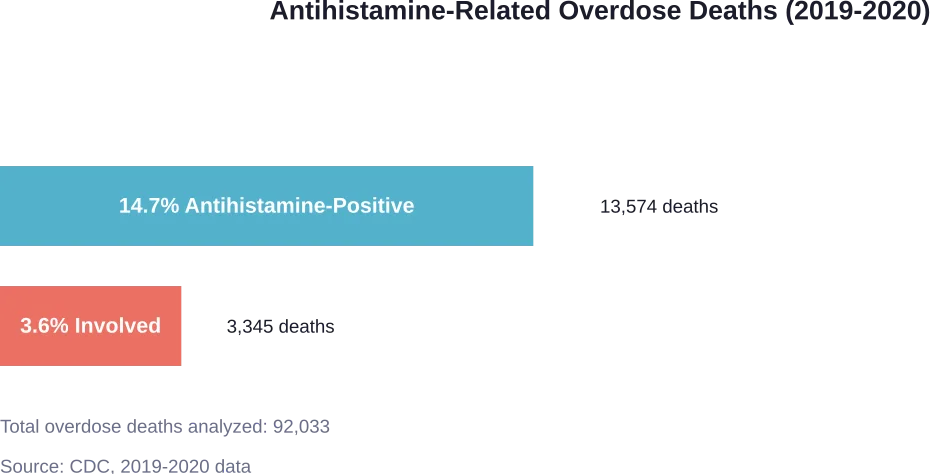
Between 2019 and 2020, CDC data revealed that among 92,033 drug overdose deaths in the United States, 13,574 (14.7%) were antihistamine-positive, and 3,345 (3.6%) were antihistamine-involved; fewer than 0.1% (90) involved antihistamines alone. Diphenhydramine was the most commonly found antihistamine in these cases.
Dangerous Symptoms of Benadryl Overdose
Diphenhydramine toxicity manifests through anticholinergic symptoms that affect multiple body systems. The presentation can be severe and life-threatening.
Research published in StatPearls identifies the following critical symptoms:
- Excessive sleepiness progressing to unresponsiveness
- Confusion and disorientation
- Hallucinations (visual and auditory)
- Fast or irregular heartbeat
- Seizures
- Dangerously low blood pressure
- Cardiac arrest
- Coma
Medical case reports document patients who suffered cardiac arrest following diphenhydramine overdose. Initial evaluation in such cases has revealed critical findings including severely altered consciousness, systolic blood pressure around 60 mmHg, and elevated heart rates.
Why the Benadryl Challenge Is Deadly
The “Benadryl Challenge” involves taking excessive amounts of diphenhydramine to induce hallucinations for social media videos. This trend has resulted in emergency room visits and deaths among teenagers.
The challenge is never safe. Period. The dose required to cause hallucinations puts individuals at extreme risk for seizures, cardiac complications, and death. Medical professionals universally condemn this dangerous activity.
How Much Benadryl Is Too Much?
Standard adult dosing recommendations for diphenhydramine typically range from 25-50 mg every 4-6 hours. But toxic doses vary based on individual factors including age, weight, tolerance, and other medications.
According to research from NIH, toxic diphenhydramine exposures most commonly result from oral ingestion, given the accessibility of oral formulations. Both accidental and intentional overdoses occur frequently.
| Dose Range | Expected Effects | Risk Level |
|---|---|---|
| 25-50 mg | Normal therapeutic effect | Safe when used as directed |
| 300+ mg/24hr | Exceeds recommended maximum | Increased risk of side effects |
| 500+ mg | Toxic symptoms likely | Medical emergency |
| 1000+ mg | Severe toxicity, life-threatening | Critical emergency |
What to Do If Someone Takes Too Much
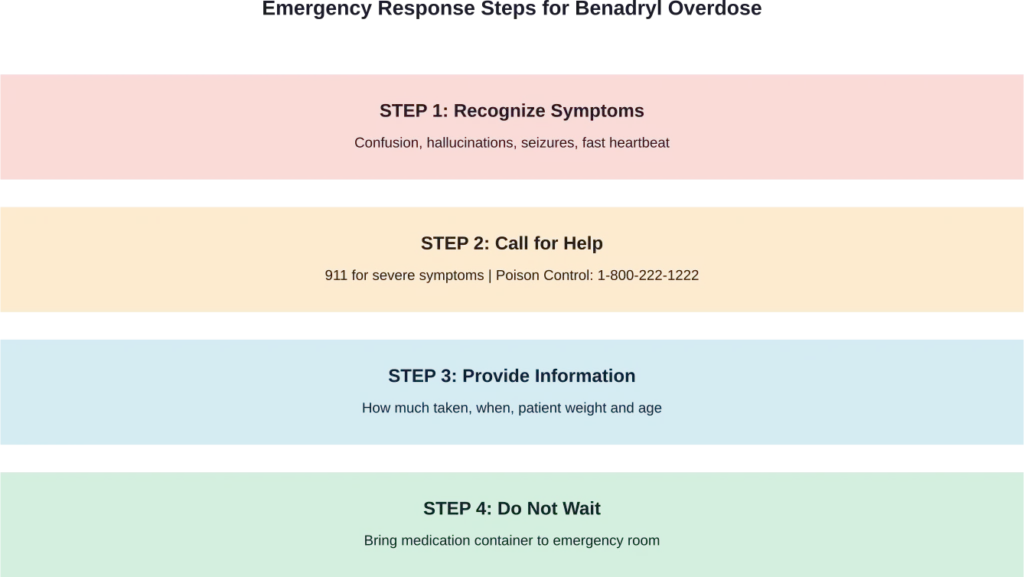
Diphenhydramine overdose requires immediate medical attention. Time matters critically in these situations.
If someone takes too much Benadryl or takes diphenhydramine by accident, call Poison Control at 1-800-222-1222 immediately or use the webPOISONCONTROL online tool. For severe symptoms—seizures, loss of consciousness, cardiac symptoms—call 911 without delay.
Emergency department treatment may include activated charcoal if the patient presents within one hour of ingestion, intravenous fluids, cardiac monitoring, seizure management with benzodiazepines, and in severe cases, sodium bicarbonate for cardiac toxicity.
In severe cases of anticholinergic toxicity, physostigmine, a centrally acting acetylcholinesterase inhibitor, may be administered when available. Supportive care continues with monitoring and additional interventions as needed.
Long-Term Concerns With Regular Benadryl Use
Beyond acute overdose risks, regular diphenhydramine use carries other concerns. First-generation antihistamines like Benadryl cross the blood-brain barrier, causing sedation and cognitive effects that some research has linked to increased dementia risk with long-term use in older adults.
The medicine also interacts poorly with alcohol, intensifying central nervous system depression. Combining these substances increases accident risk and can lead to dangerous respiratory depression.
Frequently Asked Questions
Symptoms typically appear within 1-2 hours after ingestion, as diphenhydramine is rapidly absorbed from the gastrointestinal tract. Peak effects usually occur within 2-4 hours, though serious complications can develop quickly.
Yes. According to the FDA and CDC data, diphenhydramine overdose can be fatal. Deaths result from cardiac arrest, uncontrolled seizures, or severe cardiovascular collapse. Between 2019-2020, antihistamines were involved in 3.6% of all drug overdose deaths in the United States.
The lethal dose varies significantly based on individual factors including age, weight, tolerance, and concurrent medications. Medical literature documents fatalities at doses ranging from 500 mg to several grams. Any intentional overdose should be treated as a medical emergency regardless of the amount.
While the viral trend peaked around 2020 when the FDA issued its warning, social media challenges continue to resurface periodically. Medical authorities and poison control centers remain vigilant about this dangerous activity and strongly warn against participation.
Contact Poison Control at 1-800-222-1222 for guidance. Taking slightly more than recommended may cause increased drowsiness but typically doesn’t require emergency treatment. However, professional assessment helps determine the appropriate course of action based on the total amount taken and individual risk factors.
Treatment includes cardiac monitoring, intravenous fluids, activated charcoal if given early enough, benzodiazepines for seizures, and sodium bicarbonate for cardiac toxicity. In cases of severe anticholinergic toxicity, physostigmine may be administered when available. Supportive care continues until the drug is metabolized and eliminated.
Yes. Children are at increased risk due to their smaller body size and developing nervous systems. The CDC has documented infant deaths associated with antihistamine-containing medications. Pediatric dosing must be carefully calculated based on weight, and parents should always consult healthcare providers before giving antihistamines to young children.
Benadryl overdose is a preventable medical emergency. Always follow dosing instructions, keep medications secured away from children and teens, and seek immediate help if overdose occurs. The risks are real, well-documented, and potentially fatal—but quick action saves lives.