

Quick Summary: Skipping tooth brushing allows harmful bacteria to multiply rapidly, forming plaque within hours that hardens into tartar and causes cavities, gum disease, and bad breath. According to CDC data, periodontal disease affects nearly half of U.S. adults over 30, with 60% of those 65+ experiencing this largely preventable condition. Long-term neglect leads to tooth loss, systemic health issues including heart disease and cognitive decline, and significant medical costs.
Everyone’s skipped brushing at least once. Maybe after a late night out, or when exhaustion hits hard and the bed seems more important than the bathroom sink.
But what actually happens during those hours when teeth go unbrushed? The answer involves more than just morning breath.
The mouth hosts billions of bacteria that feed on food particles and sugars, producing acids that attack tooth enamel. Without regular brushing, this process accelerates into a cascade of problems—some visible within hours, others developing silently over months and years.
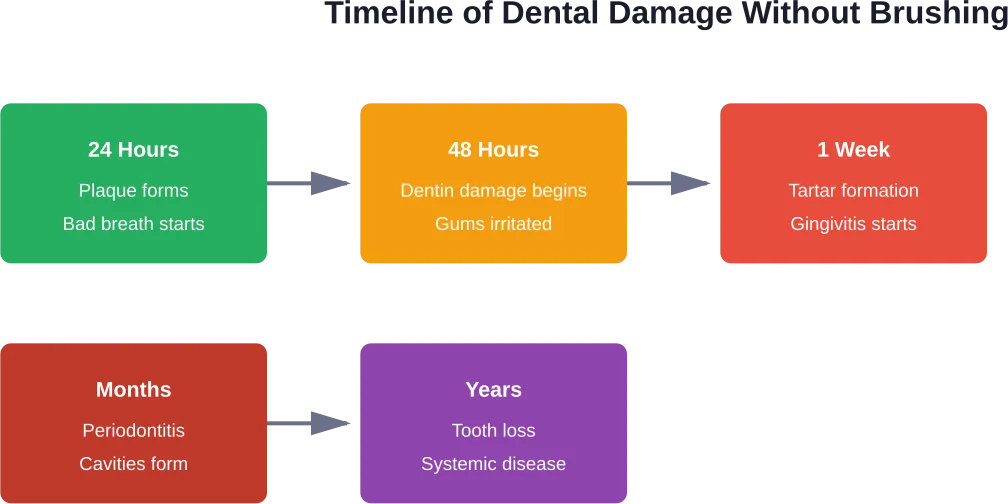
The First 24 Hours: Plaque Formation Begins
Bacteria waste no time. Within hours of the last brushing session, a sticky film called plaque starts coating teeth surfaces.
According to Shafer’s Textbook of Oral Pathology, dental plaque can begin decalcifying dentin—the protective layer beneath enamel—within just 48 hours. That’s barely two days before permanent tooth structure faces damage.
Here’s what happens in that first day:
- Bacteria multiply exponentially, feeding on leftover food particles
- Acid production increases as bacteria metabolize sugars
- Plaque film thickens, particularly along the gumline and between teeth
- Breath freshness deteriorates as volatile sulfur compounds accumulate
One missed brushing session won’t cause a cavity overnight. But it sets the stage.
Week One: When Plaque Turns to Tartar
Skip brushing for a week, and plaque mineralizes into tartar (also called calculus).
Unlike plaque, which a toothbrush can remove, tartar bonds to tooth enamel. Only professional dental cleaning can eliminate it. This hardened deposit creates a rough surface where even more bacteria colonize.
Gums respond to this bacterial assault with inflammation—the early stage of gingivitis. Signs include:
- Red, swollen gums instead of healthy pink tissue
- Bleeding during eating or when touching the gumline
- Persistent bad breath that mouthwash can’t mask
- A fuzzy, unclean feeling on tooth surfaces
The good news? Gingivitis remains reversible at this stage with proper oral care.
Months of Neglect: Periodontal Disease Takes Hold
Continue ignoring oral hygiene for months, and gingivitis progresses to periodontitis—a serious infection of the tissues supporting teeth.
CDC research indicates that about 4 in 10 U.S. adults 30 years or older had periodontitis in 2009–2014, with prevalence increasing to about 60% of adults 65 years or older.
Periodontitis destroys the bone and connective tissue anchoring teeth. Gums pull away from teeth, creating pockets where infection thrives. Eventually, teeth loosen and may fall out.
The WHO reports that oral diseases affect nearly 3.7 billion people globally, with untreated dental caries in permanent teeth being the most common health condition according to the Global Burden of Disease 2021.
Cavities: The Silent Tooth Destroyers
While gum disease attacks the supporting structures, cavities destroy the teeth themselves.
Bacteria produce acids that erode enamel, creating holes that penetrate deeper into the tooth. According to NIH research, tooth decay affects about 90% of U.S. adults—more common than periodontal disease, which affects about 47% of U.S. adults over age 30.
Early cavities cause no symptoms. By the time pain appears, significant damage has occurred. Untreated cavities lead to:
- Tooth sensitivity to hot, cold, or sweet foods
- Visible holes or dark spots on tooth surfaces
- Severe toothache and jaw pain
- Dental abscesses requiring emergency treatment
The NIDCR emphasizes that fluoride can reverse early tooth decay by preventing mineral loss and replacing lost minerals in enamel. But this only works when caught early—before cavities form.
Beyond the Mouth: Systemic Health Consequences
Poor oral health doesn’t stay confined to the mouth. Research reveals disturbing connections between dental neglect and whole-body health.
Recent CDC research found that middle-aged and older adults with poor oral health had a 13.6% prevalence of subjective cognitive decline, compared to 7.7% among those with good oral health. The oral-systemic connection involves chronic inflammation that affects distant organs.
Arizona State University research on the Tsimane people confirmed that poor oral health associates with smaller brain volumes and aortic valve calcification—markers of dementia and cardiovascular disease.
| Systemic Condition | Connection to Oral Health |
|---|---|
| Cardiovascular Disease | Periodontal bacteria enter bloodstream, causing arterial inflammation |
| Diabetes | Bidirectional relationship—each condition worsens the other |
| Cognitive Decline | Chronic oral inflammation linked to reduced brain volume |
| Respiratory Infections | Oral bacteria aspirated into lungs, causing pneumonia |
| Pregnancy Complications | Periodontal disease associated with preterm birth and low birth weight |
CDC research indicates that about 4 in 10 U.S. adults 30 years or older had periodontitis in 2009–2014, with prevalence increasing to about 60% of adults 65 years or older, making this oral-systemic connection a widespread public health concern.
The Financial Cost of Dental Neglect
Preventive care costs far less than treating advanced dental disease.
A tube of toothpaste and a toothbrush represent minimal investment. Compare that to root canals, crowns, implants, and periodontal surgery—procedures running into thousands of dollars.
The WHO notes that treating oral diseases often leads to catastrophic costs and significant financial burden for families. CDC data shows that 33.0% of U.S. adults aged 65 or older have lost six or more teeth—a condition requiring careful management and sometimes expensive dentures or implants.
Prevention through proper brushing costs pennies per day. Treatment costs thousands.
What Proper Oral Hygiene Really Means
Brushing teeth isn’t just about fresh breath—it’s about disrupting bacterial colonies before they cause irreversible damage.
The NIDCR recommends:
- Brushing twice daily for two minutes each time
- Using fluoride toothpaste to strengthen enamel
- Flossing daily to remove plaque between teeth
- Regular dental checkups every six months
- Limiting sugary foods and drinks that feed bacteria
Community water fluoridation provides additional protection. About 63% of the U.S. population receives fluoridated water, which the CDC identifies as a safe, cost-effective way to prevent cavities.
Real talk: brushing for the full two minutes feels longer than it sounds. But that duration ensures thorough plaque removal from all tooth surfaces.
Can Damage Be Reversed?
Some dental damage reverses with improved care. Some doesn’t.
Early gingivitis responds well to proper brushing and professional cleaning. Gums heal, inflammation subsides, and bleeding stops within weeks.
Very early cavities—those that haven’t penetrated enamel—can remineralize with fluoride treatment. But once a cavity forms a hole, only dental filling can restore the tooth.
Advanced periodontitis causes permanent bone loss. While treatment can halt progression, the destroyed bone structure won’t regenerate naturally. Lost teeth don’t grow back.
That’s why prevention matters more than treatment.
Frequently Asked Questions
According to Shafer’s Textbook of Oral Pathology, plaque can begin decalcifying dentin within 48 hours. However, individual factors like diet, saliva production, and existing oral health affect the timeline. Permanent damage like cavities typically develops over weeks to months of consistent neglect.
No. Mouthwash kills some bacteria and freshens breath but doesn’t mechanically remove plaque from tooth surfaces. Only brushing and flossing physically disrupt and remove the bacterial biofilm that causes cavities and gum disease.
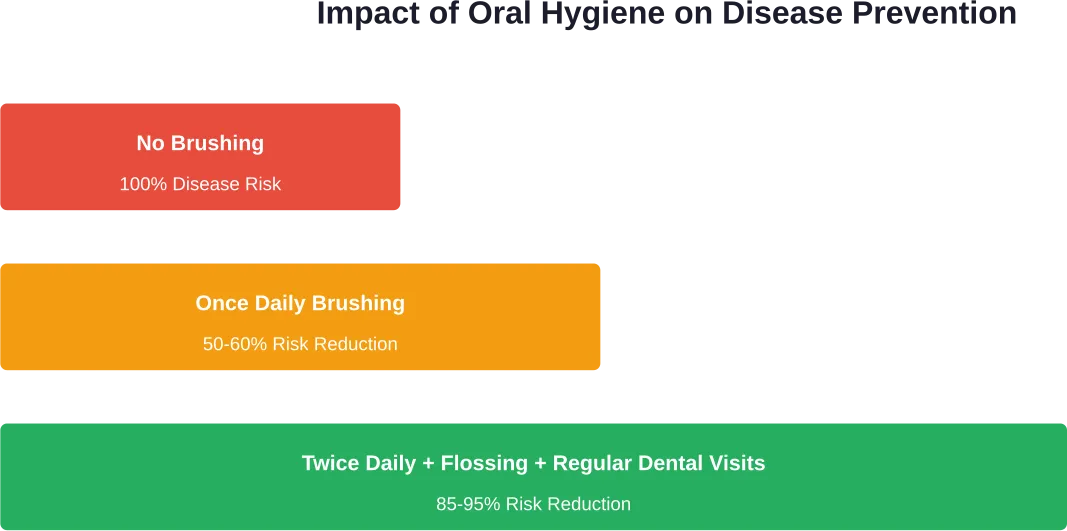
Brushing once daily is better than not brushing at all, but it leaves teeth vulnerable for extended periods. Bacteria accumulate throughout the day and night. The NIDCR recommends twice-daily brushing to maintain optimal protection against plaque buildup.
Yes. Research shows that periodontal bacteria can enter the bloodstream and contribute to arterial inflammation. Studies have found associations between periodontal disease and increased risk of cardiovascular disease, though more research continues to clarify the mechanisms.
No. While CDC data shows that some adults 65 or older have experienced tooth loss, this results from preventable diseases like cavities and periodontitis—not aging itself. Proper oral hygiene throughout life prevents most tooth loss.
Plaque begins mineralizing into tartar within days of inadequate brushing. The exact timeline varies based on saliva mineral content and individual factors, but tartar typically forms within a week of plaque accumulation. Once formed, only professional dental cleaning can remove it.
A low-sugar diet reduces cavity risk but doesn’t eliminate the need for brushing. Even with excellent nutrition, bacteria in the mouth produce acids and form plaque. According to the WHO, limiting sugary foods works best in combination with proper oral hygiene—not as a replacement for it.
The Bottom Line on Dental Neglect
Skipping tooth brushing sets off a predictable chain of events: plaque formation, tartar buildup, gingivitis, periodontitis, cavities, and ultimately tooth loss.
But the consequences extend beyond the mouth. The same inflammation and bacteria that destroy teeth and gums affect the cardiovascular system, brain, and overall health. CDC research demonstrates clear links between oral health and conditions ranging from diabetes to cognitive decline.
The good news? Most oral diseases are preventable. Brushing twice daily with fluoride toothpaste, flossing, and regular dental visits provide powerful protection against both oral and systemic health problems.
Two minutes twice a day. That’s the investment required to prevent decades of health complications and thousands of dollars in dental treatment.
The mouth is the gateway to the body. What happens there doesn’t stay there.
Schedule a dental checkup today to assess oral health status and get personalized recommendations for maintaining healthy teeth and gums for life.