
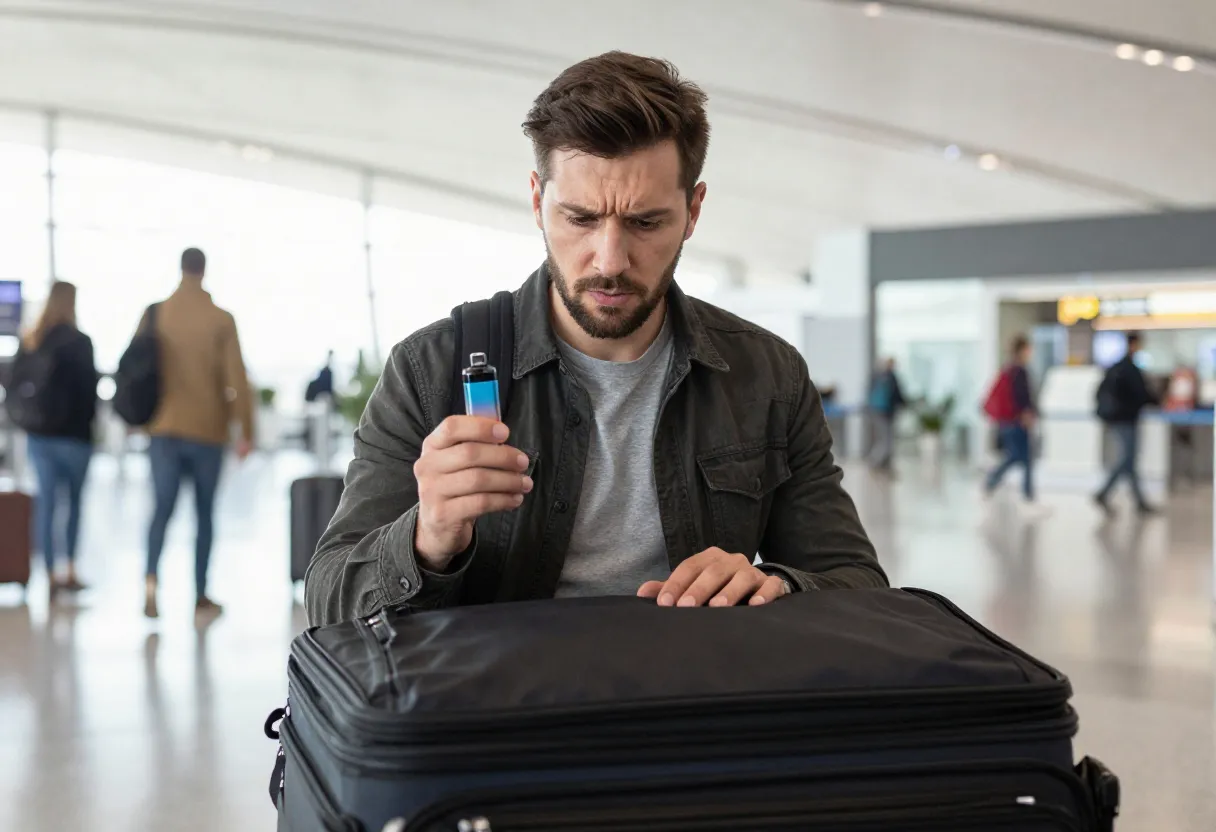
Quick Summary: When you put a vape in your carry-on bag, it passes through TSA screening and travels in the cabin with you—which is exactly where it should be. TSA and FAA regulations require all electronic smoking devices to be in carry-on luggage, never checked baggage, due to lithium battery fire risks. The device must be powered off and protected from accidental activation during the flight.
Flying with a vape can feel confusing if it’s your first time navigating airport security with an electronic smoking device. But here’s the reality: putting your vape in carry-on luggage isn’t just allowed—it’s actually required by federal regulations.
The Transportation Security Administration and Federal Aviation Administration have strict rules about where vaping devices can travel on aircraft. Understanding these regulations helps travelers avoid complications at security checkpoints and ensures compliance with safety protocols designed to prevent lithium battery fires.
The Official TSA Rule for Vapes in Carry-On Bags
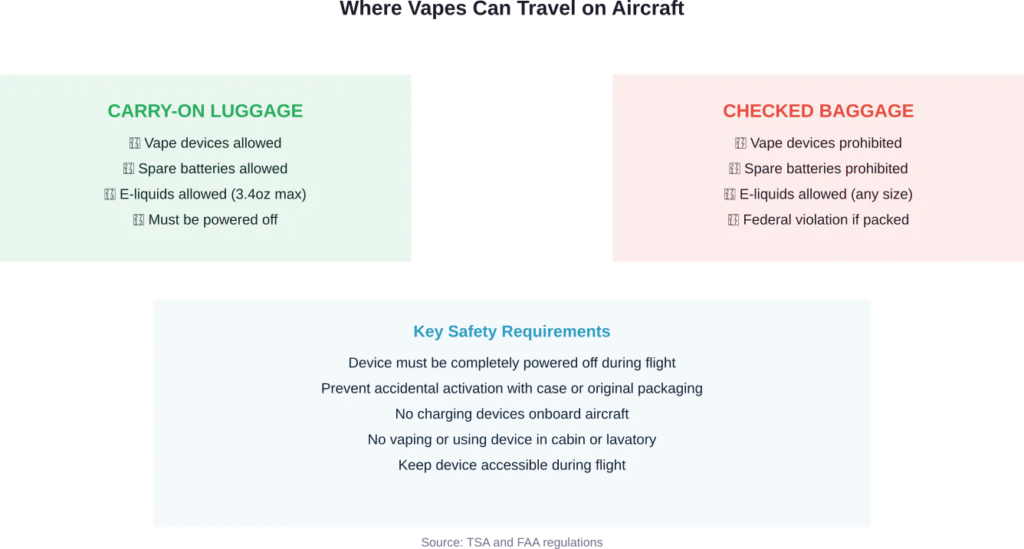
According to the TSA, electronic smoking devices are allowed only in carry-on baggage (Carry On Bags: Yes (Special Instructions); Checked Bags: No). This includes e-cigarettes, vape pens, vaporizers, atomizers, and any battery-powered nicotine delivery system.
When you place your vape in your carry-on and send it through the X-ray machine, TSA officers can see it clearly. They’re trained to identify these devices, and as long as everything follows regulations, the screening process continues normally.
The TSA requires passengers to take effective measures for preventing accidental activation of the heating element. This means your device should be powered off completely—not just in standby mode.
What TSA Officers Look For During Screening
Security officers verify that electronic smoking devices contain lithium batteries within approved limits. Each lithium ion battery must not exceed a Watt-hour (Wh) rating of 100 Wh, or for lithium metal batteries, a lithium content of 2 grams.
Most standard vaping devices fall well below these thresholds. Disposable vapes, pod systems, and typical mod batteries comply with these specifications without issue.
However, the final decision rests with the TSA officer on whether an item is allowed through the checkpoint. Items that trigger alarms, appear tampered with, or pose security concerns may receive additional screening.
Why Vapes Must Travel in the Cabin
The Federal Aviation Administration implemented these rules because electronic smoking devices contain lithium batteries that pose fire risks. According to the FAA, these devices were the leading cause of lithium battery incidents on aircraft in 2022.
Lithium batteries can overheat and undergo thermal runaway—a process where the battery overheats rapidly and can catch fire or explode. This can occur if the battery is damaged, overheated, or if terminals are short-circuited.
In the passenger cabin, crew members can respond immediately to any smoke or fire from a lithium battery device. In checked baggage stored in the cargo hold, a fire could go undetected until it becomes catastrophic.
What Actually Happens at the Security Checkpoint
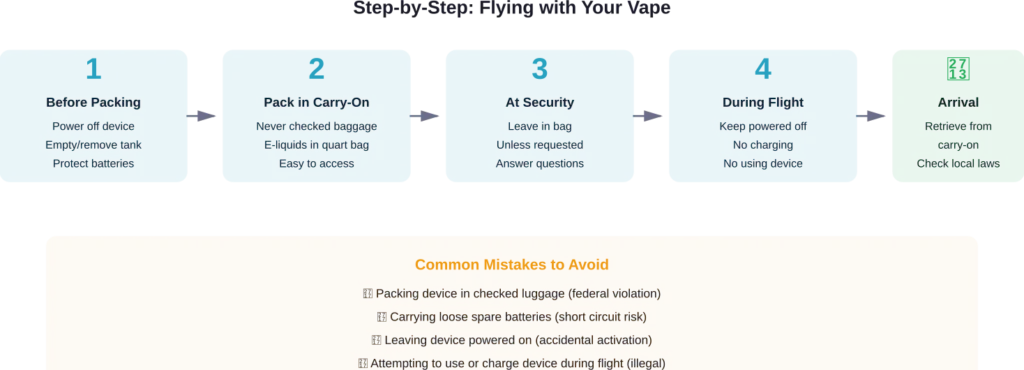
When you arrive at airport security with your vape in carry-on luggage, the process is straightforward. Place your carry-on bag on the conveyor belt for X-ray screening just like any other item.
TSA officers can identify vaping devices through the X-ray machine. In most cases, they won’t need to open your bag for inspection specifically because of the vape.
Some travelers wonder if they should remove the vape from their bag. Generally, it’s not necessary to remove vaping devices separately unless a TSA officer requests it during screening. The device can remain in your carry-on bag.
If Your Bag Gets Pulled for Additional Screening
Occasionally, bags receive secondary screening for various reasons unrelated to vaping devices. If this happens, the officer may ask about the vape or other contents.
Being upfront and cooperative makes the process faster. Simply explain that it’s a vaping device, which is allowed in carry-on baggage per TSA regulations.
The officer may swab the device for explosive residue testing—this is standard procedure for many electronic items and doesn’t indicate suspicion.
The Serious Consequences of Packing Vapes in Checked Luggage
If you accidentally (or intentionally) pack a vape in checked baggage, several things can happen. First, TSA officers screen checked bags and can identify electronic smoking devices through X-ray equipment.
When found, TSA will typically open the bag and remove the vape. The airline may contact you before the flight to retrieve the item, or they may remove it and leave a notice in your luggage.
According to the Pipeline and Hazardous Materials Safety Administration (PHMSA), passengers who violate these regulations can face civil penalties. This isn’t just an airline preference—it’s federal law under hazardous materials regulations.
In October 2015, the U.S. Department of Transportation issued an interim final rule (October 26, 2015 per DOT source) prohibiting passengers and crewmembers from carrying battery-powered electronic smoking devices in checked baggage. A final rule followed, also prohibiting charging these devices while onboard aircraft.
| Scenario | Outcome | Potential Consequences |
|---|---|---|
| Vape in carry-on luggage | Passes through security normally | None (compliant with regulations) |
| Vape in checked baggage | Detected during screening | Item removed, possible civil penalty, potential flight delay |
| Vaping on aircraft | Crew intervention required | Federal fines up to thousands of dollars, possible arrest, flight ban |
| Charging vape on aircraft | Prohibited activity | Civil penalties, safety violation |
How to Pack Your Vape Properly for Air Travel
Proper packing prevents accidental activation and ensures compliance with safety regulations. Start by completely powering off your device—not sleep mode, but fully off.
Remove the tank or pod if possible to prevent leaking. Changes in cabin pressure can cause e-liquid to leak from tanks during flight. Placing a paper towel or tissue around the tank helps absorb any leakage.
Store spare batteries in their original packaging or in a protective case. Never carry loose batteries, as contact with metal objects (keys, coins, other batteries) can cause short circuits.
E-Liquid Restrictions for Carry-On Bags
E-liquids follow the same TSA liquid rules as other liquids, gels, and aerosols. According to TSA regulations, e-liquids in carry-on bags must be in containers of 3.4 ounces (100 ml) or less.
All liquid containers must fit in a single quart-sized clear plastic bag. This is the same requirement that applies to shampoo, toothpaste, and other liquids.
However, if you pack e-liquid in checked baggage, these size restrictions don’t apply. Large bottles of e-liquid can travel in checked bags without the 3.4-ounce limitation.
Using Your Vape at the Airport
Once you’re through security, airport policies on vaping vary by location. Some airports have designated smoking areas where vaping is permitted, though these are increasingly rare.
Most U.S. airports prohibit vaping indoors entirely, treating it the same as traditional smoking. Community discussions indicate that vapers typically need to exit the secure area to use their devices, then go through security again.
Check your specific airport’s policy before your trip. Some international airports have more permissive policies with designated vaping areas inside terminals.
What You Absolutely Cannot Do on the Plane
Federal regulations strictly prohibit vaping or using electronic smoking devices on commercial aircraft. This includes time on the ground, during takeoff, during flight, and during landing.
Using your vape in the airplane lavatory triggers smoke detectors and can result in serious consequences. Flight attendants must report these incidents, and passengers can face federal fines, arrest upon landing, and lifetime bans from airlines.
Charging your vape during flight is also prohibited under federal regulations. The charging process increases fire risk from lithium batteries, so devices must remain off and unplugged throughout the journey.
International Travel Considerations
TSA and FAA rules apply to flights departing from U.S. airports, but international destinations have their own regulations. Some countries have banned vaping devices entirely.
Thailand, Singapore, and several other countries prohibit the possession and sale of electronic cigarettes. Travelers caught with vapes in these countries can face fines, confiscation, or even arrest.
Before flying internationally with your vape, research the laws at your destination. Some countries allow vaping but restrict where devices can be purchased or used. Others have heavy restrictions that make bringing devices impractical.
Frequently Asked Questions
Passengers can bring multiple vaping devices in carry-on luggage. However, check with your airline on any limitations on the number of devices that can be carried for personal use by a passenger. Each lithium ion battery must not exceed 100 Wh. Most disposable vapes and standard devices contain lithium batteries well below the 100 Wh limit. However, individual airline policies may restrict the quantity.
If your vape activates accidentally during flight, it creates a serious safety concern due to the heating element. This is why TSA requires effective measures to prevent accidental activation. If you notice your device activated, alert a flight attendant immediately. To prevent this, always power off devices completely and use protective cases or locking mechanisms.
TSA permits vapes in carry-on luggage as long as they comply with regulations. Electronic smoking devices are permitted in the cabin. However, the final decision rests with the TSA officer on whether an item is allowed through the checkpoint. If you pack a vape in checked baggage, TSA will remove it since devices with lithium batteries are prohibited in the cargo hold.
Cannabis remains illegal under federal law. While TSA security screening focuses on safety threats rather than searching for marijuana, TSA will refer any cannabis products discovered during screening to law enforcement. Individual airline policies and state laws at your departure and arrival locations also apply.
No, disposable vapes follow the same TSA and FAA regulations as rechargeable devices. All electronic smoking devices must travel in carry-on baggage, never checked bags. Disposables contain lithium batteries just like rechargeable devices, creating the same fire risk that necessitates cabin storage.
Yes, your personal item (backpack, purse, laptop bag) counts as carry-on baggage for TSA purposes. Vaping devices can travel in either your main carry-on bag or your personal item. Both remain with you in the cabin, which satisfies the requirement that electronic smoking devices stay out of the cargo hold.
Spare lithium batteries must be in carry-on baggage and should be protected from short circuits. Keep batteries in their original packaging or place each battery in a separate plastic bag or protective case. Never carry loose batteries where terminals can contact metal objects. Some travelers use battery cases specifically designed for safe transport.
The Bottom Line on Flying With Vapes
Putting your vape in carry-on luggage is both allowed and required by federal regulations. The device goes through normal TSA screening and travels with you in the cabin where crew can respond to any battery incidents.
The rules exist for legitimate safety reasons. Lithium battery fires on aircraft are serious events, and keeping these devices in the passenger cabin—rather than the cargo hold—allows for immediate response if problems occur.
Compliance is straightforward: power off your device, pack it in carry-on baggage, protect spare batteries, and follow liquid rules for e-juice. Never pack vapes in checked luggage, never use or charge devices on the plane, and research destination laws before international travel.
Following these guidelines ensures smooth travel without delays, penalties, or safety concerns. Whether you’re flying with a disposable vape or a complex mod setup, proper packing and awareness of regulations make the process hassle-free.