

Quick Summary: Drinking olive oil daily can support heart health, reduce inflammation, and provide essential antioxidants, according to research from Harvard and the PREDIMED study. Studies show consuming more than half a tablespoon daily is associated with lower mortality risk. However, it’s calorie-dense at 120 calories per tablespoon, so moderation matters for weight management.
The idea of drinking olive oil straight has exploded on social media, with influencers tossing back morning shots like it’s a magic health elixir. But does the science actually back this trend?
Here’s the thing—olive oil has been a cornerstone of the Mediterranean diet for centuries, and research consistently links it to impressive health outcomes. The question isn’t whether olive oil is beneficial. It’s whether drinking it directly offers advantages over simply using it in cooking.
Let’s examine what happens to the body when olive oil becomes a daily habit, based on what peer-reviewed research actually shows.
The Science Behind Olive Oil’s Health Effects
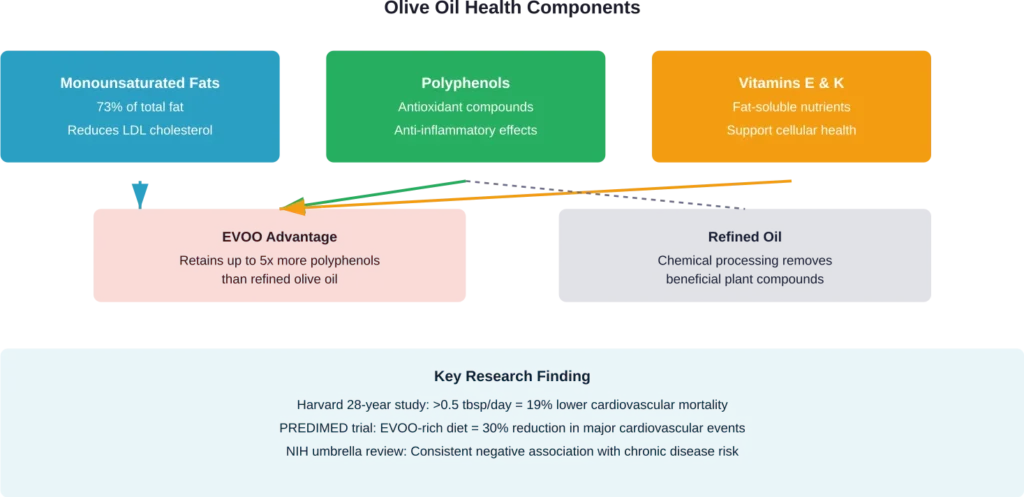
Olive oil contains primarily monounsaturated fats, specifically oleic acid. According to the U.S. Department of Agriculture, one tablespoon contains approximately 120 calories, 14 grams of total fat (10 grams monounsaturated), 13% of the daily value for vitamin E, and 7% for vitamin K.
But the real story goes beyond basic nutrition facts.
A Harvard study published in the Journal of the American College of Cardiology tracked Americans over 28 years. Researchers found that participants consuming more than half a tablespoon of olive oil daily (>7g/d) had lower cardiovascular mortality risk (HR 0.81, 95% CI 0.78-0.84) compared to those who rarely consumed it.
The same research revealed something even more striking: replacing just one teaspoon of margarine, butter, mayonnaise, or dairy fat with an equivalent amount of olive oil was associated with lower overall mortality risk.
What Makes Extra Virgin Different
Not all olive oil delivers the same benefits. Extra virgin olive oil (EVOO) undergoes minimal processing and retains higher concentrations of polyphenols—bioactive compounds with antioxidant and anti-inflammatory properties.
The PREDIMED study, a landmark Spanish trial involving over 7,000 participants at high cardiovascular risk, demonstrated that Mediterranean diets supplemented with extra virgin olive oil demonstrated significant cardiovascular benefits in the PREDIMED study.
Regular or refined olive oil loses many of these protective compounds during processing. For health benefits, extra virgin is the clear choice.
Cardiovascular Benefits: What the Data Shows
The cardiovascular evidence is particularly robust. According to research published in the NIH’s Foods journal, an umbrella review of meta-analyses found consistent negative associations between olive oil consumption and cardiovascular disease risk.
Here’s what happens at the cellular level: monounsaturated fats in olive oil help reduce LDL cholesterol (the harmful type) while maintaining or even slightly increasing HDL cholesterol (the protective type). This favorable shift in lipid profiles translates to cleaner arteries and better blood flow.
The polyphenols add another layer of protection. These compounds reduce oxidative stress and inflammation—two processes that damage blood vessel walls and contribute to atherosclerosis.
Blood Pressure Effects
Several studies suggest olive oil consumption may help maintain healthy blood pressure levels. The mechanisms involve improved endothelial function (how blood vessels relax and constrict) and reduced arterial stiffness.
According to MedlinePlus, the U.S. government health information resource, replacing saturated fats with sources of monounsaturated fats like olive oil represents one dietary strategy for cardiovascular health.
Impact on Inflammation and Metabolic Health
Chronic low-grade inflammation underlies many modern health conditions—from type 2 diabetes to certain cancers. Olive oil’s anti-inflammatory properties come primarily from oleocanthal, a polyphenol that functions similarly to ibuprofen in inhibiting inflammatory enzymes.
A comprehensive umbrella review published in Food Science and Nutrition examined multiple systematic reviews and found that olive oil consumption was associated with reduced risk of type 2 diabetes. The exact mechanisms likely involve improved insulin sensitivity and better glucose metabolism.
Some research also suggests potential cancer risk reduction, though the evidence is less definitive than for cardiovascular outcomes. The NIH notes that several studies have found negative associations between olive oil intake and various cancer types.
Digestive System Effects
Community discussions frequently mention digestive benefits from morning olive oil shots. The theory suggests that olive oil “coats” the stomach lining and supports gut health.
Real talk: the coating concept is oversimplified. Olive oil doesn’t create a protective barrier in any meaningful way. However, fats do slow gastric emptying, which can promote satiety and more stable blood sugar levels throughout the morning.
Olive oil may support beneficial gut bacteria, according to some preliminary research. The polyphenols appear to have prebiotic-like effects, potentially encouraging the growth of health-promoting microbes.
That said, taking olive oil on an empty stomach doesn’t confer special advantages. The benefits come from regular consumption, regardless of timing.
Weight Management Considerations
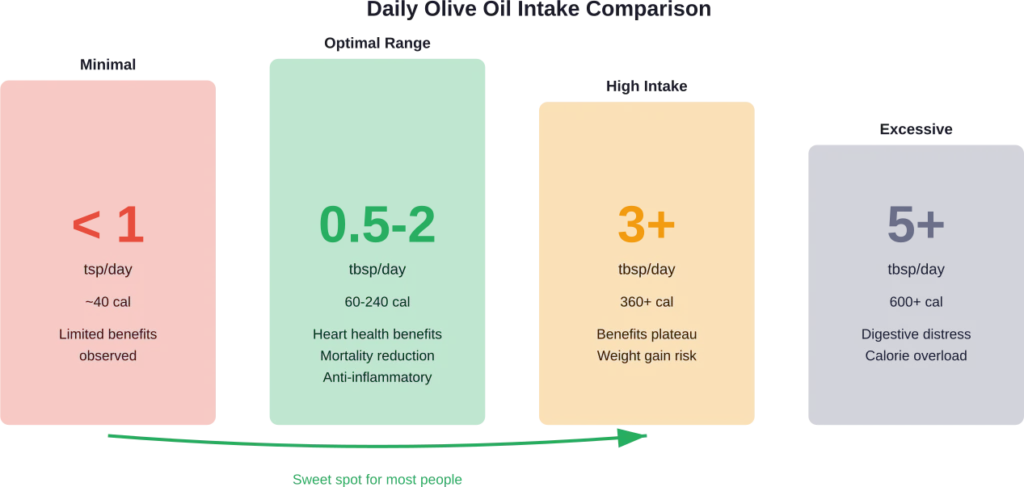
Here’s where things get nuanced. Olive oil is calorie-dense—120 calories per tablespoon adds up quickly. Three tablespoons daily represents 360 calories, roughly equivalent to a small meal.
Yet research from the PREDIMED study found that participants following Mediterranean diets rich in olive oil didn’t experience problematic weight gain compared to low-fat diet groups. Some actually lost weight.
How? The satiating effects of fat likely reduce overall calorie intake throughout the day. People feel fuller and snack less. The metabolic benefits—improved insulin sensitivity and reduced inflammation—may also play a role.
Still, portion control matters. According to WHO guidelines, total fat intake should represent less than 30% of total energy intake, with emphasis on unsaturated fats like those in olive oil.
Potential Downsides and Who Should Be Cautious
While generally safe for most people, drinking olive oil straight isn’t for everyone.
Some individuals report nausea or digestive discomfort, especially when consuming it on an empty stomach. Those with sensitive gag reflexes may struggle with the texture and taste.
People with certain digestive conditions—like gallbladder disease—should consult healthcare providers before significantly increasing fat intake. High-fat consumption can trigger symptoms in some cases.
According to research documented by the NIH, only a few adverse reactions have been reported from olive oil consumption, including rare cases of occupational allergic contact dermatitis and lichen planus pigmentosus. These are uncommon and typically associated with topical application rather than consumption.
How to Incorporate Olive Oil Daily
Drinking it straight is one approach, but not the only—or necessarily best—option.
Most Mediterranean populations don’t take olive oil shots. They use it liberally in cooking, drizzle it over vegetables, mix it into salads, and dip bread in it. The health benefits come from consistent consumption, not the delivery method.
If morning shots appeal to you, start small. Half a tablespoon (about one teaspoon) on an empty stomach is enough for many people. Some mix it with lemon juice to improve palatability.
Otherwise, simply replace other cooking fats with extra virgin olive oil. Use it for sautéing vegetables (despite myths, EVOO can withstand typical cooking temperatures.). Add it to smoothies. Drizzle it over finished dishes.
The goal is consistency, not perfection.
What Research Doesn’t Show
It’s important to acknowledge gaps in the evidence. While cardiovascular benefits are well-established, claims about olive oil “detoxifying” the body lack scientific support. The liver and kidneys handle detoxification—no food can replace those functions.
Similarly, assertions that olive oil alone causes significant weight loss don’t align with research. It may support weight management as part of an overall healthy dietary pattern, but it’s not a magic bullet for fat loss.
The immune system claims also require more investigation. While anti-inflammatory effects theoretically support immune function, direct evidence of reduced infection rates or enhanced immune response in humans is limited.
The Bottom Line on Daily Olive Oil
So what actually happens if olive oil becomes a daily habit?
Based on substantial research—including long-term studies from Harvard and landmark trials like PREDIMED—regular olive oil consumption, particularly extra virgin, supports cardiovascular health and may reduce overall mortality risk. The anti-inflammatory and antioxidant properties provide additional metabolic benefits.
Drinking it straight offers no proven advantages over incorporating it into meals, though some people prefer the ritual. The timing doesn’t matter much—consistency does.
For most adults, one to two tablespoons daily appears to hit the sweet spot where benefits are clear without excessive calorie intake. Always choose extra virgin when possible to maximize polyphenol content.
But remember: olive oil works best as part of a broader Mediterranean-style dietary pattern rich in vegetables, fruits, whole grains, and fish. No single food—no matter how beneficial—compensates for an otherwise poor diet.
Frequently Asked Questions
Research suggests more than half a tablespoon (approximately 1.5 teaspoons) daily is associated with cardiovascular benefits. Most studies showing mortality reduction used intake levels between 0.5 to 2 tablespoons daily. Start with one tablespoon and adjust based on total calorie needs and how the body responds.
No research indicates that timing significantly affects olive oil’s health benefits. Some people prefer morning consumption on an empty stomach based on anecdotal digestive benefits, but studies measuring cardiovascular and metabolic outcomes don’t specify optimal timing. Choose whatever time supports consistent daily intake.
Olive oil alone doesn’t cause weight loss—it contains 120 calories per tablespoon. However, PREDIMED study participants consuming olive oil-rich Mediterranean diets didn’t gain weight compared to low-fat groups, and some lost weight. The satiating effects of fat may reduce overall calorie intake throughout the day, supporting weight management when part of a balanced diet.
The health benefits come from regular consumption regardless of method. Drinking it straight ensures no nutrient loss from heating, though extra virgin olive oil remains stable at typical cooking temperatures (up to 375°F). Raw consumption preserves all polyphenols, but cooked applications make it easier to consume consistently as part of meals.
Yes, research supports anti-inflammatory effects. Oleocanthal, a polyphenol in extra virgin olive oil, inhibits inflammatory enzymes similarly to ibuprofen. NIH umbrella reviews of meta-analyses found consistent evidence linking olive oil consumption to reduced inflammatory markers and lower chronic disease risk.
Excessive intake (more than 3-4 tablespoons daily) can cause digestive discomfort and provides a significant calorie load (360-480 calories) that may contribute to unwanted weight gain. WHO recommends total fat intake below 30% of daily calories. Most health benefits appear at moderate intake levels without additional advantages from very high consumption.
People with gallbladder disease or those who experience nausea from high-fat foods should consult healthcare providers before significantly increasing olive oil intake. Those managing calorie intake for weight loss need to account for olive oil’s energy density. Individuals with known allergies to olives should obviously avoid olive oil entirely.
Final Thoughts
The olive oil trend has substance behind it. Decades of research from institutions like Harvard and major trials like PREDIMED demonstrate real cardiovascular benefits and mortality risk reduction from regular consumption.
Whether drinking it straight or drizzling it over salads, the key is making extra virgin olive oil a consistent part of daily eating patterns. Start with one tablespoon daily, choose high-quality extra virgin varieties, and view it as one component of an overall Mediterranean-style approach to eating.
The body responds to patterns, not perfection. Small, sustainable changes—like swapping butter for olive oil—accumulate into meaningful health outcomes over time.