

Quick Summary: Ignoring lactose intolerance can lead to persistent digestive problems including diarrhea, bloating, and abdominal pain. While it won’t cause permanent intestinal damage in most cases, continued lactose consumption may result in nutritional deficiencies, particularly calcium and vitamin D, and significantly impact quality of life. Managing the condition through dietary changes is essential for long-term health and wellbeing.
Lactose intolerance affects approximately 68 percent of the world’s population, according to data from the National Institute of Diabetes and Digestive and Kidney Diseases. Yet many people continue consuming dairy products despite experiencing uncomfortable symptoms.
The question isn’t whether lactose intolerance is serious—it’s what happens when someone decides to push through the discomfort rather than managing the condition properly.
Here’s the thing: lactose intolerance won’t kill you. But ignoring it can significantly impact health, comfort, and nutritional status in ways that accumulate over time.
Understanding Lactose Intolerance and the Lactase Enzyme
Lactose is a sugar found in milk and dairy products. Breaking it down requires lactase, an enzyme produced in the small intestine.
According to research published by the NIH, lactase diminishes to approximately 10% of original levels in two-thirds to three-quarters of the human population. This reduction is completely normal—it’s the human default.
When lactase production drops, undigested lactose moves into the large intestine where bacteria ferment it. This fermentation process creates the uncomfortable symptoms associated with lactose intolerance.
The condition typically develops in teenagers or adults. While most infants can digest lactose without problems, many people begin experiencing lactose malabsorption after infancy.
Immediate Consequences of Ignoring Lactose Intolerance
Symptoms typically appear 30 minutes to 2 hours after consuming dairy products, according to medical sources. When lactose intolerant individuals continue eating dairy, these symptoms don’t just persist—they can intensify.
Digestive System Disruption
The primary effects occur in the digestive tract. Undigested lactose reaches the large intestine in 6-10 hours of consumption, meaning digestive symptoms may occur on the same day or in the next two days.
Common digestive symptoms include:
- Diarrhea and loose stools
- Abdominal bloating and distension
- Gas and flatulence
- Nausea or vomiting
- Stomach pain and cramping
- Rumbling or gurgling sounds in the abdomen
Real talk: these aren’t minor inconveniences. Persistent diarrhea can lead to dehydration, electrolyte imbalances, and constant bathroom trips that disrupt daily activities.

Quality of Life Impact
Ignoring lactose intolerance can exacerbate symptoms and affect overall quality of life. The constant physical discomfort can influence mood, social interactions, and daily productivity.
Think about it: planning every activity around bathroom access, experiencing pain during meals, or feeling chronically fatigued from poor nutrient absorption takes a toll.
Long-Term Health Consequences
The effects of consistently ignoring lactose intolerance extend beyond immediate digestive discomfort.
Nutritional Deficiencies
According to the NIDDK, lactose intolerance may affect health if it prevents getting enough nutrients, particularly calcium and vitamin D.
Here’s where it gets problematic: many people who experience dairy-related symptoms simply avoid all dairy without finding alternative nutrient sources. This avoidance—rather than the intolerance itself—creates the deficiency risk.
| Nutrient | Role in Body | Deficiency Risks | Non-Dairy Sources |
|---|---|---|---|
| Calcium | Bone health, muscle function | Osteoporosis, fractures, bone loss | Leafy greens, fortified foods, almonds |
| Vitamin D | Calcium absorption, immune function | Weak bones, immune problems | Fatty fish, egg yolks, fortified products |
| Protein | Muscle maintenance, tissue repair | Muscle loss, weakness | Meat, fish, legumes, nuts |
| Riboflavin | Energy production | Fatigue, skin problems | Eggs, lean meats, green vegetables |
But wait—there’s another angle. Continued dairy consumption despite intolerance can impair overall nutrient absorption due to chronic digestive inflammation and rapid intestinal transit from diarrhea.
Intestinal Health Concerns
While lactose intolerance doesn’t typically cause permanent damage to the intestinal lining, persistent inflammation from ongoing symptoms may create additional digestive sensitivity.
Some research suggests that chronic digestive distress could potentially impact the gut microbiome, though more studies are needed to fully understand this relationship.
Does Ignoring Lactose Intolerance Cause Permanent Damage?
The short answer? Generally not.
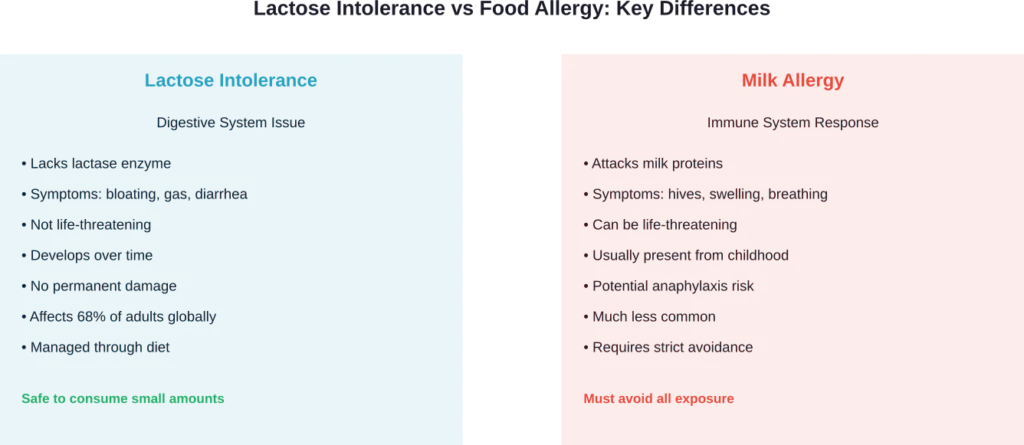
Lactose intolerance differs fundamentally from food allergies. According to NCBI research, food allergies involve an inappropriate immune response, while lactose intolerance is a digestive issue, not an immune system reaction.
This distinction matters. Continuing to consume lactose won’t trigger the same dangerous immune responses that food allergies can cause.
That said, the accumulation of symptoms and potential nutritional deficiencies represents real health concerns that shouldn’t be dismissed.
Managing Lactose Intolerance Properly
According to the NIDDK, most cases can be managed by changing dietary habits to limit or avoid foods containing lactose.
Some people may only need to limit lactose intake, while others require more complete avoidance. The severity varies considerably between individuals.
Dietary Modifications
Management doesn’t necessarily mean eliminating all dairy. Many lactose-intolerant individuals can tolerate small amounts, particularly hard cheeses and yogurt with live cultures.
Practical strategies include:
- Consuming dairy with other foods to slow digestion
- Choosing lactose-free or lactose-reduced products
- Using lactase enzyme supplements before eating dairy
- Gradually introducing small amounts to gauge tolerance
- Selecting naturally low-lactose options like aged cheese
Ensuring Adequate Nutrition
The NIDDK emphasizes talking with a doctor or dietitian about changing dietary habits while ensuring adequate nutrient intake.
Calcium-fortified plant milks, leafy green vegetables, canned fish with bones, and fortified foods can provide necessary nutrients without lactose.
Regional Variations in Lactose Intolerance
Lactose intolerance prevalence varies dramatically by ancestry and geography. According to NCBI data, only 5 to 15% of people from Europe are lactose-intolerant, with the condition being least common in Northern Europe.
In contrast, lactose malabsorption is significantly more common in populations from East Asia, Africa, and among certain ethnic groups.
This variation reflects evolutionary adaptation. Populations with long histories of dairy farming developed higher rates of lactase persistence into adulthood.
Can Lactose Tolerance Be Regained?
Some research published in medical journals explores whether the gut microbiome can adapt to lactose consumption in lactase non-persistent individuals.
Studies suggest that gradual, consistent exposure might allow gut bacteria to better ferment lactose with fewer symptoms. However, this doesn’t restore lactase enzyme production—it simply helps the microbiome handle undigested lactose more efficiently.
The evidence remains mixed, and this approach doesn’t work for everyone. Working with healthcare providers before attempting lactose reintroduction is advisable.
When to Seek Medical Advice
Digestive symptoms can result from many conditions beyond lactose intolerance. If experiencing persistent or severe symptoms, proper diagnosis matters.
Medical evaluation is particularly important if symptoms include:
- Bloody stools or severe abdominal pain
- Unexplained weight loss
- Fever accompanying digestive symptoms
- Symptoms that worsen or don’t improve with dietary changes
These could indicate inflammatory bowel disease, celiac disease, or other conditions requiring different treatment approaches.
Frequently Asked Questions
Lactose intolerance typically doesn’t cause permanent intestinal damage. Unlike celiac disease or inflammatory bowel disease, continuing to consume lactose won’t destroy the intestinal lining. However, persistent symptoms can cause chronic discomfort and may impact nutrient absorption due to rapid intestinal transit and inflammation.
The underlying enzyme deficiency won’t worsen from consuming lactose, but symptoms may become more severe or frequent with continued dairy consumption. Some individuals report increased sensitivity over time, though this varies considerably between people.
Tolerance varies significantly. Many people can handle small amounts of lactose, particularly when consumed with other foods. Hard cheeses and yogurt with live cultures often cause fewer symptoms than milk. Testing individual tolerance through gradual introduction helps determine personal limits.
Chronic diarrhea and poor nutrient absorption from ongoing lactose consumption can potentially lead to weight loss. However, this isn’t a direct effect of lactose intolerance itself but rather a consequence of persistent digestive symptoms and malabsorption.
No. Lactose intolerance is a digestive issue caused by insufficient lactase enzyme. Milk allergy involves the immune system reacting to milk proteins and can be life-threatening. The two conditions require completely different management approaches.
Lactase enzyme supplements can help many people digest lactose more effectively when taken before consuming dairy products. Effectiveness varies between individuals and depends on the amount of lactose consumed and individual enzyme deficiency severity.
Yes, though it typically develops in teenagers or adults. In African-American children, symptoms can appear as early as 2 years old. Congenital lactose intolerance (present from birth) is extremely rare.
Conclusion
Ignoring lactose intolerance won’t cause the catastrophic damage that untreated celiac disease or severe food allergies might. But it’s far from harmless.
The persistent digestive symptoms, potential nutritional deficiencies, and diminished quality of life add up. Why endure chronic discomfort when effective management strategies exist?
Managing lactose intolerance through dietary modifications, lactase supplements, or carefully selected dairy alternatives allows for symptom-free living while maintaining proper nutrition. The condition affects billions globally—resources and solutions are readily available.
If experiencing persistent digestive symptoms after consuming dairy, consult with a healthcare provider for proper diagnosis and personalized management strategies. Taking control of lactose intolerance means taking control of digestive health and overall wellbeing.