

Quick Summary: Swallowing a small amount of mouthwash accidentally is generally not harmful, though it may cause mild nausea or stomach discomfort. However, ingesting large quantities can lead to serious toxicity from alcohol, fluoride, or other ingredients, requiring immediate medical attention. Children are particularly at risk and should be monitored closely.
Mouthwash is designed to swish around your mouth and then go straight down the drain. But what happens when it takes a detour down your throat instead?
It’s more common than you’d think. Maybe you were rushing through your morning routine, or a child got curious about the minty-smelling liquid under the sink. Either way, that moment of realization—did I just swallow mouthwash?—can spark immediate concern.
Here’s the thing though: not all mouthwash incidents are created equal. The difference between a harmless accident and a medical emergency depends on several factors, including how much was swallowed and what ingredients are in that particular bottle.
Understanding What’s Actually in Mouthwash
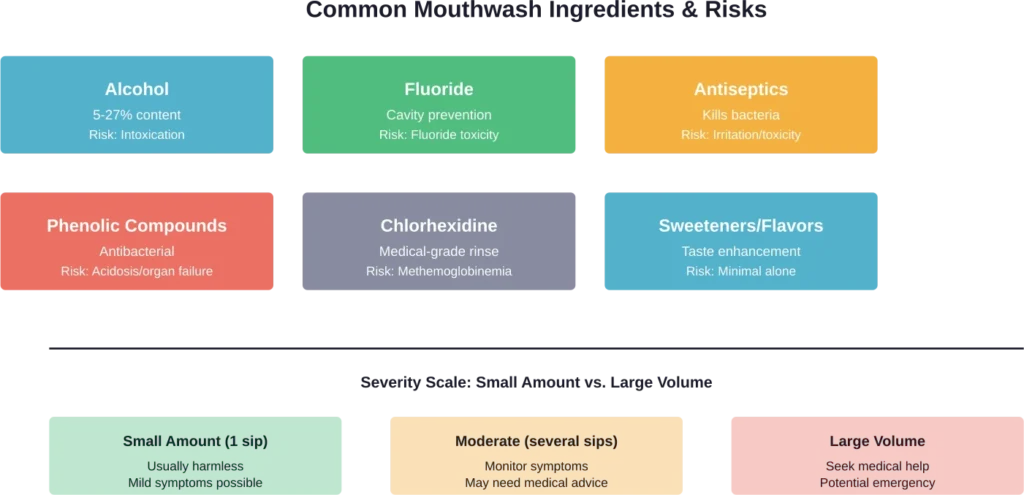
Before diving into what happens when you swallow it, you need to know what mouthwash contains. According to Poison Control, ingredients vary widely but typically include antimicrobial or antiseptic agents, fluoride, alcohol, sweeteners, and flavoring agents.
The alcohol content ranges from around 5% to 27% in products that contain it. That’s comparable to some alcoholic beverages, which explains why large-volume ingestion can cause intoxication.
Fluoride is another key ingredient in many formulations. While excellent for preventing tooth decay when used as directed, it can cause toxicity when swallowed in significant amounts.
Some mouthwashes contain additional ingredients like chlorhexidine (an antibacterial agent), chlorine dioxide, sodium chlorite, or phenolic compounds. Each carries its own risk profile when ingested.
What Happens When You Swallow a Small Amount
According to Poison Control, swallowing a mouthful of mouthwash is generally not harmful. That’s reassuring for the vast majority of accidental ingestions.
A small amount might cause minor stomach upset, mild nausea, or a brief feeling of discomfort. Some people report a burning sensation in the throat or stomach, particularly with alcohol-containing formulations.
The body typically processes these small quantities without intervention. The ingredients get absorbed or pass through the digestive system, and symptoms resolve on their own within a few hours.
That said, “small amount” is key here. We’re talking about accidentally swallowing what remains in your mouth after rinsing—not deliberately drinking the stuff.
The Dangers of Swallowing Large Quantities
Now this is where it gets serious. Large-volume mouthwash ingestion can be genuinely dangerous.
Medical literature has documented severe cases of mouthwash toxicity, including those resulting in death from massive ingestion. Various mouthwash ingredients including alcohol and other compounds can contribute to severe adverse effects at high doses.
Alcohol Toxicity
With alcohol concentrations reaching 27% in some products, drinking a significant amount of mouthwash can cause intoxication. Medical literature documents cases of acute alcohol toxicity in both children and adults from mouthwash ingestion.
Symptoms include dizziness, drowsiness, confusion, slurred speech, and in severe cases, respiratory depression or loss of consciousness.
Fluoride Poisoning
Acute fluoride ingestion can result in nausea, vomiting, diarrhea, and electrolyte abnormalities in the blood. Children are particularly vulnerable to fluoride toxicity due to their lower body weight.
The calculation is straightforward: the toxic dose depends on the fluoride concentration in the product and the amount ingested relative to body weight.
Other Ingredient Risks
Chlorhexidine, when ingested in large amounts (approximately 100 milliliters of a 5% solution), has caused methemoglobinemia—a life-threatening condition where red blood cells can’t carry oxygen properly.
Chlorine dioxide and sodium chlorite, found in some oral rinses, can oxidize red blood cells when consumed in large quantities, similarly impairing oxygen transport.
Symptoms That Should Concern You
Watch for these warning signs after swallowing mouthwash:
- Persistent nausea or repeated vomiting
- Severe abdominal pain or cramping
- Diarrhea that doesn’t resolve
- Dizziness or difficulty maintaining balance
- Confusion or altered mental state
- Difficulty breathing
- Excessive drooling or difficulty swallowing
- Seizures or loss of consciousness
Any of these symptoms warrant immediate medical attention, especially in children.
What to Do If You or Someone Else Swallows Mouthwash
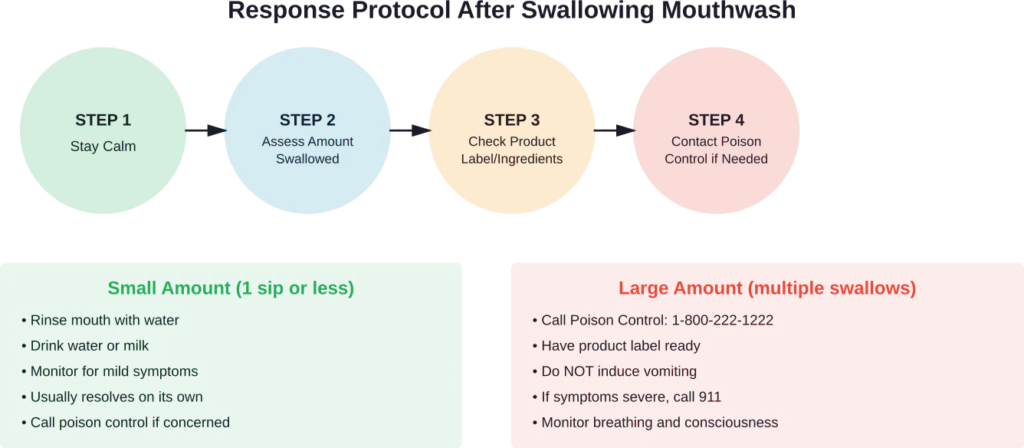
First, don’t panic. Assess the situation calmly.
For small amounts, rinse the mouth with water and have the person drink a small glass of water or milk to dilute any remaining product. Monitor for symptoms over the next few hours.
For larger amounts or if symptoms develop, contact Poison Control immediately at 1-800-222-1222. This service is free, confidential, and staffed by experts who can provide specific guidance based on the product ingredients and amount ingested.
Have the product label ready when you call. Knowing the specific ingredients and concentrations helps poison control specialists give accurate advice.
Do not induce vomiting unless specifically instructed by a medical professional. Some mouthwash ingredients can cause additional harm if they come back up through the esophagus.
If someone collapses, has a seizure, has trouble breathing, or can’t be awakened, call 911 immediately. These are medical emergencies that require hospital intervention.
Children and Mouthwash: Extra Precautions Needed
Children are at higher risk for mouthwash toxicity for several reasons. They have lower body weight, making the toxic dose threshold much lower. They’re also more likely to swallow during rinsing and may be attracted to the bright colors and pleasant flavors.
Mouthwash ingestion by children has been a documented concern in poison control data. Child-resistant packaging requirements have been implemented to reduce accidental ingestion incidents.
But accidental exposure still happens. If a child drinks mouthwash, contact Poison Control immediately, even if they seem fine. Symptoms may not appear right away, and early intervention can prevent serious complications.
| Age Group | Risk Level | Key Concerns | Recommended Action |
|---|---|---|---|
| Under 6 years | High | Low body weight, higher toxicity risk, poor motor control | Supervise closely, call poison control for any ingestion |
| 6-12 years | Moderate | Still developing rinsing skills, curiosity about products | Teach proper use, monitor during rinsing |
| Teens and adults | Low (accidental) | Usually accidental, small amounts | Monitor symptoms, contact poison control if large amount |
Prevention Strategies
Preventing mouthwash ingestion is straightforward with a few simple steps.
Store mouthwash out of reach of children, preferably in a locked cabinet. Choose products with child-resistant caps when available.
Measure out the appropriate amount rather than drinking directly from the bottle. This reduces the temptation to swallow and ensures proper dosing.
Teach children proper rinsing technique. They should learn to spit thoroughly and understand that mouthwash is not meant to be swallowed.
Consider alcohol-free formulations, especially for households with children. These reduce the risk of alcohol toxicity while still providing oral health benefits.
Read product labels carefully. Understanding what’s in your mouthwash helps you assess risk and make informed choices.
When Medical Treatment Becomes Necessary
Most mouthwash ingestion incidents resolve without medical intervention. But some cases require hospital treatment.
Medical care may involve activated charcoal administration to bind ingested toxins, intravenous fluids to maintain hydration and correct electrolyte imbalances, or specific antidotes for certain ingredient toxicities.
In cases of severe alcohol intoxication from mouthwash, respiratory support may be needed. For fluoride toxicity, calcium administration can help counteract the effects.
The rare but documented cases of methemoglobinemia from chlorhexidine ingestion require treatment with methylene blue, a medication that restores the blood’s oxygen-carrying capacity.
These interventions underscore why immediate contact with poison control or emergency services matters when large amounts are ingested or severe symptoms develop.
Frequently Asked Questions
In rare cases involving very large quantities, yes. Medical literature documents fatal cases following massive mouthwash ingestion. However, small accidental swallows are not life-threatening.
This depends on the specific product ingredients and the person’s body weight. Generally, anything more than a mouthful (about 30 mL) warrants contacting poison control. For children, even smaller amounts may be concerning due to their lower body weight.
Call Poison Control immediately at 1-800-222-1222 or call 911 if the child shows severe symptoms like difficulty breathing, seizures, or loss of consciousness. Have the product label ready and follow their instructions precisely.
Potentially, yes. Some mouthwashes contain up to 27% alcohol, which is higher than many beers and wines. Drinking significant amounts can cause intoxication, especially in children or people with low body weight.
Alcohol-free mouthwash eliminates the risk of alcohol toxicity, but other ingredients like fluoride or antiseptic agents can still cause problems if swallowed in large amounts. No mouthwash is safe to drink intentionally.
Initial symptoms typically include nausea, stomach discomfort, or a burning sensation in the throat or stomach. More severe symptoms like vomiting, diarrhea, dizziness, or confusion indicate a more serious ingestion requiring medical attention.
No. Do not induce vomiting unless specifically instructed by a medical professional or poison control specialist. Some mouthwash ingredients can cause additional damage to the esophagus if vomited back up.
The Bottom Line
Mouthwash serves an important role in oral hygiene when used as directed—swish, gargle, and spit. Accidentally swallowing a small amount during normal use isn’t cause for alarm.
But mouthwash is formulated for topical use in the mouth, not for ingestion. The ingredients that make it effective at killing bacteria and freshening breath can be harmful when swallowed in significant quantities.
Understanding what’s in your mouthwash, recognizing warning signs of toxicity, and knowing when to seek help can prevent a minor accident from becoming a medical emergency. Keep products stored safely, supervise children during use, and don’t hesitate to contact poison control if you’re uncertain about a swallowing incident.
Your oral health routine should make you healthier, not put you at risk. Use mouthwash wisely, and if an accident happens, now you know exactly what to do.