
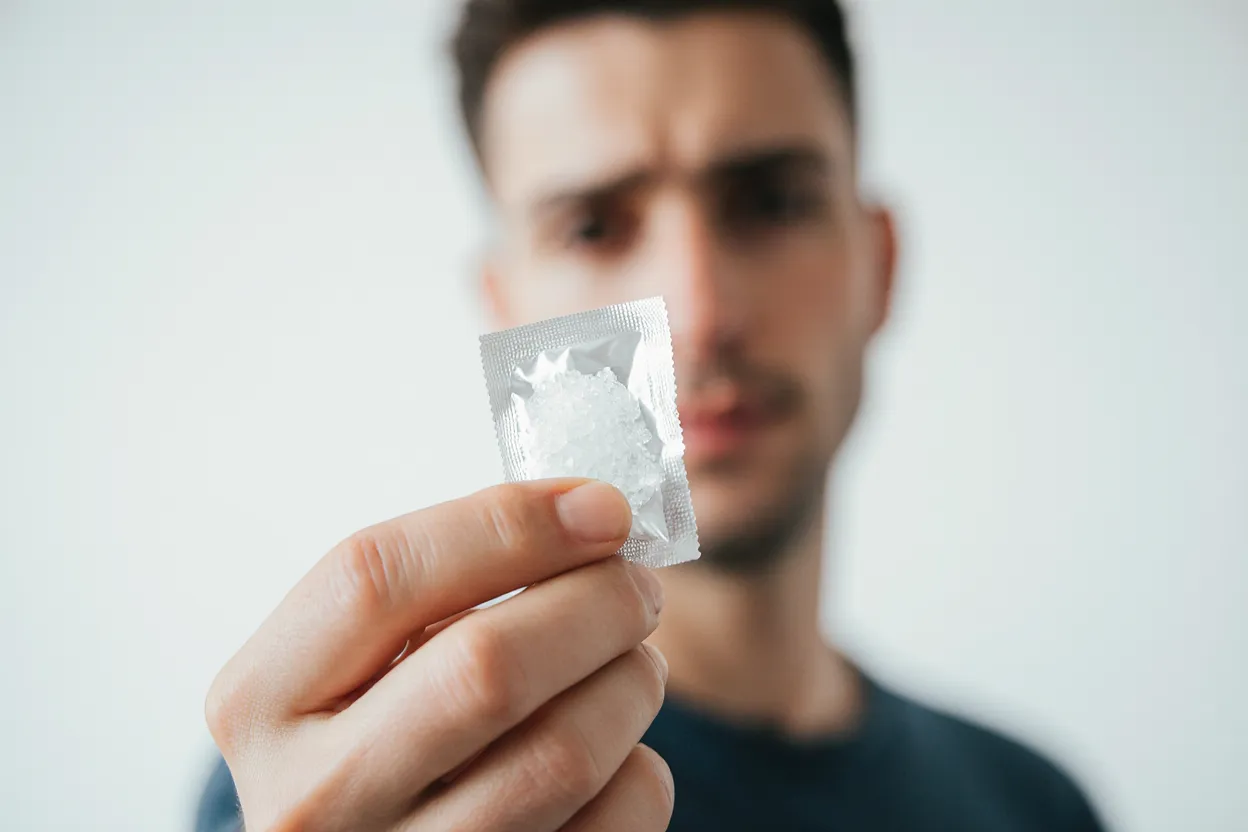
Quick Summary: Silica gel is generally non-toxic and safe if accidentally ingested. According to Poison Control, swallowing a silica gel packet typically won’t cause symptoms unless it creates a choking hazard or, rarely, a digestive blockage. The beads usually pass through the body without harm.
Those little packets that come with new shoes, beef jerky, and electronics have one job: keep moisture away. They also have one very clear warning: DO NOT EAT.
But what actually happens if someone swallows one? The dramatic warning labels featuring skull and crossbones symbols suggest certain doom. The reality? It’s far less scary than the packaging implies.
Here’s the thing though—while silica gel itself is non-toxic, there are still legitimate reasons for those warnings. Let’s break down what really happens when silica gel enters the human body.
What Exactly Is Silica Gel?
Silica gel is a desiccant, which means it absorbs moisture from its surroundings. Despite the name, it’s not actually a gel. The small clear or colored beads are a highly porous form of silicon dioxide—essentially processed sand.
These packets appear in products ranging from medications to food items to consumer electronics. The beads can absorb moisture effectively, preventing spoilage, mold growth, and damage to moisture-sensitive items.
Some silica gel contains cobalt chloride, which changes color from blue to pink when saturated with moisture. According to Poison Control, while cobalt chloride is toxic, the concentration is low (1% or less), making even these blue-indicator packets relatively safe if accidentally ingested.
Is Silica Gel Actually Toxic?
The short answer? No, not really.
According to Poison Control, silica gel is usually considered non-toxic. The American Association of Poison Control Centres reports hundreds of cases of accidental silica gel ingestion each year, overwhelmingly involving children. Most cases result in no symptoms whatsoever.
According to Poison Control, silica gel ingestion occurs overwhelmingly in young children and rarely results in symptoms. The substance doesn’t break down in the digestive system or get absorbed into the bloodstream.
So why the dramatic warnings? The packets themselves—not the beads—present the real danger.

What Actually Happens When Someone Eats Silica Gel
When silica gel beads enter the digestive system, they don’t dissolve or break down. The beads are chemically inert and won’t react with stomach acid or enzymes.
In most cases, the beads simply travel through the gastrointestinal tract and exit the body naturally in stool within 24 to 48 hours. No absorption occurs, and no toxic effects result.
The Real Risks
While the silica gel itself is harmless, there are three legitimate concerns:
Choking hazard: This is the primary danger, especially for young children. The packet itself, or a large number of beads, can lodge in the throat and obstruct the airway. This is a medical emergency requiring immediate attention.
Intestinal blockage: According to Poison Control, a packet may rarely cause a blockage in the digestive tract. This is more likely if someone swallows the entire packet intact or consumes an unusually large quantity of beads. Symptoms would include severe abdominal pain, vomiting, and inability to pass stool.
Mild irritation: Contact with skin or eyes may cause minor irritation. If inhaled as dust, the beads may irritate the respiratory tract. These effects are generally mild and temporary.
Special Cases: Different Types of Desiccants
Not all desiccant packets contain silica gel. Some products use alternative moisture absorbers that can be more dangerous.
| Desiccant Type | Appearance | Toxicity Level | Primary Risk |
|---|---|---|---|
| Silica Gel | Clear or blue beads | Non-toxic | Choking hazard only |
| Calcium Chloride | White pellets or powder | Can cause burns | Gastrointestinal irritation |
| Calcium Oxide | White powder | Caustic | Chemical burns to mouth/throat |
| Activated Charcoal | Black granules | Non-toxic | Minimal risk |
Medical case reports document instances where non-silica gel desiccants caused vomiting and difficulty swallowing in young children. That said, these cases involved non-silica gel desiccants. Standard silica gel packets don’t cause this type of injury.
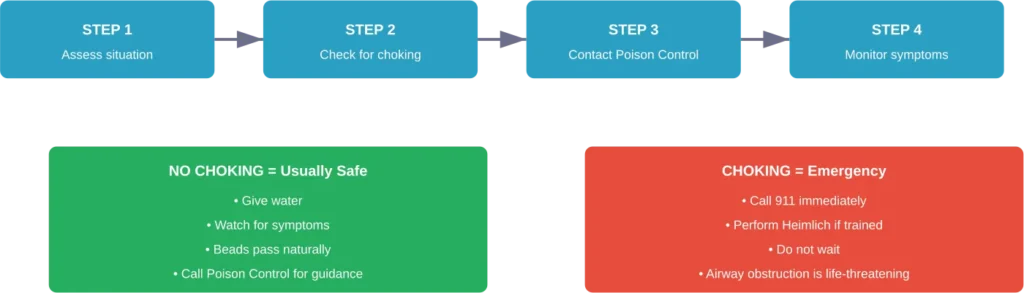
What to Do If Someone Swallows Silica Gel
Real talk: Don’t panic. But do take appropriate action based on the situation.
For small amounts (a few beads): No treatment is typically necessary. The beads will pass naturally. Offer water and monitor for any unusual symptoms.
If choking occurs: This is a medical emergency. Call 911 immediately. If trained, perform the Heimlich maneuver or back blows for infants.
For packet ingestion or larger amounts: Contact Poison Control at 1-800-222-1222 (U.S.) or use the webPOISONCONTROL online tool. They provide free, expert guidance 24/7.
For eye or skin contact: Flush the affected area with room temperature water for 15 minutes. Seek medical attention if irritation persists.
Prevention: Keeping Silica Gel Packets Safe
According to Poison Control, the best approach is prevention. Store products containing silica gel packets out of reach of children—up, away, and out of sight.
When opening a new product, immediately remove and discard the silica gel packet in a secure trash container. Don’t leave packets lying around where curious children or pets might find them.
The dramatic warning labels exist precisely because the packets resemble food seasoning packets. Children who can’t read or understand the warnings are at particular risk.
Frequently Asked Questions
Silica gel typically passes through the digestive system within 24 to 48 hours. The beads don’t dissolve or break down—they exit the body unchanged in stool. No special treatment is needed to speed this process.
No. Silica gel itself is non-toxic and won’t cause death if swallowed. However, choking on the packet is a serious risk that requires emergency medical attention. The warning labels primarily address the choking hazard, not toxicity.
The same principles apply to pets. Silica gel is generally non-toxic to dogs and cats. The main risks are choking or intestinal blockage, particularly in small animals. Contact a veterinarian if a pet consumes a large amount or shows symptoms like vomiting or lethargy.
Blue silica gel contains cobalt chloride, which is toxic in large amounts. However, Poison Control notes the concentration is low (1% or less), making accidental ingestion relatively safe. Modern manufacturers increasingly use cobalt-free color indicators due to safety concerns.
Seek immediate medical attention if someone who swallowed silica gel experiences difficulty breathing, severe abdominal pain, persistent vomiting, inability to pass stool, or signs of intestinal blockage. These symptoms suggest complications beyond simple ingestion.
No. Do not induce vomiting. This can cause additional complications, including choking or aspiration. Contact Poison Control for guidance instead of attempting home treatments.
Standard silica gel doesn’t cause chemical burns or damage to the gastrointestinal tract. It’s chemically inert and doesn’t react with body tissues. Other desiccants like calcium oxide can cause burns, but silica gel specifically does not have this risk.
The Bottom Line
The dire warnings on silica gel packets are more about liability and choking prevention than actual toxicity. According to Poison Control and medical research, silica gel is non-toxic and rarely causes symptoms when accidentally swallowed.
But here’s what matters: the packet wrapper poses a genuine choking risk, especially for children. Large amounts could theoretically cause intestinal blockage. And not all desiccant packets contain harmless silica gel—some use caustic chemicals that can cause burns.
If someone swallows silica gel, stay calm and assess the situation. Contact Poison Control at 1-800-222-1222 for expert guidance. If choking occurs, treat it as the medical emergency it is.
Prevention remains the best strategy. Store these packets safely and discard them immediately when opening new products. The warnings exist for good reasons—even if silica gel itself won’t poison anyone.