

Quick Summary: Swallowing a tonsil stone is completely harmless and causes no health problems. These small calcified formations pass through your digestive system naturally without causing damage. While they may taste unpleasant, tonsil stones are not toxic and won’t harm your throat, stomach, or intestines.
Ever coughed up something small and white from the back of your throat? If you’ve accidentally swallowed a tonsil stone, you’re probably wondering what’s happening inside your body right now.
Here’s the thing though—tonsil stones are far more common than most people realize. According to Northwestern Medicine, patients often notice these small, pebble-like formations when examining their throats. Many people swallow them without even knowing.
Let’s break down exactly what happens when a tonsil stone goes down your throat and why there’s no reason to panic.
What Are Tonsil Stones Anyway?
Tonsil stones, medically known as tonsilloliths, are small, hardened lumps that form in the tiny pockets of your tonsils. According to Cleveland Clinic, these formations consist of calcium, bits of food, bacteria, and dead cells that accumulate over time.
Think of them as calcified debris. Your tonsils have small crevices where material can get trapped. When this debris hardens and mineralizes, it creates those white or yellowish pebbles you might spot at the back of your throat.
Most tonsil stones are quite small—about the size of a grain of rice. Some can grow larger, but they typically remain harmless regardless of size.
The Real Answer: What Happens When You Swallow One
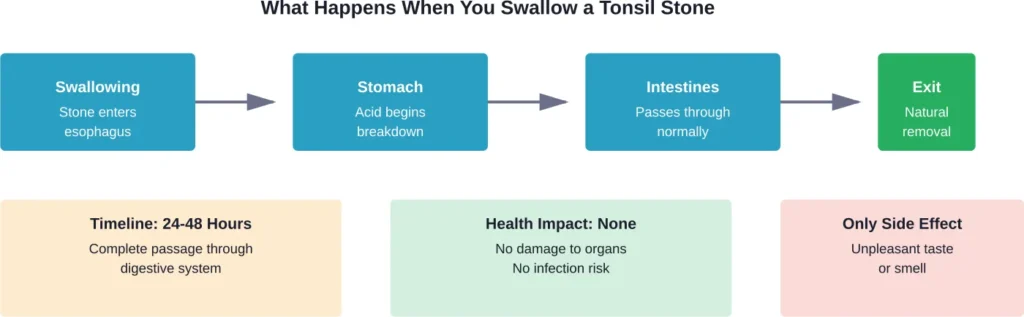
Absolutely nothing dangerous occurs when you swallow a tonsil stone.
These formations simply pass through your digestive system like any other small piece of food. Your stomach acid breaks down whatever can be dissolved, and the rest moves through your intestines and exits your body naturally.
Many people report having unknowingly swallowed tonsil stones without experiencing health issues. The stones don’t cause blockages, don’t damage your esophagus, and don’t create infections in your digestive tract.
The worst part? The taste. Tonsil stones often have an unpleasant odor and flavor due to the bacteria they contain. But that’s merely a sensory experience, not a health risk.
Are Tonsil Stones Dangerous?
According to Cleveland Clinic, tonsil stones are not harmful. Whether they stay in place or get swallowed, these formations don’t pose significant health risks.
The main issues tonsil stones cause include bad breath, minor throat discomfort, and the sensation that something is stuck in your throat. Larger stones might create swallowing difficulties or visible white spots that some find concerning.
But here’s what tonsil stones don’t do: they don’t cause cancer, they don’t create serious infections when swallowed, and they don’t damage internal organs.
Healthdirect confirms that small tonsil stones usually don’t cause problems. Even larger ones are more of a nuisance than a genuine health threat.
When Should You Actually Worry?
While swallowing tonsil stones is harmless, persistent tonsil issues might signal something worth addressing. Mayo Clinic recommends seeing a healthcare professional if experiencing a sore throat with fever, painful swallowing, or symptoms lasting beyond 48 hours.
Research published in BMJ Case Reports demonstrates that severe tonsil-related complications exist, though they’re extremely rare. A case from 2021 described acute upper airway obstruction due to tonsillitis—but this involved severe inflammation, not tonsil stones themselves.
Common Symptoms of Tonsil Stones
Most people with tonsil stones experience at least one of these symptoms:
- Persistent bad breath that doesn’t improve with regular brushing
- White or yellow spots visible on the tonsils
- Difficulty swallowing or sensation of something caught in the throat
- Occasional coughing that dislodges small white formations
- Mild sore throat or ear pain on the affected side
Northwestern Medicine notes that many patients discover tonsil stones simply by noticing white or yellow spots when examining their throats.
What Causes These Formations?
Tonsil stones form when debris accumulates in the crypts (small pockets) of your tonsils. Several factors contribute to their development:
| Contributing Factor | How It Leads to Tonsil Stones |
|---|---|
| Poor oral hygiene | Allows more bacteria and food particles to accumulate |
| Large tonsil crypts | Provides more spaces for debris to become trapped |
| Chronic tonsillitis | Creates inflammation that makes crypts larger |
| Dry mouth | Reduces saliva that naturally cleans the throat |
| Diet | Certain foods may stick more easily in crevices |
Interestingly, research published in Obstetric Medicine from 2023 suggests that pregnancy may increase tonsil stone formation, though more research is needed to understand this connection fully.
Should You Remove Them or Let Them Fall Out?
Tonsil stones often dislodge on their own. Coughing, eating, or normal throat movements can cause them to break free. When this happens, swallowing them is perfectly safe.
For stones that don’t come out naturally, several removal options exist:
At-Home Removal Methods
Gargling with salt water can help loosen tonsil stones. Mix half a teaspoon of salt in warm water and gargle several times daily.
Some people use a cotton swab to gently dislodge visible stones. This requires care to avoid triggering the gag reflex or damaging delicate throat tissue.
Water flossers set to low pressure can flush out stones without direct contact.
Professional Treatment
For recurring or problematic tonsil stones, healthcare providers might recommend different approaches. Delta Dental of South Dakota notes that good oral hygiene remains the first line of defense.
In severe cases where stones form frequently and cause significant issues, tonsillectomy (surgical removal of the tonsils) becomes an option. According to the Institute for Quality and Efficiency in Health Care (IQWiG), this surgery carries risks including bleeding and wound healing problems, so it’s typically reserved for recurrent cases that significantly impact quality of life.
Patient reports on Mayo Clinic Connect describe excessive tonsil stone formation as motivation for tonsillectomy, though post-surgery complications like taste distortion and persistent throat sensations can occur.
Prevention Strategies That Actually Work
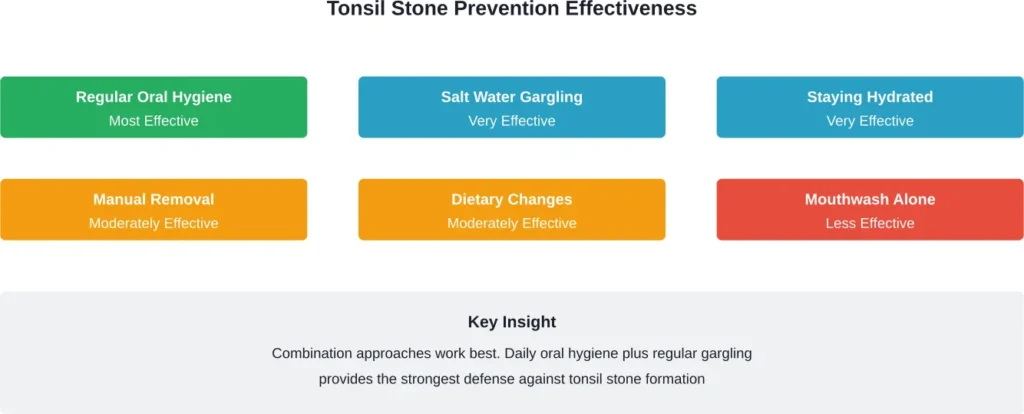
According to Healthdirect, good oral hygiene helps treat and prevent tonsil stones. Here’s what makes a real difference:
- Brush teeth twice daily, including the tongue and back of the mouth
- Floss regularly to reduce bacteria buildup
- Use an alcohol-free mouthwash to minimize bacteria without drying the mouth
- Stay hydrated throughout the day to maintain saliva production
- Gargle with salt water after meals
These habits won’t necessarily prevent all tonsil stones—some people are simply more prone to them due to tonsil anatomy—but they can reduce frequency and size.
Frequently Asked Questions
No, swallowing tonsil stones cannot make you sick. They pass through your digestive system harmlessly without causing infections or illness. The bacteria in tonsil stones are neutralized by stomach acid.
A swallowed tonsil stone typically passes through the digestive system within 24 to 48 hours, similar to other small, indigestible materials. The exact timing varies based on individual digestive speed.
Tonsil stones smell bad because they contain bacteria that produce sulfur compounds. These same compounds cause bad breath. The combination of dead cells, food debris, and bacteria creates the characteristic unpleasant odor.
Small tonsil stones that don’t cause symptoms can be left alone. They often dislodge naturally. Remove stones only if they cause bad breath, discomfort, or other bothersome symptoms. Aggressive removal attempts can damage throat tissue.
No, tonsil stones don’t indicate a weak immune system. Research indicates there is no data demonstrating significant changes in the systemic immune system after tonsillectomy. Tonsil stones are simply a result of debris accumulation in tonsil crypts.
Yes, children can swallow tonsil stones just as safely as adults. The stones pose no choking hazard when swallowed normally and pass through a child’s digestive system without causing harm.
Yes, tonsillectomy permanently prevents tonsil stones since the tonsils are removed entirely. However, IQWiG research indicates this surgery carries risks and is typically recommended only for severe, recurrent cases that significantly impact daily life.
The Bottom Line
Swallowing a tonsil stone is completely safe. These small calcified formations simply pass through your digestive system without causing damage or infection.
While tonsil stones can be annoying—causing bad breath and throat discomfort—they’re not dangerous whether they stay in your tonsils or get swallowed. Focus on good oral hygiene to reduce their formation rather than worrying about occasional swallowing.
If tonsil stones become a persistent problem affecting your quality of life, consult a healthcare professional. Otherwise, rest easy knowing that accidentally swallowing one is no cause for concern.