

Quick Summary: Drinking urine is not safe or beneficial. Urine contains waste products like urea and creatinine that your kidneys have already filtered out, along with bacteria. Consuming it can cause dehydration, electrolyte imbalances, infections, and introduce harmful toxins back into your body. There’s no scientific evidence supporting claimed health benefits of urine therapy.
The idea of drinking urine has circulated through survival scenarios, alternative medicine circles, and even social media trends. Some people claim urine therapy offers health benefits. Others wonder if drinking pee could help in emergencies.
But here’s the thing—your body expels urine for a reason. It’s waste material containing compounds your kidneys have already filtered out. So what actually happens when someone consumes it?
Let’s examine what science and medical research reveal about drinking urine.
What Is Urine and What Does It Contain?
Urine is the liquid waste product created by the kidneys as they filter blood. The kidneys remove excess water, salts, and metabolic byproducts, sending them through the ureters to the bladder for storage until elimination.
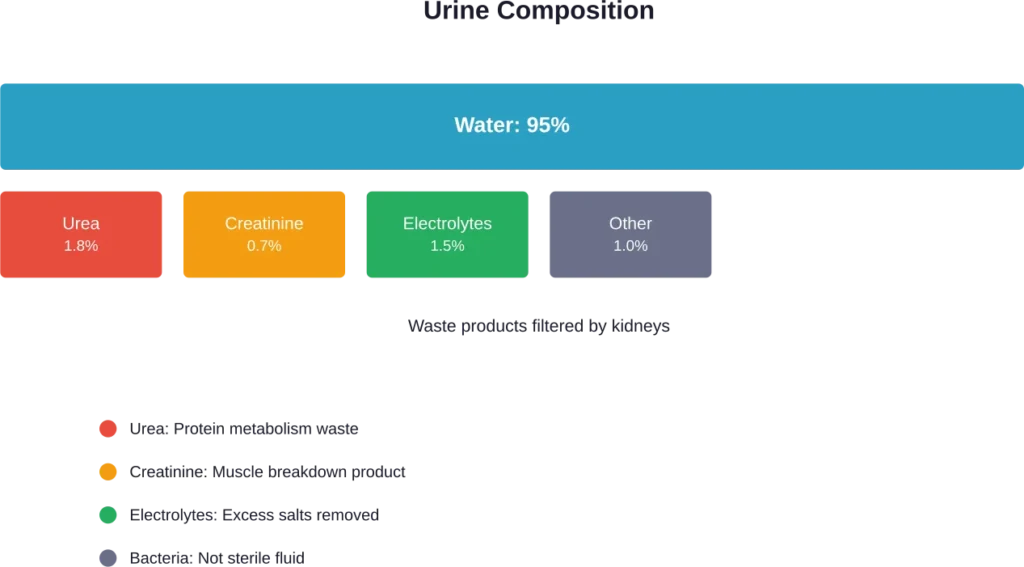
According to medical sources, urine consists of approximately 95% water mixed with various dissolved substances. The remaining 5% contains urea, creatinine, electrolytes (sodium, potassium, chloride), and other compounds the body needs to eliminate.
Human urine is slightly acidic with a normal pH value around 6 (neutral pH is 7). The exact composition varies based on hydration levels, diet, medications, and overall health status.
Is Urine Actually Sterile?
A common myth claims that urine is sterile. This isn’t accurate.
Urine contains bacteria, even in healthy individuals. While the bladder maintains relatively low bacterial counts under normal conditions, urine isn’t a sterile fluid. Research shows that the urinary tract has its own microbiome, and bacteria can be present throughout the system.
This matters because drinking urine means consuming whatever bacteria it contains. Cross-contamination during collection adds additional microbial exposure.
What Happens When You Drink Urine?
Consuming urine forces the body to reprocess waste it has already expelled. This creates several immediate and potential long-term problems.
Dehydration and Electrolyte Imbalance
Here’s where the survival myth falls apart. Drinking urine doesn’t hydrate—it dehydrates.
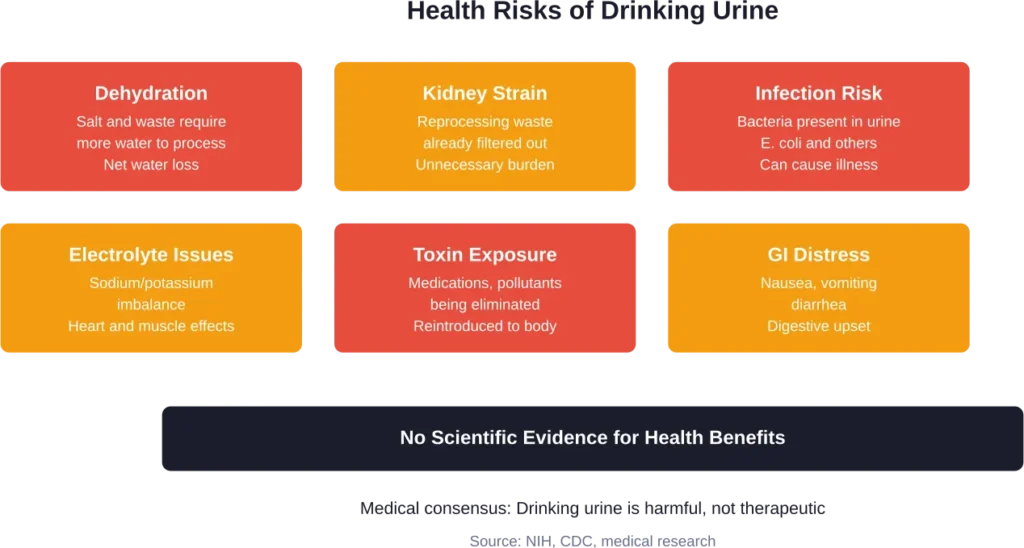
The salt content and waste products in urine require additional water for the kidneys to process and eliminate again. This creates a net water loss. In survival situations where hydration is critical, drinking urine accelerates dehydration rather than preventing it.
The electrolyte concentration can also disrupt sodium and potassium balance. According to NIH research on water toxicity, electrolyte imbalances can cause symptoms ranging from nausea to serious complications like seizures in severe cases.
Reintroduction of Waste Products
Urea and creatinine are metabolic waste products. The kidneys filter them from blood specifically because elevated levels are harmful.
Drinking urine reintroduces these compounds, forcing the kidneys to filter them repeatedly. This creates unnecessary strain on kidney function. For individuals with existing kidney disease or damage, this added burden can worsen their condition.
Research indicates that the kidneys can lose up to one-third of nephrons (filtering units) before showing noticeable functional decline. Repeatedly challenging them with reprocessed waste isn’t beneficial—it’s counterproductive.
Infection Risk
Since urine contains bacteria, drinking it introduces those microorganisms to the digestive system. While stomach acid kills many bacteria, some can survive or cause infections.
The Centers for Disease Control notes that bacteria can spread through contact with urine, particularly harmful strains like E. coli. E. coli and related bacteria found in urinary environments can cause gastrointestinal illness when ingested, according to medical sources.
Contact with urine can transmit diseases like leptospirosis, a bacterial infection spread through urine from infected animals or humans. Risk increases after floods or natural disasters when contaminated water mixes with urine.
Toxin Accumulation
Urine can contain medications, drugs, environmental toxins, and other substances the body is trying to eliminate. Drinking it reintroduces these compounds.
If someone takes prescription medications, many are excreted partially through urine. Consuming urine means getting an uncontrolled, unpredictable dose of whatever medications or metabolites it contains. The same applies to environmental pollutants or nephrotoxic substances.
Research indicates that many environmental and industrial pollutants appear well-tolerated at low doses but can cause kidney damage at higher concentrations. Recycling these toxins through repeated consumption is dangerous.
| Health Claim | Reality | Medical Evidence |
|---|---|---|
| Urine is sterile and safe | False | Contains bacteria; not sterile |
| Drinking urine hydrates you | False | Causes net water loss and dehydration |
| Urine therapy cures diseases | Unsupported | No scientific evidence for health benefits |
| Safe for wound treatment | False | Can introduce bacteria and cause infection |
| Good for jellyfish stings | False | May increase pain; not recommended |
Why Do Some People Drink Urine?
Despite medical evidence against it, urine therapy has historical roots and modern advocates. Some alternative medicine practitioners claim drinking urine boosts immunity, treats infections, or provides other health benefits.
These claims lack scientific support. No credible research demonstrates health benefits from consuming urine. The practice persists largely through anecdotal reports and alternative health communities rather than evidence-based medicine.
In survival scenarios, desperate circumstances sometimes lead people to consider drinking urine when no water is available. But survival experts and medical professionals advise against it because it worsens dehydration.
Potential Dangers and Side Effects
Short-term effects of drinking urine typically include nausea, vomiting, and diarrhea as the digestive system reacts to the waste products and bacteria.
Longer-term or repeated consumption can lead to more serious complications:
- Progressive dehydration and kidney strain
- Electrolyte imbalances affecting heart rhythm and muscle function
- Accumulation of urea and other waste products in blood
- Urinary tract or gastrointestinal infections
- Exposure to medications or toxins being eliminated
For children, the risks are even greater. If a child accidentally drinks urine, contact poison control immediately. While small amounts typically cause only mild stomach upset, monitoring is important to catch any developing problems.
What About Other Urine Uses?
Beyond drinking, some people apply urine topically or use it in other ways. These practices also lack scientific backing.
For wounds: Applying urine to open wounds can introduce bacteria and increase infection risk. Medical professionals advise against this practice.
For jellyfish stings: The common belief that urine helps jellyfish stings is false. Research shows urine may actually increase pain. Vinegar or hot water are more appropriate treatments depending on the jellyfish species.
For skin conditions: Some claim urine therapy improves skin health. No credible dermatological research supports this. Standard skincare products are safer and more effective.
For eye infections: Never put urine in eyes. This can cause serious eye infections and damage. If urine accidentally enters the eye, rinse immediately with clean water.
Frequently Asked Questions
No. Drinking urine accelerates dehydration rather than preventing it. The salt and waste content requires additional water to process, creating net water loss. Survival experts recommend finding other water sources or using proper purification methods instead.
Morning urine is more concentrated because the body hasn’t taken in fluids overnight. This makes it higher in waste products and salts—even less suitable for consumption than dilute urine. The concentration doesn’t provide benefits; it increases the potential harm.
Contact poison control immediately. Small amounts typically cause mild stomach upset, but professional guidance ensures proper monitoring. Watch for symptoms like vomiting, diarrhea, or unusual behavior. Most accidental exposures resolve without serious complications, but medical advice is important.
Medically, urine is valuable for diagnostic testing—urinalysis provides important health information. Some pharmaceutical products are derived from urine compounds, but these undergo extensive processing and purification. There’s no evidence supporting direct consumption or topical application of unprocessed urine.
While urine is 95% water, it also contains concentrated salts and waste products. Processing these substances requires the kidneys to use additional water. The body expends more water eliminating the waste than it gains from the water content, resulting in net dehydration.
Yes. According to the CDC, urine can transmit bacterial infections including leptospirosis and E. coli. Urine from infected individuals may contain pathogens that cause illness when contacted or ingested. This is particularly concerning after natural disasters when contaminated water mixes with human or animal urine.
Urine is not sterile—this is a persistent myth. Research shows urine contains bacteria even in healthy individuals. Additionally, even if urine were sterile, it would still contain waste products like urea and creatinine that stress the kidneys and provide no nutritional or hydration benefit.
The Bottom Line
Drinking urine is neither safe nor beneficial. Medical science is clear: urine contains waste products and bacteria that the body intentionally expels.
Consuming it causes dehydration, introduces unnecessary strain on kidneys, risks infection, and reintroduces toxins the body is trying to eliminate. The water content doesn’t offset these harms—it actually requires more water to process the waste, creating net fluid loss.
No credible research supports health claims about urine therapy. Alternative medicine advocates may promote it, but evidence-based medicine consistently advises against the practice.
If someone has accidentally consumed urine or is considering it for any reason, consulting a healthcare provider or contacting poison control is the appropriate response. For survival hydration, seeking clean water sources or using proper purification methods is always safer than drinking urine.
Your kidneys work constantly to filter waste from blood and maintain the body’s chemical balance. Trust that system—when your body eliminates something, there’s a good reason.