

Quick Summary: Taking too much zinc can cause nausea, vomiting, diarrhea, stomach cramps, headaches, and reduced immune function. The most serious long-term consequence is zinc-induced copper deficiency, which can lead to anemia, neurological damage, and potentially fatal outcomes. The tolerable upper intake level is 40 mg daily for adults; exceeding this regularly increases health risks.
Zinc is absolutely essential for good health. It helps your immune system fight off invading bacteria and viruses, supports wound healing, and plays a role in over 100 chemical reactions in your body.
But here’s the thing: more isn’t always better.
While zinc deficiency gets a lot of attention, zinc toxicity is a real and potentially dangerous problem. The line between beneficial supplementation and harmful excess can be surprisingly thin, especially for people taking high-dose supplements or using certain denture adhesives and ointments.
According to StatPearls, zinc is considered an essential mineral necessary to produce hundreds of enzymes throughout the body. When levels climb too high, serious complications can develop.
How Much Zinc Is Too Much?
The recommended daily intake varies based on age and life stage. For men aged 19 and older, the recommended amount is 11 mg daily. For women aged 19 and older who are not pregnant, 8 mg daily is recommended, increasing during pregnancy and breastfeeding.
The tolerable upper intake level—the maximum amount unlikely to cause adverse effects—is 40 mg daily for adults.
| Age Group | Recommended Daily Amount | Upper Limit |
|---|---|---|
| Birth to 6 months | 2 mg | 4 mg |
| Infants 7-12 months | 3 mg | 5 mg |
| Children 1-3 years | 3 mg | 7 mg |
| Children 4-8 years | 5 mg | 12 mg |
| Children 9-13 years | 8 mg | 23 mg |
| Teens 14-18 years (male) | 11 mg | 34 mg |
| Teens 14-18 years (female) | 9 mg | 34 mg |
| Adults (male) | 11 mg | 40 mg |
| Adults (female) | 8 mg | 40 mg |
Most people who eat a healthy, varied diet get enough zinc from foods like beef, chicken, seafood (especially oysters), fortified cereals, beans, and nuts. Problems typically arise from excessive supplementation or unusual exposure sources.
Immediate Signs of Zinc Overdose
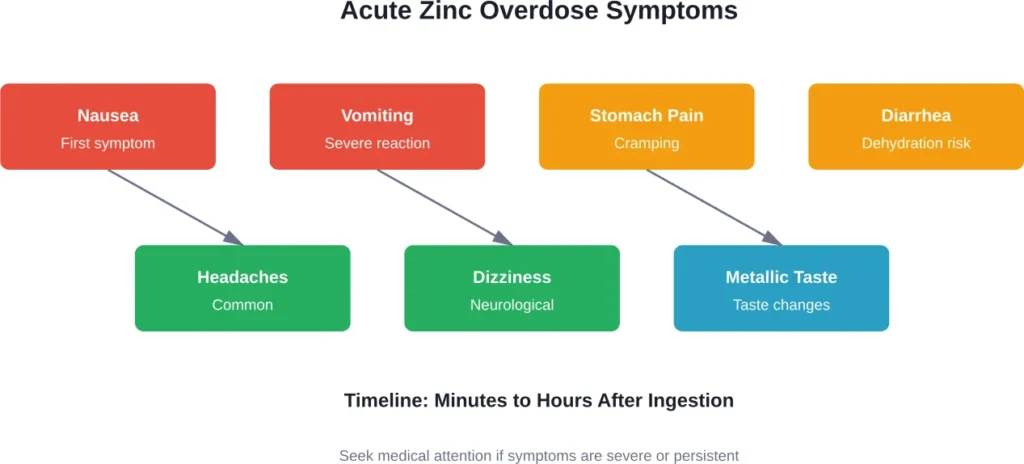
When someone takes too much zinc at once, symptoms can appear quickly. These acute reactions serve as the body’s warning system.
Nausea and Vomiting
This is often the first sign something’s wrong. Taking zinc supplements on an empty stomach makes this worse. The digestive system rebels against the excessive mineral load, triggering nausea that can progress to actual vomiting.
Stomach Pain and Diarrhea
Abdominal cramping and diarrhea commonly accompany zinc overdose. The gastrointestinal tract becomes irritated, leading to pain and loose stools. These symptoms can be severe enough to cause dehydration if not addressed.
Headaches and Dizziness
Many people report headaches after taking too much zinc. Some also experience dizziness or a general feeling of being unwell. These neurological symptoms indicate the body is struggling to process the excess mineral.
Chronic Effects of Excessive Zinc Intake
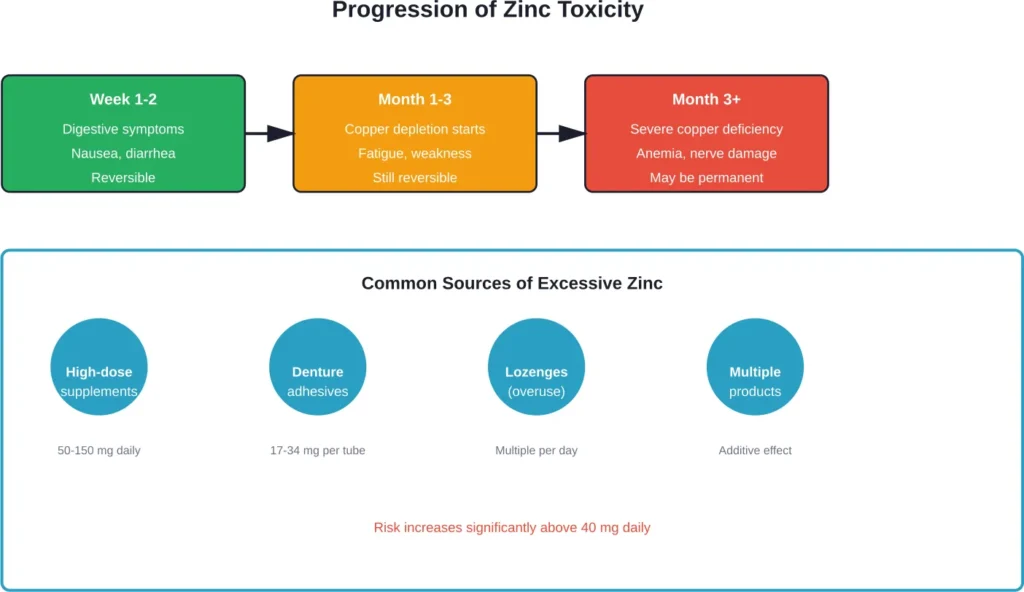
The real danger comes from prolonged excessive zinc consumption. Over weeks and months, high zinc intake creates serious health problems that can become life-threatening.
Zinc-Induced Copper Deficiency
This is the most significant long-term complication. Zinc and copper compete for absorption in the digestive system. When zinc levels are consistently high, copper absorption drops dramatically.
According to research published in Cureus, zinc-induced copper deficiency can cause neurological deficits and anemia. The condition is particularly concerning in elderly populations where it may be overlooked.
Medical literature documents cases of copper deficiency from excessive daily oral zinc supplementation.
Anemia and Blood Disorders
Copper is essential for iron metabolism and red blood cell production. Without adequate copper, anemia develops even when iron intake is sufficient. This type of anemia doesn’t respond to iron supplementation—copper levels must be restored first.
White blood cell counts can also drop, leading to leukopenia and neutropenia. These conditions compromise the immune system’s ability to fight infections.
Neurological Damage
Copper deficiency from excessive zinc can cause serious neurological problems. Symptoms include numbness and weakness in the arms and legs, difficulty walking, and balance problems.
In severe cases documented in medical literature, patients have experienced permanent nerve damage. Some cases involved people using zinc-based denture adhesives excessively for years without realizing the danger.
Reduced Immune Function
Paradoxically, while small amounts of zinc support immune health, too much zinc suppresses immune function. High zinc intake interferes with the production of white blood cells and reduces the body’s ability to fight off infections.
People taking excessive zinc supplements may find themselves getting sick more frequently—the opposite of what they were trying to achieve.
Low HDL Cholesterol
High zinc intake can reduce HDL cholesterol. This effect may occur with excessive zinc intake.
Special Cases and Unusual Sources
Zinc toxicity doesn’t always come from supplements. Several unusual cases have been documented in medical literature.
Denture Adhesive Toxicity
Multiple cases have been reported from excessive use of zinc-based denture adhesives. Cases have been documented where patients used far more adhesive than recommended, sometimes an entire tube per day for years.
These individuals developed severe copper deficiency leading to serious complications. Improved warnings on denture adhesive products have helped, but the risk remains for those who overuse these products.
Coin Ingestion
Modern U.S. pennies contain high zinc content. Case reports document zinc toxicity from massive coin ingestion, particularly in psychiatric patients with pica. Coin ingestion cases have been documented in medical literature. The zinc dissolved in stomach acid, leading to severe toxicity.
Inhalational Exposure
According to StatPearls, inhalational toxicity can occur in industrial settings. Metalworkers exposed to zinc oxide fumes can develop “metal fume fever” with symptoms including metallic taste, fever, headache, chest pain, and shortness of breath appearing 4 to 12 hours after exposure.
Smoke bombs containing zinc chloride have caused acute respiratory distress syndrome in some cases.
What to Do If You’ve Taken Too Much Zinc
If acute zinc overdose is suspected, several steps should be taken immediately.
Stop taking zinc supplements right away. For mild symptoms like nausea or diarrhea, discontinuing zinc and staying hydrated may be sufficient. Symptoms typically resolve within 12 to 24 hours.
For severe symptoms—persistent vomiting, severe abdominal pain, difficulty breathing, or signs of dehydration—seek emergency medical care. Call poison control at 1-800-222-1222 or go to the emergency room.
According to MedlinePlus, medical treatment may include supportive care to manage symptoms and prevent dehydration. In cases of chronic excess, copper supplementation may be necessary to restore copper levels.
Blood tests can measure zinc and copper levels to assess the severity of the imbalance. Treatment focuses on discontinuing zinc exposure and correcting the resulting copper deficiency.
Safe Zinc Supplementation Guidelines
Zinc supplements can be beneficial when used appropriately. Following these guidelines reduces the risk of toxicity.
Don’t exceed the tolerable upper limit of 40 mg daily unless under medical supervision. Most people need only 8-11 mg daily from all sources combined.
Take zinc with food to reduce gastrointestinal side effects. Empty-stomach dosing increases nausea risk significantly.
Be aware of zinc content in all products used. Multivitamins, cold remedies, topical creams, and denture adhesives can all contribute to total zinc intake. The combined effect matters.
For cold treatment, zinc lozenges are generally used for short periods (less than two weeks). Extended use increases toxicity risk.
Consider periodic monitoring if taking zinc supplements long-term. Blood tests for zinc and copper levels can detect problems before serious symptoms develop.
| Zinc Intake Level | Daily Amount | Safety Status |
|---|---|---|
| Normal dietary intake | 8-11 mg | Safe for daily consumption |
| Therapeutic supplementation | 15-30 mg | Generally safe short-term |
| Upper limit | 40 mg | Maximum safe daily amount |
| Excessive intake | 50-150 mg | Risk of copper deficiency |
| Acute toxicity | 150+ mg | Immediate symptoms likely |
Who’s at Higher Risk?
Certain groups face increased vulnerability to zinc toxicity.
Elderly individuals using denture adhesives daily may unknowingly consume excessive zinc, especially if they use more adhesive than recommended.
People taking multiple supplements without checking zinc content across products can accidentally exceed safe limits. Cold season is particularly risky when zinc lozenges are added to daily multivitamins.
Those with psychiatric conditions involving pica may ingest non-food items containing zinc, such as pennies or other metal objects.
Individuals working in metalworking, welding, or industrial settings face inhalational exposure risks.
Frequently Asked Questions
Acute symptoms like nausea and vomiting can appear within 30 minutes to a few hours after taking excessive zinc. Chronic effects like copper deficiency develop over weeks to months of sustained excessive intake.
Most people recover fully from acute zinc overdose once they stop taking zinc. Early-stage copper deficiency is reversible with copper supplementation. However, severe neurological damage from long-term copper deficiency may be permanent.
The tolerable upper intake level for adults is 40 mg daily. Amounts above this increase the risk of adverse effects, particularly copper deficiency with chronic use.
Yes. Zinc can reduce the absorption of certain antibiotics, particularly tetracyclines and quinolones. It also interferes with penicillamine and may affect the effectiveness of some diuretics. Take zinc at least two hours apart from these medications.
Taking zinc at recommended doses (8-11 mg daily) is safe for most people. Higher doses up to 40 mg can be safe but should be discussed with a healthcare provider, especially for long-term use.
Oysters contain more zinc per serving than any other food. Other excellent sources include red meat, crab, lobster, fortified breakfast cereals, beans, nuts, and whole grains. A varied diet typically provides adequate zinc without supplementation.
Blood tests measuring serum zinc and copper levels confirm the diagnosis. A detailed history of supplement use, medication, and potential exposure sources helps identify the cause. Complete blood counts may reveal anemia or reduced white blood cell counts.
The Bottom Line
Zinc is essential for health, but the window between beneficial and harmful is narrower than many people realize.
The tolerable upper limit of 40 mg daily exists for good reason. Exceeding it regularly sets the stage for copper deficiency, which can cause anemia, immune suppression, and permanent neurological damage.
Most cases of zinc toxicity are preventable. Check supplement labels, be aware of zinc content in cold remedies and other products, and don’t assume more is better when it comes to this trace mineral.
If experiencing persistent digestive symptoms, unexplained weakness, or neurological changes while taking zinc supplements, consult a healthcare provider. Early detection and treatment make all the difference in preventing permanent complications.