
Quick Summary: Skipping the rice wash won’t make you sick, but it affects your final dish. Unwashed rice contains surface starch that makes grains sticky and clumpy—great for sushi, problematic for pilaf. Rinsing removes debris and excess starch, giving you fluffier, separate grains for most cooking methods.
The rice debate continues. Some cooks wouldn’t dream of skipping the rinse. Others toss dry grains straight into the pot without a second thought.
So what actually happens when rice goes unwashed? The answer depends on what’s sitting on the counter and what’s headed to the table.
The Starch Situation
Rice grains carry surface starch from processing and packaging. This powdery coating becomes sticky when wet, causing grains to clump together during cooking.
Unwashed rice produces a stickier, more cohesive texture. For dishes like sushi or risotto, that’s exactly what’s needed. The starch creates the creamy, binding quality that makes these dishes work.
But for fried rice, pilaf, or biryani? That starchiness becomes a problem. Grains stick together instead of staying separate and fluffy.

Does It Actually Matter for Safety?
Here’s where things get interesting. Rinsing removes surface debris—dust, processing residue, and occasional particles that accumulate during packaging.
But washing doesn’t significantly reduce potential contaminants absorbed during growth. According to USDA research on arsenic levels in rice, rinsing removes circa 10% of total and inorganic arsenic from basmati rice, but was less effective for other rice types. The cooking method matters far more than the rinse.
High-volume cooking (using 6:1 water-to-rice ratio and draining excess) effectively removes both total and inorganic arsenic for long-grain and basmati rice by approximately 35% and 45% respectively, compared to uncooked rice. The FDA has established an action level of 100 micrograms per kilogram (100 parts per billion) for inorganic arsenic in infant rice cereals. Research indicates inorganic arsenic levels vary among rice samples from 23 to 249 ppb.
Cross-contamination presents a different concern. The USDA emphasizes that washing food doesn’t necessarily promote food safety. In fact, washing some foods can spread bacteria. According to the CDC, foodborne illness-causing bacteria can remain on kitchen surfaces for extended periods—Campylobacter can survive in your kitchen for up to 4 hours and Salmonella can last for up to 32 hours.
The key? Clean hands and surfaces matter more than rinsing the rice itself.
When the Type of Rice Changes Everything
Not all rice carries the same starch load. Different varieties behave differently when unwashed.
| Rice Type | Starch Content | Unwashed Result | Wash It? |
|---|---|---|---|
| Basmati | Low-medium | Moderately sticky | Yes, for fluffy grains |
| Jasmine | Medium | Slightly sticky | Optional |
| Long-grain white | Medium | Clumpy texture | Yes, for separation |
| Short-grain white | High | Very sticky | Only if avoiding stickiness |
| Sushi rice | High | Properly sticky | Brief rinse only |
| Arborio (risotto) | Very high | Creamy when cooked | No—starch is essential |
| Brown rice | Medium | Less affected | Optional, removes debris |
The Texture Trade-Off
Community discussions reveal that texture preferences drive washing habits more than safety concerns.
Unwashed rice produces noticeably different results. The excess starch creates a gummy, cohesive mass. Individual grains lose definition. The final dish tends toward porridge-like consistency rather than distinct, separate grains.
That’s perfect for congee. Terrible for biryani.
What Cooking Method Compounds the Problem
Low-volume cooking (the standard 2:1 water-to-rice ratio) traps starch in the pot. Without excess water to drain away, unwashed rice becomes progressively stickier as it cooks.
High-volume cooking offers some redemption. Boiling rice in abundant water, then draining (pasta-style), removes surface starch even from unwashed grains. But this method also drains nutrients.
The Traditional Perspective
Cultural cooking traditions often include rice washing for reasons beyond starch removal. Many Asian cuisines consider it essential preparation—a step tied to quality, cleanliness, and respect for ingredients.
These practices developed long before modern food safety understanding. They persist because they work, producing consistently superior texture in traditional dishes.
When You Can Definitely Skip It
Some situations make washing unnecessary or even counterproductive:
- Risotto—the starch creates the signature creamy texture
- Rice pudding—starchiness thickens the dessert
- Sticky rice dishes—the clumping is intentional
- Pre-washed rice labeled as such—already processed
- Quick-cooking or instant rice—often pre-rinsed during manufacturing
The Bottom Line on Washing Rice
Skipping the rinse won’t poison anyone. It simply changes the final texture.
For separate, fluffy grains in pilaf, fried rice, or biryani, washing removes the starch that causes clumping. For sticky dishes like sushi or risotto, that starch provides essential texture.
The choice comes down to the desired outcome. And now there’s no mystery about what happens either way.
Frequently Asked Questions
Rice doesn’t typically harbor harmful bacteria that washing would eliminate. Surface contamination is minimal, and cooking temperatures kill potential pathogens. Washing removes debris and starch, not dangerous microorganisms.
No. Properly cooked rice is safe whether washed or not. The cooking process eliminates potential contaminants. Texture and starch content change, but food safety remains intact when rice reaches proper internal temperature.
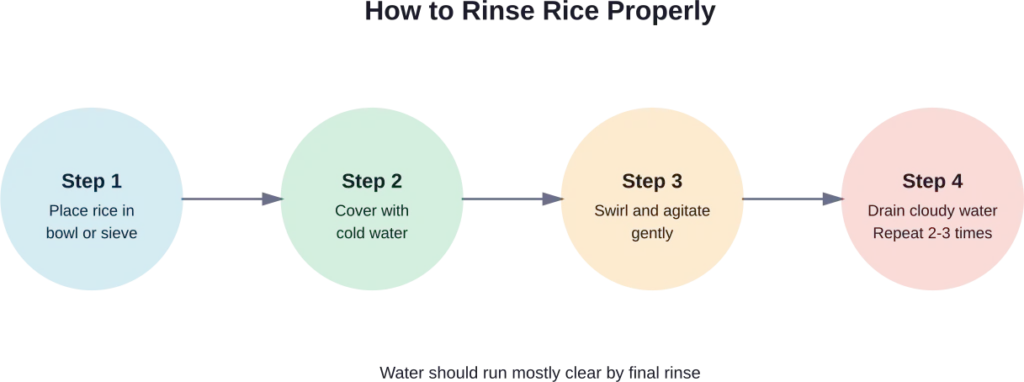
Two to three rinses typically suffice. Continue until the water runs mostly clear rather than cloudy white. Excessively washing rice (5+ times) removes beneficial nutrients along with starch.
Rinsing removes circa 10% of total and inorganic arsenic from basmati rice, but was less effective for other rice types. Cooking method matters more—using excess water and draining (6:1 ratio) removes significantly more arsenic than rinsing alone.
The starchy water works well for watering plants, as some gardeners do. It contains trace nutrients. Some beauty routines incorporate rice water, though scientific evidence for topical benefits remains limited.
Brown rice contains less surface starch due to the intact bran layer. Washing removes debris but affects texture less dramatically than with white rice. A quick rinse cleans without significantly changing the outcome.
Washing Arborio or other risotto rice removes the starch that creates the dish’s signature creamy texture. The result will be less cohesive and more grain-separated—the opposite of what traditional risotto requires.