

Quick Summary: Snorting Adderall bypasses the drug’s extended-release mechanism, delivering an intense and rapid high that significantly increases the risk of overdose, cardiovascular complications, addiction, and permanent nasal damage. This method of abuse causes severe physical and psychological health consequences including heart problems, respiratory issues, and heightened dependency. Professional treatment through medically supervised detox and comprehensive addiction programs remains essential for recovery.
Adderall ranks among the most commonly prescribed medications for attention deficit hyperactivity disorder (ADHD) and narcolepsy. When taken as prescribed, it helps millions manage their symptoms effectively. But here’s where things get dangerous.
Some people crush and snort Adderall tablets to intensify the drug’s effects or get high. This method of abuse transforms a therapeutic medication into a substance that threatens both immediate and long-term health.
According to the National Institute on Drug Abuse (NIDA), approximately 5% of high school seniors have misused prescription stimulants, including Adderall, in the past year. The FDA has identified continuing concerns about misuse, abuse, addiction, and overdose of prescription stimulants, requiring updated warnings across the entire class of these medicines.
The consequences of snorting Adderall extend far beyond what most people realize.
Understanding Adderall and How It Works
Adderall contains a combination of amphetamine and dextroamphetamine, both central nervous system stimulants. These compounds affect brain chemicals and nerves that contribute to hyperactivity and impulse control.
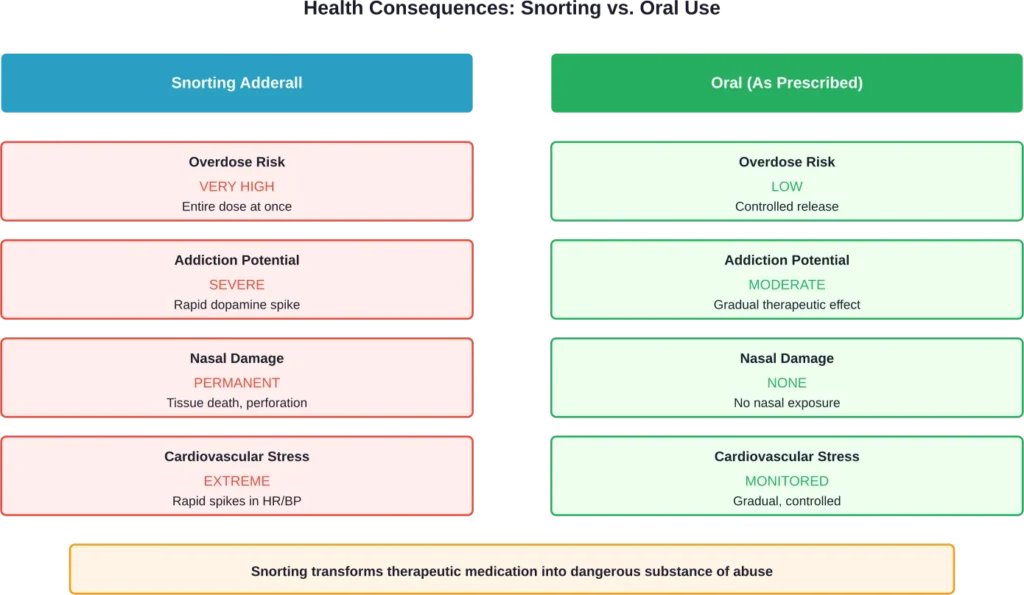
When someone takes Adderall orally as prescribed, the medication releases gradually into the bloodstream. Extended-release formulations deliver the drug over several hours, providing steady symptom management without dramatic spikes.
The drug works by increasing dopamine and norepinephrine levels in the brain. For individuals with ADHD, this improves focus, attention, and impulse control. For those with narcolepsy, it promotes wakefulness.
Snorting completely bypasses this controlled-release mechanism. The entire dose floods the bloodstream almost immediately through the nasal mucous membranes.
Why People Snort Adderall
Understanding the motivation behind this dangerous behavior matters for prevention and treatment. Several factors drive people to snort rather than swallow Adderall.
Some seek a more intense high. Crushing and snorting delivers the full dose at once, creating euphoric effects similar to other stimulants like cocaine. College students sometimes abuse Adderall this way for perceived academic performance enhancement or recreational purposes.
Others develop tolerance to oral doses. As the body adapts to prescribed amounts, some individuals mistakenly believe snorting will restore the medication’s effectiveness.
The rapid onset appeals to those chasing immediate effects. Research on intranasal administration shows that snorting gets substances into the bloodstream and brain much faster than oral consumption.
But the supposed benefits come with catastrophic risks.
Immediate Effects of Snorting Adderall
The moment crushed Adderall particles enter the nasal passages, a cascade of reactions begins. Understanding these immediate effects reveals why this method is so dangerous.
Rapid Drug Absorption
The nasal mucosa contains dense blood vessel networks designed to warm and filter air. When Adderall powder contacts these membranes, absorption happens within minutes.
Studies comparing intranasal versus oral administration of amphetamines demonstrate that snorting produces peak blood concentrations much faster. Research on intranasal lisdexamfetamine administration has examined d-amphetamine plasma concentrations and timing compared to oral administration.
This rapid absorption overwhelms the body’s ability to metabolize the drug gradually.
Intense Stimulant Effects
Within 5-10 minutes of snorting, users typically experience:
- Extreme alertness and energy surges
- Euphoria and heightened confidence
- Increased heart rate and blood pressure
- Dilated pupils and dry mouth
- Decreased appetite
- Restlessness and agitation
These effects hit harder and faster than oral consumption, but they also fade more quickly. This creates a cycle where users snort repeated doses to maintain the high, accelerating addiction and health damage.
Immediate Nasal Damage
The nose wasn’t designed to handle pharmaceutical powders. Adderall tablets contain active ingredients plus fillers and binders that irritate delicate nasal tissues.
Immediate consequences include burning sensations, nosebleeds, and congestion. The drug constricts blood vessels, reducing blood flow to nasal tissues and beginning a destructive process that worsens with repeated use.

Serious Health Risks and Dangers
The dangers of snorting Adderall extend across multiple body systems. Each episode of abuse inflicts damage, and repeated use accelerates deterioration.
Cardiovascular Complications
Stimulant abuse puts tremendous strain on the heart and blood vessels. The FDA has documented serious concerns about cardiovascular events associated with prescription stimulant misuse.
Snorting Adderall can cause:
- Dangerously elevated heart rate (tachycardia)
- Severe hypertension (high blood pressure)
- Irregular heartbeat (arrhythmia)
- Heart attack, even in young individuals
- Stroke due to blood pressure spikes
- Cardiovascular collapse in severe cases
Research on intranasal amphetamine administration indicates significant cardiovascular effects. Studies comparing behavioral and cardiovascular effects of intranasal versus oral d-amphetamine have examined heart rate and blood pressure changes, with intranasal use showing more rapid onset of effects.
Respiratory System Damage
Beyond the nose, snorting affects the entire respiratory system. Powder particles can be inhaled into the lungs, causing inflammation and damage to delicate lung tissues.
Chronic snorting leads to chronic sinusitis, lung infections, and breathing difficulties. Some individuals develop asthma-like symptoms or exacerbate existing respiratory conditions.
Neurological and Psychological Effects
Flooding the brain with amphetamines disrupts normal neurotransmitter function. While some effects reverse after stopping use, others may persist.
According to FDA safety communications on prescription stimulant abuse, mental health problems represent a serious concern. The agency has documented cases involving paranoia, psychosis, and severe agitation linked to stimulant misuse.
Psychological consequences include anxiety disorders, panic attacks, paranoia and hallucinations, aggressive behavior, and depression during withdrawal periods.
Nasal and Sinus Destruction
Repeated snorting causes progressive damage that can become permanent. The combination of vasoconstriction (blood vessel narrowing) and chemical irritation destroys nasal tissues.
Long-term snorting leads to chronic nosebleeds, loss of sense of smell, perforated nasal septum (hole between nostrils), chronic infections and crusting, and permanent structural damage requiring surgery.
What starts as occasional irritation escalates to tissue death and disfigurement.
The Overdose Danger
Snorting Adderall dramatically increases overdose risk. The controlled-release mechanism exists for safety reasons—bypassing it removes critical protection.
When the entire dose enters the bloodstream at once, the body becomes overwhelmed. Amphetamine overdose constitutes a medical emergency requiring immediate intervention.
Overdose Symptoms
Warning signs of Adderall overdose include:
- Extreme restlessness and agitation
- Rapid or irregular heartbeat
- Chest pain
- Dangerously high body temperature
- Tremors or seizures
- Confusion and disorientation
- Hallucinations
- Loss of consciousness
Severe overdoses can result in heart attack, stroke, seizures, or death. The risk multiplies when Adderall is combined with other substances, particularly alcohol or other stimulants.
Anyone experiencing overdose symptoms requires emergency medical attention. Call 911 immediately.
Addiction and Dependence
Snorting Adderall accelerates the path to addiction. The intense, rapid high creates powerful psychological reinforcement that oral use doesn’t produce to the same degree.
How Addiction Develops
Amphetamines flood the brain’s reward system with dopamine. This creates intense pleasure associations that drive compulsive use.
With snorting, the dramatic spike and rapid decline create a pattern particularly prone to addiction. Users chase that initial rush, taking more frequent doses and escalating amounts.
The FDA review of medical literature on prescription stimulant misuse found that the most common source of prescription stimulants for nonmedical use came from friends or relatives. This highlights how diverted prescription medications fuel the abuse crisis.
Tolerance develops quickly. The brain adapts to the dopamine floods, requiring larger doses to achieve the same effects. What started as recreational experimentation becomes a compulsion the person can’t control.
Signs of Adderall Addiction
Recognizing addiction early improves treatment outcomes. Warning signs include:
- Using Adderall without a prescription or in ways not prescribed
- Needing increasingly larger doses
- Inability to reduce or stop use despite wanting to
- Spending significant time obtaining, using, or recovering from Adderall
- Neglecting responsibilities at work, school, or home
- Continuing use despite physical or psychological problems
- Withdrawal symptoms when not using
- Using Adderall in dangerous situations
Physical signs include dramatic weight loss, sleep disturbances, unusual energy followed by crashes, poor hygiene and appearance changes, and visible nasal damage or frequent nosebleeds.
Behavioral changes often accompany addiction: increased secrecy, financial problems, social withdrawal, mood swings and irritability, and obtaining multiple prescriptions (doctor shopping).
Withdrawal Symptoms
Physical dependence develops alongside psychological addiction. When someone who regularly snorts Adderall stops using, withdrawal begins.
Amphetamine withdrawal isn’t typically life-threatening like alcohol or benzodiazepine withdrawal can be. But it’s intensely uncomfortable and drives many people back to using.
Common withdrawal symptoms include:
- Extreme fatigue and hypersomnia (sleeping excessively)
- Increased appetite and weight gain
- Depression and anhedonia (inability to feel pleasure)
- Anxiety and irritability
- Intense cravings for Adderall
- Difficulty concentrating
- Vivid, unpleasant dreams
- Psychomotor agitation or retardation
Withdrawal symptoms typically peak within the first few days after stopping and can persist for weeks. The severity depends on dosage, duration of use, and individual factors.
The psychological component—particularly the depression and cravings—presents the biggest challenge. Many people relapse during this vulnerable period.
Treatment and Recovery Options
Adderall addiction is treatable. Multiple evidence-based approaches help people achieve and maintain recovery.
Medical Detoxification
While amphetamine withdrawal generally doesn’t require medical intervention like some substances do, supervised detox provides crucial support during the most difficult early days.
Medical detox programs offer safe environments with monitoring, symptom management, nutritional support, and immediate transition to ongoing treatment.
Healthcare providers can manage severe depression or suicidal thoughts that sometimes emerge during withdrawal. They also address any co-occurring medical issues.
Comprehensive Treatment Programs
Effective addiction treatment addresses the complex biological, psychological, and social aspects of substance use disorders.
Treatment options include:
Partial Hospitalization Programs (PHP): Intensive day treatment while living at home or in supportive housing. Participants attend treatment several hours daily, multiple days per week.
Intensive Outpatient Programs (IOP): Structured treatment sessions several times weekly while maintaining work, school, or family responsibilities.
Outpatient Treatment: Regular counseling sessions with increasing independence as recovery strengthens.
Residential Treatment: Live-in programs providing 24/7 support and intensive therapy, typically for severe addictions or those with co-occurring disorders.
Behavioral Therapies
Psychological treatment forms the foundation of stimulant addiction recovery. Several evidence-based approaches show effectiveness:
Cognitive Behavioral Therapy (CBT): Helps identify and change thought patterns and behaviors that contribute to substance use.
Contingency Management: Uses positive reinforcement to encourage abstinence and treatment participation.
Motivational Interviewing: Strengthens personal motivation and commitment to change.
Group Therapy: Provides peer support and reduces isolation while building recovery skills.
Family Therapy: Addresses relationship dynamics and builds a supportive home environment.
Ongoing Support
Recovery doesn’t end when formal treatment concludes. Long-term success requires continued support and relapse prevention strategies.
Twelve-step programs like Narcotics Anonymous offer free, peer-led support groups available in most communities. SMART Recovery provides an alternative, science-based mutual support approach.
Aftercare planning, continued counseling, and healthy lifestyle changes all contribute to sustained recovery.
Preventing Adderall Abuse
Prevention efforts target multiple levels—from proper prescribing practices to education and early intervention.
Healthcare providers should carefully evaluate patients before prescribing stimulants, monitor for signs of misuse, educate about proper use and risks, and secure prescriptions to prevent diversion.
For those prescribed Adderall legitimately, safe practices include taking medication exactly as prescribed, never sharing prescriptions, storing medication securely, and communicating openly with healthcare providers about effects and concerns.
Educational initiatives help young people understand the real risks of prescription stimulant abuse. According to NIDA, targeting high school and college populations where nonmedical use concentrates proves particularly important.
The Bottom Line on Snorting Adderall
Snorting Adderall is never safe. This method of abuse transforms a medication that helps people when used properly into a substance that damages the body, hijacks brain chemistry, and destroys lives.
The immediate rush isn’t worth the cardiovascular dangers, permanent nasal damage, addiction potential, and overdose risk that come with it.
Anyone struggling with Adderall abuse deserves compassionate, evidence-based treatment. Recovery is possible with proper support.
If you or someone you know is snorting Adderall or abusing prescription stimulants, reach out for help. SAMHSA’s National Helpline provides free, confidential support 24/7.
Frequently Asked Questions
Yes, snorting Adderall can be fatal. The rapid delivery of a large dose increases the risk of overdose, which can cause heart attack, stroke, seizures, or cardiovascular collapse. Even first-time users face overdose risk, particularly if they combine Adderall with other substances or have underlying heart conditions.
Snorting bypasses the extended-release mechanism designed into many Adderall formulations, delivering the entire dose at once through nasal membranes. This creates a more intense, rapid high compared to oral use, but also dramatically increases risks of overdose, addiction, and side effects. Oral administration as prescribed provides gradual, controlled effects.
Long-term consequences include permanent nasal and sinus damage (including septal perforation), chronic cardiovascular problems, psychological disorders including depression and anxiety, severe addiction requiring professional treatment, cognitive impairment, malnutrition and weight loss, and increased risk of psychiatric conditions. The damage accumulates with each episode of use.
Yes, Adderall addiction responds well to comprehensive treatment. Evidence-based approaches including behavioral therapies, medical support during withdrawal, and ongoing recovery programs help many people achieve long-term recovery. Treatment should address both the physical dependence and psychological aspects of addiction. Success rates improve with early intervention and continued support.
Amphetamines typically remain detectable in urine for 2-4 days, in blood for about 24 hours, and in hair for up to 90 days. The route of administration doesn’t significantly change detection windows, though snorting produces more intense effects initially. Detection times vary based on dose, frequency of use, metabolism, and testing method.
Call 911 immediately. Amphetamine overdose is a medical emergency. While waiting for emergency services, keep the person calm, monitor breathing and consciousness, do not leave them alone, and provide information about what they took to emergency responders. Never try to make someone vomit or give them food or drink if they’re unconscious.
Yes, tolerance develops rapidly with regular use, particularly when snorting. The brain adapts to the floods of dopamine, requiring increasingly larger doses to achieve the same effects. This tolerance drives escalating use and accelerates the path to addiction. Tolerance combined with the short-lived effects of snorting creates a dangerous cycle of compulsive redosing.