

Quick Summary: Stopping masturbation can lead to temporary increases in testosterone, potential improvements in focus and motivation, and changes in sexual sensitivity. However, research shows masturbation is a healthy sexual behavior, and abstinence may increase sexual frustration, disrupt sleep patterns, and create unnecessary psychological stress for many individuals.
The decision to stop masturbating has become a cultural phenomenon, with movements like NoFap attracting millions of followers worldwide. But what actually happens to the body and mind when someone stops this common sexual behavior?
The World Health Organization defines sexual health as “a state of physical, emotional, mental and social well-being in relation to sexuality.” Masturbation falls squarely within this definition as a normal aspect of human sexuality across all ages.
Understanding the real effects requires separating anecdotal claims from scientific evidence. Research from peer-reviewed medical journals indexed in NIH databases and other authoritative sources reveals a complex picture that challenges both extreme positions in this debate.
Understanding Masturbation as a Health Behavior
Before examining what happens when people stop, it’s important to establish baseline facts about masturbation itself.
According to a U.S. nationally representative survey published in the Archives of Sexual Behavior, masturbation is an extremely common behavior. The research documents well-established individual, relational, and health benefits associated with this sexual activity.
Healthcare research from 2024 published in Healthcare journal examined 22 studies on solitary masturbation and its relationship to sexual satisfaction. The findings revealed nuanced patterns that differ between genders and circumstances.
Masturbation serves multiple functions beyond sexual release. Research published in the International Journal of Sexual Health identified it as a coping strategy that some individuals use during periods of psychological stress.
Physical Changes When You Stop Masturbating
The body responds to changes in sexual behavior in measurable ways. Here’s what research reveals about physical effects.
Testosterone Levels and Hormonal Shifts
One of the most discussed effects involves testosterone. Some proponents of abstinence claim dramatic increases in this hormone.
The reality is more modest. Short-term abstinence may produce temporary testosterone fluctuations, but sustained dramatic increases aren’t supported by current evidence. Testosterone prescribing has increased significantly in recent years, though this relates more to age-related functional androgen deficiency than masturbation habits.
Hormonal regulation is complex. The endocrine system maintains homeostasis through multiple feedback loops that extend far beyond any single behavior.
Sexual Function and Sensitivity
Changes in masturbation frequency can affect sexual responsiveness and sensitivity.
For some individuals, reducing masturbation frequency may increase physical sensitivity during partnered sexual activity. This happens simply because stimulation becomes less frequent, potentially making it feel more intense when it occurs.
However, research on ejaculation disorders reveals important context. According to Boston University Medical Center, premature ejaculation is the most frequent form of male sexual dysfunction, affecting up to 30% of men, with rapid ejaculation comprising 75% of ejaculatory disorders and delayed ejaculation comprising 8%.
Regular sexual activity, including masturbation, helps individuals understand their sexual response patterns. This self-knowledge often improves partnered sexual experiences rather than detracting from them.
Prostate Health Considerations
Long-term abstinence from ejaculation raises questions about prostate health, though research in this area remains limited.
Some studies have suggested regular ejaculation may have protective effects for prostate health, though the mechanisms aren’t fully understood. Conversely, there’s no substantial evidence that moderate abstinence causes prostate problems in healthy individuals.
Sleep Pattern Disruptions
Many people use masturbation as a sleep aid. Orgasm releases prolactin and oxytocin, hormones associated with relaxation and drowsiness.
Stopping this habit may temporarily disrupt established sleep routines for those who relied on it for relaxation. Alternative sleep hygiene practices typically compensate over time.

Psychological and Mental Effects
The mental aspects of stopping masturbation often generate more discussion than the physical ones. Here’s what evidence suggests.
Focus and Concentration Claims
NoFap supporters frequently report improved focus and concentration after stopping masturbation. These claims are primarily anecdotal.
Community discussions reveal that many individuals do experience subjective improvements in focus. However, several confounding factors complicate interpretation. People who commit to stopping masturbation often simultaneously implement other positive changes like reducing pornography consumption, improving sleep habits, or increasing exercise.
The placebo effect also plays a significant role. When individuals believe strongly that a behavior change will improve focus, they often experience exactly that, regardless of the behavior’s direct physiological effects.
Motivation and Energy
Some abstinence proponents report feeling more motivated and energetic. This connects to broader psychology around goal-setting and self-control.
Successfully maintaining any challenging commitment can boost self-efficacy—the belief in one’s ability to accomplish goals. This psychological benefit may generalize to other areas of life, creating genuine motivation improvements.
But here’s the thing: those same psychological benefits could come from any challenging voluntary commitment, not masturbation abstinence specifically.
Sexual Frustration and Mood
Research on masturbation as a coping strategy reveals potential downsides to abstinence.
The International Journal of Sexual Health study found that individuals tend to engage in masturbation more frequently when experiencing elevated psychological stress. It can serve as a stress-reduction mechanism.
Removing this coping tool without replacing it may increase irritability, mood swings, or anxiety in some individuals. Sexual frustration is a real phenomenon with documented effects on mood and interpersonal behavior.
Relationship with Pornography
Many people conflate masturbation with pornography consumption, but these are separate behaviors.
Research on pornography use shows it can become problematic for some individuals, potentially affecting sexual satisfaction and relationship quality. Stopping pornography consumption often produces different effects than stopping masturbation alone.
The perceived problems with pornography framework adopted by researchers examining masturbation abstinence highlights this distinction. Benefits attributed to stopping masturbation may actually stem from reducing pornography exposure.
Impact on Sexual Satisfaction and Relationships
The relationship between masturbation and sexual satisfaction is complex and varies significantly by gender and relationship status.
Research Findings on Sexual Satisfaction
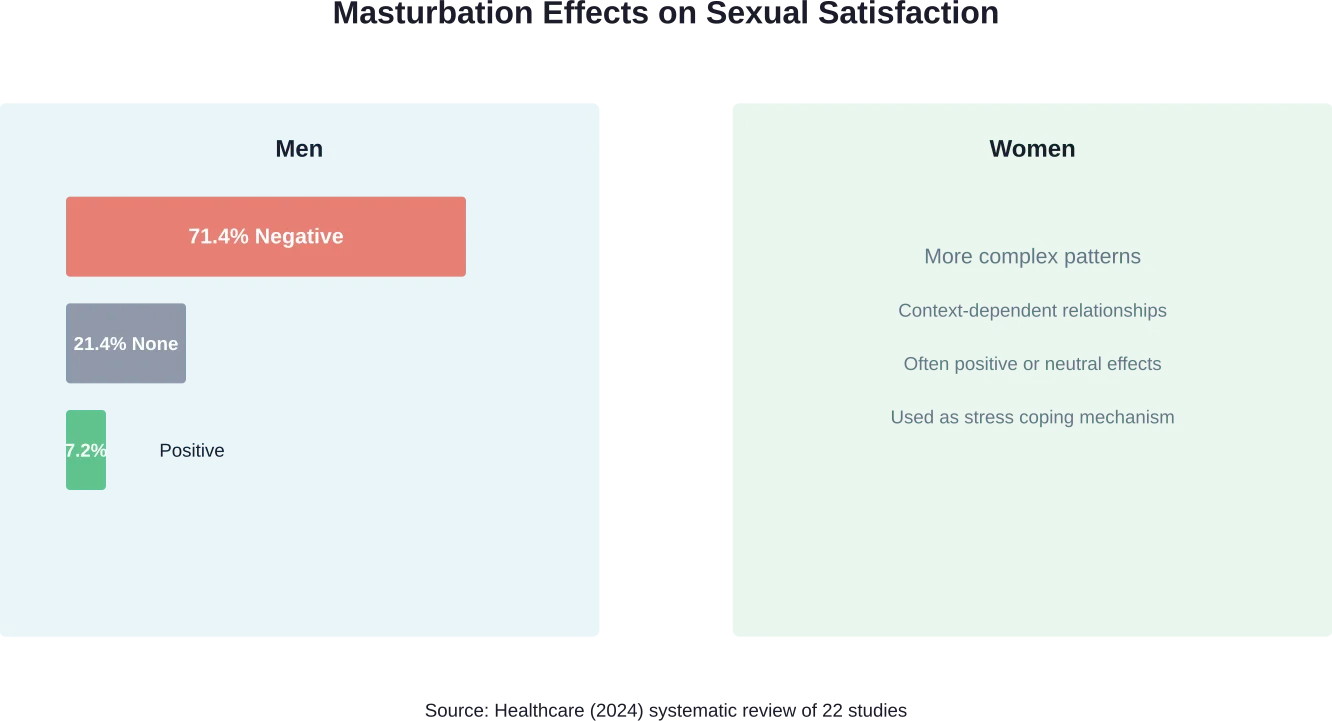
A systematic review published in Healthcare examined 22 studies on solitary masturbation and sexual satisfaction. The findings revealed notable gender differences.
In men, 71.4% of studies found a negative relation between masturbation and sexual satisfaction, while 21.4% found no relation, and 7.2% found a positive relation. In women, 40% reported no relation, 33.3% a negative relation, and the remaining percentage a positive association.
However, correlation doesn’t establish causation. Men experiencing lower relationship satisfaction might masturbate more, rather than masturbation causing lower satisfaction.
The Archives of Sexual Behavior published research exploring this seemingly paradoxical relationship. Data from 4,160 Norwegians aged 18-89 revealed that the relationship between masturbation frequency and sexual satisfaction depends heavily on individual circumstances and relationship context.
Effects on Partnered Sexual Activity
Stopping masturbation doesn’t automatically improve partnered sex, despite common assumptions.
For individuals in relationships, masturbation serves different functions. Research shows it can complement rather than replace partnered sexual activity. Among survey respondents, the most frequently endorsed reasons for not masturbating included being in a committed relationship, though many partnered individuals continue masturbating regularly.
Sexual desire discrepancies between partners are common. Masturbation can help individuals manage these differences without pressuring their partners.
Desire and Attraction Patterns
Assessment for male hypoactive sexual desire disorder sometimes reveals that masturbation patterns reflect rather than cause desire issues.
Individual meetings may uncover atypical arousal patterns, decreased attraction to a current partner, or other factors affecting desire. In these cases, masturbation serves as a symptom rather than the underlying problem.
The NoFap Movement and Its Claims
The NoFap movement has attracted significant attention and millions of participants. Understanding its claims requires separating subjective experiences from verified effects.
Origins and Philosophy
NoFap is an anti-masturbation movement primarily aimed at and practiced by heterosexual males. The name derives from slang, with “fap” meaning masturbation and “NoFap” meaning abstinence from it.
The movement endorses a specific understanding of masturbation and human sexuality. It argues that pornography is harmful and that abstaining from masturbation produces powerful benefits for body and mind.
Commonly Reported Benefits
Community discussions reveal that participants frequently report:
- Increased confidence and self-esteem
- Improved focus and mental clarity
- Better sleep quality after adjustment period
- Enhanced motivation for other goals
- Stronger erections and sexual sensitivity
- More satisfying partnered sexual experiences
An anonymous writer’s account published by BBC Three described a 13-month abstinence period as a time when their life was never better. The individual reported enhanced focus and concentration as primary benefits.
Real talk: these experiences are valid for those individuals. But anecdotal reports don’t constitute scientific evidence of universal effects.
Scientific Scrutiny of Claims
Medical research on masturbation abstinence reveals a gap between popular claims and scientific support.
Research examining abstinence from masturbation and hypersexuality, published by the NIH, found that despite the lack of evidence for negative health effects of masturbation, abstinence is frequently recommended as a strategy to improve sexual self-regulation.
The challenge is that many NoFap participants change multiple behaviors simultaneously. They might stop pornography use, increase exercise, improve diet, and establish better sleep routines—all while attributing benefits solely to masturbation abstinence.
This makes isolating masturbation’s specific role nearly impossible from anecdotal accounts.
Potential Downsides of Abstinence
Stopping masturbation isn’t universally beneficial. Several potential negative effects deserve consideration.
Increased Sexual Frustration
Sexual desire doesn’t disappear with abstinence. For many individuals, stopping masturbation creates persistent sexual frustration without a healthy outlet.
This frustration can manifest as irritability, difficulty concentrating, or intrusive sexual thoughts that actually decrease focus rather than enhancing it.
Relationship Pressure
When individuals stop masturbating while in relationships, they may unconsciously pressure partners to meet all their sexual needs.
Partners have their own desire patterns and may not always be available or interested. Masturbation provides a way to manage desire discrepancies that reduces relationship pressure.
Shame and Psychological Stress
Creating rigid rules around normal sexual behavior can backfire psychologically.
If someone commits to abstinence and then masturbates, they may experience shame, guilt, or feelings of failure. These negative emotions can create more psychological harm than any potential benefit from abstinence.
Beliefs in the benefits of abstinence can reinforce negative feelings toward what is a normal and natural part of life at all ages. This psychological framing may be more harmful than masturbation itself.
Loss of Sexual Self-Knowledge
Masturbation enables people to explore their own body and sexuality. This self-knowledge makes individuals much more comfortable with their own desires when it comes to partnered interactions.
Stopping this exploration, especially for younger or less experienced individuals, may delay sexual self-understanding.
When Stopping Masturbation Makes Sense
Despite the nuanced picture, some situations warrant reducing or stopping masturbation.
Compulsive Behavior Patterns
When masturbation becomes compulsive—interfering with daily responsibilities, relationships, or causing physical discomfort—intervention makes sense.
Compulsive sexual behavior can indicate underlying psychological issues that benefit from professional treatment rather than simple abstinence.
Pornography Addiction Concerns
For individuals struggling with problematic pornography use, stopping masturbation temporarily might help break the association between arousal and pornographic content.
However, the goal should be addressing pornography consumption specifically rather than eliminating masturbation permanently.
Personal Values and Beliefs
Survey data shows that among those who don’t masturbate, common reasons include conflict with morals or values, or being against one’s religion.
Personal values are legitimate reasons for behavioral choices. The key is ensuring these choices stem from genuine personal conviction rather than shame or misinformation.
Relationship Agreements
Some couples establish relationship agreements around masturbation. When consensually agreed upon and not rooted in control or insecurity, such agreements can work for those specific relationships.
| Situation | Abstinence May Help | Abstinence May Harm |
|---|---|---|
| Compulsive masturbation interfering with life | Breaking unhealthy patterns | Without addressing root causes, patterns may return |
| Problematic pornography use | Separating arousal from porn consumption | If masturbation without porn isn’t the goal |
| Religious or moral values | Alignment with authentic personal beliefs | If based on shame rather than genuine conviction |
| Premature ejaculation concerns | Potentially increasing sensitivity threshold | May increase anxiety around sexual performance |
| General health optimization | Uncertain—research doesn’t support universal benefits | Removing healthy stress-coping mechanism |
What Research Actually Shows
Scientific literature on masturbation reveals several consistent findings that contradict popular abstinence narratives.
Masturbation as Healthy Behavior
The consensus among sexual health researchers positions masturbation as a healthy sexual behavior associated with different sexual functioning dimensions.
WHO’s definition of sexual health emphasizes “the possibility of having pleasurable and safe sexual experiences” as fundamental to overall well-being. Masturbation clearly falls within this framework.
Individual Variation
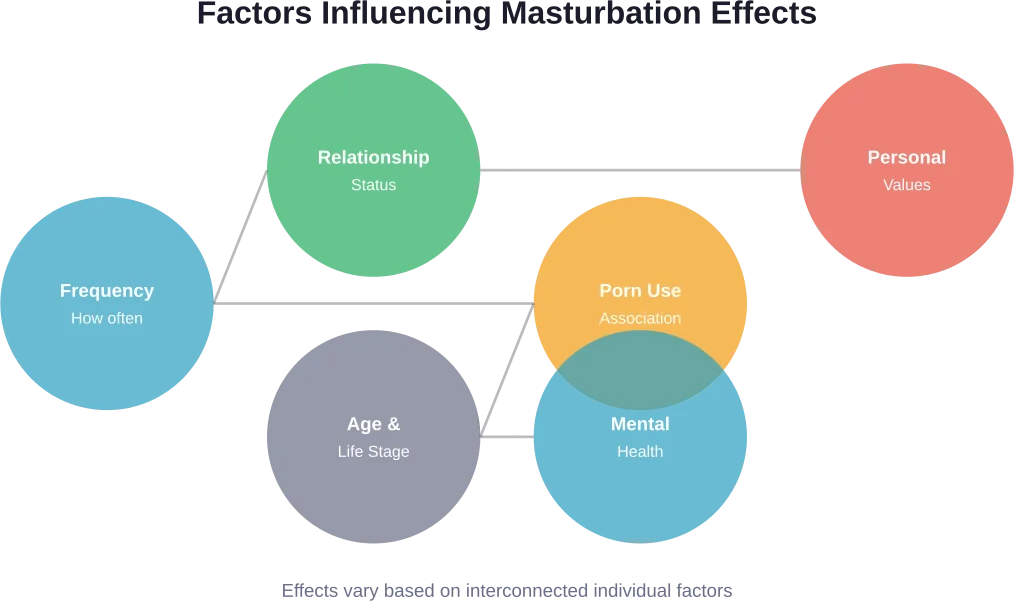
Perhaps the most consistent research finding is significant individual variation in how masturbation affects people.
The Norwegian study of 4,160 adults aged 18-89 found that masturbation’s relationship to sexual satisfaction depends heavily on age, relationship status, overall sexual desire, and many other individual factors.
What works for one person may not work for another. Universal recommendations about abstinence ignore this fundamental reality.
Frequency Matters
The relationship between masturbation frequency and various outcomes follows a curve rather than a straight line.
Moderate masturbation frequency shows different associations than either very high or very low frequency. Context and individual circumstances matter more than raw frequency numbers.
The Role of Guilt and Shame
Research consistently shows that guilt and shame around masturbation cause more problems than the behavior itself.
Cultural and religious contexts that stigmatize masturbation create psychological distress that wouldn’t exist if the behavior were accepted as normal.
Making an Informed Decision
So what should someone do with all this information?
Assess Your Personal Context
Consider why stopping masturbation appeals to you. Is it:
- To address genuinely problematic behavior patterns?
- To reduce pornography consumption?
- Because of social media claims about benefits?
- Due to guilt or shame about normal sexuality?
- To align with personal values you genuinely hold?
The motivation matters significantly in predicting whether abstinence will benefit or harm.
Consider Moderation Rather Than Elimination
For most people concerned about masturbation frequency, moderation makes more sense than complete abstinence.
Reducing frequency while maintaining the behavior as an option removes the all-or-nothing pressure that often backfires psychologically.
Address Pornography Separately
If pornography use concerns you, address it directly rather than using masturbation abstinence as a proxy.
It’s entirely possible to masturbate without pornography. Learning to become aroused through physical sensation and imagination rather than visual stimulation might be more beneficial than abstinence.
Monitor Your Experience
If choosing to stop masturbating, pay attention to both positive and negative effects.
Are you genuinely experiencing benefits, or are you unconsciously looking for benefits because you expect them? Conversely, are you experiencing increased frustration, sleep problems, or relationship pressure?
Adjust based on honest self-assessment rather than rigid commitment to a predetermined outcome.
When to Seek Professional Help
Consult a healthcare provider or sex therapist if:
- Masturbation feels compulsive and uncontrollable
- Sexual behavior interferes with daily responsibilities
- You experience significant distress about sexual thoughts or behaviors
- Stopping masturbation creates severe psychological distress
- Sexual dysfunction problems develop or worsen
Sexual health professionals can provide personalized guidance based on individual circumstances rather than generalized internet advice.
Frequently Asked Questions
Short-term abstinence may produce modest, temporary testosterone fluctuations, but sustained dramatic increases aren’t supported by current research. Testosterone regulation involves complex hormonal feedback systems that extend far beyond any single behavior. Any increases that do occur are typically temporary and modest rather than the dramatic boosts sometimes claimed in online communities.
The relationship between masturbation and partnered sexual satisfaction is complex and highly individual. Research shows that in men, 71.4% of studies found a negative relation between masturbation and sexual satisfaction, but correlation doesn’t prove causation. For many people, masturbation complements rather than competes with partnered sex. Relationship improvements depend more on communication, attraction, and overall relationship quality than masturbation habits.
Reported timelines vary widely among NoFap participants. Some individuals report changes within weeks, while others report gradual changes over months. However, many reported benefits lack scientific validation and may result from placebo effects, simultaneous lifestyle changes, or increased self-efficacy from maintaining a challenging commitment. Physical changes like increased sensitivity may occur within weeks, while psychological effects depend heavily on individual factors.
Medical research and health organizations, including the World Health Organization, recognize masturbation as a normal, healthy sexual behavior. It’s associated with various aspects of sexual functioning and well-being. Problems arise when masturbation becomes compulsive, interferes with daily life, or creates psychological distress—not from the behavior itself in moderation. The shame and guilt surrounding masturbation often cause more harm than the behavior.
The relationship between masturbation and ejaculation timing is complicated. According to research from Boston University Medical Center, in large surveys, premature ejaculation is the most frequent form of male sexual dysfunction, affecting up to 30% of men and has multiple causes. For some individuals, reducing masturbation frequency might slightly increase ejaculatory control threshold, but it’s not a reliable treatment. Premature ejaculation often benefits more from specific behavioral techniques, pelvic floor exercises, or medical interventions than simple abstinence.
Difficulty stopping a behavior doesn’t automatically indicate addiction or dysfunction. Sexual desire is a normal biological drive, and masturbation provides a natural outlet. If attempts to stop cause significant distress or if the behavior feels truly compulsive and uncontrollable, consulting a sex therapist or mental health professional can help. They can assess whether the behavior is actually problematic or whether unrealistic expectations and shame are creating unnecessary distress.
Despite persistent myths, no substantial scientific evidence shows that masturbation negatively affects athletic performance or muscle development. The temporary, modest hormonal fluctuations associated with sexual activity don’t meaningfully impact training adaptations or performance. Many elite athletes maintain normal sexual behaviors, including masturbation, throughout their careers without performance decrements. Focus on training, nutrition, recovery, and sleep matters far more for athletic performance.
Conclusion: A Balanced Perspective
What happens when someone stops masturbating depends entirely on the individual, their circumstances, and their reasons for stopping.
Physical effects are generally modest—possible temporary testosterone fluctuations, changes in sexual sensitivity, and potential sleep pattern adjustments. These effects stabilize over time as the body adapts.
Psychological effects show more variation. Some individuals genuinely experience improved focus and motivation, though these benefits may stem from the challenge of maintaining a commitment rather than abstinence itself. Others experience increased frustration, irritability, or psychological distress.
Research consistently shows that masturbation is a normal, healthy sexual behavior. The World Health Organization and sexual health researchers recognize it as part of healthy sexual development and well-being.
The decision to stop should be based on individual circumstances—genuine problematic behavior patterns, personal values, or specific situations—rather than fear-based claims about normal sexual behavior being harmful.
For most people, moderation rather than elimination makes more sense. If pornography use concerns you, address that specifically. If frequency concerns you, reduce it. But creating rigid rules around normal sexual behavior often backfires psychologically.
Listen to your body and mind. Monitor your actual experience rather than what you expect to experience. And remember that sexual health is part of overall health—it deserves the same balanced, evidence-based approach as any other health behavior.
If masturbation feels compulsive, interferes with life, or causes significant distress, professional guidance from a sex therapist or healthcare provider can help. Otherwise, trust that moderate masturbation is a normal part of sexual health across the lifespan.