

Quick Summary: Taking too much NyQuil can lead to serious overdose, primarily from acetaminophen-induced liver damage, dextromethorphan toxicity, or antihistamine complications. Symptoms range from nausea and confusion to seizures and respiratory failure. Immediate medical attention is critical if overdose is suspected—call 911 or Poison Control at 1-800-222-1222.
NyQuil sits in medicine cabinets across millions of homes as a trusted cold and flu remedy. It’s easy to grab when symptoms hit hard at night.
But here’s the thing—just because something is available over-the-counter doesn’t mean it’s risk-free.
Taking too much NyQuil, whether accidentally or intentionally, can trigger a dangerous overdose. The combination of active ingredients creates multiple risks that affect different organ systems. And the consequences? They range from uncomfortable to life-threatening.
Understanding what happens during a NyQuil overdose could literally save a life.
What’s Actually Inside NyQuil
Before diving into overdose territory, it helps to know what substances are at play here.
NyQuil products contain three primary active ingredients, each serving a specific purpose:
- Acetaminophen (650 mg per dose): Pain reliever and fever reducer
- Dextromethorphan HBr (20-30 mg per dose): Cough suppressant
- Doxylamine succinate (12.5 mg per dose): Antihistamine that causes drowsiness
According to official Vicks product information, NyQuil SEVERE contains Acetaminophen 650 mg, Dextromethorphan HBr 20 mg, and Doxylamine succinate 12.5 mg per dose. Regular NyQuil contains Acetaminophen 650 mg, Dextromethorphan HBr 30 mg, and Doxylamine succinate 12.5 mg per dose, with slightly different DXM concentration.
The FDA notes that acetaminophen appears in more than 600 medications—both prescription and over-the-counter. This creates a hidden danger: people often don’t realize they’re double-dosing when they combine NyQuil with other pain relievers.
The Three Main Overdose Risks
Each ingredient in NyQuil can cause distinct problems when taken in excessive amounts.
Acetaminophen: The Liver Damage Risk
This is the most dangerous component in a NyQuil overdose scenario.
Acetaminophen overdose represents the most common drug overdose reported in the United States, according to medical research published through the National Institutes of Health. When taken beyond recommended limits, acetaminophen can cause severe liver injury—and the damage can be irreversible.
The liver breaks down acetaminophen through a specific metabolic pathway. At normal doses, this works fine. But excessive amounts overwhelm the liver’s capacity, producing toxic metabolites that attack liver cells directly.
Symptoms of acetaminophen overdose can take up to 12 hours to appear. Early signs include:
- Nausea and vomiting
- Loss of appetite
- Sweating
- Confusion
- Extreme fatigue
Here’s what makes this particularly dangerous: initial symptoms feel like regular flu symptoms. People sometimes continue taking more medication, making the poisoning worse.
Within 24 hours, liver damage can become severe. According to medical literature, rapid treatment within eight hours significantly improves recovery outlook. Wait too long, and the damage may require liver transplantation or prove fatal.
Chronic alcohol users face even higher susceptibility to acetaminophen toxicity, as documented in multiple case studies of NyQuil-associated liver injury.

Dextromethorphan: The Dissociative Risk
Dextromethorphan (DXM) serves as a cough suppressant in NyQuil. At recommended doses, it’s safe and effective.
At high doses? It becomes a dissociative drug that alters perception and consciousness.
According to Poison Control data, dextromethorphan abuse leads to approximately 6000 emergency room visits each year. The practice, sometimes called “robotripping,” has become particularly common among teenagers seeking a cheap high.
In 2009, the National Institute on Drug Abuse’s Monitoring the Future Survey found that 6% of high school seniors had abused DXM.
Excessive dextromethorphan causes:
- Visual and auditory hallucinations
- Altered time perception
- Confusion and disorientation
- Slurred speech
- Loss of motor coordination
- Rapid heart rate
- Elevated blood pressure
In severe cases, DXM overdose can trigger seizures, respiratory depression, or coma. The effects intensify dramatically when combined with alcohol or other central nervous system depressants.
Doxylamine: The Antihistamine Danger
Doxylamine is the ingredient that makes NyQuil so sedating. It’s an antihistamine designed to dry up runny noses and help people sleep through cold symptoms.
Too much doxylamine creates a cascade of anticholinergic effects:
- Extreme drowsiness or paradoxical excitation
- Dry mouth and difficulty swallowing
- Blurred vision
- Urinary retention
- Rapid heartbeat
- Confusion and delirium
Research published through the NIH documents cases of paradoxical excitation with diphenhydramine (a related antihistamine). Instead of sedation, some people—particularly children—experience agitation, hyperactivity, and even hallucinations.
Antihistamine overdose in children has proven particularly dangerous, with documented fatalities in cases where caregivers administered medication with nontherapeutic intent.
How Overdoses Actually Happen
Most NyQuil overdoses aren’t intentional suicide attempts. They happen through more mundane circumstances.
Accidental Double-Dosing
Someone takes NyQuil for cold symptoms. A few hours later, they take acetaminophen for a headache. Then maybe some ibuprofen with acetaminophen. Before they realize it, they’ve consumed toxic levels of acetaminophen from multiple sources.
The FDA specifically warns about this risk, noting that acetaminophen appears in cough/cold medicines, pain relievers, and even sleep aids. According to FDA data, each year in the U.S., people catch 1 billion colds and as many as 12% of people get the flu—creating massive opportunities for medication errors.
Taking Doses Too Close Together
NyQuil should be taken every six hours maximum. But when symptoms persist, some people take another dose after just two or three hours.
Poison Control case reports document multiple instances of individuals taking doses too close together, resulting in overdose symptoms requiring hospitalization.
Using NyQuil as a Sleep Aid
The sedating effects of NyQuil lead some people to use it regularly for sleep—completely outside its intended purpose. This creates tolerance, dependence, and increased overdose risk as people take more to achieve the same effect.
Mixing With Alcohol
Alcohol amplifies every risk associated with NyQuil. It increases acetaminophen’s liver toxicity, enhances dextromethorphan’s dissociative effects, and compounds doxylamine’s sedation—potentially to the point of respiratory depression.
Some NyQuil liquid formulations contain alcohol. Adding more creates a dangerous synergy.
Warning Signs of NyQuil Overdose
Recognizing overdose symptoms quickly can make the difference between full recovery and permanent damage.
| Symptom Category | Mild to Moderate | Severe (Emergency) |
|---|---|---|
| Digestive | Nausea, vomiting, loss of appetite | Persistent vomiting, severe abdominal pain |
| Neurological | Drowsiness, confusion, dizziness | Seizures, loss of consciousness, hallucinations |
| Respiratory | Slowed breathing | Severe breathing difficulty, respiratory failure |
| Cardiovascular | Rapid heartbeat, elevated blood pressure | Irregular heartbeat, chest pain |
| Liver | Right-side abdominal discomfort | Jaundice (yellowing skin/eyes), severe pain |
| Other | Excessive sweating, blurred vision | Urinary retention, inability to wake person |
The Children’s Hospital of Philadelphia emphasizes that antihistamine overdoses in children can present differently, sometimes with extreme agitation rather than sedation.
What to Do If Someone Takes Too Much
Time matters critically in overdose situations.
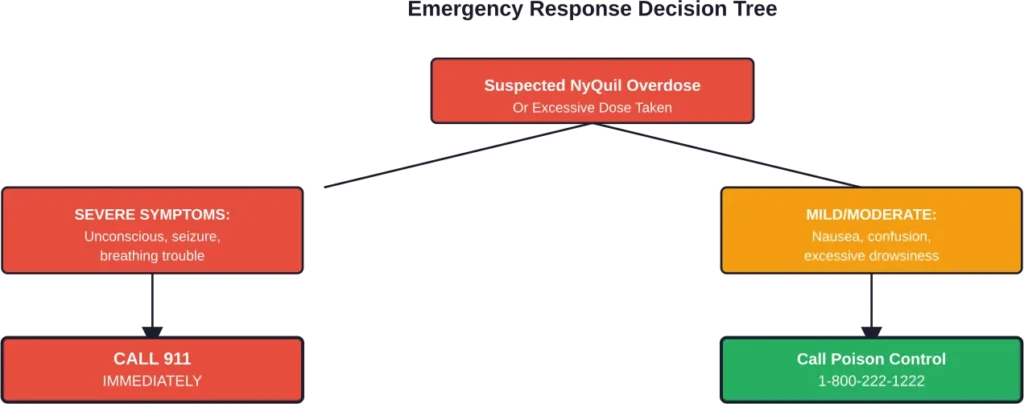
If someone has taken excessive NyQuil or shows overdose symptoms:
- Call Poison Control immediately: 1-800-222-1222 (works nationwide, 24/7, free and confidential)
- Use the webPOISONCONTROL online tool for immediate guidance
- Call 911 if the person:
- Has collapsed or lost consciousness
- Is having a seizure
- Has severe trouble breathing
- Cannot be awakened
- Gather information: How much was taken? When? What other medications or substances?
- Do NOT induce vomiting unless specifically instructed by medical professionals
For acetaminophen overdose specifically, medical treatment often involves N-acetylcysteine (NAC), an antidote that can prevent liver damage if administered promptly. This is why the eight-hour window matters so much.
Special Risks for Children
Children face significantly higher risks from cold medication overdoses.
The FDA and medical organizations consistently warn against giving cough and cold medicines to children under four years old. There’s no evidence these medications are safe or effective for young children—but there IS evidence of harm.
Medical research documents pediatric deaths from cough and cold medications, including cases where infants received both prescription and over-the-counter medications containing the same active ingredients simultaneously.
Poison Control emphasizes that home remedies like saline drops, gentle suctioning, humidity, and fluids work better than medicines for young children with coughs and colds.
For children who accidentally ingest NyQuil, even small amounts can cause serious problems due to their smaller body size and developing organ systems.
The Hidden Risk of Expired Medications
Here’s something most people don’t consider: expired NyQuil carries its own risks.
The FDA began requiring expiration dates on medications in 1979 for a reason—the date indicates when the product can be trusted to work as intended and remain safe.
Expired medications may have degraded active ingredients that don’t provide expected effects, potentially leading people to take more doses. Chemical breakdown can also create different compounds with unpredictable effects.
Taking expired medicines isn’t worth the risk. Dispose of outdated medications properly and replace them.
When Over-the-Counter Use Becomes Dependency
Regular NyQuil use can slip into problematic territory.
Some people develop psychological dependence on the sedating effects, using NyQuil nightly for sleep rather than cold symptoms. Others find themselves needing higher doses to achieve the same cough suppression or drowsiness.
This pattern increases overdose risk substantially. Tolerance to therapeutic effects doesn’t mean tolerance to toxic effects—the liver still suffers damage at the same acetaminophen levels, even if sedation requires higher doses.
Community discussions reveal patterns of people using NyQuil far beyond its intended short-term use for acute cold symptoms. This represents a misuse pattern that healthcare providers need to address.
Prevention: Staying Safe With NyQuil
Most NyQuil overdoses are completely preventable. These straightforward practices eliminate most risks:
- Follow label directions exactly: Two LiquiCaps or 30mL liquid every six hours, maximum four doses in 24 hours
- Check all medications for acetaminophen: Don’t combine NyQuil with other products containing APAP/acetaminophen/paracetamol
- Never mix with alcohol: Zero exceptions to this rule
- Keep medications locked away: Store up high where children can’t reach them
- Don’t use expired products: Check dates and dispose of old medications
- Consult healthcare providers: Especially if taking other medications or managing chronic conditions
- Use only for intended purpose: NyQuil treats cold/flu symptoms, not insomnia
- Set phone reminders: Prevent taking doses too close together
For people with liver disease, kidney problems, or chronic alcohol use, even standard NyQuil doses can be dangerous. Medical consultation before use isn’t optional for these populations.
Frequently Asked Questions
Exceeding the recommended dose of two LiquiCaps (or 30mL liquid) every six hours, or taking more than four doses in 24 hours, enters overdose territory. The maximum daily acetaminophen limit is crucial—going beyond this from NyQuil alone or combined with other acetaminophen products creates serious liver damage risk.
Yes, NyQuil overdose can be fatal. Acetaminophen-induced liver failure represents the most common cause of death from NyQuil overdose. Respiratory failure from excessive dextromethorphan and doxylamine, particularly when combined with alcohol, also poses fatal risk. Medical research documents multiple fatalities from over-the-counter cold medication overdoses.
Contact Poison Control immediately at 1-800-222-1222 or use the webPOISONCONTROL online tool. Provide exact information about timing and amounts. Even if symptoms haven’t appeared, acetaminophen damage can be prevented with prompt treatment. Don’t wait to see if symptoms develop—early intervention prevents serious complications.
Symptom duration varies by ingredient and severity. Dextromethorphan and doxylamine effects typically peak within 2-4 hours and may last 12-24 hours. Acetaminophen overdose symptoms evolve over days—initial symptoms appear within 12 hours, but liver damage progresses over 24-72 hours if untreated. This makes acetaminophen the most dangerous component for delayed serious effects.
No. NyQuil is designed for short-term use during acute cold and flu symptoms, typically 3-7 days maximum. Using it nightly as a sleep aid constitutes misuse that increases dependency risk, builds tolerance, and elevates overdose potential. Regular sleep problems require different solutions—consult a healthcare provider about appropriate sleep aids.
For most healthy adults, NyQuil at recommended doses doesn’t cause liver damage. However, people with existing liver disease, chronic alcohol users, or those taking multiple acetaminophen-containing products face increased risk even at standard doses. According to medical research, chronic alcohol users show particular susceptibility to acetaminophen hepatotoxicity.
Both formulations contain the same three active ingredients at similar doses—NyQuil SEVERE has 650mg acetaminophen versus 650mg in regular NyQuil, and includes a nasal decongestant. Overdose risks remain essentially identical since acetaminophen levels and other core ingredients are comparable. Neither is “safer” to exceed recommended doses.
Final Thoughts
NyQuil works effectively when used as directed. It relieves cold and flu symptoms and helps millions of people rest through illness.
But that familiar bottle in the medicine cabinet deserves respect. The combination of acetaminophen, dextromethorphan, and doxylamine creates real overdose potential—particularly when people assume over-the-counter means risk-free.
The consequences of taking too much NyQuil range from uncomfortable symptoms to permanent liver damage or death. Acetaminophen overdose remains one of the most common poisonings in the United States, often from products people consider completely safe.
Prevention is straightforward: follow directions, avoid combining medications, never mix with alcohol, and use only for intended purposes.
If overdose does happen, immediate action matters. Call Poison Control at 1-800-222-1222 or use webPOISONCONTROL for expert guidance. For severe symptoms, call 911 without hesitation.
That eight-hour treatment window for acetaminophen poisoning? It could determine whether someone walks away unharmed or faces permanent liver damage.
Store medications safely. Read labels carefully. And remember—more medicine doesn’t mean faster relief. It just means more risk.