

Quick Summary: Getting evicted triggers a legal court process that can result in forced removal from your rental home, damage to your credit report, difficulty finding future housing, and potential financial consequences including judgments for unpaid rent. The eviction becomes a public record that landlords can access during tenant screening, and research shows evicted tenants face increased homelessness risk and reduced earnings. However, tenants have legal rights throughout the process and may access free legal help and rental assistance programs.
Facing eviction is stressful, and the consequences extend far beyond losing your current rental. Understanding what actually happens during and after an eviction helps you make informed decisions about your situation.
Roughly 2.5 million eviction cases are filed annually in the United States—about four every minute. But what does that process actually look like for tenants?
The Legal Eviction Process Explained
Landlords can’t just force you out. They must follow a specific legal process that includes court proceedings and official documentation.
Notice Requirements Come First
Before filing a lawsuit, landlords typically must provide written notice. The timeline varies by state and situation. In Virginia, for example, landlords must wait between 5-30 days before filing a complaint, depending on the reason for eviction.
If you don’t receive proper notice, you might be able to challenge the eviction lawsuit. Landlords who try to remove you without an official court order are acting illegally.
The Court Filing and Hearing
Once notice periods expire, landlords can file an eviction lawsuit with the local court. Filing costs vary—in some jurisdictions like Arlington Circuit Court, fees can reach as high as $151.
You’ll receive notification of a court hearing date. Attending this hearing is critical. If you don’t appear, the landlord could win by default, potentially allowing the sheriff to remove you within 72 hours of posting the eviction notice.
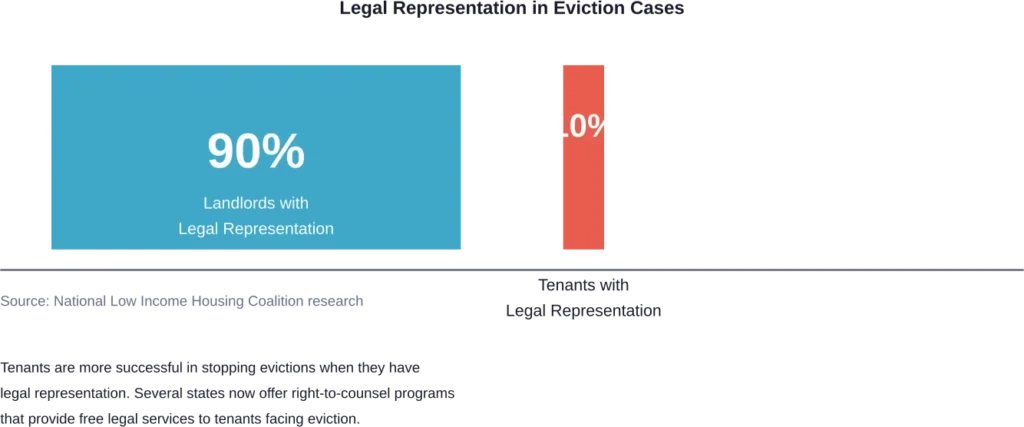
Research shows that more than 90% of landlords have legal representation compared to less than 10% of tenants. This imbalance affects outcomes significantly.
The Sheriff’s Role in Physical Removal
If the court rules against you, the landlord receives a writ of possession. The sheriff then posts this writ on your door along with a notice—typically giving you 72 hours to vacate voluntarily.
After that deadline passes, the sheriff can physically remove you and your belongings from the property.
How Eviction Damages Your Financial Future
The consequences don’t end when you leave the property. Evictions create lasting financial and housing barriers.
Court Records Are Public and Permanent
Eviction lawsuits become public court records. These records appear in tenant screening reports that future landlords commonly use during application reviews.
Even if you ultimately won the case or settled it, the fact that an eviction was filed can appear in these searches. Many landlords automatically reject applicants with any eviction history.
Credit Report Damage
The eviction itself doesn’t directly appear on credit reports. However, related financial consequences do show up:
- Unpaid rent sent to collections agencies
- Court judgments for money owed
- Broken lease agreements reported by landlords
- Utility bills left unpaid
These negative items can remain on credit reports for seven years, damaging credit scores and making it harder to rent, get loans, or even secure employment in some fields.
Financial Judgments and Wage Garnishment
Courts may order you to pay back rent, late fees, court costs, and attorney fees. According to data from the Consumer Financial Protection Bureau, the average late fee is around $85, and the average non-sufficient funds fee is around $40. The median outstanding balance is $3,200. These fees frequently compound for tenants in financial distress.
If you don’t pay these judgments voluntarily, landlords can pursue wage garnishment or bank account levies in many states.
The Broader Economic Impact of Eviction
Yale researchers combined eviction court records with detailed longitudinal data on socioeconomic outcomes—the first study of its kind. Their findings reveal serious long-term consequences.
Increased Homelessness Risk
Eviction orders often leave tenants with little time to find new housing. The Yale study showed that an eviction order increased the probability of using an emergency shelter by 3.4 percentage points in the year following the eviction.
Prior eviction orders make finding new housing harder since many landlords screen rental history. This creates a cycle where evicted tenants struggle to secure stable housing.
Reduced Earnings Over Time
The same research found that evictions reduce tenants’ earnings. The instability of forced moves, potential homelessness, and time dealing with legal proceedings all interfere with steady employment.
Look, losing your job makes it hard to pay rent. But getting evicted can also make it harder to keep or find work—creating a downward spiral.
Disproportionate Impact on Vulnerable Groups
The Yale study results suggest that Black and female tenants are more likely to face eviction. According to Consumer Financial Protection Bureau data, Black and Hispanic households were more than twice as likely to report being behind on housing payments than white households.
In all, nearly 6 million U.S. renters owed nearly $20 billion in back rent according to UC Berkeley research. Those most affected are low-income people, women, and families with children.
| Consequence Category | Immediate Impact | Long-Term Impact |
|---|---|---|
| Housing | Forced to leave current home within 72 hours | Difficulty passing tenant screenings; limited housing options |
| Financial | Court costs, attorney fees, moving expenses | Damaged credit, wage garnishment, reduced earnings |
| Legal Record | Public court filing | Permanent eviction record accessible to landlords |
| Employment | Time off for court hearings; potential job loss | Employment barriers due to credit checks or instability |
| Health & Stability | Stress, potential homelessness | Increased homelessness risk, disrupted family stability |
Legal Protections and Rights for Tenants
Despite these serious consequences, tenants have important legal protections.
Fair Housing Act Protections
The Fair Housing Act prohibits discrimination by landlords based on race, color, religion, sex, national origin, familial status, or disability. The Department of Justice enforces these protections.
If you believe you’re facing eviction due to discrimination, you have legal recourse through HUD or DOJ complaints.
Servicemembers Civil Relief Act (SCRA)
According to the Department of Justice, the SCRA provides special protections for active-duty servicemembers and their dependents. If your rent is less than $4,214.28 a month (as of 2022), you and your dependents can’t be evicted from a residential home during military service and for a period afterward without a court order.
The term “dependent” includes a servicemember’s spouse, children, and any other person for whom the servicemember has provided more than half of their financial support for the past 180 days.
State-Specific Tenant Rights
Many states have enacted additional tenant protections, including:
- Right-to-counsel legislation providing free legal representation
- Extended notice periods before eviction filings
- Rent control and just-cause eviction requirements
- Sealed eviction records under certain circumstances
What You Can Do If Facing Eviction
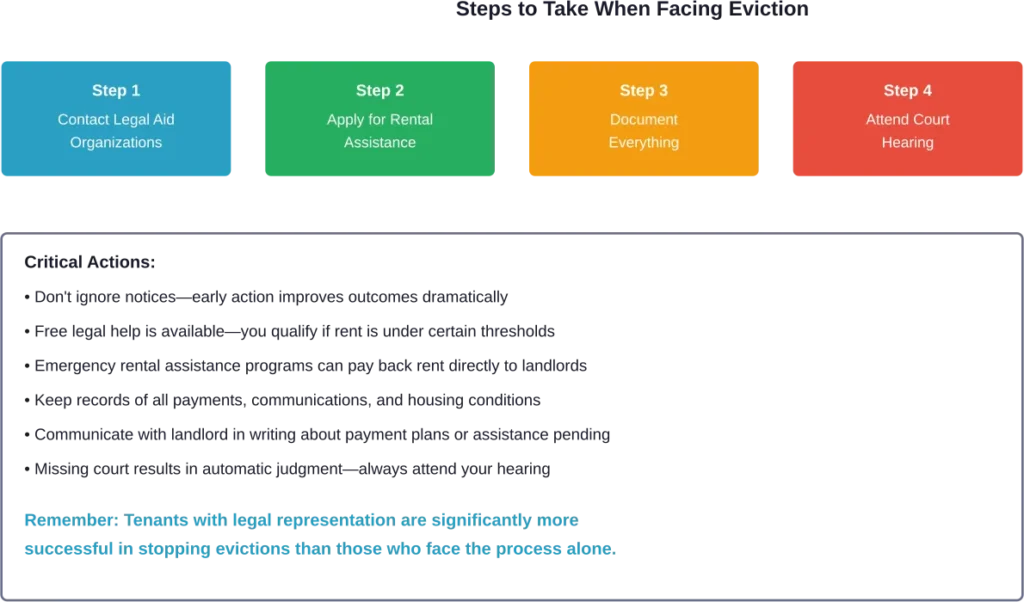
Don’t wait until the sheriff arrives. Taking action early improves your options significantly.
Seek Free Legal Help Immediately
Tenants with legal representation are far more successful in eviction cases. Several resources offer free legal assistance:
- Local Legal Aid organizations
- State bar association lawyer referral services
- Law school legal clinics
- Servicemembers can contact their Legal Assistance Office
Don’t delay—talk with a lawyer as soon as you receive any eviction notice.
Apply for Emergency Rental Assistance
State and local organizations may have programs to help renters struggling with rent payments. According to the Consumer Financial Protection Bureau, renters can search for rental assistance through their city, county, and state government websites.
Many of these programs were expanded or created in response to housing crises and can cover back rent, preventing eviction entirely.
Communicate With Your Landlord
Sometimes landlords are willing to work out payment plans or other arrangements. Written communication creates a record of your good-faith efforts.
If you can pay partial rent, document your offer in writing. If you’re awaiting rental assistance funds, inform your landlord and provide documentation.
Show Up to Court
Never skip your court hearing. If you don’t appear, the landlord wins by default. At the hearing, you can present defenses, evidence, and negotiate settlements.
Bring all relevant documentation: lease agreements, rent payment records, correspondence with the landlord, and evidence of any housing code violations or improper notice.
Frequently Asked Questions
The eviction filing itself doesn’t appear directly on credit reports. However, unpaid rent sent to collections, court judgments, and broken lease agreements do appear and can damage your credit score for up to seven years.
Yes, but it’s significantly harder. Eviction records appear in tenant screening reports that most landlords check. Some landlords have policies against renting to anyone with eviction history, while others may require larger security deposits or co-signers. Being upfront about the eviction and showing proof of current income and stability can help.
The timeline varies by state and situation. In Virginia, for example, the process can take anywhere from one to several weeks from initial notice to physical removal. Some states have longer notice requirements and court backlogs that extend the timeline to several months.
No. Landlords must obtain a court order to legally evict you. If a landlord tries to remove you, change locks, or shut off utilities without a court order, those actions are illegal. You have legal recourse against such “self-help” evictions.
Communicate this to your landlord in writing immediately. Some landlords will accept partial payment and work out a plan for the remainder. However, in some states, accepting partial payment can reset the eviction process timeline, so document everything carefully. Rental assistance programs may also be able to cover the shortfall.
Yes. The Servicemembers Civil Relief Act (SCRA) provides significant eviction protections for active-duty servicemembers and their dependents. For rental agreements under $4,214.28 per month (as of 2022), landlords must obtain a court order and prove that military service doesn’t materially affect the tenant’s ability to pay rent.
It depends on your state and situation. Some states allow eviction records to be sealed or expunged under certain circumstances—such as if you won the case, if the case was dismissed, or after a certain period of time. Consult with a local attorney about your state’s specific provisions for clearing eviction records.
Take Action Before It’s Too Late
Getting evicted creates serious consequences that extend far beyond losing your current home. The public record, credit damage, and housing barriers can affect your financial stability for years.
But you have rights and options. Free legal help exists specifically for tenants facing eviction. Emergency rental assistance programs can pay your back rent directly to landlords. State and federal laws provide important protections.
The key is acting quickly. Don’t wait for the sheriff to post a notice on your door. The moment you receive any eviction notice or fall behind on rent, start seeking help.
Contact your local Legal Aid organization today. Search for rental assistance programs in your area. Document everything. Show up to court.
In all, nearly 6 million renters currently face housing insecurity—you’re not alone in this situation. Resources exist because housing stability matters for entire communities, not just individual tenants.
What happens if you get evicted depends partly on the actions you take right now.