

Quick Summary: Most healthcare providers recommend waiting 1-2 weeks after an abortion before having sex to reduce infection risk and allow the cervix to close. However, ovulation can return within 2 weeks, so contraception is essential immediately if you don’t want to become pregnant again. Always follow your provider’s specific recovery instructions.
After an abortion—whether medical or surgical—your body needs time to heal. One of the most common questions people have is when it’s safe to resume sexual activity and what risks exist if sex happens too soon.
The answer isn’t one-size-fits-all. Recovery timelines vary based on the type of abortion procedure, individual healing rates, and specific health circumstances. But understanding the medical guidance can help you make informed decisions about your sexual health during recovery.
Recommended Waiting Period After Abortion
Most healthcare providers recommend waiting at least 2-3 weeks before having penetrative sex after an abortion. This isn’t an arbitrary timeline—there are specific medical reasons for this guidance.
The cervix may remain slightly open for several days following the procedure, particularly after a surgical abortion. An open cervix creates a direct pathway for bacteria to enter the uterus, significantly increasing infection risk.
According to medical research, pelvic infection is the most common complication of legal abortion. The presence of lower genital tract infections increases the risk of complications, making the immediate post-abortion period particularly vulnerable.
Here’s the thing though—the waiting period can differ based on your procedure type:
After Medical Abortion
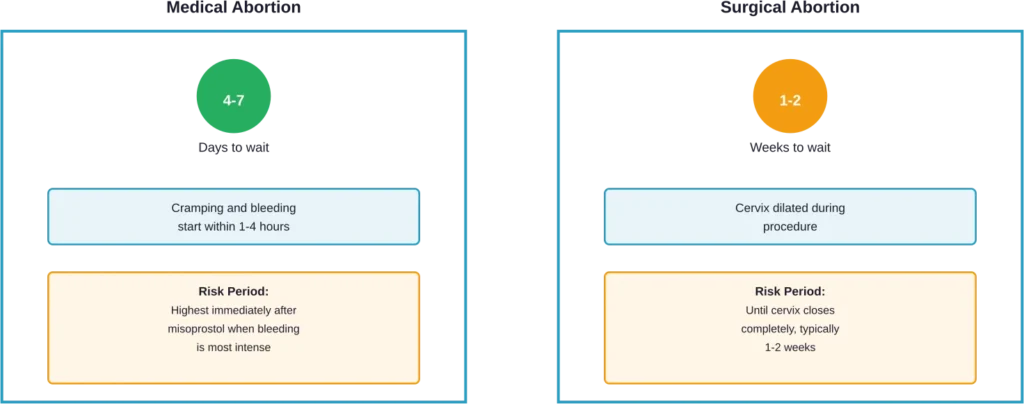
Medical abortion involves taking medications (typically mifepristone followed by misoprostol) to end a pregnancy. The second medication causes cramping and bleeding that often starts within one to four hours, though it can take up to 24 hours for some people.
For medical abortion, many providers recommend waiting 4-7 days before having sex. However, some sources recommend 2-3 weeks after a medical abortion. The greater risk of infection exists immediately after taking misoprostol when bleeding and cramping are most intense.
After Surgical Abortion
Surgical abortion procedures—whether aspiration or dilation and evacuation—are performed in a clinic or hospital setting. The cervix is dilated during the procedure, which means it needs time to close completely.
The standard recommendation is to wait 1-2 weeks after surgical abortion before resuming sexual activity. Some providers may advise waiting until bleeding has stopped completely.
What Are the Risks of Having Sex Too Soon?
Having sex before your body has fully recovered from an abortion carries several potential complications. Understanding these risks helps explain why healthcare providers recommend waiting.
Increased Infection Risk
The primary concern with early sexual activity after abortion is infection. When the cervix remains open or the uterine lining is still healing, bacteria from the vagina can travel upward into the uterus.
This can lead to postabortion pelvic inflammatory disease (PID), which encompasses a range of infections including endometritis and salpingitis. Research indicates that women requesting abortion are at significant risk of harboring sexually transmitted diseases, which further elevates infection risk if sex occurs too soon.
A combined retrospective and longitudinal study examining abortion complications found that complications—categorized as bleeding, infection, or incomplete abortion—were assessed in women who contacted gynecological clinics within 30 days after the procedure. Nearly all abortions in the study (99.7%) were performed, demonstrating that while abortion itself is safe, post-procedure care matters significantly.
Prolonged Bleeding
Some people experience bleeding during sex after abortion pills, even after the initial bleeding has subsided. This happens because the uterine lining is still healing and may be sensitive to any physical contact or activity.
While light spotting can be normal for up to several weeks after an abortion, heavy bleeding during or after sex is not typical and warrants medical attention.
Physical Discomfort
Real talk: sex might not feel comfortable immediately after an abortion. Your body has undergone significant hormonal and physical changes. Cramping, tenderness, and sensitivity are common during the recovery period.
Waiting until you feel physically ready—not just until a certain number of days have passed—is equally important for your overall wellbeing.
How Soon Can You Get Pregnant After an Abortion?
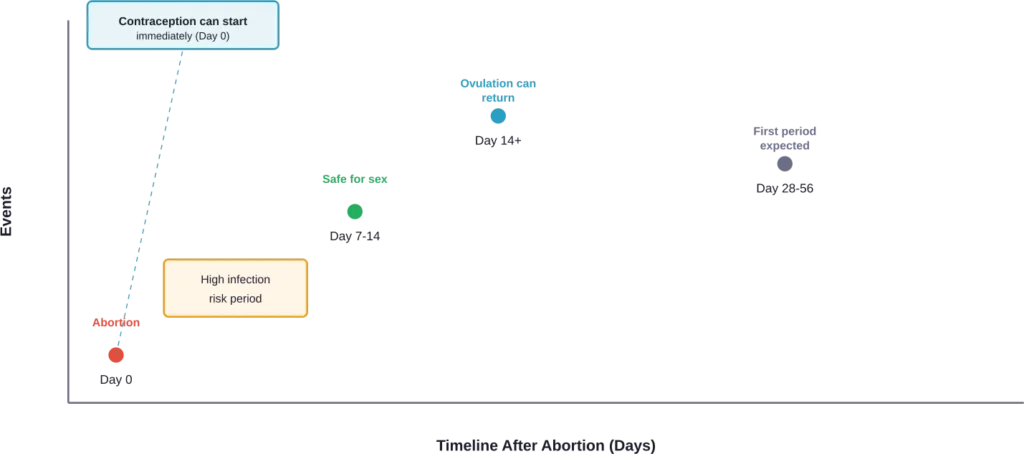
Here’s what catches many people off guard: you can get pregnant again almost immediately after an abortion. Ovulation can return within 2 weeks following the procedure, sometimes even before your next period arrives.
This means that if you have unprotected sex during the recommended waiting period or shortly after, pregnancy is absolutely possible. According to the CDC’s U.S. Selected Practice Recommendations for Contraceptive Use, almost all methods of contraception can be initiated immediately following a surgical or medical abortion.
For medical abortion, “immediate start” refers to the day the first pill is taken. For surgical abortion, it means the same day as the procedure.
Fertility Returns Quickly
Your menstrual cycle typically resumes within 4-8 weeks after an abortion, but ovulation occurs about 2 weeks before menstruation. That’s why you can become fertile again before you even have your first post-abortion period.
Between 10-20% of known pregnancies end in miscarriage, with approximately 80% of these occurring in the first trimester. If you become pregnant again very soon after an abortion, your body may not have fully recovered, which some healthcare providers suggest could affect the new pregnancy—though this varies individually.
Starting Contraception After Abortion
If you don’t want to become pregnant again right away, starting contraception immediately is crucial. The good news? According to ACOG (American College of Obstetricians and Gynecologists), immediate postabortion contraception is both safe and effective.
Access to postabortion contraception is recognized as patient-centered care. ACOG’s Committee Opinion emphasizes that immediate postabortion contraception should be offered as part of comprehensive abortion care.
| Contraceptive Method | When to Start After Abortion | Effectiveness |
|---|---|---|
| Birth control pills | Same day as abortion | 91% typical use |
| IUD (copper or hormonal) | Immediately after procedure | 99%+ |
| Contraceptive implant | Same day as abortion | 99%+ |
| Injectable contraceptive | Same day as abortion | 94% typical use |
| Condoms | When sex resumes | 85% typical use |
| Fertility awareness methods | Wait until regular cycles return | 76-88% typical use |
Long-Acting Reversible Contraception
Long-acting reversible contraceptives (LARCs)—including IUDs and implants—can be placed immediately following an abortion. The CDC’s guidance on intrauterine contraception notes that postpartum placement of IUDs is safe, with similar principles applying to postabortion placement.
For IUDs specifically, the levonorgestrel IUD should not be placed immediately after abortion beyond 14 weeks’ gestation—use should be postponed for 6 weeks in these cases. However, for earlier abortions, immediate placement is both safe and highly effective.
Research on facilitating uptake of post-abortion contraception for young people shows that by prioritizing training and mentorship of mid-level providers on both medical and surgical abortion care along with post-abortion contraception, common barriers to care can be removed. Eighty-five percent of abortion care clients served by the project accepted same-day contraception.
Signs of Infection to Watch For
Regardless of when you resume sexual activity, knowing the warning signs of infection is essential. Contact your healthcare provider immediately if you experience:
- Fever above 100.4°F (38°C)
- Severe abdominal or pelvic pain that doesn’t improve with over-the-counter pain medication
- Heavy bleeding (soaking through two or more pads per hour for two consecutive hours)
- Foul-smelling vaginal discharge
- Severe cramping that worsens instead of improves
- Chills or feeling generally unwell
When used consistently and correctly, external condoms are effective in preventing the sexual transmission of HIV infection and can also reduce the risk of other sexually transmitted infections. Using condoms when you resume sexual activity provides dual protection—against both infection during the healing period and STIs generally.
Emotional Considerations After Abortion
Physical readiness is only part of the equation. Emotional readiness matters too.
Some people feel ready to resume sexual activity quickly, while others need more time to process their experience. Both responses are completely normal. Research examining sexual behavior during the first eight weeks after legal termination of pregnancy found that coitus is recommenced shortly after termination but not always with sufficient contraception. Legal abortion is associated with few adverse effects on sexual function.
That said, individual experiences vary widely. There’s no “right” timeline for when you should feel emotionally ready. Communicate openly with your partner about your needs, boundaries, and feelings during this time.
When to Contact Your Healthcare Provider
Always follow the specific post-abortion care instructions provided by your healthcare provider. These may differ from general guidelines based on your individual circumstances.
Contact your provider before resuming sexual activity if:
- You’re experiencing any signs of infection
- Bleeding hasn’t stopped or decreased after two weeks
- You have questions about contraception options
- You’re unsure whether your recovery is progressing normally
- You need emergency contraception
Your provider can assess your individual healing progress and give you personalized guidance about when it’s safe to resume sexual activity.
Frequently Asked Questions
Most healthcare providers recommend waiting 1-2 weeks after an abortion before having penetrative sex. For medical abortion, the recommendation is often 4-7 days. This waiting period allows the cervix to close and reduces infection risk. Always follow your specific provider’s instructions, as recommendations may vary based on your individual situation.
Yes, ovulation can return within 2 weeks after an abortion—often before your first post-abortion period. This means you can become pregnant again almost immediately if you have unprotected sex. If you don’t want to become pregnant, start using contraception right away. Most methods can be initiated the same day as the abortion procedure.
Having sex before your body has healed increases your risk of infection, particularly pelvic inflammatory disease. The cervix may still be slightly open, creating a pathway for bacteria to enter the uterus. You may also experience increased bleeding, cramping, or physical discomfort. If you’ve had sex sooner than recommended and experience fever, severe pain, or foul-smelling discharge, contact your healthcare provider immediately.
You can start most forms of birth control immediately after an abortion. Birth control pills, implants, IUDs, and injectable contraceptives can all be initiated the same day as a surgical abortion or the day you take the first abortion pill for medical abortion. Fertility awareness methods should wait until your regular menstrual cycles return, typically 4-8 weeks.
Light spotting can be normal for several weeks after an abortion as your body heals. However, heavy bleeding during or after sex is not typical and should be evaluated by your healthcare provider. If you experience any bleeding during sex after an abortion, it may indicate that your body needs more time to heal before resuming sexual activity.
Signs of infection include fever above 100.4°F, severe abdominal or pelvic pain, heavy bleeding, foul-smelling vaginal discharge, worsening cramping, and chills. Pelvic infection is the most common complication of abortion, so monitoring for these symptoms is important. If you experience any of these warning signs, contact your healthcare provider immediately—infections require prompt treatment with antibiotics.
Most providers recommend avoiding tampons for 1-2 weeks after an abortion and using pads instead. Tampons can introduce bacteria into the vagina and potentially the uterus while the cervix is still open or healing. This is the same reasoning behind waiting to have sex. Once your provider clears you for sexual activity, tampons are typically safe to use again.
Taking Care of Yourself After Abortion
Recovery from an abortion involves both physical healing and emotional processing. While the medical guidance provides important safety parameters, listening to your own body and emotions is equally vital.
Wait the recommended 1-2 weeks before having sex to minimize infection risk. Start contraception immediately if you want to prevent another pregnancy—you can become fertile again within weeks. Watch for warning signs of complications and don’t hesitate to contact your healthcare provider with questions or concerns.
Most importantly, give yourself permission to recover at your own pace. Your body has been through a significant medical procedure. Whether you’re physically ready after one week or need several weeks before resuming sexual activity, honor what feels right for you.
If you have questions about your specific recovery timeline, contraception options, or any concerning symptoms, reach out to your healthcare provider. They can provide personalized guidance based on your individual health needs and circumstances.