

Quick Summary: Taking 2 Nurtec in 1 day exceeds the recommended dosage for acute migraine treatment. The official prescribing information states Nurtec ODT should be taken only once in a 24-hour period for treating migraine attacks. Taking two doses within the same day may increase the risk of side effects without additional therapeutic benefit.
Migraine attacks can be debilitating, and when pain relief doesn’t come fast enough, the temptation to take an additional dose of medication is understandable. But with Nurtec ODT (rimegepant), doubling up within the same day isn’t recommended—and it could cause problems.
Here’s what happens when you take 2 Nurtec in 1 day, what the official dosing guidelines say, and what steps to take if you’ve already exceeded the recommended dose.
Understanding Nurtec ODT Dosing Guidelines
Nurtec ODT is approved for two distinct uses: treating acute migraine attacks and preventing episodic migraine in adults. How often the medication can be taken depends entirely on which purpose it’s serving.
According to the official Nurtec website, for acute treatment of migraine attacks, Nurtec ODT can be taken as needed up to once daily. That’s a maximum of one 75 mg dose in any 24-hour period.
For preventive treatment, the dosing schedule is different—one 75 mg dose every other day. This regimen helps reduce monthly migraine days without the need for daily medication.
The Standard Dosing Schedule
The 75 mg strength is the only formulation available. The tablet dissolves on or under the tongue, making it convenient during a migraine attack when swallowing pills might be difficult.
Timing matters. Taking Nurtec ODT at the first sign of migraine pain can improve outcomes, with many patients experiencing pain relief at 2 hours that lasts up to 48 hours.
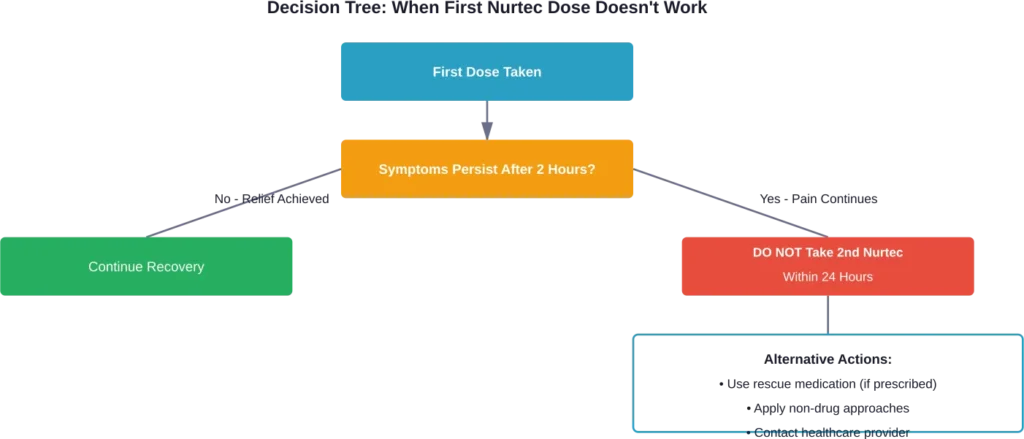
But what if the first dose doesn’t fully resolve symptoms?

What the Official Prescribing Information Says
The prescribing information is clear: for acute treatment, the recommended dosage is one 75 mg dose taken as needed, with a maximum of one dose in a 24-hour period.
There’s no provision for a second dose within the same day, even if the migraine persists or worsens. The drug is designed to provide sustained relief, and stacking doses doesn’t improve efficacy.
Can You Repeat the Dose in 24 Hours?
Yes—but only after a full 24 hours have passed since the first dose. If another migraine attack occurs the next day, another 75 mg dose can be taken.
However, certain medications that interact with Nurtec ODT require an even longer waiting period. If taking drugs that increase Nurtec levels in the body, patients should wait at least 48 hours between doses.
What Happens If You Take 2 Nurtec in 1 Day
Taking two doses of Nurtec ODT within a 24-hour window exposes the body to 150 mg of rimegepant instead of the intended 75 mg. This isn’t a therapeutic dose—it’s an overdose scenario.
While Nurtec ODT has been studied in long-term safety trials, those studies involved participants taking the medication according to prescribed schedules. Research published in the Journal of Pain Research (2024) examined rimegepant safety in participants who self-administered rimegepant 75 mg up to once daily as needed for 52 weeks to treat attacks, or every other day plus as needed for 12 weeks. These schedules didn’t involve double-dosing within a single day.
Potential Side Effects and Risks
Common side effects of Nurtec ODT at the standard 75 mg dose include nausea and stomach pain. Doubling the dose within 24 hours could intensify these reactions.
Other possible side effects from excessive dosing might include:
- Increased nausea or abdominal discomfort
- Allergic reactions (though rare)
- Drowsiness or fatigue
- Indigestion
The good news? Nurtec ODT doesn’t cause vasoconstriction, which sets it apart from some other migraine medications. Safety analyses have shown rimegepant can be used in adults with cardiovascular risk factors without the vascular concerns associated with triptans.
Still, exceeding the recommended dose isn’t risk-free. The drug hasn’t been tested for safety or efficacy when taken twice in one day.
No Evidence of Increased Benefit
Here’s the thing: taking a second dose won’t necessarily provide additional relief. Nurtec ODT works by blocking CGRP receptors involved in migraine pathways. Once those receptors are blocked, adding more medication doesn’t enhance the effect.
Real talk—if the first dose isn’t working, a second dose likely won’t either. Migraine treatment sometimes requires a different approach or medication, not simply more of the same drug.
What to Do If You’ve Already Taken 2 Doses
Mistakes happen. Maybe the pain was severe, or there was confusion about the dosing schedule. If two Nurtec doses have already been taken within 24 hours, here’s what to consider.
Monitor for Adverse Reactions
Watch for any unusual symptoms, particularly increased nausea, allergic reactions (rash, swelling, difficulty breathing), or severe stomach pain. Most people tolerate Nurtec well, but doubling the dose increases the likelihood of side effects.
Contact a Healthcare Provider
Reach out to a doctor or pharmacist for guidance, especially if concerning symptoms develop. They can provide personalized advice based on medical history and current medications.
For immediate concerns about medication errors or potential overdose, the Poison Control helpline is available 24/7. According to Poison Control, taking too much medicine is among the most common medication errors, and problems can range from minor to serious.
Don’t Take Another Dose
After taking two doses in one day, wait at least 24 hours (or 48 hours if taking interacting medications) before considering another dose. Give the body time to process the medication already taken.
| Scenario | Recommended Wait Time | Action |
|---|---|---|
| Standard dosing (no drug interactions) | 24 hours | One dose per day maximum |
| Taking interacting medications | 48 hours | Extended wait required |
| Two doses taken in one day | 24-48 hours | Skip next scheduled dose, monitor symptoms |
| Severe or unusual symptoms | N/A | Contact healthcare provider immediately |
Drug Interactions That Affect Nurtec Dosing
Certain medications increase rimegepant levels in the blood, which is why the 48-hour rule exists for some patients. These drugs inhibit enzymes that metabolize Nurtec, causing it to stay in the system longer.
Medications that may require the extended 48-hour waiting period include certain:
- Antifungal medications
- Antibiotics (particularly macrolides)
- HIV protease inhibitors
- Some antidepressants
Always discuss current medications with a healthcare provider before starting Nurtec ODT. The interaction profile matters, and dosing adjustments may be necessary.
Preventive Migraine Medications
What about patients using Nurtec for acute treatment while also taking other preventive migraine medications?
Research has evaluated this scenario. A study published in the Journal of Pain Research (2024) found that of 1800 rimegepant-treated participants, 243 (13.5%) took a concomitant preventive medication, with preventive migraine medications allowed if dosing was stable for ≥2 months prior to baseline.
But this still doesn’t justify taking two Nurtec doses in one day. The once-daily limit applies regardless of other migraine medications in the regimen.
Alternative Strategies When One Dose Isn’t Enough
So what’s the solution when a single Nurtec dose doesn’t fully resolve migraine symptoms?
Consider Rescue Medications
Many migraine patients use a “rescue” medication in addition to their primary treatment. If Nurtec doesn’t provide complete relief, a different class of medication might help.
Options could include NSAIDs, antiemetics for nausea, or in some cases, other prescription migraine treatments. This should be discussed with a healthcare provider in advance, so there’s a plan in place when breakthrough migraine occurs.
Non-Pharmacological Approaches
Sometimes combining medication with other strategies improves outcomes:
- Resting in a dark, quiet room
- Applying cold or warm compresses
- Staying hydrated
- Using relaxation techniques
These won’t replace medication, but they can support recovery when symptoms persist.
Reassess Treatment Plan
If Nurtec frequently fails to provide adequate relief, it might be time to reevaluate the migraine treatment strategy. Migraine is complex, and what works for one person may not work for another.
A healthcare provider might suggest:
- Switching to preventive dosing (every other day)
- Adding a different preventive medication
- Trying an alternative acute treatment
- Investigating potential migraine triggers
Long-Term Safety Considerations
Nurtec ODT has been evaluated in long-term safety studies. One open-label study followed participants for 52 weeks, with some using rimegepant up to once daily as needed and others using it every other day for prevention.
The safety profile remained consistent throughout the study period. Importantly, participants weren’t instructed to take multiple doses in a single day—the protocol specifically capped acute use at once daily.
Medication Overuse Headache
One concern with frequent acute migraine medication use is medication overuse headache (MOH), a condition where the medication itself triggers rebound headaches.
While Nurtec ODT is generally considered to have a lower risk of MOH compared to some older migraine treatments, taking it more frequently than recommended could still pose problems. Proper dosing schedules help minimize this risk.
Frequently Asked Questions
No. The recommended maximum is one 75 mg dose per 24-hour period for acute treatment, regardless of whether symptoms return or a new attack begins. Wait at least 24 hours before taking another dose. If migraines are occurring daily or near-daily, discuss preventive treatment options with a healthcare provider.
Contact a healthcare provider or Poison Control immediately. Taking 150 mg at once (two tablets simultaneously) is double the recommended dose. Monitor for increased side effects like nausea or allergic reactions, and don’t take another dose for at least 48 hours unless directed by a medical professional.
Specific pharmacokinetic data about rimegepant elimination is not universally documented in standard sources. For detailed information about how long this medication remains in the body and its implications for dosing intervals, consult with a healthcare provider or pharmacist.
Switching dosing schedules should be done under medical supervision. The preventive regimen (every other day dosing) is designed to reduce migraine frequency over time, while acute dosing treats attacks as they occur. A healthcare provider can help determine the best approach based on migraine patterns and treatment response.
Nurtec ODT and triptans work through different mechanisms. Triptans cause vasoconstriction and may not be suitable for patients with cardiovascular risk factors. Rimegepant doesn’t induce vasoconstriction, which research has shown allows for use in adults with certain CV risk factors. However, both medication classes have dosing limits to prevent overuse and medication overuse headache.
Not every migraine medication works for every patient. If Nurtec consistently fails to provide relief after several uses, discuss alternatives with a healthcare provider. Options include other CGRP antagonists, triptans, preventive medications, or combination approaches. Migraine treatment is often individualized.
Generally speaking, Nurtec ODT can be taken alongside many over-the-counter pain relievers, but this should be confirmed with a healthcare provider. Some patients use combination approaches for severe attacks. However, this doesn’t change the fact that Nurtec itself should only be taken once per 24-hour period.
The Bottom Line on Taking 2 Nurtec in 1 Day
Taking 2 Nurtec doses within a 24-hour period isn’t recommended and isn’t supported by clinical evidence. The standard dosing—one 75 mg tablet per day maximum for acute treatment—exists for safety and efficacy reasons.
If one dose isn’t providing adequate relief, the solution isn’t doubling up. It’s working with a healthcare provider to develop a comprehensive migraine management plan that might include rescue medications, preventive strategies, or alternative treatments.
Migraine management is complex. But following prescribed dosing schedules protects both safety and treatment outcomes.
If questions about Nurtec dosing arise, or if current migraine treatment isn’t working well enough, reach out to a healthcare provider. They can provide personalized guidance based on individual migraine patterns, medical history, and treatment goals.