
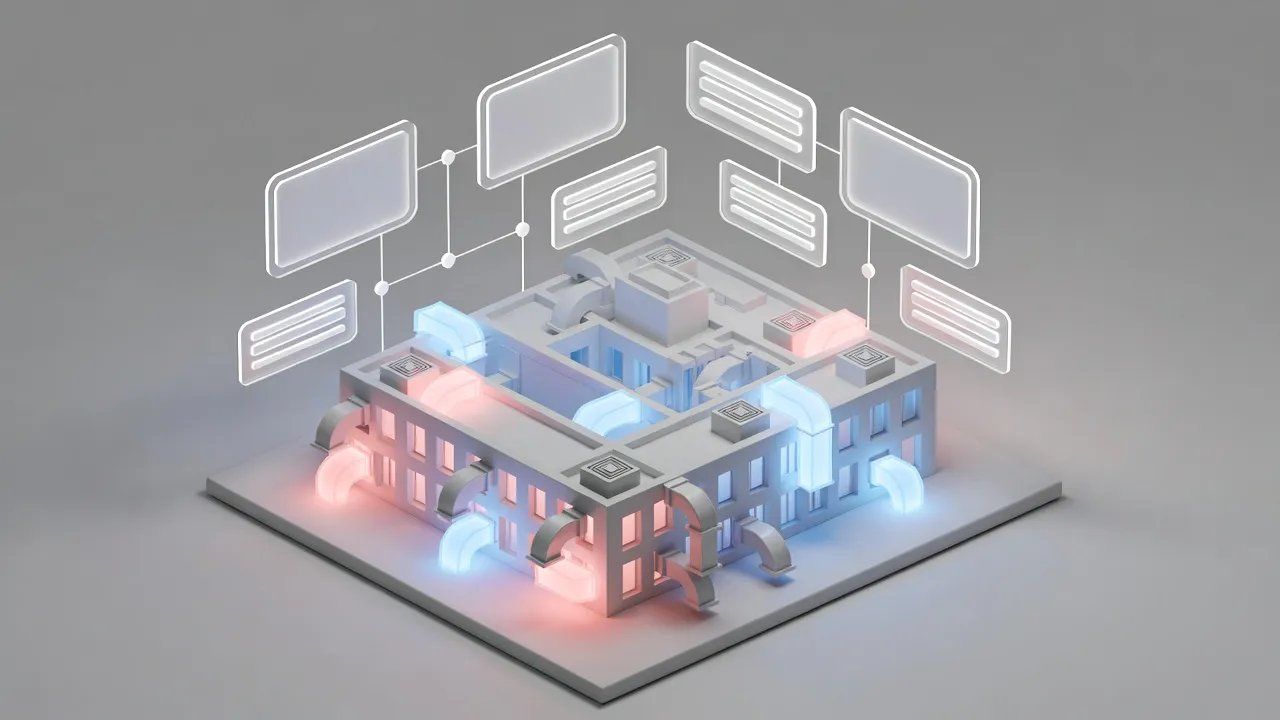
Quick Summary: Finding the right HVAC web development company can transform your heating and cooling business online presence. This comprehensive guide reviews 15 specialized agencies with proven track records in building high-converting HVAC websites, from design and SEO to lead generation and mobile optimization. Each agency brings unique strengths in serving the heating, ventilation, and air conditioning industry.
The HVAC industry faces unique digital challenges. Seasonal demand fluctuations, emergency service calls, and local competition mean your website needs to work harder than most.
A generic web development shop won’t cut it. HVAC contractors need agencies that understand comfort systems, service areas, and what makes homeowners pick up the phone at 2 AM when their furnace quits.
That’s why specialized HVAC web development companies exist. They build sites optimized for lead capture, mobile searchers, and the specific journey a stressed homeowner takes when their air conditioning fails on the hottest day of summer.
This guide examines 15 agencies that have proven themselves in the heating and cooling space. Not all will fit every business, but understanding what each brings to the table helps contractors make informed decisions.
What Makes HVAC Web Development Different
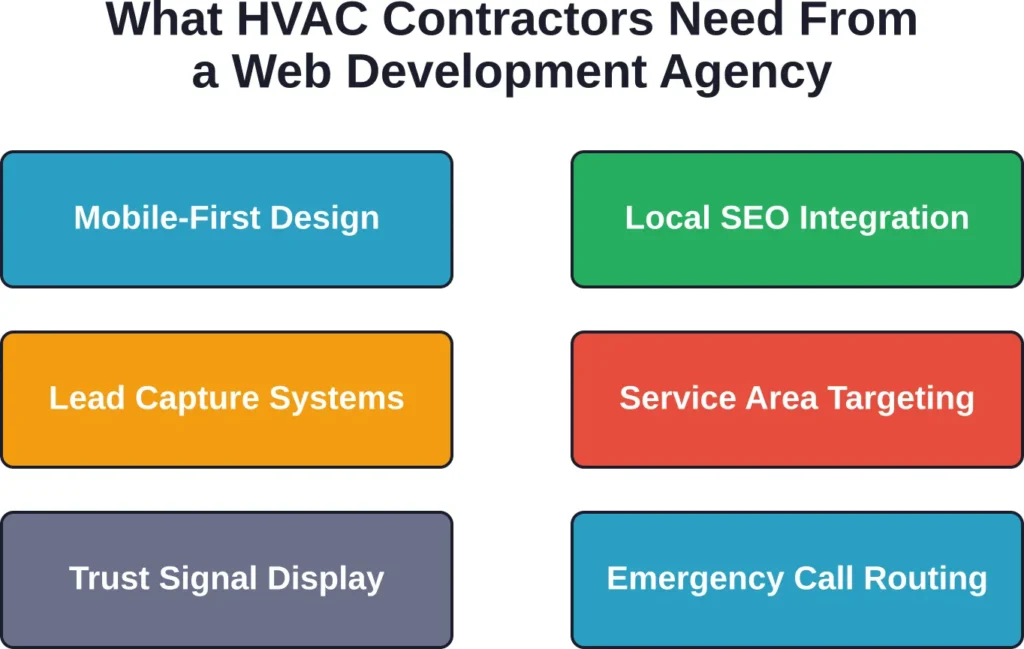
Building websites for heating and cooling companies requires specific expertise that general web developers often lack.
The buyer journey differs dramatically from retail or B2B. Someone searching for furnace repair at midnight isn’t browsing casually. They need help now. The website must accommodate both emergency visitors and homeowners planning installations months in advance.
Service area targeting matters more than in most industries. An HVAC company in Phoenix needs completely different seasonal messaging than one in Minneapolis. The site structure must handle multiple service areas without cannibalizing SEO performance.
Trust signals carry extra weight. HVAC work happens inside homes, often when residents are present. Licensing information, insurance certificates, technician photos, and genuine reviews build the credibility needed to convert visitors.
Mobile dominates traffic. Industry analyses indicate that HVAC searches happen overwhelmingly on smartphones, particularly during emergencies. Sites that don’t load fast and convert well on mobile simply don’t compete.
Technical Requirements Specific to HVAC Sites
Call tracking integration needs to be bulletproof. HVAC businesses live and die by phone conversions, so proper attribution matters.
Booking systems must handle complex scheduling. Installation requires longer appointment windows than repairs. Emergency calls need priority routing. Online scheduling for HVAC services involves more variables than booking a restaurant reservation.
The content management system should let non-technical staff update seasonal promotions quickly. When temperatures spike or drop, offers need to change immediately.
Top 15 HVAC Web Development Companies
These agencies have demonstrated consistent results for heating and cooling contractors. Each brings different strengths to the table.
1. Oski

Oski develops smart, high-performance digital solutions for HVAC companies that want to stand out in local markets. They specialize in modern web development, cloud technologies, and AI-enhanced features for the home services industry.
Their websites feature clean, conversion-oriented designs with excellent user experience on both desktop and mobile. Oski incorporates AI tools such as smart chat systems and predictive scheduling to help contractors work more efficiently and improve customer interactions.
The company delivers fast, secure, and locally optimized websites that rank well in search results and convert visitors into customers. They create solutions including online booking systems, customer portals, and operational dashboards tailored for HVAC needs.
Oski is ideal for forward-thinking HVAC contractors and growing businesses that require scalable, future-ready digital platforms.
Contact Information:
- Website: oski.site
- Phone: +48571282759
- Email: [email protected]
- Address: Kaupmehe tn 7, 10114 Tallinn, Estonia
- LinkedIn: www.linkedin.com/company/oski-solutions
2. Mobian Studio
Mobian Studio builds dedicated engineering teams for HVAC contractors who need fast and reliable digital solutions. They specialize in mobile apps, AI-powered tools, and custom web platforms tailored specifically for the heating, cooling, and plumbing industry.
The studio offers both outsourcing and outstaffing models, letting contractors either hand over complete projects or embed senior developers into their existing teams. This flexibility helps HVAC businesses strengthen their online presence without the overhead of building an in-house tech department.
Mobian focuses on clean architecture, full documentation, and production-ready delivery. Their teams create mobile booking systems, technician dashboards, and intelligent chat features that streamline job management and customer communication. They also excel at integrating new tools with legacy software commonly used in HVAC operations.
Post-launch partnership is a core part of their approach, including ongoing maintenance, scaling support, and rapid updates during busy seasons. This makes them well-suited for contractors who want a long-term technology partner.
Contact Information:
- Website: mobian.studio
- Phone: [email protected]
- Address: Harju maakond, Tallinn, Kesklinnalinnaosa, Masina tn 22, 10113
- LinkedIn: www.linkedin.com/company/mobian-studio
3. Lengreo

Lengreo serves as a complete marketing and technology partner for HVAC companies aiming to grow their online customer base. They combine custom website development with integrated digital strategies built for home service businesses.
Their websites are designed with strong conversion focus, featuring clear calls-to-action for emergency repairs, maintenance plans, and seasonal offers. Lengreo integrates local SEO, lead capture forms, chat systems, and automated follow-up sequences that turn visitors into booked service appointments.
The team runs performance-driven paid ad campaigns across multiple platforms while optimizing for lower cost per lead. They also develop content and outreach strategies that position HVAC contractors as trusted local experts in their service areas.
Lengreo works best with established contractors who are ready to scale their digital marketing and improve visibility in competitive local markets.
Contact Information:
- Website: Lengreo.com
- Phone: +31 686 147 566
- Email: [email protected]
- Address: Vrijstraat 9 C/D, 5611 AT Eindhoven, Netherlands
- LinkedIn: Lengreo
- Twitter: @Lengreo
- Instagram: @lengreo
4. Gilzor

Gilzor creates custom web and mobile solutions designed for HVAC contractors of various sizes. They focus on building digital products that enhance operations, attract more customers, and drive revenue growth.
Their development process includes thorough idea validation, user-focused design, and full-cycle creation of online booking platforms, customer portals, and technician mobile applications. Gilzor also helps with go-to-market strategies so new digital tools quickly reach local homeowners.
The company builds scalable systems that handle seasonal demand spikes and integrate smoothly with scheduling, payment, and inventory software. Their strict quality assurance ensures high reliability, especially for critical emergency service requests.
Gilzor is a strong choice for HVAC businesses that prefer custom-built digital products instead of standard templates and want to modernize their customer experience.
Contact Information:
- Website: www.gilzor.com
- Email: [email protected]
- Address: Poland, Warsaw, Office 58, street Adama Mickiewicza 37, 01-625
- LinkedIn: www.linkedin.com/company/gilzor-softwaredevelopment
5. A-listware

A-listware supplies dedicated software development teams and technical solutions for the HVAC sector. They help contractors develop and maintain professional websites, online booking systems, and internal tools that support business expansion.
They provide both team augmentation and full outsourcing options, delivering custom web development, UX/UI design, and application services optimized for home service providers. Their solutions typically include well-structured service area pages, review integration, and CRM connections for smoother lead management.
A-listware also handles cloud infrastructure, security measures, and responsive design so HVAC websites perform well across all devices and protect customer information.
This partner fits HVAC companies that need consistent technical support and ongoing website improvements without creating their own internal development team.
Contact Information:
- Website: a-listware.com
- Phone: +1 (888) 337 93 73
- Email: [email protected]
- Address: North Bergen, NJ 07047, USA
- LinkedIn: www.linkedin.com/company/a-listware
- Facebook: www.facebook.com/alistware
6. Comrade Digital Marketing Agency

Comrade specializes in local service businesses, with HVAC representing a core vertical. They combine web development with aggressive local SEO campaigns.
The agency’s sites prioritize Google Business Profile integration. Design elements drive reviews and local engagement, recognizing these factors influence local pack rankings.
Their development process includes competitive analysis specific to each contractor’s market. Comrade audits what local competitors offer online and positions the new site to stand out.
Schema markup implementation goes beyond basics. Comrade adds structured data for service areas, business hours, financing options, and other elements that enhance search visibility.
They offer month-to-month arrangements rather than long contracts. This flexibility appeals to contractors testing digital marketing or those burned by previous agency relationships.
7. Thrive Internet Marketing Agency
Thrive builds HVAC websites as part of comprehensive digital marketing programs. Their approach assumes web development, SEO, and paid advertising work together rather than as isolated tactics.
The agency’s design process emphasizes user experience testing. They create wireframes and prototypes to validate navigation and conversion paths before full development begins.
Thrive’s content team produces industry-specific resources. Their HVAC writers understand equipment types, efficiency ratings, and maintenance requirements, creating genuinely useful content rather than keyword-stuffed pages.
According to published case studies, Thrive reported one HVAC client achieved a 218 percent increase in eCommerce orders year-over-year after implementing Thrive’s recommendations. Another saw a 113 percent revenue increase and 155 percent improvement in return on advertising spend.
The agency works with contractors at various growth stages. Their service tiers accommodate both smaller operations testing digital marketing and established companies ready for sophisticated campaigns.
8. Digital Shift

Digital Shift positions itself as a boutique agency for home services companies. Their smaller client roster allows for personalized attention and custom solutions.
The agency emphasizes website speed as a competitive advantage. Their development practices and hosting configurations produce sites that load in under two seconds even on 3G connections.
Design work balances aesthetics with function. Digital Shift creates attractive sites but never sacrifices conversion elements for visual impact. Forms, phone numbers, and calls-to-action always remain prominent.
They handle photography coordination as part of website projects. Rather than relying on stock images, Digital Shift arranges photoshoots of actual technicians, trucks, and completed installations.
The agency maintains ongoing relationships rather than project-based engagements. Most clients stay for years, with the website serving as the foundation for expanding digital marketing efforts.
9. Hook Agency

Hook Agency specializes in home services marketing, with particular strength in the plumbing and HVAC sectors. Their team includes former contractors who understand operational realities.
The agency’s websites integrate with their proprietary marketing platform. This unified system manages SEO, reputation, and advertising alongside the website itself.
Hook emphasizes transparent reporting. Contractors access dashboards showing traffic sources, conversion rates, and cost per lead. This visibility helps business owners make informed marketing decisions.
They prefer working with contractors ready to implement recommendations. The agency provides strategy but needs clients willing to invest in content creation, review generation, and other ongoing activities.
10. WebFX

WebFX operates at significant scale, serving thousands of clients across industries. Their HVAC division applies enterprise-level resources to contractor marketing.
The agency promotes generative engine optimization (GEO) as a capability, though specific performance metrics require direct verification from the company. Their websites incorporate their proprietary technology platform, MarketingCloudFX.
This system tracks customer journeys from first click through closed sale, providing attribution most contractors never see.
Their team size enables comprehensive service delivery. Projects move quickly because developers, designers, writers, and SEO specialists work in parallel rather than sequentially.
The agency works best for contractors with substantial budgets and complex needs. Their minimum engagements exceed what smaller HVAC companies typically invest in digital marketing.
11. Scorpion

Scorpion focuses exclusively on home services companies, with HVAC representing a significant portion of their client base. Their platform combines web development with call tracking, chat systems, and review management.
The company builds custom WordPress sites designed around conversion optimization. Their designers understand HVAC buyer psychology and structure pages accordingly.
What sets Scorpion apart is their technology stack. Call tracking integrates natively with their CRM, giving contractors clear attribution from ad spend to closed jobs. Chat widgets connect to real representatives who understand HVAC terminology.
They handle ongoing optimization as part of their service model. Sites don’t launch and then stagnate—Scorpion continuously tests headlines, calls-to-action, and layouts to improve conversion rates.
The agency works primarily with established contractors, typically those with multiple trucks and serious growth goals. Their approach assumes the business is ready to scale and needs technology to support that expansion.
12. HVAC Webmasters
HVAC Webmasters lives up to their name by specializing exclusively in heating, cooling, and plumbing websites. This narrow focus means every developer and designer on the team understands the industry intimately.
Their sites emphasize local SEO from the ground up. The architecture supports multiple service area pages without duplicate content penalties. Schema markup for HVAC services comes standard.
The agency offers fixed-scope packages, which appeals to contractors who want predictable costs. Design options include customization within templated frameworks, balancing uniqueness with development efficiency.
Content comes included. HVAC Webmasters provides baseline service pages written by industry specialists. Contractors can customize from there rather than starting from scratch.
Maintenance packages keep sites updated with security patches and WordPress core updates. For contractors without dedicated IT support, this managed approach prevents sites from becoming outdated or vulnerable.
13. Contractor Webmasters
Contractor Webmasters serves multiple trades but maintains a strong HVAC specialty team. They’ve built hundreds of heating and cooling sites over nearly two decades in business.
Their strength lies in content strategy. Instead of generic service pages, they create comprehensive resources that answer homeowner questions. This content-first approach generates organic traffic beyond branded searches.
The agency provides custom design work rather than templates. Each site receives unique layouts tailored to the contractor’s brand and market positioning. This customization takes longer but produces distinctive results.
Integration capabilities run deep. Contractor Webmasters connects websites to ServiceTitan, Housecall Pro, and other field service management platforms. Forms and calls flow directly into the contractor’s existing workflow.
They take a partnership approach to client relationships. Account managers conduct quarterly strategy reviews, analyzing traffic patterns and conversion rates to recommend improvements.
14. Blue Corona

Blue Corona, now operating as RYNO Strategic Solutions, pioneered performance-based marketing for contractors. Their web development integrates tightly with their paid advertising services.
The agency builds sites with conversion tracking embedded throughout. Every button click, form submission, and phone call gets attributed back to its source. This data obsession helps contractors understand exactly which marketing efforts produce revenue.
Design follows a proven formula refined across thousands of contractor sites. Blue Corona has tested countless variations to identify layouts that convert. New clients benefit from this accumulated knowledge.
Their hosting infrastructure emphasizes speed. Sites load quickly even during traffic spikes, which matters during seasonal HVAC rushes when contractors run aggressive campaigns.
Blue Corona works best for contractors ready to invest in paid advertising alongside web development. Their model assumes marketing spend will drive traffic to the optimized site they build.
15. Sagefrog Marketing Group

Sagefrog approaches HVAC web development from a full-service marketing agency perspective. Web builds integrate with broader brand strategies, content marketing, and traditional advertising.
Their design aesthetic skews more corporate than some HVAC-focused competitors. This serves contractors looking to position themselves as premium service providers rather than competing primarily on price.
The agency excels at communicating technical information accessibly. Their content team translates HVAC specifications and processes into language homeowners understand without talking down to the audience.
Video integration comes standard in Sagefrog builds. They encourage contractors to invest in professional video content and design sites to showcase it prominently.
Project timelines run longer than template-based competitors. The custom strategy work and design iterations take time but produce distinctive results for contractors willing to invest in the process.
Key Features to Evaluate in HVAC Web Development Companies
Not every contractor needs the same capabilities. Priorities shift based on company size, market maturity, and growth objectives.
That said, certain features matter across nearly all HVAC web development projects.
Industry Experience Verification
Request examples of previous HVAC sites the agency built. Don’t just look at design—test the user experience. Try booking a service, finding service area information, and navigating on mobile.
Check whether those example sites still perform well. An agency showing work from five years ago should demonstrate those clients still rank and convert, indicating ongoing optimization rather than abandonment post-launch.
Ask about HVAC-specific challenges the agency solved. How do they handle multiple service areas? What’s their approach to seasonal content? How do they structure equipment pages for SEO without creating thin content?
Technology Stack and Integration Capabilities
The website needs to connect with tools contractors already use. Field service management software, accounting systems, and CRM platforms should integrate without manual data entry.
Modern HVAC websites benefit from advanced technology. Chat systems that qualify leads, booking tools that check technician availability, and financing calculators that help homeowners understand payment options all require sophisticated implementation.
Ask about the content management system. WordPress dominates for good reasons, but implementation quality varies wildly. The contractor’s team should be able to update content without developer assistance.
Mobile Performance Standards
Test agency-built sites on actual mobile devices, not just desktop browser tools. Load speed, tap target sizing, and form usability differ between simulation and reality.
Ask about AMP or other mobile optimization approaches. While not mandatory, agencies serious about mobile performance have informed perspectives on these technologies.
Review mobile conversion rates from existing clients. Sites should convert mobile traffic at rates comparable to desktop, not at dramatically lower percentages indicating poor mobile UX.
Local SEO Implementation
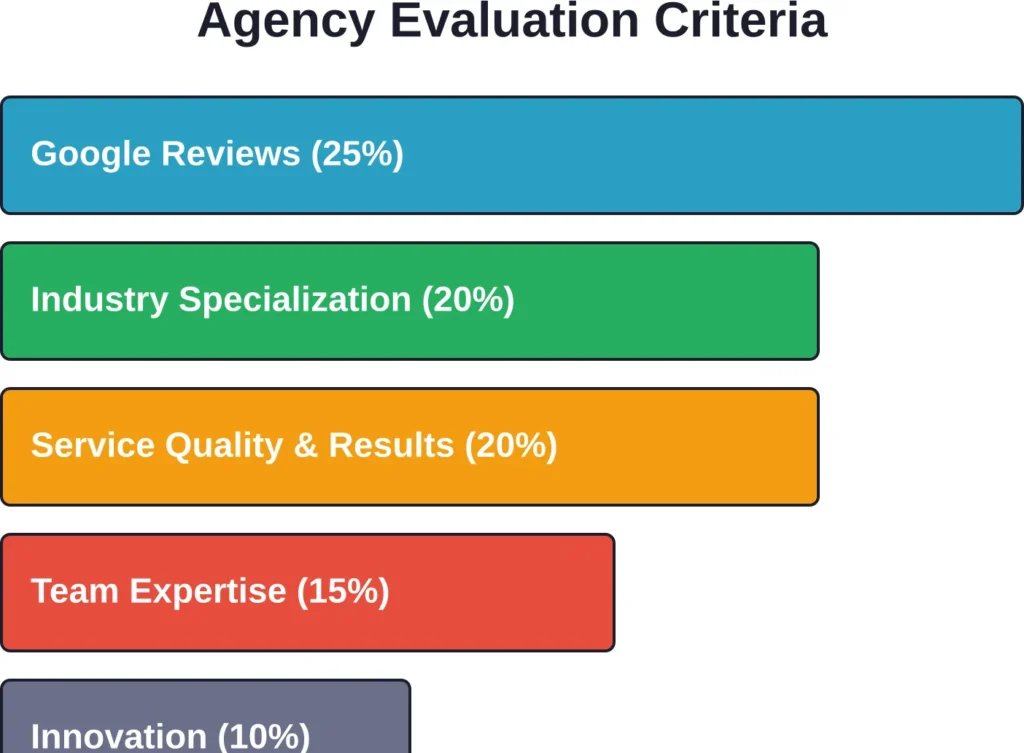
According to First Page Sage’s evaluation criteria for HVAC SEO agencies, specialty focus carries 10 percent weight, while average reviews account for 20 percent of overall scoring.
The agency should articulate their local SEO strategy clearly. How do they build citations? What’s their approach to Google Business Profile optimization? How do they generate and display reviews?
Service area pages require special attention. The approach must serve users and search engines simultaneously, no small feat given Google’s sophisticated duplicate content detection.
Schema markup for HVAC services should come standard. LocalBusiness, Service, and Product schemas help search engines understand offerings and display rich results.
Content Strategy and Creation
Beautiful design means nothing without content that engages visitors and ranks in search engines.
Ask whether content comes included or costs extra. Some agencies provide baseline service pages while others expect contractors to supply all copy.
Writing quality varies dramatically. Request content samples specific to HVAC topics. Generic marketing writers often produce obvious filler that doesn’t answer real homeowner questions.
The content strategy should extend beyond launch. How does the agency recommend expanding the site over time? Blog content, seasonal pages, and new service offerings all require planning.
Common Pitfalls When Hiring HVAC Web Developers
Contractors make predictable mistakes when selecting web development partners. Awareness helps avoid expensive regrets.
Choosing Based on Price Alone
The cheapest option rarely delivers the best value. Web development quality differences translate directly to lead generation performance.
A budget website that generates three leads monthly costs more than a properly built site generating thirty, even if the better site cost five times more upfront.
Consider total cost of ownership. Cheap builds often require complete rebuilds within two years. Quality development lasts five to seven years with routine maintenance.
Ignoring Ongoing Costs
The initial build represents only part of total investment. Hosting, maintenance, content updates, and optimization generate recurring costs.
Clarify what happens after launch. Who handles updates? What does maintenance include? How quickly can seasonal promotions go live?
Some agencies bundle ongoing services while others charge separately. Neither approach is inherently better, but contractors must understand the complete cost structure.
Failing to Verify Industry Experience
General web developers struggle with HVAC-specific challenges. Service area optimization, emergency call routing, and seasonal content strategies require industry knowledge.
Ask potential agencies about HVAC licensing display, financing integration, and equipment comparison tools. Their answers reveal whether they understand contractor needs.
Request introductions to existing HVAC clients. Speaking directly with other contractors provides insights no sales presentation can match.
Neglecting Mobile Testing
Agencies often showcase desktop designs during presentations. Insist on seeing mobile layouts and testing on actual phones.
The mobile experience drives most lead generation. Sites that work beautifully on desktop but frustrate mobile users waste most of their traffic.
Test forms especially carefully. Multi-step forms, dropdown menus, and date pickers often break on mobile despite working on desktop.
Questions to Ask Potential HVAC Web Development Agencies
These questions reveal agency capabilities and working styles more effectively than rehearsed sales pitches.
How many HVAC websites have you launched in the past year? Specific numbers matter more than vague claims of experience.
Can you show traffic and conversion data from similar clients? Results matter more than portfolio aesthetics. Agencies should demonstrate actual performance metrics.
What happens if we’re unhappy with the initial design? Revision processes vary dramatically. Understand how many rounds of changes are included and what triggers additional costs.
How do you handle website hosting and maintenance? Clarify whether these services come included, cost extra, or remain the contractor’s responsibility.
What’s your typical project timeline? Reasonable timelines run six to twelve weeks for custom builds. Faster promises often indicate template-based approaches. Longer timelines may signal poor project management.
How do you approach SEO during the build process? SEO should inform site architecture from the beginning, not bolt on after launch.
What integrations do you commonly implement for HVAC clients? Field service software, financing tools, and chat systems should be familiar territory.
Who will be our primary point of contact? Meet the actual team members who’ll work on the project, not just salespeople.
What reporting do you provide after launch? Traffic, leads, and conversion tracking should come standard. Ask to see sample reports.
How do you handle website content creation? Clarify whether writing comes included and whether the agency has HVAC-specific content expertise.
The Role of Ongoing Optimization
Website launch marks the beginning, not the end, of effective web development.
Conversion rate optimization should continue indefinitely. Testing different headlines, form placements, and calls-to-action incrementally improves performance over time.
Content expansion serves both users and search engines. Adding city-specific pages, detailed equipment guides, and maintenance advice gradually increases organic visibility.
Technical maintenance prevents degradation. WordPress, plugins, and security certificates require regular updates. Neglected sites become slow, vulnerable, or broken.
Some agencies include ongoing optimization in their engagements while others charge separately. Either model works if contractors budget appropriately.
The key is ensuring someone monitors performance and makes continuous improvements. Websites aren’t brochures that remain static for years—they’re marketing assets requiring active management.
How HVAC Web Development Fits Broader Marketing Strategy
The website serves as the foundation for digital marketing but can’t succeed in isolation.
Paid advertising drives immediate traffic while SEO builds over time. The website must convert both traffic sources effectively, which requires different optimization approaches.
Reputation management feeds website performance. Reviews displayed prominently on the site build trust, while the site’s design influences whether customers leave reviews.
Email marketing brings past customers back to the site for maintenance reminders and seasonal promotions. The site needs dedicated landing pages for these campaigns.
Social media drives awareness and some direct traffic. The website provides the content worth sharing and the destination for social visitors to convert.
Think of the website as the hub with other marketing channels as spokes. Everything connects back to the site, which must handle varied traffic sources and visitor intents.
Specialized Features Worth Considering
Beyond fundamental requirements, certain advanced features deliver significant value for contractors ready to invest.
Online Booking Systems
Allowing customers to schedule service online captures leads outside business hours. Implementation requires integration with dispatching systems and technician calendars.
Done poorly, online booking creates scheduling conflicts and customer frustration. Done well, it converts visitors who prefer digital interaction over phone calls.
Financing Calculators
HVAC replacements represent significant investments. Interactive calculators that show monthly payments at various financing terms help homeowners visualize affordability.
These tools require integration with actual financing programs the contractor offers. Generic calculators provide less value than those displaying real terms.
Live Chat Systems
Chat widgets engage visitors before they leave. Effectiveness depends entirely on response quality—slow or unhelpful responses damage conversion rates rather than helping.
AI chatbots handle qualification questions before connecting qualified leads to human representatives. This hybrid approach scales better than purely human chat.
Video Integration
Video builds trust and explains complex topics efficiently. Sites should accommodate technician introductions, installation time-lapses, and maintenance tutorials without sacrificing load speed.
Service Area Maps
Interactive maps showing coverage areas help visitors quickly determine eligibility. This improves user experience and reduces wasted inquiries from outside service territories.
| Feature | Best For | Implementation Complexity | Conversion Impact |
|---|---|---|---|
| Online Booking | Established contractors with multiple technicians | High | High for maintenance, medium for replacements |
| Financing Calculators | Companies offering installation financing | Medium | High for replacement sales |
| Live Chat | Contractors available to respond promptly | Medium | Medium to high depending on response quality |
| Video Integration | All contractors willing to invest in production | Low | Medium, higher for premium positioning |
| Service Area Maps | Contractors serving multiple distinct territories | Low | Low direct impact, improves UX significantly |
| Equipment Comparison Tools | Companies selling multiple equipment brands | Medium | Medium for educated buyers |
Red Flags When Evaluating Agencies
Certain warning signs indicate agencies unlikely to deliver satisfactory results.
Guaranteed rankings represent the most obvious red flag. No agency controls Google’s algorithms. Promises of specific ranking positions by specific dates indicate either dishonesty or ignorance.
Vague timelines suggest poor project management. Professional agencies provide detailed schedules showing design phases, development milestones, and content delivery.
Inability to explain their process clearly indicates the agency either lacks defined processes or can’t communicate effectively. Both problems cause project failures.
No contract or extremely short contracts raise concerns. Reputable agencies document scope, deliverables, and responsibilities clearly.
Pressure tactics around urgency or special offers reveal sales-focused operations rather than service-focused agencies. Quality firms have steady pipelines and don’t need aggressive closing tactics.
Lack of references or unwillingness to provide them suggests unhappy clients. Every established agency should gladly connect prospects with satisfied customers.
Understanding True Web Development Costs
While specific pricing varies by scope and agency, understanding cost factors helps contractors budget appropriately.
Custom design costs more than templates but provides differentiation. Template-based sites start competitors with identical layouts, limiting branding impact.
Content creation represents significant expense. Professional HVAC copywriting, photography, and video production add to project costs but dramatically improve results.
Integration complexity affects pricing. Connecting to field service management platforms, financing systems, and marketing automation tools requires development time.
Ongoing costs include hosting, maintenance, content updates, and optimization. These typically run monthly and continue indefinitely.
When evaluating total investment, calculate cost per lead generated rather than absolute project cost. A site generating fifty quality leads monthly justifies higher investment than one generating five, regardless of build costs.
Making the Final Decision
After researching agencies and conducting interviews, contractors face the decision.
Create a simple scoring matrix evaluating each agency against critical criteria: industry experience, technical capabilities, communication quality, cultural fit, and total cost of ownership.
Trust matters more than any spreadsheet reveals. Contractor instincts about whether an agency will be a reliable partner deserve weight in the decision.
Check references thoroughly. Ask other contractors about responsiveness, flexibility when needs changed, and performance relative to promises.
Review contracts carefully before signing. Ensure deliverables, timelines, revision processes, and ongoing responsibilities are documented clearly.
Remember that the cheapest option rarely delivers the best value while the most expensive doesn’t guarantee superior results. The right agency balances capability, experience, and investment level appropriate for the contractor’s business stage.
Beyond the Website Launch
The website’s launch represents the foundation, not the finish line.
Plan for continuous improvement. Allocate budget for ongoing optimization, content expansion, and feature additions. Websites that evolve with business needs deliver value for years.
Monitor performance religiously. Review traffic, leads, and conversion rates monthly. Identify patterns in seasonal fluctuations and adjust content accordingly.
Invest in traffic generation. Even perfect websites need visitors. SEO, paid advertising, and reputation management drive the traffic the site converts into customers.
Maintain the technology. Security updates, plugin maintenance, and speed optimization prevent degradation over time.
The relationship with the web development agency should continue beyond launch. Whether through formal retainer agreements or project-based engagement, maintain access to technical expertise as needs evolve.
Frequently Asked Questions
Custom HVAC website projects typically require 8 to 12 weeks from kickoff to launch. This timeline includes discovery and strategy, design and revision rounds, content creation, development and integration, testing, and final deployment. Template-based builds may complete faster, in 4 to 6 weeks, though with less customization. Complex projects involving custom tools, extensive integrations, or large content libraries may extend to 14 to 16 weeks. Rushed timelines often compromise quality, particularly in content creation and testing phases.
WordPress dominates HVAC websites for good reasons. The platform offers flexibility, extensive plugin ecosystems, and broad developer familiarity. Most contractors lack internal technical staff, so WordPress’s user-friendly content management allows team members to update content without developer assistance. Custom platforms may offer specific advantages for enterprise-scale operations with complex requirements, but most heating and cooling companies get superior value from professionally built WordPress sites. The key is implementation quality rather than platform choice—poorly built WordPress sites perform just as badly as any other poorly built site.
Prominent phone numbers visible on every page without scrolling generate the highest lead volume for most HVAC contractors, since many homeowners prefer calling for emergency service. Contact forms with minimal required fields convert better than lengthy forms requesting excessive information. Service area pages optimized for local search capture geographic traffic. Customer reviews displayed prominently throughout the site build trust that converts visitors. Mobile optimization impacts all conversions since most HVAC searches happen on smartphones. Online booking tools work well for maintenance scheduling though less effectively for emergency repairs or major replacements.
Expect ongoing website costs between several hundred to over a thousand dollars monthly depending on service level. Basic maintenance covering security updates, plugin updates, hosting, and technical support typically runs on the lower end. Comprehensive management including content updates, conversion optimization, performance monitoring, and monthly reporting costs more. Some agencies bundle ongoing services with initial development while others charge separately. Budget also for periodic content expansion, seasonal campaign pages, and feature additions that enhance performance over time. Websites require active management to maintain effectiveness—treating them as one-time purchases rather than ongoing marketing assets leads to degraded performance.
Technically capable contractors can build functional websites using modern site builders and WordPress themes. However, the time investment diverts attention from business operations where contractor expertise actually generates revenue. More critically, DIY builds typically lack conversion optimization, proper local SEO implementation, and integration sophistication that professional development provides. The cost difference between DIY and professional development often pays for itself within months through improved lead generation. Contractors should build their own sites only when capital constraints leave no alternative, with plans to upgrade to professional development as budget allows.
HVAC sites require stronger emergency service emphasis than most trades since heating and cooling failures often need immediate response. Seasonal content strategies matter more for HVAC than relatively stable trades like electrical work. Equipment comparison and replacement guidance play larger roles since HVAC installations involve significant investment and multiple brand options. Comfort and indoor air quality content opportunities exceed most other trades. Service area targeting matters intensely since HVAC companies rarely travel far and face direct local competition. Financing integration appears more commonly on HVAC sites given installation costs. The buyer journey differs dramatically between emergency repairs and planned replacements, requiring site architecture that serves both.
Design impacts lead generation primarily through trust and usability rather than aesthetics alone. Professional design signals business legitimacy and builds confidence needed to invite technicians into homes. However, beautiful design without conversion optimization generates compliments instead of customers. Effective HVAC web design makes calls-to-action obvious, simplifies navigation to critical information, loads quickly on mobile devices, and guides visitors toward conversion. The best HVAC websites balance visual appeal with functional effectiveness—they look professional while making it effortless for stressed homeowners to request service.
Conclusion
Selecting the right HVAC web development company shapes digital marketing success for years to come.
The agencies listed here bring proven experience in heating and cooling contractor marketing. Each offers different strengths, from comprehensive marketing platforms to specialized web development focus.
The right choice depends on contractor size, growth stage, technical sophistication, and budget. Small operations may thrive with focused web specialists, while growing companies benefit from agencies offering integrated marketing services.
Evaluate potential partners against clear criteria: demonstrated HVAC experience, technical capabilities, communication quality, and cultural fit. Check references thoroughly and review contracts carefully.
Remember that website development represents the foundation of digital marketing, not the complete strategy. Budget for ongoing optimization, content expansion, and traffic generation that converts the site into a lead generation engine.
The HVAC companies winning online in 2026 combine strong technical foundations with continuous improvement. Choose a web development partner ready to support that journey, not just deliver a one-time project.
Ready to transform your online presence? Start by requesting proposals from agencies specializing in HVAC contractor websites and comparing their approaches to your specific business needs.