

Quick Summary: Finding a reliable website maintenance company in 2026 means evaluating technical expertise, security protocols, performance optimization capabilities, and long-term support quality. The top agencies combine proactive monitoring, regular updates, and comprehensive backup systems to keep websites secure and running smoothly. This guide profiles 15 leading maintenance companies that excel in WordPress management, security hardening, performance tuning, and dedicated support for businesses of all sizes.
Websites don’t maintain themselves. Security vulnerabilities emerge daily, plugins require updates, backups need verification, and performance gradually degrades without intervention. That’s the reality facing every business with an online presence.
Here’s the thing though—maintaining a website demands specialized technical knowledge that most marketing teams simply don’t possess. Hiring in-house developers gets expensive fast. But letting maintenance slide? That’s how sites get hacked, lose data, or suffer catastrophic downtime.
Website maintenance companies fill that critical gap. They monitor sites around the clock, apply security patches before vulnerabilities get exploited, optimize database performance, and restore backups when disaster strikes. The best agencies function as an extension of your team, providing enterprise-grade website care without the enterprise-level overhead.
Businesses increasingly rely on specialized maintenance providers rather than general web design agencies. Looking for top website maintenance services in 2026 requires understanding what separates truly excellent providers from those simply offering basic upkeep.
This comprehensive guide examines the 15 best website maintenance companies operating in 2026. Each agency listed here brings demonstrated expertise in critical maintenance domains: security hardening, performance optimization, backup management, and responsive technical support.
What Website Maintenance Actually Involves
Website maintenance encompasses far more than installing plugin updates. Professional maintenance covers multiple interconnected systems that keep sites secure, fast, and functional.
Security maintenance forms the foundation. Maintenance companies scan for malware signatures, monitor for unauthorized access attempts, patch known vulnerabilities in core software and plugins, configure firewalls, implement SSL certificates, and establish intrusion detection systems. Security threats evolve constantly, making continuous monitoring essential rather than optional.
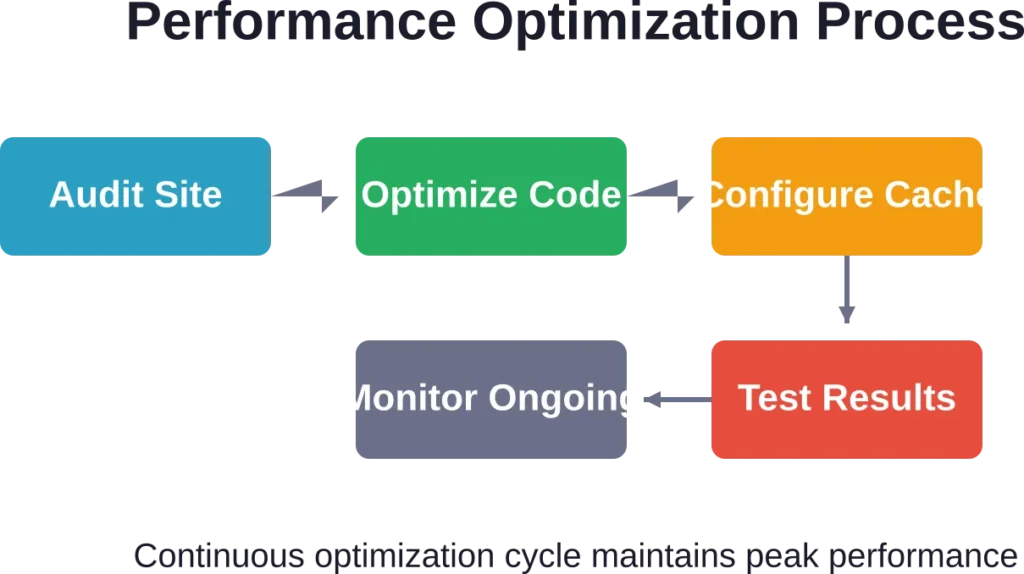
Performance optimization keeps sites loading quickly despite increasing complexity. Agencies compress images, minimize code, configure caching layers, optimize databases, implement content delivery networks, and monitor server response times. Testing shows that even minor speed improvements directly impact conversion rates and search rankings.
Backup management ensures business continuity. Professional services create automated daily backups, store copies in multiple geographic locations, regularly test restoration procedures, and maintain versioned backup histories. When sites crash or get compromised, verified backups determine whether recovery takes hours or weeks.
Software updates keep platforms current. Maintenance teams update CMS cores, plugins, themes, PHP versions, and server software while testing for compatibility issues. Updates patch security holes but can also break functionality if not properly managed.
Uptime monitoring alerts teams to outages immediately. Most web hosts provide a 99.9% uptime guarantee, though this varies by provider and service tier. Monitoring services verify actual availability and notify technicians the moment issues arise.
Content support helps businesses make routine site changes without developer involvement. Many maintenance packages include monthly content updates, form modifications, page edits, and minor design adjustments.
The 15 Best Website Maintenance Companies in 2026
These agencies represent the top tier of website maintenance providers based on technical capabilities, service quality, security expertise, and client satisfaction metrics. Each brings distinct strengths to website maintenance.
1. Mobian Studio

Mobian Studio operates as a full-cycle mobile and AI development provider, helping clients keep their digital products reliable, scalable, and ready for growth. Their approach combines deep technical development with product-focused care for long-term stability.
Their managed development model sets them apart by treating mobile applications as living products. Mobian Studio handles everything from initial architecture and code implementation to AI integration, performance optimization, and ongoing improvements, ensuring apps stay aligned with business goals.
AI and security management includes continuous code auditing, vulnerability scanning, automated threat protection, and recovery procedures. They maintain expertise in protecting native, cross-platform, and AI-powered mobile solutions from evolving risks.
The dedicated team model provides consistent assistance through all project stages. Their European team ensures timely responses and smooth collaboration regardless of time zones.
Mobile functionality and AI feature support extends beyond basic development. Plans include regular updates, feature enhancements, performance tuning, and new integrations that help applications continue performing effectively.
Mobian Studio particularly excels for startups and product companies who need reliable, ongoing mobile and AI development they can trust as an extension of their development team.
Contact Information:
- Website: mobian.studio
- Phone: [email protected]
- Address: Harju maakond, Tallinn, Kesklinnalinnaosa, Masina tn 22, 10113
- LinkedIn: www.linkedin.com/company/mobian-studio
2. Gilzor

Gilzor operates as a full-cycle website maintenance provider, helping clients keep their digital products reliable, scalable, and ready for growth. Their approach combines deep technical maintenance with product-focused care for long-term stability.
Their managed maintenance model sets them apart by treating websites as living products. Gilzor handles everything from routine updates and security to performance monitoring and ongoing improvements, ensuring sites stay aligned with business goals.
Security management includes continuous monitoring, vulnerability scanning, automated threat response, and recovery procedures. They maintain expertise in protecting custom and platform-based websites from evolving risks.
The dedicated support model provides consistent assistance through all project stages. Their global team ensures timely responses and smooth collaboration regardless of time zones.
Content and functionality support extends beyond basic maintenance. Plans include regular updates, minor edits, feature adjustments, and optimizations that help websites continue performing effectively.
Gilzor particularly excels for startups and product companies who need reliable, ongoing website maintenance they can trust as an extension of their development team.
Contact Information:
- Website: www.gilzor.com
- Email: [email protected]
- Address: Poland, Warsaw, Office 58, street Adama Mickiewicza 37, 01-625
- LinkedIn: www.linkedin.com/company/gilzor-softwaredevelopment
3. Oski
Oski specializes exclusively in intelligent website maintenance, delivering engineered, high-performance care for tech-forward enterprises and ambitious startups. The company built its reputation on combining deep technical expertise with proactive monitoring and continuous optimization that keeps websites fast, secure, and reliable.
Their security approach implements multiple protection layers including real-time threat monitoring, automated malware scanning, firewall configuration, vulnerability patching, and immediate incident response. Security updates are applied rapidly to minimize any exposure windows.
Performance optimization runs continuously rather than occasional fixes. Oski engineers tune databases, implement advanced caching solutions, compress and optimize assets, and monitor core web vitals to maintain excellent loading times and user experience.
The backup system creates automated daily snapshots with multi-location storage and regular integrity testing. This ensures fast and dependable recovery whenever needed.
Support quality focuses on transparency and engineering excellence. Clients get clear dashboards with security status, performance metrics, update history, and uptime data, plus direct access to technical specialists.
Oski serves tech-forward enterprises and ambitious companies that value quality engineering in their website maintenance partnership.
Contact Information:
- Website: oski.site
- Phone: +48571282759
- Email: [email protected]
- Address: Kaupmehe tn 7, 10114 Tallinn, Estonia
- LinkedIn: www.linkedin.com/company/oski-solutions
4. A-listware
A-listware focuses on affordable, high-quality website maintenance that makes professional care accessible to businesses of all sizes. They combine standardized processes with skilled human oversight to deliver reliable results efficiently.
Their maintenance packages cover essential daily operations: security monitoring, updates, backups, uptime tracking, and performance optimization. These core services address the most important aspects of keeping websites healthy and operational.
The flexible support feature stands out. Clients can request content updates, minor adjustments, and technical improvements without complicated processes or extra costs, making maintenance smooth and predictable.
WordPress and CMS specialization means the team understands platform specifics deeply. They handle common issues, security vulnerabilities, and optimization techniques that deliver strong results with minimal disruption.
A-listware particularly appeals to small and medium businesses, startups, and growing companies that need dependable website maintenance without enterprise-level budgets.
Contact Information:
- Website: a-listware.com
- Phone: +1 (888) 337 93 73
- Email: [email protected]
- Address: North Bergen, NJ 07047, USA
- LinkedIn: www.linkedin.com/company/a-listware
- Facebook: www.facebook.com/alistware
5. Lengreo

Lengreo takes an all-inclusive approach to website maintenance, bundling comprehensive services into complete packages rather than offering separate options. This simplifies everything for clients and ensures nothing critical is ever overlooked.
Their emergency support capability stands out. Lengreo maintains dedicated rapid-response teams ready to take immediate action when sites go down, get hacked, experience performance crashes, or face any critical failure. Response times for emergencies are measured in minutes rather than hours.
The monitoring infrastructure tracks dozens of key metrics continuously: uptime, loading speed, security threats, SSL certificate health, malware activity, broken links, and conversion-impacting issues. Automated intelligent alerts notify specialists the moment anything deviates from optimal performance.
Conversion-focused optimization represents another strong differentiator. Lengreo combines technical maintenance with ongoing marketing performance improvements — ensuring sites stay not only secure and fast, but also highly effective at generating leads and sales.
Platform versatility extends across WordPress, custom-built websites, and various CMS solutions. This makes them especially valuable for businesses managing multiple sites or complex digital ecosystems that require unified, reliable maintenance.
Companies that need complete, worry-free website maintenance with strong technical execution and measurable business results choose Lengreo for consistent quality and proactive care.
Contact Information:
- Website: Lengreo.com
- Phone: +31 686 147 566
- Email: [email protected]
- Address: Vrijstraat 9 C/D, 5611 AT Eindhoven, Netherlands
- LinkedIn: Lengreo
- Twitter: @Lengreo
- Instagram: @lengreo
6. WP Site Plan
WP Site Plan structures services around subscription plans that scale with business needs, from basic maintenance for simple sites to comprehensive management for complex applications. This tiered approach lets clients pay for exactly the level of service they require.
Development hours included in higher-tier plans provide ongoing customization capability. Rather than just maintaining existing functionality, clients can request feature additions, design updates, and custom development work using included monthly hours.
The performance optimization process goes deep. WP Site Plan engineers analyze site architecture, identify inefficient queries, optimize asset delivery, implement advanced caching strategies, and continuously tune performance as content and traffic evolve.
Security hardening extends beyond plugin updates. They implement server-level security measures, configure Web Application Firewalls, establish intrusion detection, and conduct quarterly penetration testing to identify vulnerabilities before attackers do.
Google Analytics integration helps clients understand how maintenance impacts business metrics. Monthly reports correlate performance improvements with user behavior changes, demonstrating maintenance ROI through data.
WP Site Plan works well for growth-stage companies that need maintenance services to scale alongside their business expansion.
7. SiteCare

SiteCare approaches website maintenance from a holistic perspective, viewing sites as business assets requiring strategic management rather than technical widgets needing updates. Their maintenance philosophy emphasizes business outcomes over technical metrics.
The strategic consulting component sets them apart from pure-play maintenance providers. SiteCare teams include digital strategists who help clients optimize conversion funnels, improve user experiences, and align website functionality with business objectives.
Enterprise-grade security protocols protect high-value digital assets. SiteCare implements compliance frameworks for industries with strict regulatory requirements, maintains detailed security documentation, and provides audit trails showing all system access and modifications.
Disaster recovery planning ensures business continuity. Beyond standard backups, SiteCare develops comprehensive recovery procedures, conducts regular disaster recovery drills, and maintains documentation enabling rapid restoration even in worst-case scenarios.
Their team structure assigns multiple specialists to each client: security engineers, performance specialists, developers, and strategic advisors. This multi-disciplinary approach brings diverse expertise to complex maintenance challenges.
SiteCare primarily serves enterprise clients and organizations with mission-critical websites where downtime or security breaches create significant business impact.
8. Seahawk

Seahawk specializes in maintenance for WooCommerce and e-commerce websites, understanding the unique requirements of online stores where downtime directly impacts revenue. Their e-commerce focus informs every aspect of their maintenance approach.
Payment gateway monitoring ensures transaction processing continues uninterrupted. Seahawk tracks payment system health, SSL certificate validity, and checkout functionality, alerting teams immediately if customers can’t complete purchases.
Performance optimization emphasizes product pages and checkout flows. They implement aggressive caching strategies that keep product catalogs fast without causing inventory synchronization issues, optimize image delivery for product photos, and minimize checkout friction.
Security priorities focus on payment data protection and PCI compliance. Seahawk implements security measures specifically designed to protect customer payment information and personal data according to payment industry standards.
Inventory management integration helps prevent technical issues from causing stock problems. They monitor database performance during high-traffic periods, optimize product queries, and ensure inventory synchronization happens reliably.
E-commerce businesses running WooCommerce find particular value in Seahawk’s specialized expertise addressing online retail technical challenges.
9. Zen WP

Zen WP emphasizes simplicity and transparency in website maintenance, stripping away complexity to focus on essential services delivered consistently and reliably. Their straightforward approach appeals to businesses wanting effective maintenance without navigating complicated service tiers.
The flat-rate pricing model eliminates surprises. Clients pay predictable monthly fees covering unlimited plugin updates, daily backups, security monitoring, and basic support. No usage limits, no surprise charges, no complicated billing.
Speed optimization represents a particular strength. Zen WP engineers obsess over performance metrics, implementing caching layers, optimizing database queries, compressing assets, and configuring CDNs to achieve consistently fast loading times.
The educational approach helps clients understand maintenance activities. Monthly reports explain not just what was done but why it matters, teaching clients about website security, performance, and best practices rather than keeping them in the dark.
Zen WP particularly resonates with clients who value clear communication, transparent pricing, and straightforward service delivery over feature complexity.
10. BlogVault
BlogVault built their reputation on backup technology and expanded into comprehensive WordPress maintenance while retaining their signature focus on bulletproof data protection. Their backup infrastructure remains best-in-class.
The incremental backup system captures changes continuously rather than full daily snapshots. This approach minimizes data loss windows—if a site crashes, BlogVault can restore to within minutes of the failure rather than losing a full day’s changes.
Staging environments let clients test updates safely before applying them to live sites. BlogVault creates complete site copies where plugins, themes, and code changes can be tested thoroughly without risking production functionality.
Migration services simplify host transfers. BlogVault handles the complete technical process of moving sites between hosting providers, managing DNS updates, and verifying functionality post-migration.
The security scanning technology detects threats missed by many competitors. Their malware detection algorithms identify suspicious code patterns, backdoors, and security compromises quickly, often catching breaches before significant damage occurs.
WordPress site owners who prioritize data protection and backup reliability find BlogVault’s backup-first approach particularly appealing.
11. Maintainn
Maintainn specializes exclusively in WordPress maintenance, bringing deep platform expertise developed over years of focused service. The company built its reputation on comprehensive daily maintenance that covers security, performance, backups, and uptime monitoring.
Their security approach implements multiple protection layers including firewall configuration, malware scanning, brute force protection, and immediate threat response. Security patches get applied within hours of release, minimizing vulnerability windows.
Performance optimization runs continuously rather than as occasional tune-ups. Maintainn engineers optimize databases, implement advanced caching, compress assets, and monitor speed metrics to maintain fast loading times as sites grow more complex.
The backup system creates daily automated snapshots stored in multiple geographic locations with 30-day retention. But here’s what sets them apart—they actually test restorations monthly to verify backup integrity, something many competitors skip.
Support quality emphasizes communication and transparency. Clients receive detailed monthly reports covering security scans, updates applied, performance metrics, and uptime statistics. The team responds to support requests typically within one business hour for standard issues and immediately for critical outages.
Maintainn serves businesses from small companies to enterprise clients, with particular strength supporting high-traffic WordPress sites that demand robust maintenance infrastructure.
12. WP Buffs

WP Buffs operates as a white-label maintenance provider, partnering with agencies and freelancers who need reliable backend support for client websites. This unique positioning gives them extensive experience managing diverse site configurations and client requirements.
Their managed WordPress hosting integration sets them apart. WP Buffs doesn’t just maintain sites—they optimize the entire hosting environment, working closely with premium managed WordPress hosts to ensure optimal performance and security at both the application and infrastructure levels.
Security management includes real-time threat monitoring, automated malware removal, and emergency hack recovery. They maintain dedicated security specialists who stay current on emerging WordPress vulnerabilities and attack vectors.
The 24/7 support model provides assistance around the clock through multiple channels. Website emergencies don’t respect business hours, and WP Buffs maintains sufficient staff globally to respond immediately regardless of time zone.
Content support capabilities extend beyond pure maintenance. Plans include monthly content updates, allowing clients to request page edits, form modifications, and minor design changes without needing separate developer relationships.
WP Buffs particularly excels supporting creative agencies and freelancers who need reliable white-label maintenance they can confidently offer under their own brand.
13. Valet
Valet positions itself as the concierge service of website maintenance—high-touch, personalized support for businesses that demand exceptional service quality. Each client works with a dedicated account manager who knows their site intimately.
The onboarding process involves comprehensive site audits identifying existing security gaps, performance bottlenecks, and potential failure points. Valet engineers then systematically address issues before beginning ongoing maintenance, ensuring sites start from a solid foundation.
Proactive maintenance defines their approach. Rather than waiting for problems, Valet identifies potential issues during routine monitoring and recommends improvements before functionality degrades. This forward-looking perspective prevents problems rather than just reacting to them.
Development support complements core maintenance services. Many clients use Valet for ongoing feature development, design updates, and functionality enhancements in addition to security and performance maintenance. This integrated approach eliminates the need for multiple vendor relationships.
The reporting system provides transparency into all maintenance activities. Clients access dashboards showing update history, security scan results, performance metrics, and uptime statistics. Monthly strategy calls review site health and discuss optimization opportunities.
Valet serves mid-market and enterprise clients who prioritize quality over cost and value the strategic partnership approach to website management.
14. Go WP

Go WP emphasizes affordability without sacrificing essential maintenance capabilities, making professional site management accessible to smaller businesses and startups. They achieve efficiency through standardized processes and automation while maintaining responsive human support.
Their maintenance packages cover the fundamentals: daily backups, security monitoring, core and plugin updates, uptime monitoring, and malware scanning. While less comprehensive than premium competitors, these core services address the most critical maintenance requirements.
The unlimited minor edits feature differentiates their service. Clients can request content changes, form updates, and minor design adjustments without worrying about hourly charges or support tickets running out. This removes friction for businesses that frequently need small site modifications.
WordPress specialization means the team knows the platform thoroughly. They understand common plugin conflicts, security vulnerabilities specific to WordPress, and optimization techniques that deliver the most performance improvement for the least effort.
Go WP particularly appeals to small businesses, bloggers, and startups needing reliable maintenance at accessible price points. They prove that quality maintenance doesn’t require enterprise budgets.
15. FixRunner

FixRunner takes an all-inclusive approach to website maintenance, bundling comprehensive services into single packages rather than offering à la carte options. This simplifies decision-making and ensures nothing critical gets overlooked.
Their emergency support capability stands out. FixRunner maintains dedicated emergency response teams who can take immediate action when sites go down, get hacked, or experience critical failures. Response times for emergencies typically measure in minutes rather than hours.
The monitoring infrastructure tracks dozens of metrics continuously: uptime, response times, SSL certificate validity, domain expiration dates, broken links, 404 errors, and security threats. Automated alerts notify technicians the moment anomalies appear.
Accessibility compliance represents another differentiator. FixRunner includes accessibility audits and remediation in maintenance services, helping clients meet WCAG standards and avoid legal issues while expanding audience reach.
Platform versatility extends beyond WordPress. While WordPress remains their primary focus, FixRunner maintains expertise across multiple CMS platforms including Shopify, Wix, and custom solutions. This makes them valuable for businesses managing multiple sites on different platforms.
Companies with diverse digital properties benefit from FixRunner’s multi-platform capabilities and comprehensive service bundling.
Why Businesses Partner With Maintenance Companies
Organizations choose specialized maintenance providers for several compelling reasons beyond just technical expertise.
Cost efficiency makes the economic case straightforward. Hiring a full-time developer with comprehensive maintenance skills costs significantly more than monthly maintenance contracts. Small businesses particularly benefit from accessing enterprise-grade expertise at predictable monthly costs.
Specialized knowledge matters enormously in website maintenance. The best maintenance companies employ teams with deep expertise in specific platforms, security protocols, and performance optimization techniques. That specialized knowledge base far exceeds what generalist developers typically possess.
Proactive monitoring prevents problems before they cause damage. Maintenance teams identify security vulnerabilities, performance degradation, and potential failures before they impact visitors or business operations. Reactive maintenance—fixing problems after they occur—costs more and creates worse user experiences.
Risk mitigation protects business assets. Websites store customer data, process transactions, and represent brand identity. Security breaches damage reputation, violate privacy regulations, and create legal liability. Professional maintenance significantly reduces those risks through systematic security protocols.
Business continuity keeps operations running during crises. When sites crash, get hacked, or suffer data loss, maintenance companies restore functionality quickly using verified backups and documented recovery procedures.
Time savings free internal teams for strategic work. Marketing teams shouldn’t spend hours troubleshooting technical issues or researching plugin conflicts. Maintenance companies handle technical operations so internal staff can focus on content, campaigns, and customer engagement.
How to Evaluate Website Maintenance Providers
Selecting the right maintenance company requires evaluating several key factors that indicate quality and reliability.
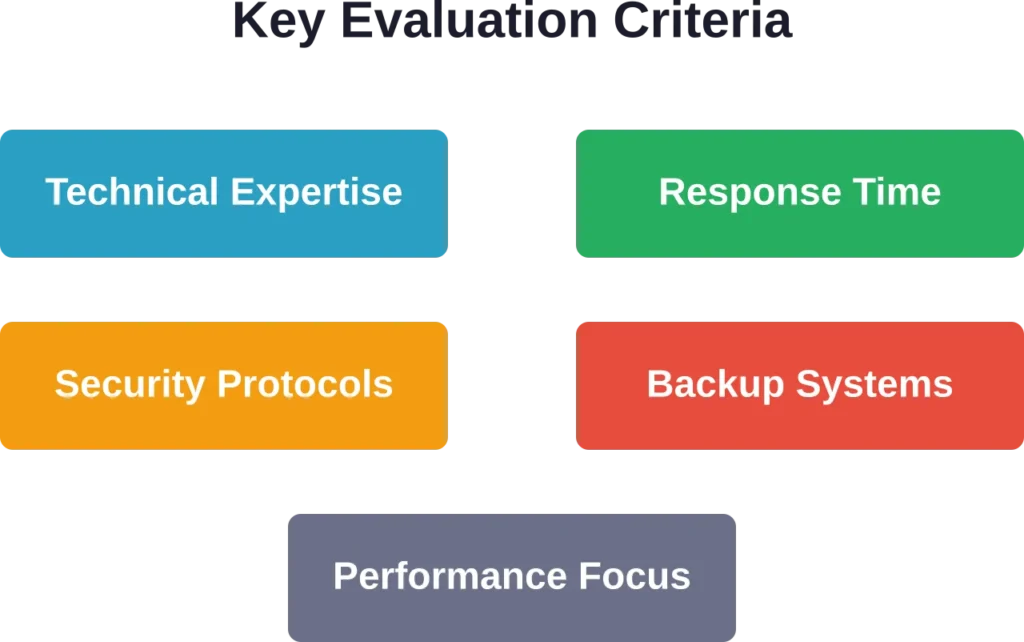
Technical expertise forms the baseline requirement. Providers should demonstrate deep knowledge of specific platforms—particularly WordPress, which powers a substantial portion of websites worldwide. Look for certifications, case studies, and evidence of handling complex technical challenges.
Response time commitments define support quality. How quickly do they respond to critical issues versus routine requests? The best services guarantee response times for different priority levels and maintain sufficient staff to meet those commitments.
Security protocols reveal how seriously companies take protection. Strong providers implement multi-layered security including firewalls, malware scanning, intrusion detection, SSL management, and regular security audits. They should also carry cybersecurity insurance and maintain compliance with relevant standards.
Backup procedures determine recovery capability. Verify that companies perform daily automated backups, store copies in multiple locations, maintain versioned histories, and regularly test restoration processes. Backups are worthless if they can’t actually restore sites when needed.
Performance optimization capabilities affect user experience and search rankings. Strong maintenance teams actively optimize site speed through caching, image compression, code minimization, database optimization, and CDN implementation.
Communication practices impact working relationships. Maintenance partners should provide regular reports, proactive recommendations, clear explanations of technical issues, and accessible support channels. Transparency builds trust.
Client retention and reviews indicate satisfaction levels. Based on analysis of provider ratings, total review volume carries significant weight in assessing reliability—more reviews provide broader validation of service quality.
Security Considerations in Website Maintenance
Security represents the most critical maintenance domain. Websites face constant threats from automated attacks, targeted breaches, and emerging vulnerabilities.
Malware infections happen more frequently than most business owners realize. Attackers compromise sites to distribute malware, steal customer data, inject spam links, or utilize server resources for cryptocurrency mining. Professional maintenance companies scan for malware signatures continuously and remove infections before they cause damage.
Brute force attacks attempt to guess login credentials through automated password attempts. Security-focused maintenance implements rate limiting, monitors login attempts, blocks suspicious IP addresses, and enforces strong authentication requirements to prevent unauthorized access.
Plugin vulnerabilities represent the most common WordPress security weakness. Outdated plugins with known security holes provide easy entry points for attackers. Maintenance companies track vulnerability disclosures, apply security patches immediately, and remove plugins that developers no longer support.
DDoS attacks overwhelm sites with traffic to force them offline. While hosting providers typically handle network-level DDoS protection, maintenance companies implement application-level defenses and monitoring to detect and mitigate attacks quickly.
SSL certificates encrypt data transmission between browsers and servers. Maintenance teams ensure certificates remain valid, implement proper HTTPS redirects, and resolve mixed content issues that undermine encryption.
Firewall configuration blocks malicious traffic before it reaches website applications. Web Application Firewalls analyze traffic patterns, block known attack signatures, and create rules preventing common exploit attempts.
Security audits identify vulnerabilities proactively. The best maintenance companies conduct regular security assessments examining file permissions, user access controls, security configurations, and potential weaknesses that attackers might exploit.
Performance Optimization Strategies
Website speed directly impacts user experience, conversion rates, and search engine rankings. Professional maintenance companies employ multiple optimization techniques to maintain fast loading times.
Caching stores pre-generated page versions that serve instantly instead of dynamically generating pages for each visitor. Maintenance teams configure multiple caching layers: browser caching, page caching, object caching, and CDN caching, each addressing different performance bottlenecks.
Image optimization reduces file sizes without noticeable quality loss. Techniques include compression, format conversion to modern formats like WebP, lazy loading to defer off-screen images, and responsive image delivery serving appropriately sized versions to different devices.
Database optimization maintains query efficiency as sites accumulate data. Maintenance includes clearing transients, optimizing tables, indexing frequently queried fields, and removing post revisions and spam comments that bloat databases.
Code minification removes unnecessary characters from CSS, JavaScript, and HTML files. This reduces file sizes and improves transfer speeds without affecting functionality.
Content Delivery Networks distribute static assets across globally distributed servers. Visitors download files from geographically proximate servers, reducing latency and improving loading speeds worldwide.
Resource loading optimization controls how browsers load page assets. Techniques include deferring non-critical JavaScript, eliminating render-blocking resources, and prioritizing above-the-fold content to improve perceived performance.
Server response time optimization ensures hosting infrastructure responds quickly. Maintenance teams monitor server performance, upgrade hosting resources when necessary, and work with hosting providers to resolve infrastructure issues affecting speed.
Backup and Disaster Recovery
Backups provide the safety net when everything else fails. But backup quality varies dramatically between providers.
Backup frequency determines maximum data loss. Daily backups mean potentially losing a full day’s content, orders, or changes if disaster strikes. Some providers offer continuous or hourly backups minimizing data loss windows significantly.
Storage redundancy protects against backup corruption or storage failures. Professional services store backup copies in multiple geographic locations using different storage systems. If one backup location fails, others remain accessible.
Retention periods affect recovery options. Longer retention lets businesses restore sites to specific points in time weeks or months in the past—valuable when discovering compromises that happened days ago or recovering accidentally deleted content.
Testing procedures verify backups actually work. Many services create backups but never test restoration. When disaster strikes, they discover backups are corrupted or incomplete. Quality providers regularly test restoration procedures to verify backup integrity.
Restoration speed determines downtime duration. The best maintenance companies can restore sites within minutes using streamlined procedures and optimized backup formats. Slower services might require hours or days for complex site restorations.
Backup completeness ensures everything gets captured. Complete backups include database content, uploaded files, theme customizations, plugin configurations, and server settings. Incomplete backups create restoration headaches when critical components are missing.
Content and Development Support
Many maintenance companies extend beyond pure technical upkeep to include content updates and development assistance. This integrated approach eliminates the need for multiple vendor relationships.
Content update services let clients request routine changes without developer involvement. Typical updates include text modifications, image replacements, form adjustments, menu changes, and minor layout tweaks. Monthly allowances typically range from a few hours to unlimited minor edits depending on service tier.
Plugin configuration assistance helps clients utilize existing functionality without custom development. Maintenance teams configure complex plugins, establish integrations, and optimize settings to achieve desired functionality.
Troubleshooting support resolves functional issues beyond just fixing broken elements. When features don’t work as expected, maintenance teams investigate causes, identify solutions, and implement fixes to restore intended functionality.
Development hours included in premium plans enable custom feature additions. Rather than pure maintenance, clients can request new functionality, design modifications, or custom integrations using included development time.
Strategic recommendations help clients improve site effectiveness. Experienced maintenance teams notice opportunities for UX improvements, conversion optimization, and functionality enhancements based on their deep familiarity with client sites.
Industry-Specific Maintenance Requirements
Different industries face unique maintenance challenges requiring specialized expertise and approaches.
E-commerce sites demand particular attention to transaction processing, inventory management, and payment security. Downtime directly impacts revenue, making uptime monitoring and rapid incident response critical. Performance optimization focuses on product pages and checkout flows where speed most affects conversion rates.
Healthcare and medical websites must maintain HIPAA compliance when handling protected health information. Maintenance includes security measures specifically designed to protect patient data, audit logging, access controls, and encryption requirements mandated by healthcare regulations.
Financial services sites face strict security and compliance requirements. Maintenance must address PCI DSS standards for payment processing, implement robust authentication, maintain detailed security logs, and establish procedures for regulatory reporting.
Membership and subscription sites require particular database optimization attention. Member authentication, content access controls, and subscription management create complex database queries that require ongoing optimization as membership grows.
Educational institutions often manage large sites with thousands of pages, multiple user roles, and complex organizational structures. Maintenance emphasizes accessibility compliance, large-scale content management, and performance optimization for content-heavy sites.
Publishing and media sites prioritize performance under traffic spikes when content goes viral. Maintenance includes aggressive caching strategies, CDN optimization, and infrastructure scaling capabilities to handle sudden traffic surges without crashes.
WordPress-Specific Maintenance Considerations
WordPress powers a substantial portion of websites worldwide, creating a large ecosystem of specialized maintenance providers. WordPress-specific maintenance addresses platform characteristics and common challenges.
Plugin compatibility represents a primary concern. WordPress’s extensive plugin ecosystem creates powerful functionality but also introduces compatibility risks. Updates can conflict with other plugins or themes, breaking functionality. Specialized maintenance teams understand common conflicts and test updates carefully before applying them to production sites.
Core update management requires balancing security with stability. WordPress releases regular core updates including security patches and feature additions. Maintenance teams evaluate updates, test on staging environments, and apply updates strategically to maintain security without introducing instability.
Theme customization preservation matters when updating themes. Custom modifications can get overwritten during theme updates unless properly implemented in child themes or plugins. WordPress maintenance specialists ensure customizations survive updates.
Database optimization becomes increasingly important as WordPress sites age. Post revisions, transients, and plugin data accumulate over time, bloating databases and slowing queries. Regular optimization maintains performance as content volume grows.
Security hardening goes beyond plugin updates. WordPress-specific security includes protecting wp-admin access, securing wp-config.php, implementing proper file permissions, disabling file editing, and removing version information that helps attackers identify vulnerabilities.
Performance optimization addresses WordPress-specific bottlenecks. The platform’s dynamic nature requires strategic caching, query optimization, and careful plugin selection to maintain speed despite processing overhead.
Maintenance for Different Business Sizes
Optimal maintenance approaches vary significantly based on business size, budget, and website complexity.
Small businesses and startups typically need fundamental maintenance covering security, backups, updates, and basic support. Budget constraints make affordability paramount. Providers like Go WP and Zen WP serve this segment well with streamlined services at accessible price points.
Growing businesses require more comprehensive maintenance as websites become critical business infrastructure. Mid-tier services add performance optimization, enhanced monitoring, faster support response times, and content update assistance. Companies like Maintainn and WP Site Plan offer scalable services that grow with business needs.
Enterprise organizations demand premium maintenance including 24/7 support, dedicated account management, strategic consulting, compliance assistance, and guaranteed response times. Providers like Valet and SiteCare deliver high-touch services justified by the business impact of website issues at enterprise scale.
E-commerce businesses face unique cost-benefit calculations where revenue directly depends on website functionality. Even premium maintenance costs pale compared to revenue losses from outages or performance problems, justifying specialized e-commerce maintenance from providers like Seahawk.
Agencies and freelancers need white-label maintenance they can confidently offer clients under their own brand. WP Buffs specializes in this partnership model, functioning as invisible backend support while agencies maintain client relationships.
Red Flags When Evaluating Providers
Several warning signs indicate maintenance providers might not deliver quality service.
Vague service descriptions suggest companies lack deep expertise or hide limitations. Quality providers specify exactly what they monitor, how frequently they perform tasks, and what support response times to expect.
No backup testing policies raise serious concerns. Creating backups without ever testing restoration means backups might be worthless when needed. Ask specifically about restoration testing procedures.
Extremely low pricing often indicates cut corners somewhere—insufficient security monitoring, slow support response, unreliable backups, or poor technical expertise. Professional maintenance requires skilled technicians; rock-bottom pricing can’t sustainably fund quality service.
Lack of specialized expertise becomes problematic for complex sites. Generic IT service providers offering website maintenance as a side service rarely match platform specialists in technical depth or current knowledge.
Poor communication practices forecast frustrating working relationships. Delayed responses, vague explanations, and lack of proactive updates during evaluation usually continue after contracts are signed.
No performance guarantees or SLAs leave clients without recourse when service quality falls short. While no provider can guarantee perfection, reputable companies stand behind their work with defined commitments and remedies.
Outsourced support to unvetted contractors introduces quality and security risks. Understand who actually performs maintenance work and what vetting, training, and oversight processes ensure quality.
| Warning Sign | Why It Matters | What to Ask |
|---|---|---|
| Vague service descriptions | Hides service limitations | Request detailed task lists and frequencies |
| No backup testing | Backups might not actually work | Ask how often they test restorations |
| Extremely low pricing | Indicates cut corners somewhere | Compare what’s included vs. competitors |
| No specialized expertise | Lacks platform-specific knowledge | Verify team certifications and experience |
| Poor communication | Forecasts frustrating relationship | Test responsiveness during evaluation |
| No SLAs or guarantees | No accountability for service quality | Request uptime guarantees and response times |
Questions to Ask Potential Providers
Thorough vetting requires asking specific questions that reveal service quality and provider capabilities.
What exactly does your monitoring cover? Look for comprehensive answers including uptime checks, security scans, performance metrics, SSL monitoring, and broken link detection. Vague answers suggest limited monitoring.
How quickly do you respond to different priority levels? Reputable providers specify response times for emergencies versus routine requests. If they can’t commit to timeframes, support quality might disappoint.
How do you handle plugin updates? Strong processes include staging site testing, compatibility verification, and rollback procedures if updates cause problems. Simple automatic updates risk breaking functionality.
How often do you test backup restorations? This critical question separates quality providers from those just creating untested backups. Monthly testing provides reasonable assurance of backup reliability.
Where are backups stored and how many copies exist? Multiple geographic locations using different storage systems provide redundancy. Single backup locations create unacceptable risk.
What happens when you discover security issues? Look for immediate action protocols, client notification procedures, and remediation processes rather than just periodic reporting.
Can you provide client references? Established providers should readily offer references from satisfied long-term clients. Reluctance suggests potential service issues.
What access do you need to my site? Understanding required access levels, security practices protecting credentials, and procedures limiting unnecessary access rights reveals security conscientiousness.
How do you handle emergency situations outside business hours? Critical sites need 24/7 emergency response capability. Understand what constitutes an emergency and how quickly help arrives.
Making the Final Decision
Selecting a maintenance provider requires balancing multiple factors against business priorities and budget realities.
Start by defining requirements clearly. List must-have services, nice-to-have features, and unnecessary extras. Different businesses prioritize different capabilities—e-commerce sites need different maintenance than simple brochure sites.
Evaluate technical expertise through conversations and references. Ask detailed technical questions and assess whether responses demonstrate deep knowledge or surface-level familiarity. Technical competence ultimately determines service quality.
Consider communication style and cultural fit. Technical expertise matters, but so does working relationship quality. Choose providers whose communication style, responsiveness, and approach match organizational preferences.
Review service agreements carefully. Understand exactly what’s included, guaranteed response times, procedures for emergencies, and terms for service modifications or cancellation.
Verify monitoring and reporting. Ask to see sample reports understanding what information gets tracked and how performance gets communicated. Transparency indicates professionalism.
Test support responsiveness before committing. How providers handle pre-sales questions often predicts post-sales support quality. Slow or vague responses during evaluation rarely improve after contracts are signed.
Consider long-term partnership potential. Website maintenance is ongoing, not a one-time project. Choose providers capable of growing alongside business needs rather than requiring switches as requirements evolve.
But here’s the thing—no provider is perfect. Prioritize factors most critical for specific business needs rather than seeking perfection across every dimension. The best maintenance company is the one best suited to particular requirements, not necessarily the most comprehensive or expensive.
Frequently Asked Questions
Professional website maintenance encompasses security monitoring and malware scanning, regular software updates for CMS cores and plugins, daily automated backups stored securely, performance optimization including caching and image compression, uptime monitoring with immediate downtime alerts, and technical support for troubleshooting issues. Comprehensive services also include content updates, broken link monitoring, SSL certificate management, and database optimization. The specific services vary between providers and service tiers.
Daily backups represent the industry standard minimum for active websites. Businesses that update content frequently or process transactions should consider continuous or hourly incremental backups to minimize potential data loss. Backup frequency should match how much data loss is acceptable if disaster strikes. E-commerce sites processing orders throughout the day need more frequent backups than static informational sites updated weekly. Beyond frequency, backup testing matters enormously—untested backups often fail when actually needed.
Small site owners can handle basic maintenance tasks like installing updates and creating backups. However, comprehensive maintenance requires expertise most business owners lack: identifying security vulnerabilities, optimizing performance bottlenecks, configuring proper backups, managing plugin conflicts, and responding quickly to emergencies. The time investment also becomes substantial—maintenance requires consistent attention that diverts focus from core business activities. Professional maintenance becomes cost-effective once sites grow complex or business-critical.
Quality maintenance companies detect compromises quickly through continuous security monitoring, immediately isolate affected sites to prevent further damage, identify attack vectors and vulnerabilities exploited, remove malicious code and backdoors thoroughly, restore clean backups if necessary, implement additional security measures to prevent recurrence, and help with any required notifications if customer data was exposed. Response speed matters enormously—detected within hours versus discovered weeks later dramatically affects recovery difficulty and damage extent.
Professional WordPress maintenance follows systematic update procedures rather than blindly applying updates. The process typically includes monitoring for available updates, reviewing changelogs for compatibility concerns, testing updates on staging site copies, verifying functionality after staging updates, applying updates to production sites during low-traffic periods, confirming sites work properly post-update, and maintaining rollback capability if updates cause unforeseen issues. This careful approach prevents the broken functionality that sometimes results from automatic updates.
Managed hosting handles server-level infrastructure including hardware management, operating system updates, server security, and hosting platform optimization. Website maintenance addresses application-level concerns including CMS updates, plugin management, theme customizations, content backups, malware scanning, and site-specific optimization. Both are important and complementary—managed hosting doesn’t eliminate the need for website maintenance. Some maintenance companies integrate closely with specific managed hosts to optimize both infrastructure and application layers.
Emergency response time expectations depend on service tier and provider capabilities. Premium services typically guarantee response within 15-30 minutes for critical issues like site outages, security breaches, or transaction processing failures. Standard services might commit to 1-4 hour emergency response. Business-hours-only support means overnight or weekend emergencies wait until the next business day. Critical sites with zero tolerance for downtime require 24/7 emergency support with rapid response guarantees, while less critical sites can accept slower response for lower costs.
Conclusion
Website maintenance separates functional sites from disaster magnets. The difference between professional maintenance and neglect shows up in security, speed, and business continuity.
The 15 companies profiled here represent the best website maintenance providers operating in 2026. Each brings proven expertise, systematic processes, and reliable service quality. But the optimal choice depends entirely on specific business requirements, budget parameters, and website characteristics.
Small businesses prioritizing affordability should examine Go WP and Zen WP. Growing companies needing scalable services benefit from Maintainn and WP Site Plan. E-commerce operations require Seahawk’s specialized retail expertise. Enterprise organizations demanding premium service find value in Valet and SiteCare. Agencies need WP Buffs’ white-label capabilities.
No universal best exists—only the best fit for particular circumstances. Start by defining requirements clearly, then evaluate providers against those specific needs rather than generic feature checklists.
Real talk: website maintenance seems like an optional expense until disaster strikes. Then it suddenly becomes the most critical service you wish you’d purchased earlier. Security breaches, data loss, and extended outages create costs far exceeding maintenance fees.
The question isn’t whether to invest in professional maintenance but rather which provider matches your needs best. Websites represent significant business investments deserving protection through systematic, expert maintenance.
Ready to secure your website with professional maintenance? Review the providers listed here, ask the questions outlined above, and select a partner capable of protecting your digital assets reliably. Your website—and your future self—will thank you when professional maintenance prevents the disasters amateur upkeep invites