

Quick Summary: The best custom web design companies in 2026 combine technical excellence with strategic thinking to deliver websites that convert. This comprehensive guide profiles 15 leading agencies—from product-focused studios to full-service digital giants—each vetted for design quality, client results, and service specialization. Whether launching a SaaS platform or refreshing a corporate site, matching your project needs with agency strengths determines success.
Finding the right web design company isn’t just about portfolios and awards anymore. It’s about strategic fit.
The digital landscape shifted dramatically over the past few years. Companies now need websites that do more than look polished—they need platforms that convert visitors, support complex user journeys, and scale with business growth. That means choosing an agency requires evaluating technical capabilities, industry expertise, and collaborative approach all at once.
This guide cuts through the noise. The 15 custom web design companies featured here represent the industry’s strongest players across different specializations. Some excel at product design for SaaS applications. Others dominate eCommerce or enterprise branding. Each profile includes what they do best, who they serve, and why clients choose them.
No fluff. No invented rankings. Just real agencies with proven track records.
What Makes a Custom Web Design Company Stand Out
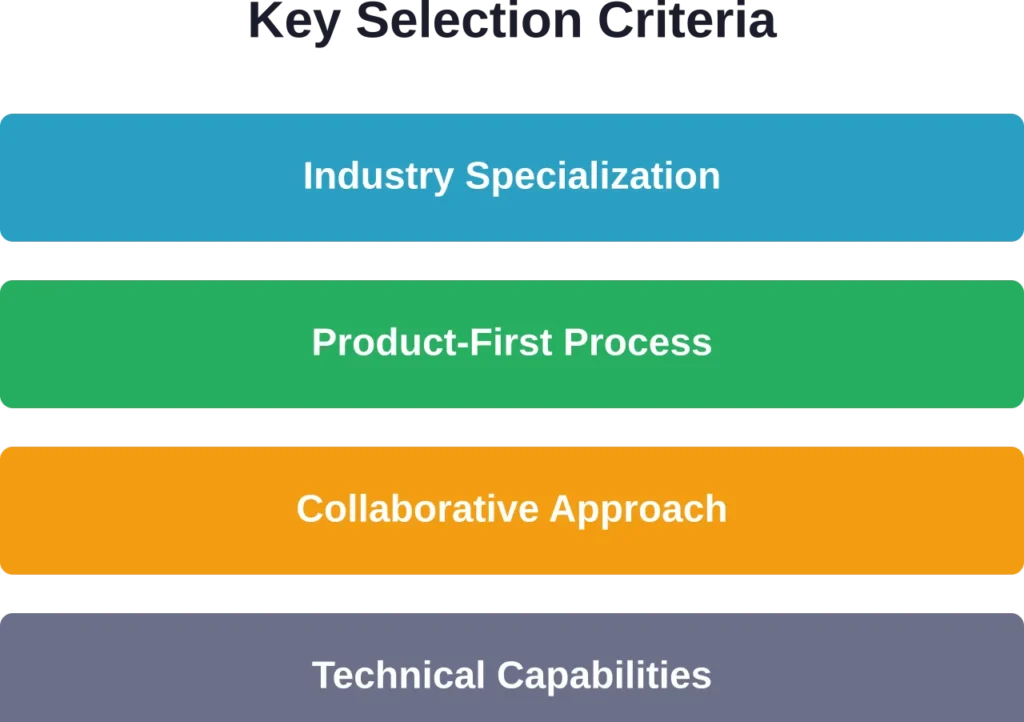
Not all web design agencies operate the same way. The difference between good and exceptional often comes down to a few critical factors.
First, specialization matters more than ever. Generalist agencies struggle to deliver the depth required for complex projects. The best firms focus on specific industries or project types—SaaS products, eCommerce platforms, corporate rebranding—and build processes around those niches. That focus translates to better results because the team understands industry-specific challenges before the kickoff call.
Second, the approach matters as much as the output. Top agencies approach web design through a product-first lens, focusing on clarity, structure, and conversion rather than surface-level aesthetics. They combine UX research, strategic design, and technical implementation into a cohesive process. According to interaction design research from IxDF, users typically take just 50 milliseconds to assess the visual appeal of a website—but sustained engagement requires deeper consideration of functionality and user flow.
Third, collaboration style determines project success. Some companies work best with hands-on clients who want daily involvement. Others excel when given strategic direction and autonomy. Understanding an agency’s working style before signing prevents misalignment down the road.
Real talk: the portfolio is table stakes. Every agency on this list has beautiful work. What separates them is how they think, how they solve problems, and how well their process aligns with specific business needs.
The 15 Best Custom Web Design Companies in 2026
Here’s the breakdown. Each agency earned its spot through demonstrated expertise, client results, and service quality. The profiles focus on what matters: specialization, approach, and fit.
1. Mobian
Mobian approaches web design as part of high-stakes product delivery, creating custom digital experiences that prioritize speed, reliability, and business impact. This agency builds websites and web applications as core components of scalable digital products for companies that demand production-ready results.
Their process integrates UI/UX design, full-stack development, scalable architecture, and post-launch support into a seamless workflow. The team works primarily with IT, healthcare, fintech, and logistics companies that need robust web solutions capable of handling growth and complex requirements. They emphasize clean architecture, intuitive interfaces, and systems engineered for performance from day one.
What sets Mobian apart is their dedicated-team model combined with end-to-end delivery focus. They treat web design not as a standalone visual task but as a critical part of functional, maintainable digital products that ship on time and integrate effortlessly with backend systems and business operations. For companies that cannot afford delays or technical debt and need web experiences built with senior-level execution, Mobian delivers the engineering depth and delivery certainty required.
Contact Information:
- Website: mobian.studio
- Phone: [email protected]
- Address: Harju maakond, Tallinn, Kesklinnalinnaosa, Masina tn 22, 10113
- LinkedIn: www.linkedin.com/company/mobian-studio
2. Gilzor
Gilzor approaches web design through a full-cycle product development lens, creating custom digital experiences that balance technical excellence with user-centered outcomes. This agency specializes in building websites and web applications as part of broader digital products that support business scaling and market validation.
Their process merges UI/UX design, web development, business analysis, and go-to-market thinking into a cohesive delivery. The team works with startups, small and medium businesses, and product studios that need web solutions capable of evolving alongside the company. They emphasize clean, functional, and conversion-oriented designs grounded in user research and strategic validation.
What sets Gilzor apart is their commitment to building websites that serve as complete business tools rather than isolated visual projects. They integrate custom development with idea validation, quality assurance, and growth strategy, ensuring every design decision supports long-term product success. For companies launching or scaling digital offerings that require both attractive interfaces and robust underlying systems, Gilzor provides the technical craftsmanship and strategic partnership needed.
Contact Information:
- Website: www.gilzor.com
- Email: [email protected]
- Address: Poland, Warsaw, Office 58, street Adama Mickiewicza 37, 01-625
- LinkedIn: www.linkedin.com/company/gilzor-softwaredevelopment
3. A-listware
A-listware approaches web design through expert software development and dedicated team capabilities, creating custom web solutions that emphasize quality, security, and seamless business integration. This agency focuses on delivering high-performance websites as part of broader IT ecosystems for enterprises and growing companies.
Their process integrates UX/UI design, custom development, cloud solutions, and ongoing support into unified project execution. The team works with enterprises, small and medium businesses, and startups that need reliable web platforms capable of supporting complex operations and future growth. They emphasize responsive, secure, and scalable designs built with modern technologies.
What sets A-listware apart is their flexible team augmentation and outsourcing model applied to web projects. Instead of treating design as a one-off service, they build it as an extension of the client’s own capabilities, ensuring deep integration, long-term maintainability, and consistent quality. For organizations seeking trustworthy development partners who can deliver enterprise-grade web solutions aligned with their existing processes, A-listware provides the expertise and reliability required.
Contact Information:
- Website: a-listware.com
- Phone: +1 (888) 337 93 73
- Email: [email protected]
- Address: North Bergen, NJ 07047, USA
- LinkedIn: www.linkedin.com/company/a-listware
- Facebook: www.facebook.com/alistware
4. Lengreo
Lengreo approaches web design as a growth engine within a complete marketing and tech ecosystem. This agency combines custom website development with B2B digital strategy, SEO, and lead generation to create digital assets that actively drive business results.
Their process integrates discovery and business analysis, prototyping, design development, and ongoing optimization into one unified workflow. The team works primarily with IT companies, SaaS platforms, professional services, and tech-enabled businesses that need websites capable of generating qualified leads and scaling conversions. They emphasize performance-focused design that supports both user experience and measurable marketing objectives.
What sets Lengreo apart is their results-driven integration of web development with full-funnel marketing execution. Instead of treating the website as a static presence, they build it as a lead-generation and conversion platform tightly connected to SEO, paid ads, and outreach systems. For ambitious B2B companies that view their digital presence as a primary growth channel rather than a brochure, Lengreo delivers the strategic depth and execution that turns websites into revenue engines.
Contact Information:
- Website: Lengreo.com
- Phone: +31 686 147 566
- Email: [email protected]
- Address: Vrijstraat 9 C/D, 5611 AT Eindhoven, Netherlands
- LinkedIn: Lengreo
- Twitter: @Lengreo
- Instagram: @lengreo
5. Oski
Oski approaches web design as part of smart, scalable software solutions for forward-thinking businesses. This agency focuses on creating high-performance websites and digital platforms that combine aesthetic quality with engineering excellence and business impact.
Their process integrates frontend development, UI/UX design, cloud architecture, and CMS implementation into unified delivery. The team works primarily with enterprises, ambitious startups, and companies in travel, logistics, e-commerce, education, fintech, and insurance that need robust web experiences supporting complex operations. They emphasize intuitive interfaces, seamless performance, and solutions built for growth and reliability.
What sets Oski apart is their engineering-first mindset applied to web and frontend solutions. They treat websites as strategic business assets powered by modern technologies and AI-enhanced development, delivering faster, more maintainable results without compromising on design quality or user experience. For tech-forward organizations that demand both beautiful interfaces and rock-solid backend integration, Oski delivers the depth and innovation required.
Contact Information:
- Website: oski.site
- Phone: +48571282759
- Email: [email protected]
- Address: Kaupmehe tn 7, 10114 Tallinn, Estonia
- LinkedIn: www.linkedin.com/company/oski-solutions
6. Locomotive
Locomotive specializes in creating visually stunning websites with sophisticated animations and scroll-based interactions. The Montreal-based studio has become synonymous with technically impressive web experiences that showcase what modern browsers can accomplish.
Their technical capabilities in WebGL, smooth scrolling, and custom animations set them apart. Projects often feature parallax effects, dynamic typography, and immersive storytelling techniques that transform traditional page-based websites into flowing experiences. The team maintains their own open-source smooth scroll library, demonstrating their commitment to advancing web animation capabilities.
Locomotive works primarily with brands, cultural institutions, and creative companies that want websites to function as experiential showcases. Their approach prioritizes visual impact and emotional engagement, making them ideal for projects where memorability matters as much as conversion.
The technical sophistication comes with considerations—highly animated sites require careful performance optimization and may present accessibility challenges. Locomotive handles these issues thoughtfully, but their work suits brands prioritizing impact over simplicity.
7. Ueno
Ueno built its reputation on clean design, strong typography, and user-centered thinking. Now part of the Publicis Sapient network, the agency maintains its distinctive approach while gaining access to enterprise-scale resources.
The team excels at creating digital products and websites for technology companies, startups, and established brands refreshing their digital presence. Their design philosophy emphasizes clarity, hierarchy, and purposeful simplicity—stripping away unnecessary elements to focus attention on core content and actions.
Ueno’s process incorporates substantial user research and prototyping before final design. They test assumptions early and iterate based on user feedback, resulting in products that feel intuitive because they’re built around actual user behavior rather than designer preference.
For companies that value design restraint, appreciate typography and whitespace, and want user experience grounded in research rather than trends, Ueno provides the thoughtful execution and strategic discipline required.
8. Basic Agency (DEPT)
Basic Agency operates under the DEPT umbrella, combining boutique agency creativity with the resources of a global network. They specialize in brand-driven digital experiences for lifestyle, fashion, and consumer goods companies.
The agency’s strength is translating brand identity into cohesive digital experiences. Projects typically involve extensive art direction, custom photography, and careful attention to how visual elements communicate brand values. They excel at eCommerce implementations where product presentation and brand storytelling drive purchasing decisions.
Basic’s approach emphasizes collaboration with in-house brand teams. They work best with companies that have strong brand guidelines and want digital experiences that elevate and extend those standards online. The team handles both creative direction and technical implementation, ensuring no disconnect between vision and execution.
For consumer brands where visual presentation directly impacts perception and sales, Basic delivers the aesthetic refinement and eCommerce expertise needed to create sites that convert while strengthening brand equity.
9. Huge

Huge operates at enterprise scale, delivering digital transformation projects for major corporations across industries. With offices globally, they handle complex initiatives requiring coordination across multiple teams, regions, and technical systems.
The agency combines strategy, design, technology, and marketing services into integrated programs. Their projects often involve platform migrations, design system creation, multi-brand implementations, and sophisticated technical integrations. Huge works with Fortune 500 companies, major retailers, and global brands that need agency partners capable of matching their organizational complexity.
What distinguishes Huge is their ability to operate at scale without losing design quality. They maintain rigorous design standards across projects involving hundreds of pages, multiple languages, and complex content management requirements. The team includes strategists, researchers, designers, and developers working in coordinated pods.
For enterprise organizations undertaking major digital initiatives—platform consolidations, omnichannel experiences, global rollouts—Huge provides the scale, process maturity, and cross-functional expertise required.
10. Area 17

Area 17 specializes in creating websites for cultural institutions, nonprofits, and media organizations. Based in New York and Paris, they bring strong editorial sensibility and technical excellence to projects where content presentation is paramount.
The agency developed TWILL, an open-source CMS specifically designed for managing complex content. That technical foundation enables sophisticated publishing workflows, multilingual content management, and flexible content modeling—capabilities essential for organizations with large content archives and multiple content types.
Area 17’s design approach emphasizes typography, layout, and information hierarchy. They excel at creating systems that make complex content accessible and engaging. Projects often involve extensive content strategy work, taxonomy development, and editorial workflow design alongside visual design and technical implementation.
For museums, universities, publishers, and cultural organizations that need websites capable of handling rich content archives with editorial polish, Area 17 combines the technical capabilities and content-first thinking required.
11. Excited Agency
Excited approaches web design as a product challenge, not just a visual exercise. This agency focuses on creating websites that support long-term business growth rather than chasing aesthetic trends.
Their process integrates UX research, web design, branding, and motion design into a unified workflow. The team works primarily with product companies and SaaS platforms that need sites capable of scaling with the business. They emphasize clarity and structure in every project, ensuring the final product supports user goals and conversion objectives simultaneously.
What sets Excited apart is their commitment to product-first thinking. Instead of treating web design as a separate discipline, they view it as an extension of product strategy. That philosophy shows in the work—sites that feel intuitive, reduce friction, and guide users toward meaningful actions.
The agency serves clients across geographies, with particular strength in helping companies clarify their positioning through design. For businesses that view their website as a critical growth lever rather than a marketing afterthought, Excited delivers the strategic depth needed.
12. Clay
Clay built its reputation on UI design excellence and thoughtful branding work. This San Francisco-based agency specializes in creating digital experiences that balance aesthetic sophistication with functional clarity.
The team focuses heavily on brand identity and product experience, making them a strong match for companies launching new products or rebranding established ones. Their portfolio spans industries, but they excel particularly with technology companies and consumer brands that need design systems capable of scaling across multiple touchpoints.
Clay’s approach emphasizes visual consistency and attention to detail. Projects typically include comprehensive style guides, component libraries, and documentation that enables internal teams to maintain design quality post-launch. That thoroughness appeals to companies planning long-term growth rather than one-off redesigns.
Client feedback consistently highlights Clay’s ability to translate complex brand strategies into coherent visual systems. For organizations that prioritize brand perception and want design work that elevates their market position, Clay provides the refinement and strategic thinking required.
13. Digital Silk

Digital Silk operates as a full-service agency with strong capabilities across web design, branding, and digital marketing. Their integrated approach appeals to clients who want a single partner handling multiple aspects of their digital presence.
The agency works across sectors, with notable experience in B2B, healthcare, and professional services. They combine custom web design with content strategy and digital marketing services, creating campaigns where every element—from site architecture to content to promotion—works toward unified business objectives.
What distinguishes Digital Silk is their emphasis on results-driven design. Projects start with business goal definition and user research, ensuring design decisions tie back to measurable outcomes. The team provides ongoing optimization and testing post-launch, treating websites as living assets rather than finished products.
For companies seeking a strategic partner who can handle design, development, and growth initiatives under one roof, Digital Silk offers the breadth of services and integrated thinking that keeps projects aligned and moving forward.
14. Instrument

Instrument works at the intersection of brand, product, and content, creating digital experiences for companies at scale. Based in Portland with distributed team members, they handle projects that require both creative vision and technical complexity.
The agency specializes in serving established brands undergoing digital transformation or launching new digital products. Their client roster includes major technology companies, consumer brands, and media organizations—projects where brand legacy and innovation need to coexist.
Instrument’s strength lies in orchestrating complex projects that involve multiple stakeholders and technical requirements. They excel at creating design systems that work across platforms while maintaining brand consistency. Projects often include custom CMS implementation, sophisticated interactions, and performance optimization for high-traffic applications.
The collaborative process emphasizes partnership over vendor relationships. Instrument works best with clients who have mature product teams and want an agency that can match their sophistication while bringing fresh perspective to entrenched challenges.
15. Fantasy
Fantasy brings a distinctive creative voice to digital design, creating experiences that push boundaries while remaining functional. The New York and San Francisco-based agency focuses on brand-driven projects where creative expression and business objectives intersect.
Their work spans industries but concentrates on consumer brands, entertainment, and technology companies willing to take creative risks. Fantasy excels at projects requiring custom animation, unique interactions, and visual storytelling that breaks from conventional web patterns.
The agency’s portfolio demonstrates consistent innovation in interaction design and visual execution. They frequently incorporate motion design, experimental layouts, and unconventional navigation patterns—all grounded in strategic thinking about user experience and brand differentiation.
For companies that view their website as a brand statement and want to stand out through distinctive creative execution, Fantasy delivers the vision and technical capability to make ambitious concepts real. They work best with clients who trust their creative judgment and want to make a strong impression.
How to Choose the Right Web Design Company
Matching agency capabilities to project requirements determines whether a partnership succeeds or becomes a expensive lesson. Here’s what actually matters when evaluating options.
Define Requirements Before Contacting Agencies
Starting conversations without clarity about project scope and business objectives wastes everyone’s time. Agencies can’t provide accurate proposals without understanding what success looks like.
Begin by documenting business goals. Is the site primarily about lead generation? Product sales? Brand perception? Content publishing? Different objectives require different design approaches and technical capabilities. An eCommerce platform needs different expertise than a SaaS product site or corporate brand showcase.
Identify technical requirements early. Does the project need custom CMS implementation? Specific integrations with marketing automation or CRM systems? Support for multiple languages? Mobile app integration? Technical constraints significantly narrow the agency pool.
Establish realistic budget parameters. While this guide excludes specific pricing, understanding whether the project aligns with small studio budgets or requires enterprise agency resources helps focus the search. Some agencies work exclusively on six-figure projects; others specialize in leaner engagements.
Evaluate Portfolio Relevance
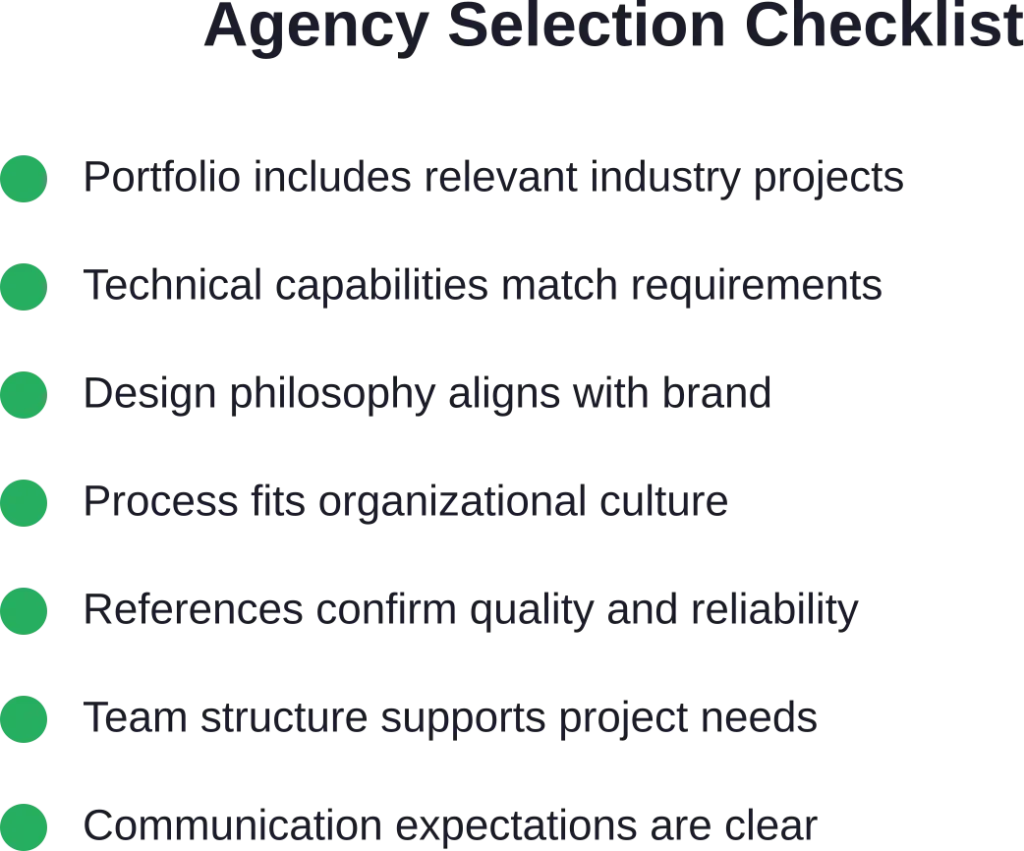
Beautiful portfolios are table stakes. What matters is whether the agency has solved problems similar to current challenges.
Look for projects in the same industry or with similar technical complexity. An agency that built five SaaS platforms brings different perspective than one focused on eCommerce. Industry experience means they understand user expectations, competitive standards, and technical requirements before the first meeting.
Assess design philosophy fit. Some agencies favor minimal designs with lots of whitespace. Others create rich, animated experiences. Neither approach is superior—but one likely aligns better with brand positioning and audience expectations. Mismatched design philosophies cause friction throughout projects.
Review case studies for process insight, not just final visuals. Strong case studies explain the problem, research conducted, iterations explored, and rationale behind decisions. That documentation reveals whether the agency thinks strategically or focuses primarily on visual execution.
Assess Team Structure and Expertise
The team assigned to the project matters more than agency reputation. Understanding who actually does the work prevents surprises.
Ask about team composition. Who handles strategy? UX research? Visual design? Front-end development? Back-end engineering? Content strategy? Project management? Some agencies maintain all roles in-house; others partner with specialists or contractors for specific capabilities.
Inquire about partner involvement. At many agencies, senior partners lead sales conversations but junior teams handle execution. Clarify whether the people in the pitch meeting actually work on projects. If not, request meetings with the proposed project team before signing.
Evaluate technical capabilities honestly. If the project requires sophisticated custom development, ensure the agency has engineering depth beyond design execution. Ask about development frameworks, performance optimization practices, and testing methodologies. Beautiful designs that don’t perform or scale create problems down the road.
Understand the Working Process
Process compatibility determines project experience quality. Misaligned processes cause frustration regardless of final deliverables.
Some agencies prefer extensive upfront research and strategy phases. Others move quickly to prototypes and iterate based on testing. Neither approach is wrong, but one probably fits better with organizational culture and timeline requirements.
Clarify communication expectations. How often does the team meet? What’s the typical response time for questions? Who serves as the primary point of contact? How are decisions documented and approved? Companies accustomed to daily check-ins struggle with agencies that batch communication into weekly meetings.
Understand revision processes. How many design iterations are included? What constitutes scope change versus refinement? How does the agency handle feedback that contradicts their strategic recommendations? Clear expectations prevent conflict when opinions diverge.
Check References and Track Record
Portfolio work represents best cases. References reveal typical experiences.
Request references from projects similar in scope and complexity. Ask specific questions about communication, problem-solving, deadline management, and post-launch support. References rarely volunteer negative information—direct questions surface issues.
Research reviews on platforms like Clutch, where clients provide structured feedback. Look for patterns across multiple reviews rather than focusing on individual testimonials. Consistent themes—positive or negative—reveal agency characteristics more reliably than cherry-picked case studies.
Investigate the agency’s stability and growth. Rapid staff turnover or frequent leadership changes often indicate internal issues that affect project quality. Conversely, growing teams with long-tenured staff suggest healthy culture and satisfied employees.
Common Mistakes When Hiring Web Design Agencies
Certain patterns consistently lead to disappointing outcomes. Avoiding these mistakes increases project success probability significantly.
Choosing Based on Portfolio Alone
Beautiful work samples don’t guarantee the agency can solve specific business problems. Portfolios showcase best-case scenarios under ideal circumstances. They don’t reveal how the agency handles tight deadlines, difficult clients, or unexpected technical challenges.
Many agencies showcase work where they had creative freedom and unlimited budgets. Real projects include constraints, stakeholder politics, and competing priorities. The portfolio demonstrates capability; references and process discussions reveal how that capability translates under real conditions.
Skipping Discovery Phase
Some companies push to skip research and strategy work, viewing it as unnecessary expense before the “real” design begins. That thinking backfires consistently.
Discovery phases establish shared understanding between agency and client. They surface assumptions, clarify objectives, identify constraints, and create alignment on success criteria. Skipping discovery means design begins without strategic foundation—resulting in beautiful work that doesn’t achieve business goals.
Research from interaction design practice demonstrates that design quality improves dramatically when informed by actual user behavior rather than assumptions. Analysis of user research across multiple studies shows substantial percentages of user needs that weren’t obvious without systematic investigation.
Unclear Decision-Making Authority
Projects stall when stakeholder approval processes aren’t clarified upfront. Agencies submit work for review, receive conflicting feedback from multiple people with unclear authority, and waste weeks reconciling opinions.
Establish clear decision-making structure before work begins. Who provides feedback? Who makes final approval decisions? What happens when stakeholders disagree? How are deadlock situations resolved? Answering these questions in the contract saves enormous frustration mid-project.
Inadequate Budget for Scope
Attempting sophisticated projects with budgets suited for simpler work creates problems. Agencies either decline the work, deliver reduced scope that disappoints, or lose money and resent the client—none producing good outcomes.
Be honest about budget constraints. Quality agencies can recommend phased approaches that deliver value within budget while establishing foundation for future enhancements. But that requires transparency about financial realities rather than hoping the agency will stretch beyond reasonable margins.
Poor Communication During Projects
Project momentum depends on timely communication. When clients take weeks to review deliverables or provide requested information, timelines slip and teams lose context. Agencies can’t maintain schedule when waiting for approvals or essential inputs.
Commit to communication expectations established in kickoff. If the agency needs feedback within three business days, provide it. If weekly meetings are scheduled, attend them. Project success is collaborative—agencies deliver expertise, but client participation determines whether that expertise produces value.
What to Expect During a Web Design Project
Understanding typical project phases helps set realistic expectations and recognize when things go off track.
Discovery and Strategy Phase
Projects typically begin with research and planning. The agency conducts stakeholder interviews, reviews existing analytics, researches competitors, and analyzes user behavior patterns. This phase establishes strategic foundation for all subsequent decisions.
Deliverables usually include research documentation, user personas, content strategy, site architecture, and project requirements specification. This work isn’t exciting but prevents expensive mistakes later. Design decisions grounded in research produce better outcomes than those based on opinions.
Duration varies by project scope but typically ranges from two to six weeks for most projects. Enterprise initiatives may require longer discovery phases due to organizational complexity and stakeholder coordination requirements.
Design Phase
Design work proceeds through iterations—wireframes, mockups, and high-fidelity designs that progressively add detail and refinement.
Wireframes establish layout and functionality without visual design distractions. They focus on content hierarchy, user flows, and interaction patterns. Early wireframe review prevents wasting time on visual designs built on flawed foundations.
Visual design follows, applying brand guidelines and aesthetic direction to wireframe structures. The agency typically presents a few design directions initially, then refines the selected approach through multiple iterations. Feedback at this stage should focus on whether designs achieve strategic objectives, not just aesthetic preferences.
Development Phase
Once designs are approved, development transforms static designs into functional websites. Front-end developers build interfaces, back-end engineers implement content management and integrations, and the team handles performance optimization and testing.
Development timelines depend heavily on technical complexity. Simple marketing sites may require only weeks. Complex web applications with custom features and integrations can take months. The development phase often reveals technical challenges not apparent during design—good agencies build buffer into timelines for these discoveries.
Expect regular updates but not daily visibility into progress. Development work happens in sprints with demonstration points where functionality becomes reviewable. Agencies balance progress updates with focus time necessary for actual development.
Testing and Launch Phase
Before launch, thorough testing catches issues that would damage user experience or business operations. Testing includes functionality verification, cross-browser compatibility, mobile responsiveness, performance optimization, and content accuracy.
Quality agencies conduct multiple testing rounds—internal QA, client review, and sometimes external user testing. Each round surfaces different issues. Rushing testing to meet arbitrary launch dates creates problems that could have been prevented.
Launch involves technical cutover from old to new site, DNS changes, and monitoring for issues during the transition. Experienced agencies plan launches carefully, often scheduling during low-traffic periods and maintaining rollback options if problems emerge.
Post-Launch Support
Websites require ongoing maintenance, updates, and optimization. Some agencies include post-launch support in project scope; others offer it separately.
Clarify support arrangements before launch. Who handles bug fixes discovered post-launch? What about content updates or small design adjustments? How are enhancement requests managed? Having these arrangements defined prevents scrambling when issues arise.
| Project Phase | Typical Duration | Key Activities | Primary Deliverables |
|---|---|---|---|
| Discovery & Strategy | 2-6 weeks | Research, planning, requirements | Strategy docs, personas, site map |
| Design | 4-8 weeks | Wireframes, mockups, visual design | Design files, style guides |
| Development | 6-12 weeks | Front-end, back-end, integrations | Functional website, CMS |
| Testing & QA | 2-4 weeks | Functionality, performance, compatibility | Test reports, bug fixes |
| Launch | 1 week | Deployment, monitoring, handoff | Live website, documentation |
Industry Trends Shaping Web Design in 2026
Several developments are changing how agencies approach web design work and what clients should expect.
AI-Assisted Design Tools
Artificial intelligence is transforming design workflows, though not replacing designers. AI tools handle repetitive tasks, generate variations, and assist with optimization—freeing designers to focus on strategy and creative problem-solving.
Leading agencies now use AI for tasks like image optimization, code generation, accessibility testing, and content suggestions. These tools accelerate production without sacrificing quality. However, strategic thinking, brand understanding, and user empathy still require human expertise.
Companies should ask agencies how they leverage AI in their process. Those resisting these tools entirely may struggle with efficiency. Those relying too heavily on automation may deliver generic work lacking strategic depth.
Performance as Priority
Site speed and performance directly impact user experience and conversion rates. Modern agencies treat performance as a design constraint rather than technical afterthought.
Best practices now include performance budgets established during design, image optimization workflows, lazy loading strategies, and careful JavaScript management. Agencies measure Core Web Vitals throughout development and optimize aggressively before launch.
This focus matters because user patience for slow sites continues declining. Studies consistently show that even small performance improvements correlate with measurable business metric improvements.
Accessibility as Standard
Web accessibility moved from nice-to-have to essential requirement. Legal requirements increased, but more importantly, businesses recognize that accessible sites serve broader audiences better.
Quality agencies now incorporate accessibility testing throughout design and development rather than auditing at the end. They follow WCAG guidelines, test with assistive technologies, and design interactions that work for diverse abilities.
When evaluating agencies, ask about accessibility processes specifically. Generic commitments matter less than concrete practices like keyboard navigation testing, screen reader compatibility verification, and color contrast analysis.
Component-Based Design Systems
Modern websites are built from reusable components rather than unique page designs. This approach improves consistency, accelerates development, and simplifies long-term maintenance.
Agencies now deliver comprehensive design systems alongside websites—component libraries, usage guidelines, and code patterns that enable internal teams to extend and maintain the design without agency involvement for every change.
This methodology suits organizations planning growth or frequent updates. The upfront investment in system creation pays dividends when launching new features or refreshing existing sections without starting from scratch.
Questions to Ask During Agency Consultations
The right questions during initial conversations reveal whether an agency fits project needs. Here are the critical ones.
“What similar projects have you completed?” Look for specific examples matching industry, technical complexity, and business objectives. Generic experience matters less than directly relevant work.
“Who will actually work on this project?” Understand team composition, experience levels, and whether senior partners stay involved beyond sales. Request meetings with proposed team members.
“What’s your typical process and timeline?” Understand project phases, decision points, and realistic duration. Compare their standard process against internal capabilities and constraints.
“How do you handle scope changes and revisions?” Clarify what’s included in base scope versus billable changes. Understand iteration allowances and how additional requests are managed.
“What happens after launch?” Ask about support options, maintenance offerings, and how they handle post-launch issues. Understand whether ongoing relationship is expected or project ends at launch.
“How do you measure project success?” Quality agencies define success metrics upfront. Understanding their measurement approach reveals whether they focus on aesthetics alone or business outcomes.
“Can you provide references from similar projects?” Request contact information for clients with comparable project scope. Follow up with references independently rather than relying on curated testimonials.
Red Flags to Watch For
Some warning signs indicate potential problems. Recognizing these early prevents expensive mistakes.
Pushing aggressive timelines for complex work suggests the agency doesn’t understand requirements or plans to cut corners. Quality work requires appropriate time—agencies promising unrealistic speeds often underdeliver.
Reluctance to provide references or case study details may indicate limited relevant experience or problematic client relationships. Established agencies with strong track records happily connect prospects with past clients.
Vague answers about process, team structure, or technical approach suggest the agency lacks defined methodology. Mature agencies articulate their process clearly because they’ve refined it through experience.
Pressure to sign contracts quickly without thorough mutual understanding creates misalignment. Good agency relationships begin with careful requirements definition and clear expectations—rushing that foundation causes problems later.
Portfolio work that all looks similar may indicate limited creative range or inability to adapt to different brand identities. Strong agencies demonstrate versatility across different aesthetics and industries.
Frequently Asked Questions
Most custom web design projects require three to six months from kickoff to launch, though timelines vary significantly based on scope and complexity. Simple marketing sites may complete in six to eight weeks. Complex web applications or enterprise implementations often need six months or longer. The timeline includes discovery and strategy (2-6 weeks), design iterations (4-8 weeks), development (6-12 weeks), and testing and launch (2-4 weeks). Delays often occur during client review and approval stages rather than agency work phases.
Custom web design involves creating unique designs and functionality specifically for one organization’s needs, brand, and objectives. Template-based solutions use pre-built designs and features adapted with content and styling changes. Custom designs offer complete flexibility, unique brand expression, and optimized user experiences but require larger budgets and longer timelines. Templates provide faster deployment and lower costs but limit differentiation and may include unnecessary features or lack needed functionality. The right choice depends on budget, timeline, differentiation goals, and technical requirements.
Web design agencies typically use project-based pricing or hourly billing. Project-based pricing provides a fixed cost for defined scope, offering budget predictability but requiring clear requirements upfront. Changes to scope usually trigger additional charges. Hourly billing charges for actual time spent, providing flexibility for evolving requirements but less cost certainty. Some agencies also offer retainer arrangements for ongoing work. Generally speaking, smaller projects often use project-based pricing while larger, complex initiatives may use time-and-materials approaches due to requirement uncertainty.
Both local and remote agencies can deliver excellent results—the decision depends on working preferences and project needs. Local agencies offer face-to-face meetings and easier collaboration but limit the talent pool to one geography. Remote agencies provide access to specialized expertise regardless of location and often offer cost advantages but require comfort with digital collaboration. Many successful projects happen entirely remotely using video calls and project management tools. Consider communication style preferences, whether in-person meetings add value, and which agencies best match requirements regardless of location.
Comprehensive web design contracts should specify project scope and deliverables, timeline and milestones, payment terms and schedule, revision and approval processes, intellectual property ownership, post-launch support arrangements, and termination conditions. The contract should clarify what happens if either party wants to end the engagement early, how scope changes are handled, and who owns design files and code. Quality agencies provide detailed contracts protecting both parties. Review contracts carefully and request clarification on any ambiguous terms before signing.
Industry experience provides valuable context but isn’t always essential. Agencies familiar with specific industries understand user expectations, regulatory requirements, competitive standards, and common technical challenges before starting. They bring proven patterns and best practices from similar projects. However, agencies without direct industry experience can still deliver excellent results if they invest in research and bring fresh perspectives unburdened by industry conventions. Evaluate whether the project benefits more from industry-specific expertise or creative thinking uninfluenced by existing patterns.
Post-launch support arrangements vary by agency and should be clarified in the contract before work begins. Most agencies provide warranty periods (typically 30-90 days) covering bugs and issues with delivered work. After warranty periods, agencies usually offer maintenance retainers or hourly support for updates, fixes, and enhancements. Some problems result from hosting or third-party services rather than the agency’s work. Before launch, establish clear agreements about what post-launch support is included, how additional work is billed, and who handles different types of issues.
Conclusion
Selecting the right web design company fundamentally shapes digital presence and business outcomes. The 15 agencies profiled here represent different specializations, each excelling in specific contexts and project types.
The strongest partnerships emerge from careful matching—aligning agency capabilities with business objectives, design philosophy with brand positioning, and process preferences with organizational culture. Portfolio quality matters, but strategic fit determines success.
Start with clear requirements definition. Understanding project objectives, technical needs, and realistic constraints focuses the search on appropriate agencies rather than wasting time with mismatched options. Research candidates thoroughly, reviewing not just portfolios but case studies, references, and process descriptions that reveal how they work.
Ask direct questions during consultations. Quality agencies articulate their approach clearly, provide relevant examples, and demonstrate understanding of challenges similar to those the project faces. Red flags like vague answers, aggressive timelines, or reluctance to provide references warrant caution.
Remember that agency relationships are collaborative. The agency brings design expertise, technical capability, and strategic thinking. The client brings business context, user insight, and decision authority. Success requires both parties fulfilling their roles effectively.
The right web design company becomes a strategic partner, delivering work that advances business objectives while establishing foundations for future growth. That relationship begins with thorough evaluation and continues through clear communication and mutual respect throughout the project.
Ready to start the search? Review the agencies profiled here, identify which specializations align with project needs, and begin conversations with a clear understanding of requirements and expectations.