

Quick Summary: The best corporate web design companies in 2026 combine strategic thinking, technical excellence, and award-winning creativity to deliver results-driven digital experiences. This list features 15 industry-leading agencies recognized by Awwwards, ADWEEK, and other authoritative platforms for their exceptional work with corporate clients. Each agency brings specialized expertise—from UX research and brand strategy to technical development and conversion optimization—helping enterprises build websites that engage users and drive business growth.
Choosing the right corporate web design company can make or break your digital presence. The wrong partner burns budget and delivers a site that doesn’t convert. The right one transforms your online presence into a revenue-generating asset.
But here’s the thing—not every award-winning agency is the right fit for corporate clients. Some excel at flashy startups but struggle with enterprise complexity. Others understand stakeholder management and compliance requirements that corporate projects demand.
This guide cuts through the noise. The agencies featured here have earned recognition from authoritative platforms like Awwwards and ADWEEK, demonstrating both creative excellence and business impact. They’ve worked with major brands, understand corporate decision-making processes, and deliver websites that balance aesthetics with functionality.
What Makes a Great Corporate Web Design Company
Corporate web design isn’t just about making things look pretty. It’s about solving complex business problems through digital experiences.
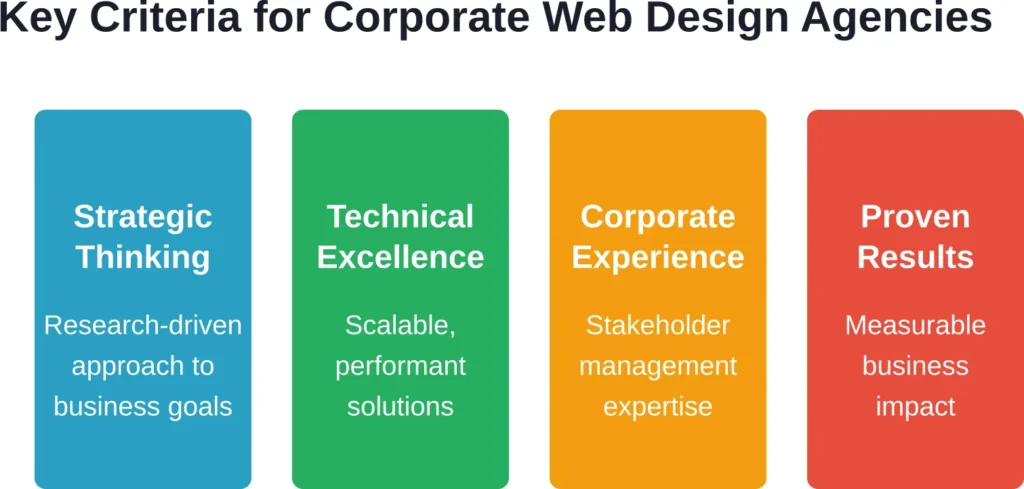
Great corporate agencies understand stakeholder complexity. They navigate multiple decision-makers, lengthy approval processes, and competing priorities without losing sight of the end user. They communicate progress clearly and manage expectations realistically.
They also bring strategic thinking to the table. Before touching design tools, top agencies conduct research—competitor analysis, user interviews, analytics audits. They ask hard questions about business goals and translate corporate objectives into design decisions.
Technical excellence matters equally. Enterprise websites often integrate with existing systems—CRMs, marketing automation platforms, content management systems. The best agencies build sites that scale, load quickly, and maintain performance under traffic spikes.
Finally, they demonstrate measurable impact. According to ADWEEK’s 2025 Agency of the Year coverage, top-performing agencies delivered double-digit revenue growth and maintained 70% client retention rates even during market contractions. That’s the benchmark.
Top 15 Corporate Web Design Companies in 2026
These agencies represent the best corporate web design talent available. Each has demonstrated excellence through industry recognition, client results, and award-winning work.
1. Gilzor

Gilzor is a global team of creative and strategic thinkers specializing in custom digital product development from idea to launch.
What sets Gilzor apart is their user-centric approach to digital solutions. Their work showcases strong UI/UX design capabilities, full-cycle web and mobile development, and a focus on creating functional, attractive products that connect with target audiences.
The agency positions itself specifically to help corporate clients and product companies build and scale high-quality digital experiences. Their expertise includes UI/UX design, web development, and go-to-market strategies.
Real talk: Gilzor’s balanced focus on design quality, technical execution, and business outcomes makes them a reliable choice for enterprises investing in custom corporate digital platforms.
Contact Information:
- Website: www.gilzor.com
- Email: [email protected]
- Address: Poland, Warsaw, Office 58, street Adama Mickiewicza 37, 01-625
- LinkedIn: www.linkedin.com/company/gilzor-softwaredevelopment
2. A-listware

A-listware is a software development and consulting company delivering high-quality digital solutions through dedicated teams and expert services.
What sets A-listware apart is their comprehensive approach to digital experiences. They combine strong UX/UI design capabilities with full software development expertise to create responsive, secure, and user-focused corporate solutions.
The agency positions itself specifically to help enterprises build and maintain professional digital platforms. Their expertise includes UX/UI design, custom software development, enterprise applications, and complete digital transformation support.
Real talk: A-listware’s ability to deliver both design excellence and technical depth makes them a valuable partner for corporate clients needing reliable, scalable web solutions.
Contact Information:
- Website: a-listware.com
- Phone: +1 (888) 337 93 73
- Email: [email protected]
- Address: North Bergen, NJ 07047, USA
- LinkedIn: www.linkedin.com/company/a-listware
- Facebook: www.facebook.com/alistware
3. Lengreo
Lengreo positions itself as a complete marketing and tech partner, delivering website development alongside powerful B2B lead generation and digital strategies.
What sets Lengreo apart is their results-driven approach to corporate digital presence. Their work demonstrates strong capabilities in building business websites, landing pages, and conversion-focused digital experiences that directly support client acquisition goals.
The agency positions itself specifically to help corporate clients scale through integrated web development and performance marketing. Their expertise spans website development, UX optimization, and demand generation—core needs for enterprises seeking measurable growth.
Real talk: Lengreo’s combination of technical website development and proven lead generation makes them a strong partner for corporate clients who want their digital assets to actively drive business results.
Contact Information:
- Website: lengreo.com
- Phone: +31 686 147 566
- Email: [email protected]
- Address: Vrijstraat 9 C/D, 5611 AT Eindhoven, Netherlands
- LinkedIn: www.linkedin.com/company/lengreo
- Instagram: www.instagram.com/lengreo.agency
- Twitter: x.com/Lengreo
4. Oski
Oski builds smart, well-engineered software solutions for tech-forward enterprises and ambitious startups.
Oski stands out through their emphasis on innovative design and seamless user experiences. Their frontend solutions and CMS expertise deliver aesthetically pleasing, intuitive interfaces combined with robust performance — exactly what corporate digital platforms require.
The agency positions itself to help enterprises reimagine operations through thoughtful digital solutions. Their capabilities span cloud architecture, frontend development, AI integrations, and reliable CMS implementations.
Real talk: Oski’s focus on quality engineering and user-centered design makes them a solid partner for companies that need corporate websites and digital systems that are both powerful and professionally polished.
Contact Information:
- Website: oski.site
- Phone: +48571282759
- Email: [email protected]
- Address: Kaupmehe tn 7, 10114 Tallinn, Estonia
- LinkedIn: www.linkedin.com/company/oski-solutions
5. Mobian Studio
Mobian Studio is a European partner specializing in mobile and AI solutions, building dedicated engineering teams for companies in IT, Healthcare, Fintech, and Logistics.
Mobian excels at creating production-ready digital products with clean architecture and scalable design. Their approach focuses on end-to-end delivery of sophisticated web and mobile solutions that enterprises can rely on.
For corporate clients, Mobian brings both outsourcing and outstaffing models, delivering senior-level execution and thoughtful digital experiences without the overhead of building in-house teams.
The agency’s emphasis on scalable architecture and domain-specific expertise makes them particularly valuable for enterprises that require robust, future-proof digital platforms.
Contact Information:
- Website: mobian.studio
- Phone: [email protected]
- Address: Harju maakond, Tallinn, Kesklinnalinnaosa, Masina tn 22, 10113
- LinkedIn: www.linkedin.com/company/mobian-studio
6. Clay
Clay consistently appears in top agency rankings across the web design industry. While not featured in the Awwwards data, the agency’s reputation among corporate clients warrants inclusion.
Clay focuses on UI/UX design for digital products and websites, with particular strength in interface design, branding, and product experience. Their client roster includes major brands across technology, finance, and consumer sectors.
The agency brings Silicon Valley sensibilities to corporate design—clean interfaces, intuitive interactions, and user-centered thinking. For enterprises undergoing digital transformation, Clay’s product design expertise proves invaluable.
Their work demonstrates how corporate websites can feel modern and accessible without sacrificing professionalism. Clay bridges the gap between consumer-grade UX and enterprise requirements.
7. Huemor
Huemor appears consistently in rankings of best web design companies. The agency takes a conversion-focused approach to web design, emphasizing measurable business outcomes.
For corporate clients obsessed with ROI, Huemor speaks the right language. They position design decisions around business impact—lead generation, user engagement, conversion optimization.
The agency works across industries but shows particular strength with B2B corporate clients. They understand longer sales cycles, complex buyer journeys, and the need to communicate credibility through design.
Huemor also emphasizes research and testing. They don’t launch and disappear; they iterate based on performance data to improve results over time.
8. Bop Design
Bop Design specializes in B2B marketing and web design. That focus makes them particularly relevant for corporate clients operating in business-to-business contexts.
The agency understands B2B buying processes—multiple stakeholders, lengthy evaluation periods, the need for detailed product information and case studies. Their designs accommodate these requirements without feeling cluttered.
Bop Design also offers integrated marketing services beyond web design. For corporate clients seeking a strategic partner rather than just a vendor, this full-service approach provides value.
Their portfolio demonstrates work with established companies across professional services, technology, and manufacturing—industries with complex corporate needs.
9. Locomotive
Locomotive brings award-winning creative capabilities to corporate web design. Based in Montreal, the agency combines artistic ambition with technical excellence.
What makes Locomotive special? Their work demonstrates that corporate websites don’t have to be boring. They push creative boundaries while maintaining usability and performance.
The agency’s technical capabilities shine in their use of animation, scroll-based interactions, and sophisticated layouts. They build sites that feel premium—important for corporate brands competing on perceived quality.
Locomotive also maintains a strong open-source presence, contributing tools and frameworks back to the development community. That technical credibility matters when evaluating agency partners.
10. Fantasy
Fantasy operates at the intersection of brand, product, and experience design. The agency works with ambitious companies—both established corporations and high-growth startups.
Their approach emphasizes transformation. Fantasy doesn’t just redesign websites; they help companies reimagine their entire digital presence and brand positioning.
For corporate clients undergoing rebranding or major strategic shifts, Fantasy brings the creative vision and executional rigor needed to pull off complex changes.
The agency’s portfolio spans technology, consumer products, and media—sectors where design leadership provides competitive advantage. Their work consistently demonstrates polish and strategic thinking.
11. Paper Tiger

Paper Tiger relaunched as a strategic design partner helping brands win new customers and engage users. Recognized as Awwwards Site of the Day on January 17, 2026, with a score of 7.35/10, the agency showcases exceptional technical and creative capabilities.
What sets Paper Tiger apart is their strategic approach to corporate design. Their work demonstrates careful attention to user engagement, with standout elements including sophisticated page transitions, studio animations, and thoughtfully designed gallery experiences.
The agency positions itself specifically to help corporate clients outpace competition through design. Their expertise spans brand strategy, digital experience design, and customer acquisition—core concerns for enterprise clients.
Real talk: Paper Tiger’s Awwwards recognition validates their technical execution. The Site of the Day award evaluates design quality, usability, creativity, and content—exactly what corporate clients need.
12. Mantis
Based in New York City, Mantis operates as an experience studio specializing in experiential, digital, and brand work. The agency earned Awwwards Site of the Day recognition on November 8, 2025, scoring 7.28/10.
Mantis excels at creating deep connections between brands and audiences. Their portfolio showcases advanced interaction design—scroll reveals, sophisticated transitions, and carefully crafted user journeys that hold attention without sacrificing usability.
For corporate clients, Mantis brings a multidisciplinary approach. They don’t just build websites; they create cohesive experiences across physical and digital touchpoints. That integrated thinking proves valuable for enterprises managing complex brand ecosystems.
The agency’s New York location matters. Proximity to major corporate headquarters facilitates the face-to-face collaboration many enterprise projects require.
13. Studio X

Studio X specializes in commercial interior design with locations in Hong Kong and Singapore. They earned Awwwards Site of the Day on April 17, 2026, scoring 7.38/10—the highest score among the agencies featured here.
Wait, an interior design firm? Here’s why Studio X belongs on this list: their digital presence demonstrates exactly how corporate websites should function. Their site features intuitive navigation, clear project presentation, and sophisticated interactions that never overwhelm content.
Studio X proves that corporate websites can be both beautiful and functional. Their process page, loader animations, and project views showcase technical polish while maintaining professional credibility.
For corporate clients in retail, workplace, hospitality, or mixed-use development, Studio X understands the visual language that resonates with enterprise decision-makers.
14. Webyansh

Webyansh is a premium UX design and Webflow agency based in India. The agency earned Awwwards Nominee recognition on June 11, 2025, positioning itself as an expert in UX/UI design, web development, and SEO for startups.
But don’t let the startup focus fool you. Webyansh brings critical capabilities corporate clients need: systematic UX design processes, technical Webflow development expertise, and integrated SEO strategy.
The agency’s work demonstrates attention to scalability—building digital brands that grow with business needs. Their mega menu navigation and hero header designs show sophistication in handling complex information architectures.
Cost-conscious enterprises appreciate Webyansh’s value proposition. As an India-based agency, they offer competitive economics without compromising design quality, as evidenced by their Awwwards recognition.
15. Portal-1 Studio
Portal-1 Studio earned Awwwards Honorable Mention on June 10, 2025. The agency crafts data-driven, story-led digital experiences that merge strategy, UX, and brand design.
The data-driven emphasis resonates with corporate clients tired of design decisions based on personal preference. Portal-1 grounds their work in user research and analytics, creating experiences optimized for measurable outcomes.
Their story-led approach balances data with emotion. Corporate websites shouldn’t feel sterile—they need to communicate brand values and connect with audiences. Portal-1 understands that balance.
The agency’s work on contact pages, studio presentations, and case studies demonstrates polish appropriate for corporate contexts. Everything communicates professionalism and strategic thinking.
How to Choose the Right Corporate Web Design Company
Having options is great. Making the right choice is harder.
Start by clarifying your objectives. Do you need a site refresh or complete digital transformation? Are you launching new products or repositioning your brand? Different agencies excel at different types of projects.
Evaluate portfolio fit carefully. Don’t just look at visual appeal—examine whether agencies have solved problems similar to yours. Have they worked with companies at your scale? In your industry? With your level of technical complexity?
Process matters as much as creativity. Ask about research methods, stakeholder management approaches, and post-launch support. Corporate projects fail more often from process breakdowns than design shortcomings.
Check references thoroughly. Contact at least three former clients. Ask about communication, deadline management, budget adherence, and post-launch support. The best agencies provide contact information freely.
Consider cultural fit. You’ll work closely with your agency partner for months. Do their communication styles match yours? Do they understand your industry? Can they navigate corporate politics?
Budget realistically. Top agencies aren’t cheap, and projects almost always cost more than initial estimates. Build in contingency and remember that cutting corners on design usually costs more long-term.
Common Corporate Web Design Mistakes to Avoid
Corporate clients make predictable mistakes when selecting design partners. Here’s what to watch for.
Design by committee kills great work. Too many stakeholders with veto power results in bland, compromised designs that satisfy no one. Empower a small decision-making team and trust their judgment.
Undervaluing research is another common error. Agencies that skip user research and jump straight to mockups are guessing. Effective design requires understanding user needs, competitive positioning, and technical constraints.
Ignoring performance optimization comes back to haunt companies. Beautiful designs mean nothing if pages load slowly or crash on mobile devices. Insist on performance benchmarks from the start.
Neglecting content strategy is equally problematic. Design frameworks only work with strong content. If your agency isn’t asking hard questions about messaging, information architecture, and content creation, worry.
Finally, treating launch as the finish line sets projects up for failure. Websites require ongoing optimization. Plan for post-launch testing, analytics review, and iterative improvements.
Corporate Web Design Trends in 2026
The corporate web design landscape continues evolving. Here’s what defines leading work right now.
Sophisticated minimalism dominates corporate sites. Clean layouts, generous white space, and purposeful typography create professional impressions without feeling sterile. The best corporate sites prove less really is more.
Scroll-based storytelling has matured beyond gimmicky parallax effects. Modern corporate sites use scroll position to reveal information progressively, guiding users through complex narratives without overwhelming them.
Performance-first design is non-negotiable. With Core Web Vitals impacting SEO rankings, leading agencies optimize every aspect of site performance—image loading, script execution, render times.
Accessibility has moved from checkbox requirement to design principle. Top agencies build accessible experiences from the ground up, ensuring sites work for users with diverse abilities.
Modular design systems enable consistent experiences across large corporate sites. Rather than designing individual pages, agencies create component libraries that scale across hundreds or thousands of pages.
Personalization engines customize experiences based on user behavior, industry, or role. Corporate buyers expect relevant content, and leading sites deliver it through smart personalization.
What to Expect from the Design Process
Understanding typical agency processes helps set realistic expectations.
Discovery phases typically run 2-4 weeks. Agencies conduct stakeholder interviews, user research, competitive analysis, and technical audits. This research foundation prevents expensive missteps later.
Strategy development follows discovery. Agencies synthesize research into strategic recommendations—positioning, messaging, user journeys, content strategy, technical architecture. Expect another 2-3 weeks here.
Design phases vary by project scope. Initial concepts usually take 3-4 weeks, followed by refinement rounds based on feedback. Corporate projects often require multiple stakeholder review cycles.
Development timelines depend on technical complexity. Simple WordPress sites might take 6-8 weeks; complex custom applications require 3-6 months. Realistic scheduling prevents rushed launches.
Testing and quality assurance deserve dedicated time. Leading agencies test across devices, browsers, and accessibility tools before launch. Budget at least 2 weeks for thorough QA.
Post-launch optimization should be ongoing. Plan for analytics review, user testing, and iterative improvements. The best agencies offer retainer arrangements for continued partnership.
| Project Phase | Typical Duration | Key Deliverables |
|---|---|---|
| Discovery & Research | 2-4 weeks | Stakeholder interviews, user research, competitive analysis, technical audit |
| Strategy Development | 2-3 weeks | Positioning, messaging framework, user journeys, content strategy |
| Design & Prototyping | 4-6 weeks | Visual concepts, interactive prototypes, design system components |
| Development | 6-16 weeks | Front-end build, CMS integration, functionality implementation |
| Testing & QA | 2-3 weeks | Cross-browser testing, accessibility audit, performance optimization |
| Launch & Optimization | Ongoing | Deployment, analytics setup, iterative improvements |
Questions to Ask Potential Agency Partners
The right questions reveal whether an agency truly fits your needs.
Ask about their research process. How do they gather user insights? What methods do they use for competitive analysis? Agencies without systematic research approaches are winging it.
Inquire about stakeholder management experience. How do they navigate multiple decision-makers? What’s their approach to gathering and incorporating feedback? Corporate projects require political savvy.
Understand their technical capabilities. Do they build custom or use platforms? How do they ensure performance? What’s their approach to security and compliance? Technical gaps cause expensive problems.
Discuss their design process. How many revision rounds are included? What does their feedback process look like? How do they handle scope changes? Clear processes prevent frustrating surprises.
Ask about post-launch support. What happens after the site launches? Do they offer ongoing optimization? What does maintenance and support look like? Launches are beginnings, not endings.
Request case studies with measurable results. What business metrics improved? How do they track success? Agencies that can’t articulate impact should raise red flags.
Finally, discuss team composition. Who will actually work on your project? What’s their experience level? Will you work with the senior team or junior staff? Meeting the actual team matters.
Investment Considerations for Corporate Web Design
Corporate web design represents significant investment. Understanding cost factors helps budget appropriately.
Scope drives cost more than any other factor. A 10-page corporate site costs dramatically less than a 100-page site with custom functionality. Define scope precisely before requesting proposals.
Agency expertise and reputation affect rates. Award-winning agencies with corporate portfolios command premium rates. That premium often delivers value through fewer revisions and stronger results.
Technical complexity impacts budgets significantly. Custom CMS development, third-party integrations, and complex user experiences require more development time and specialized expertise.
Content creation adds to project costs. If your agency creates written content, photography, or video, budget accordingly. Many corporate clients underestimate content costs.
Ongoing costs shouldn’t be overlooked. Hosting, maintenance, security updates, and content management require continued investment. Factor these into total cost of ownership.
Based on industry reports, corporate web design projects typically range from tens of thousands to hundreds of thousands of dollars, depending on complexity and agency positioning. The investment scales with business impact.
Measuring Web Design Success
You can’t improve what you don’t measure. Effective corporate websites require clear success metrics.
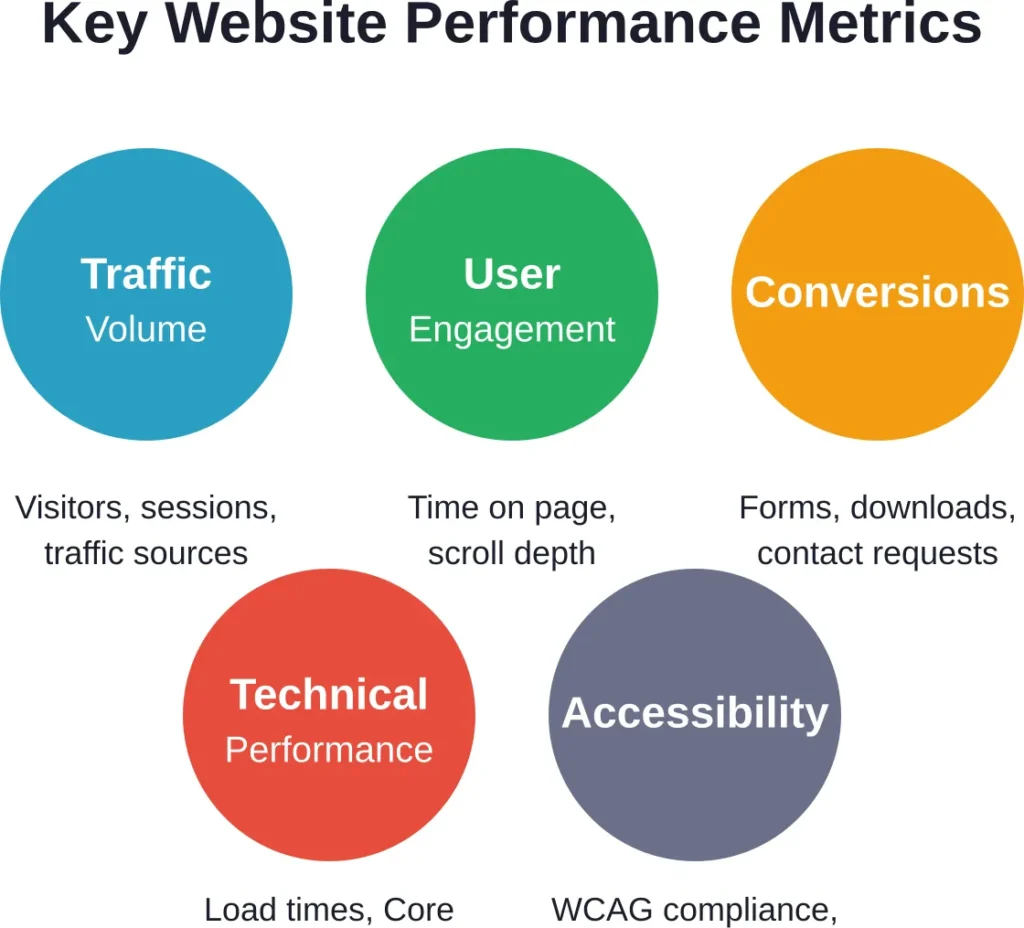
Traffic metrics provide baseline health indicators. Monitor unique visitors, page views, traffic sources, and bounce rates. Declining traffic signals problems; growth indicates success.
Engagement metrics reveal how users interact with content. Time on page, scroll depth, video completion rates, and internal navigation patterns show whether content resonates.
Conversion metrics tie design to business outcomes. Track form submissions, download rates, contact requests, or e-commerce transactions. These connect design decisions to revenue.
Performance metrics affect both user experience and SEO. Core Web Vitals—Largest Contentful Paint, First Input Delay, Cumulative Layout Shift—directly impact search rankings and user satisfaction.
Accessibility metrics ensure inclusive experiences. Track keyboard navigation functionality, screen reader compatibility, color contrast ratios, and WCAG compliance levels.
According to ADWEEK coverage of top-performing agencies, successful firms maintained 70% client retention rates and delivered production revenue boosts even during contractions.
The Role of Content in Corporate Web Design
Beautiful design with weak content fails. Content strategy and design must work together.
Content strategy should drive design decisions, not the other way around. Before creating layouts, agencies need to understand messaging priorities, content types, and information architecture.
Hierarchy matters in corporate contexts. Users need to find critical information quickly—product details, pricing, contact information, case studies. Design should make important content immediately accessible.
Tone and voice require careful calibration. Corporate content walks a fine line between professional credibility and approachable personality. The best content sounds authoritative without being stuffy.
Visual content carries equal weight to written content. Photography, video, infographics, and data visualizations communicate complex information efficiently and engage users emotionally.
Content management considerations affect design. How will teams update content? What level of flexibility is needed? Smart design systems balance creative control with operational practicality.
Security and Compliance in Corporate Web Design
Corporate websites face scrutiny that startup sites don’t. Security and compliance aren’t optional.
Data protection regulations vary by region and industry. GDPR, CCPA, HIPAA, and other frameworks impose specific requirements. Experienced corporate agencies understand compliance obligations and build accordingly.
Security starts with infrastructure. Leading agencies implement SSL certificates, secure hosting environments, regular security patches, and intrusion detection systems as baseline requirements.
Accessibility compliance carries legal weight. Many jurisdictions require WCAG 2.1 AA compliance for corporate websites. Agencies should build accessible sites from the ground up, not retrofit accessibility later.
Cookie consent and privacy policies need careful implementation. Users must understand data collection practices and provide informed consent. Half-baked privacy implementations create legal risk.
Third-party integrations introduce security considerations. Every marketing tool, analytics platform, and CRM integration expands attack surface. Vet vendors carefully and limit unnecessary integrations.
Mobile-First Design for Corporate Sites
Mobile traffic dominates web usage. Corporate sites must deliver excellent mobile experiences.
Mobile-first design starts with the smallest screen and scales up. This approach ensures core functionality works on every device rather than cramming desktop experiences into mobile viewports.
Touch interfaces require different interaction patterns. Buttons need sufficient size and spacing. Navigation must work with thumbs, not mouse pointers. Mobile users expect different patterns.
Performance matters more on mobile. Users on cellular connections won’t wait for bloated pages. Optimize images aggressively, minimize JavaScript, and prioritize critical content.
Context differs on mobile. Users might be researching on-the-go, multitasking, or dealing with distractions. Mobile content should be scannable with clear calls to action.
Testing on real devices is non-negotiable. Emulators don’t capture actual user experience. Test on multiple devices, operating systems, and browsers before launch.
Integration with Marketing Technology
Corporate websites rarely exist in isolation. Integration with marketing technology stacks is essential.
CRM integration enables lead tracking and nurturing. When website visitors submit forms, data should flow automatically to Salesforce, HubSpot, or whatever CRM the company uses.
Marketing automation platforms need clean connections. Email campaigns, landing pages, and automated workflows should integrate seamlessly with website content and analytics.
Analytics implementation requires strategic planning. Beyond basic Google Analytics, enterprise sites often need event tracking, conversion funnels, and integration with business intelligence tools.
Personalization engines customize experiences based on visitor characteristics. Account-based marketing, industry-specific content, and role-based navigation require sophisticated personalization infrastructure.
Testing and optimization tools enable continuous improvement. A/B testing platforms, heat mapping tools, and user session recording provide insights for iterative enhancement.
Frequently Asked Questions
Corporate web design projects typically take 3-6 months from kickoff to launch, depending on scope and complexity. Simple refreshes with existing content might take 8-12 weeks. Complex sites with custom development, extensive content creation, and multiple stakeholder groups often require 6-9 months. The timeline includes discovery and research (2-4 weeks), strategy development (2-3 weeks), design (4-6 weeks), development (6-16 weeks), and testing (2-3 weeks). Corporate approval processes and content creation often extend timelines beyond initial estimates.
Web design agencies focus primarily on visual design, user experience, branding, and creative strategy. Web development companies emphasize technical implementation, coding, system architecture, and functionality. Many leading corporate agencies offer both design and development services under one roof. For corporate projects, integrated agencies that handle both design and development typically deliver better results than splitting work between separate vendors. That said, some companies work with specialized design agencies and have in-house development teams handle implementation.
Both local and remote agencies can deliver excellent results for corporate clients. Local agencies offer face-to-face collaboration, easier stakeholder meetings, and familiarity with regional market dynamics. Remote agencies often provide access to top talent regardless of location, potentially better value, and global perspectives. For complex corporate projects with many stakeholders, local agencies sometimes navigate internal politics more effectively. However, distributed collaboration tools have made remote partnerships increasingly viable. Focus on capability, portfolio fit, and cultural alignment rather than location alone.
Stakeholder disagreements are common in corporate projects. The best approach is establishing clear decision-making authority before starting. Identify who has final approval on design decisions and empower that person or small group. Experienced agencies facilitate stakeholder workshops to align perspectives early and document agreed-upon objectives. When disagreements arise, refer back to research, user testing data, and documented goals rather than personal preferences. Consider creating a steering committee with representatives from key departments but limit voting members to prevent paralysis. Some agencies offer stakeholder training to help teams evaluate design objectively.
Reputable agencies include revision rounds in their contracts. Typically, projects include 2-3 rounds of revisions at the concept phase. If initial concepts miss the mark, provide specific feedback tied to project objectives rather than subjective preferences. Explain which aspects don’t work and why, referencing target audience needs and business goals. Good agencies use feedback to refine direction rather than starting completely over. If designs fundamentally misunderstand requirements, that signals communication breakdown during discovery—address gaps in the brief before moving forward. Most contracts specify what happens if both parties can’t reach agreement.
Generally speaking, corporate websites benefit from major redesigns every 3-5 years, with continuous minor updates in between. Technology, design trends, and user expectations evolve constantly. Sites older than 3-4 years often feel dated and may suffer from technical debt. However, complete redesigns are disruptive and expensive. Leading companies take an iterative approach—building flexible design systems that allow continuous evolution without full rebuilds. Focus on ongoing optimization, regular content updates, and incremental improvements rather than infrequent massive overhauls. If site analytics show declining performance, user complaints increase, or the brand has evolved significantly, consider redesign regardless of timeline.
Internal teams provide essential context, domain expertise, and stakeholder management that external agencies can’t replicate. Assign a dedicated project manager or website owner who serves as the primary agency contact. This person coordinates internal feedback, makes timely decisions, and keeps the project moving. Subject matter experts should contribute to content strategy and provide technical requirements. Marketing teams guide messaging and brand positioning. IT teams address security, compliance, and integration needs. However, resist design by committee—consolidate feedback through your project lead rather than having agencies manage multiple internal contacts directly. The right balance is active collaboration without micromanagement.
Conclusion
Choosing the right corporate web design company shapes your digital presence for years. The agencies featured here represent the industry’s best—recognized by Awwwards, ADWEEK, and other authoritative platforms for their exceptional work.
Remember what actually matters: strategic thinking that aligns design with business objectives, technical excellence that delivers performance and scalability, corporate experience that navigates complex stakeholder environments, and proven results that demonstrate measurable impact.
The best agency for your company depends on your specific needs. Evaluate portfolio fit carefully. Ask hard questions about process, team composition, and post-launch support. Check references thoroughly. And budget realistically—quality design represents significant investment that delivers corresponding returns.
Start by clearly defining your objectives and success metrics. Then reach out to 3-5 agencies whose work resonates with your goals. The right partner is out there—choose thoughtfully and the investment will pay dividends for years.
Ready to transform your corporate website? Contact agencies on this list to discuss your project and find the perfect partner for your digital transformation.