
Quick Summary: Hydrogen peroxide can be safe for ear use when properly diluted to 3% concentration and applied correctly for earwax removal. However, it carries risks of irritation, eardrum damage if the membrane is perforated, and ototoxicity at higher concentrations. Professional evaluation is recommended before home treatment, especially for persistent earwax buildup or suspected ear infections.
Earwax buildup affects millions of people annually. The condition impacts approximately 5% of the adult population and 10% of children, according to research published by the National Institutes of Health. That number jumps dramatically for elderly and cognitively impaired individuals—reaching 30% in these groups.
With cotton swabs increasingly recognized as dangerous for ear cleaning, hydrogen peroxide has emerged as a popular home remedy. But is it actually safe?
Understanding Earwax and When It Needs Removal
Cerumen (earwax) serves critical protective functions. The substance moisturizes the ear canal skin, prevents infections, and blocks water, foreign bodies, and insects from entering deeper structures.
Here’s the thing though—ears are typically self-cleaning. Normal jaw movement naturally expels wax from the canal. This automatic mechanism fails in certain individuals, causing impaction that can lead to conductive hearing loss, fullness, itching, and pain.
Interestingly, earwax type shows strong ethnic correlations. Dry-type earwax appears in 95% of East Asians but only 3% of Europeans and Africans. Mixed-type earwax occurs in 30-50% of North Americans, according to NIH research.
How Hydrogen Peroxide Works for Earwax
Hydrogen peroxide functions as a cerumenolytic—a substance that softens and breaks down earwax. Over-the-counter ear drops typically contain about 6.5% carbamide peroxide, which releases both hydrogen peroxide and oxygen to dissolve wax buildup.
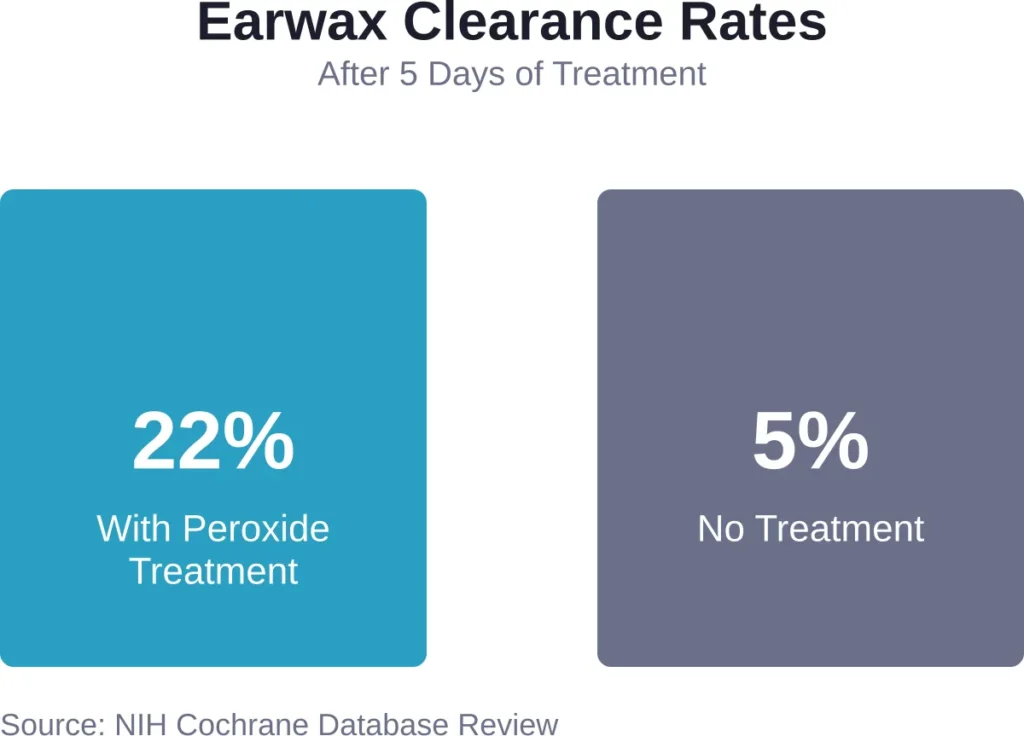
Research comparing active treatment versus no treatment found significant differences. After five days, 22% of ears showed complete wax clearance with treatment compared to just 5% without intervention. That represents a risk ratio of 4.09 for successful clearance.
Safe Concentrations and Application Methods
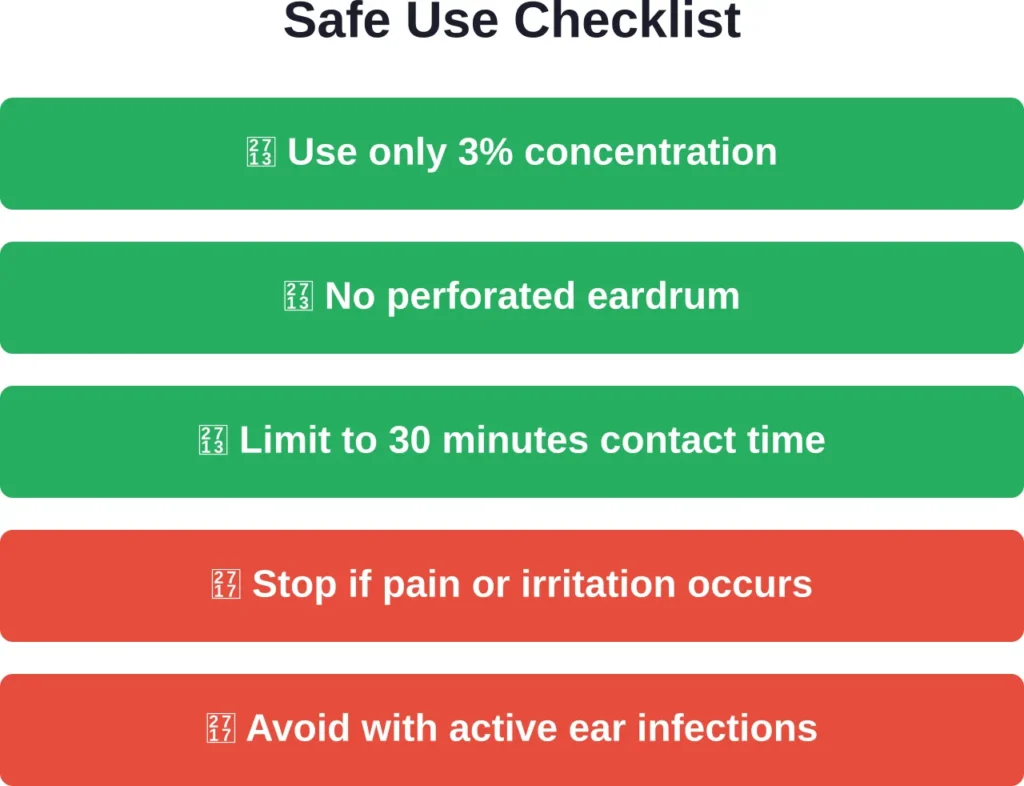
Concentration matters significantly for safety. Most over-the-counter hydrogen peroxide solutions contain 3% hydrogen peroxide—the concentration generally recognized as safe for ear use.
Medical guidelines recommend applying drops 15-30 minutes before irrigation or syringing. This timeframe allows the solution adequate contact time to soften impacted wax.
The application process is straightforward. Tilt the head to allow drops to enter the ear canal, remain in position for several minutes, then tilt in the opposite direction to drain. Some protocols suggest applying drops at breakfast and dinner when used alongside antibiotic treatments for infections.
| Concentration | Use Case | Safety Level |
|---|---|---|
| 3% hydrogen peroxide | OTC ear cleaning | Generally safe |
| 6.5% carbamide peroxide | Medical ear drops | Safe when used as directed |
| Above 10% | Not for ear use | Risk of burns and damage |
Risks and Safety Concerns
Real talk: hydrogen peroxide isn’t without risks. Research on sand rats demonstrated that topical hydrogen peroxide adversely affects both cochlear and vestibular function—raising concerns about ototoxicity in humans.
The primary dangers include:
- Irritation and chemical burns at concentrations above 10%
- Eardrum perforation if the tympanic membrane is already damaged
- Inner ear damage if solution penetrates beyond the eardrum
- Skin irritation in the external auditory canal
- Temporary discomfort, fizzing sensation, and drainage
Studies examining antiseptic preparations found evidence that hydrogen peroxide, along with iodine, chlorhexidine, and alcohol-based solutions, can demonstrate ototoxicity. That said, conclusive evidence for human ototoxicity from any solution remains limited.
When Professional Care Is Necessary
Home treatment has limits. Professional cerumen removal becomes necessary when impaction occludes the external auditory canal, presses against the tympanic membrane, or causes significant symptoms.
Medical evaluation is critical before using hydrogen peroxide if there’s any history of eardrum perforation, ear surgery, chronic ear infections, or drainage. Healthcare providers can safely irrigate ears, manually remove impacted wax, or prescribe appropriate prescription-strength cerumenolytics.
For 2016, CPT code 69209 was created specifically for removal of impacted cerumen using irrigation/lavage, reflecting the medical necessity of professional intervention in many cases.
Conclusion
So, is it OK to put peroxide in your ear? The answer is conditional yes—when used properly at safe concentrations for appropriate cases.
Stick to 3% hydrogen peroxide solutions, never exceed recommended contact times, and discontinue use immediately if pain or excessive irritation occurs. Most importantly, consult a healthcare provider before attempting home treatment, especially if symptoms persist beyond a few days.
Professional evaluation ensures the eardrum is intact and rules out conditions requiring medical intervention rather than home remedies.
Frequently Asked Questions
Medical guidelines recommend 15-30 minutes of contact time before irrigation. Allow the solution to bubble and fizz for 1 minute before tipping it out for routine cleaning. Tilt the head to keep the solution in the ear canal during this period.
Hydrogen peroxide can damage the eardrum if it’s already perforated or if high concentrations are used. At the standard 3% concentration with an intact tympanic membrane, the risk is minimal when used as directed.
Three percent hydrogen peroxide is the standard safe concentration available over-the-counter. Medical ear drops containing 6.5% carbamide peroxide are also safe when used according to package instructions. Concentrations above 10% should never be used in ears.
For active treatment of earwax buildup, place 5-10 drops in each ear twice daily for no more than four days in a row. Consult medical guidelines for routine preventive use frequency, as recommendations vary by individual circumstances. Overuse can irritate the ear canal and disrupt the natural protective wax layer.
Consultation is recommended if there’s any history of ear problems, current ear pain, drainage, or hearing loss. Medical evaluation ensures the eardrum is intact and identifies conditions requiring professional treatment rather than home remedies.
Hydrogen peroxide can help clean the ear canal when used alongside prescribed antibiotic drops for infections. However, it doesn’t treat the infection itself. Bacterial and viral ear infections require appropriate medical treatment—hydrogen peroxide serves only as an adjunct cleaning agent.
Common side effects include temporary fizzing sensation, mild discomfort, drainage, and slight irritation. More serious but rare side effects include chemical burns from high concentrations, allergic reactions, dizziness, and inner ear damage if the eardrum is perforated.