
Quick Summary: Yes, Tylenol (acetaminophen) is safe to take on an empty stomach. Unlike NSAIDs such as ibuprofen, acetaminophen does not irritate the stomach lining or increase the risk of ulcers or bleeding. Food does not affect its safety, though it may slightly slow absorption.
A headache hits before breakfast. Your back aches after an overnight fast. You reach for Tylenol, then pause—should you eat something first?
This question comes up constantly, and for good reason. Many pain relievers require food to protect the stomach. But Tylenol works differently.
Here’s what the science actually says about taking acetaminophen without food.
Why Tylenol Is Gentle on the Stomach
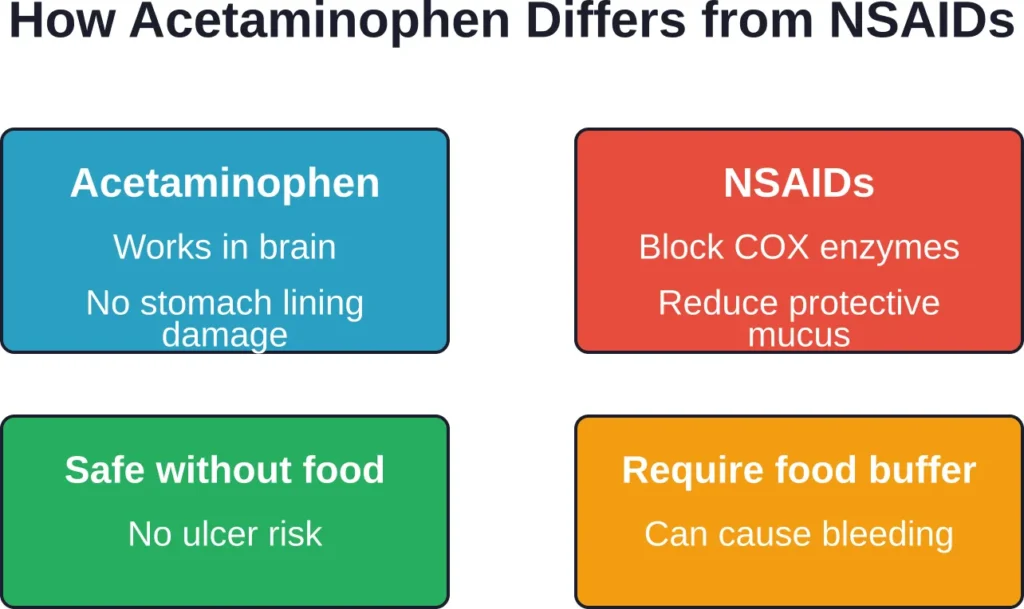
Acetaminophen—the active ingredient in Tylenol—doesn’t cause the stomach irritation that other pain relievers do. The key difference lies in how it works.
Nonsteroidal anti-inflammatory drugs (NSAIDs) like ibuprofen and aspirin block enzymes called COX-1 and COX-2 throughout the body, including in the stomach lining. This blocking action reduces the protective mucus layer in your stomach, which can lead to irritation, ulcers, and bleeding.
Acetaminophen takes a different path. According to research published by the National Institutes of Health, acetaminophen works primarily in the central nervous system rather than directly on the stomach lining. It changes how the body senses pain and helps regulate body temperature through brain pathways.
Real talk: this mechanism means acetaminophen doesn’t strip away stomach protection the way NSAIDs do.
Does Food Affect Acetaminophen Absorption?
Food doesn’t make acetaminophen unsafe, but it does change how quickly it gets absorbed.
Research from the National Center for Biotechnology Information shows that acetaminophen is rapidly and efficiently absorbed when taken on an empty stomach. The drug isn’t absorbed in the stomach itself—it passes through to the small intestine where absorption actually occurs.
When taken with food, especially a large or high-fat meal, gastric emptying may slow absorption. The delay does not reduce effectiveness or safety.
For most people managing chronic conditions or mild discomfort, this timing difference doesn’t matter. But for acute pain—a sudden migraine or injury—taking acetaminophen without food provides faster relief.
Safe Dosing Guidelines for Adults
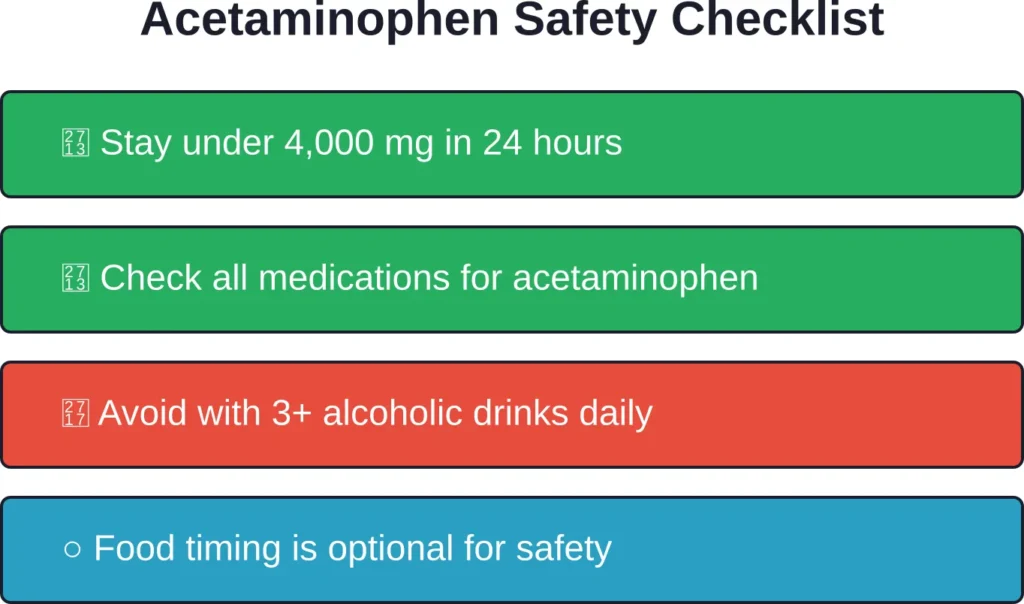
According to FDA guidance, adults and children 12 years and older should not exceed 4,000 mg of acetaminophen in 24 hours. That’s the maximum total from all sources—tablets, liquid, combination cold medicines, and prescription drugs.
Standard dosing for regular strength Tylenol (325 mg tablets) is two tablets every 4 to 6 hours while symptoms persist, not to exceed 10 tablets in 24 hours. For extra strength formulations (500 mg), the typical dose is two tablets every 4 to 6 hours, not to exceed 6 doses in 24 hours.
The FDA emphasizes that exceeding the daily maximum can cause severe liver damage or liver failure. This risk exists whether acetaminophen is taken with food or without it—the danger comes from total dose, not stomach contents.
| Tylenol Product | Strength per Dose | Maximum Daily Doses | Maximum 24-Hour Total |
|---|---|---|---|
| Regular Strength | 325 mg × 2 tablets | 10 tablets | 3,250 mg |
| Extra Strength | 500 mg × 2 tablets | 6 doses | varies |
| Children’s Liquid | 160 mg/5 mL | 5 doses | Varies by weight |
When Acetaminophen Might Upset Your Stomach
While acetaminophen doesn’t cause the stomach damage NSAIDs do, some people report mild nausea or discomfort. This reaction isn’t common, but it happens.
Possible reasons include:
- Individual sensitivity to the inactive ingredients in specific formulations
- Taking acetaminophen on a completely empty stomach when already nauseous from illness
- Very high doses approaching the maximum daily limit
- Underlying gastrointestinal conditions unrelated to the medication itself
If mild stomach discomfort occurs, taking acetaminophen with a small snack or glass of water often resolves it. But this adjustment is about personal comfort, not medical necessity.
The Liver Warning That Matters More Than Food
Here’s what actually demands attention: liver safety.
Each year in the U.S., people catch 1 billion colds and as many as 12% of people get the flu. Moreover, 7 in 10 people use nonprescription medicines to treat cold, cough and flu symptoms. More than 600 medications—both prescription and nonprescription—contain acetaminophen.
Taking Tylenol plus a cold medicine plus a prescription pain medication could easily push total acetaminophen intake beyond safe limits. And according to authoritative medical sources, severe liver damage may occur if three or more alcoholic drinks per day are consumed while using acetaminophen.
Food timing? Not the risk factor. Dose tracking and alcohol interaction? Critical.
Who Should Take Tylenol With Food Anyway
Even though acetaminophen is safe without food, some situations call for taking it with a meal or snack:
- People with existing nausea or vomiting from illness may tolerate any medication better with bland food
- Those taking multiple medications at once sometimes find food helps prevent general queasiness
- Anyone who experiences rare but genuine stomach discomfort from acetaminophen specifically
Taking acetaminophen with food won’t reduce its effectiveness significantly—it just might delay peak concentration. For chronic pain management or fever reduction, that delay rarely matters clinically.
Tylenol vs NSAIDs: When Stomach Protection Matters
The distinction between acetaminophen and NSAIDs becomes critical for people with:
- History of stomach ulcers or gastrointestinal bleeding
- Current use of blood thinners or antiplatelet drugs
- Inflammatory bowel disease or other chronic GI conditions
- Need for long-term daily pain management
For these groups, acetaminophen offers pain and fever relief without the stomach erosion risk that NSAIDs carry. Acetaminophen is the #1 doctor-recommended pain relief brand for those with stomach problems such as stomach bleeding and stomach ulcers.
That said, acetaminophen doesn’t reduce inflammation the way NSAIDs do. For conditions like arthritis where inflammation drives pain, NSAIDs (taken properly with food) may work better despite the stomach risk. But for headaches, minor aches, and fever? Acetaminophen delivers effective relief without requiring a meal.
FAQ
Yes, taking Tylenol on an empty stomach daily is safe as long as the total dose stays below 4,000 mg in 24 hours. The empty stomach doesn’t increase risk—exceeding the maximum dose does. People with liver disease should consult their healthcare provider before daily use.
Yes, acetaminophen is absorbed more rapidly on an empty stomach versus with food. The drug passes through the stomach to the small intestine for absorption, and food slows gastric emptying.
No, acetaminophen does not cause stomach bleeding or ulcers because it doesn’t interfere with the protective stomach lining the way NSAIDs do. It works through central nervous system pathways rather than blocking COX enzymes in the gastrointestinal tract.
Yes, taking Tylenol with a full glass of water helps the tablet dissolve and pass to the small intestine where absorption occurs. Water doesn’t slow absorption the way food might, and adequate hydration supports proper drug metabolism.
Extra Strength Tylenol (500 mg) is no more likely to upset an empty stomach than regular strength. The dosage difference doesn’t change acetaminophen’s gentle mechanism of action. Rare stomach discomfort from acetaminophen relates to individual sensitivity, not dose strength.
Avoid exceeding 4,000 mg acetaminophen total per day from all sources, including combination cold medicines and prescriptions. Avoid alcohol consumption of three or more drinks daily while using acetaminophen, as this combination significantly increases liver damage risk. Always check medication labels for hidden acetaminophen.
Yes, taking Tylenol before bed on an empty stomach is safe. Nighttime dosing doesn’t change acetaminophen’s safety profile. The medication will be absorbed and metabolized normally during sleep, providing pain or fever relief without requiring food.
Bottom Line
Tylenol is safe to take on an empty stomach. The acetaminophen it contains works through brain pathways, not by irritating the stomach lining like NSAIDs do.
Food won’t protect you from acetaminophen—there’s nothing to protect against. What matters is staying under 4,000 mg daily, tracking all sources of acetaminophen in combination products, and avoiding heavy alcohol use.
For fastest relief, take it without food. For personal comfort, take it with a snack. Either way, it’s safe.
Experiencing persistent pain that requires daily medication? Consult a healthcare provider to identify the underlying cause and develop a comprehensive treatment plan beyond symptom management alone.