

Quick Summary: Sex during pregnancy is generally safe for most women with healthy, low-risk pregnancies. The amniotic sac and strong uterine muscles protect the baby, and sexual activity does not increase the risk of miscarriage or preterm delivery in normal pregnancies. However, certain conditions—such as placenta previa, incompetent cervix, or preterm labor risk—require abstaining from intercourse, so consulting with a healthcare provider is essential.
Pregnancy transforms a woman’s body in profound ways. And with those changes come dozens of questions—many of which center on what’s safe and what’s not.
One of the most common concerns? Whether having sex while pregnant poses any risk to the developing baby.
The short answer is reassuring: for most women with healthy pregnancies, sexual activity is perfectly safe throughout all trimesters. But there are nuances, exceptions, and practical considerations worth understanding.
Is Sex Safe During Pregnancy?
According to the American College of Obstetricians and Gynecologists (ACOG), most sexual activity is safe for women having healthy pregnancies. This includes sexual intercourse as well as penetration with fingers or sex toys.
Here’s why: the amniotic sac and the strong muscles of the uterus protect the fetus. The baby is cushioned by amniotic fluid and surrounded by layers of tissue that act as a natural barrier. Sexual activity—even orgasm—doesn’t reach the baby or cause harm in a normal pregnancy.
Research has examined the relationship between sexual intercourse during pregnancy and obstetric outcomes. While some studies have investigated this topic, the specific findings about frequent sexual intercourse and preterm birth risk should be discussed with a healthcare provider, as individual circumstances vary.
That said, pregnancy is not one-size-fits-all. Individual circumstances matter.
When to Avoid Sex During Pregnancy
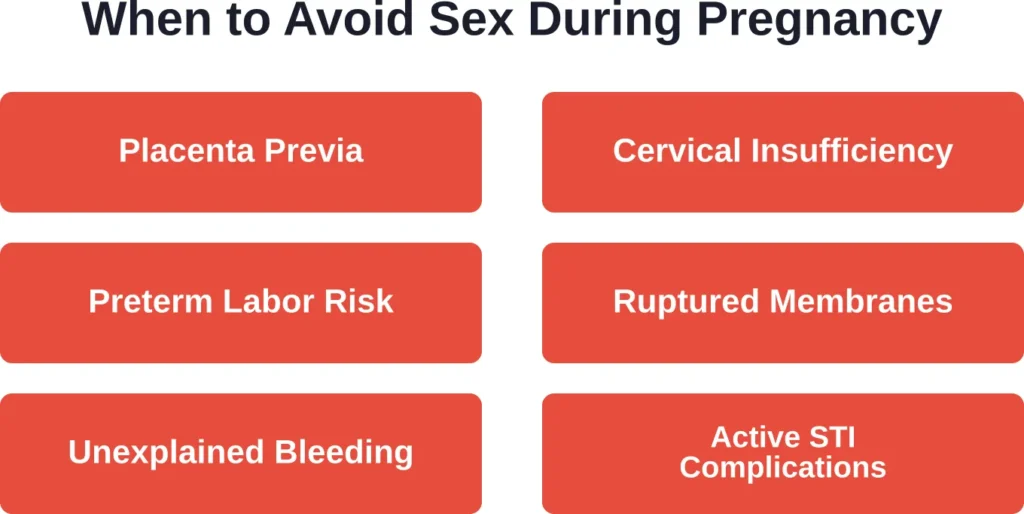
While sex is generally safe, certain medical conditions require abstaining from intercourse. Healthcare providers may recommend avoiding sex if any of the following apply:
- Placenta previa (placenta covering the cervix)
- Incompetent cervix or cervical insufficiency
- History of preterm labor or current risk of preterm delivery
- Ruptured membranes or leaking amniotic fluid
- Unexplained vaginal bleeding or discharge
- Multiple pregnancy (twins, triplets) with certain risk factors
- Certain sexually transmitted infections (STIs)
The Centers for Disease Control and Prevention (CDC) emphasizes that pregnant women are not immune to sexually transmitted infections. STIs can complicate pregnancy and have serious effects on both mother and baby. Pregnant women should ask their doctors about getting tested and treated for STIs as part of routine prenatal care.
If any complications arise—cramping that doesn’t stop, bleeding, or unusual discharge—contact a healthcare provider immediately.
Sex in the First Trimester
Many women wonder whether sex is safe in the early weeks of pregnancy—especially given concerns about miscarriage.
The reality? Sexual activity does not cause miscarriage. Most miscarriages in the first trimester happen due to chromosomal abnormalities or developmental issues unrelated to intercourse.
That said, the first trimester brings its own challenges. Nausea, fatigue, breast tenderness, and hormonal shifts can dramatically affect libido. Some women feel less interested in sex during these early months. Others notice heightened desire.
Both responses are completely normal. There’s no “right” way to feel about intimacy during pregnancy.
Sex in the Second Trimester
For many women, the second trimester represents a sweet spot. Nausea subsides. Energy returns. The baby bump isn’t yet large enough to cause significant discomfort.
Increased blood flow to the pelvic region can heighten sensitivity and arousal. Some women experience their highest levels of desire during this period.
Sex remains safe during the second trimester for women with healthy pregnancies. This is often the time when couples feel most comfortable resuming or maintaining regular intimacy.
Sex in the Third Trimester
As pregnancy progresses into the third trimester, physical changes make certain positions less comfortable. A growing belly, back pain, and pelvic pressure can shift how intercourse feels.
But sex is still safe—right up until delivery—assuming no complications exist.
Some couples worry that orgasm or intercourse might trigger labor. While orgasm can cause mild uterine contractions (called Braxton Hicks contractions), these are generally harmless and temporary. Research does not support the idea that sexual activity induces labor in healthy pregnancies before term.
Individual risk factors for preterm delivery vary by person. This highlights the importance of discussing sexual activity and any pregnancy complications with a healthcare provider.
Best Sexual Positions During Pregnancy
Comfort matters—especially as the belly grows. Positions that worked before pregnancy may need adjustment.
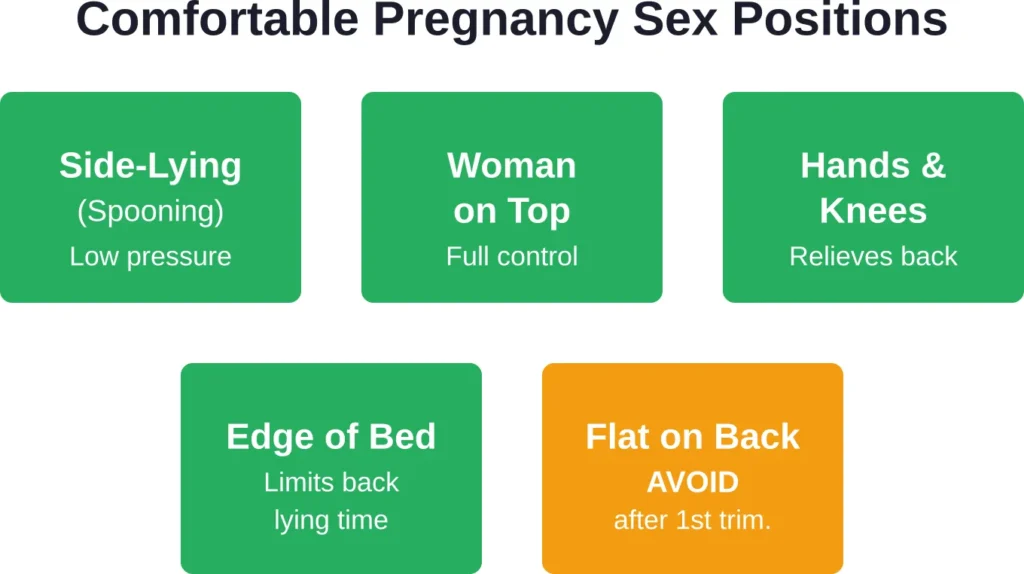
Recommended positions include:
- Side-lying (spooning): Reduces pressure on the abdomen and allows for shallow penetration.
- Woman on top: Gives control over depth and pace, avoiding belly pressure.
- Hands and knees: Takes weight off the back and belly, though some find it tiring.
- Edge of the bed: Woman lies on her back at the edge, partner stands—limits time spent flat on the back.
Avoid lying flat on the back for extended periods, especially after the first trimester. This position can compress the vena cava (a major blood vessel), reducing blood flow and causing dizziness.
Common Physical Changes and Concerns
It’s normal to experience mild cramping or spotting after sex during pregnancy. The cervix becomes more vascular and sensitive, which can lead to light bleeding. This doesn’t necessarily indicate a problem, but mention it to a healthcare provider if it happens repeatedly or is accompanied by pain.
Hormonal shifts also affect vaginal lubrication. Some women notice increased discharge; others experience dryness. Water-based lubricants can help improve comfort.
Breast tenderness, especially in the first trimester, may make certain types of touch uncomfortable. Open communication with a partner helps navigate these changes.
What If You Don’t Want to Have Sex?
Decreased libido during pregnancy is completely normal. Physical discomfort, fatigue, anxiety about the baby, and hormonal changes all contribute to fluctuations in desire.
No one should feel pressured to engage in sexual activity. Intimacy takes many forms—physical affection, emotional connection, and non-sexual touch all strengthen partner bonds.
The World Health Organization (WHO) defines sexual health as a state of physical, emotional, mental, and social well-being related to sexuality—not merely the absence of disease or dysfunction. Sexual health requires a positive and respectful approach to sexuality and sexual relationships, including the possibility of pleasurable and safe experiences, free of coercion, discrimination, and violence.
Partners should discuss expectations, feelings, and boundaries openly. Pregnancy affects both people in a relationship, and mutual understanding fosters healthy intimacy.
Are Condoms Needed During Pregnancy?
Pregnancy prevents conception, but it doesn’t protect against sexually transmitted infections. The CDC notes that STIs can complicate pregnancy and have serious effects on both the pregnant person and the developing baby.
If either partner has multiple sexual partners or if STI status is uncertain, condoms provide important protection. Testing for STIs should be part of routine prenatal care.
Benefits of Sex During Pregnancy
Beyond physical pleasure, sex during pregnancy offers several benefits:
- Emotional connection: Maintaining intimacy strengthens the partner relationship during a period of significant change.
- Stress relief: Orgasm releases endorphins, which can improve mood and reduce stress.
- Better sleep: Post-orgasm relaxation may help with pregnancy-related insomnia.
- Physical exercise: Sexual activity provides gentle physical movement and cardiovascular benefits.
Pregnancy doesn’t pause a couple’s sexual relationship—it simply evolves alongside other aspects of the journey to parenthood.
Frequently Asked Questions
No. Sexual activity does not cause miscarriage. Most miscarriages in the first trimester occur due to chromosomal abnormalities or developmental issues unrelated to intercourse. The amniotic sac and uterine muscles protect the fetus during sexual activity.
Orgasm can cause mild, temporary uterine contractions (Braxton Hicks), but research does not support the idea that sexual activity induces labor in healthy pregnancies before term. If a woman is at full term and her cervix is ready, some healthcare providers suggest sex as a natural method to encourage labor, though evidence is limited.
Absolutely. Decreased libido during pregnancy is common and normal. Hormonal changes, physical discomfort, fatigue, and anxiety all affect sexual desire. There’s no obligation to maintain the same level of sexual activity—intimacy can take many non-sexual forms.
Side-lying (spooning), woman on top, and hands-and-knees positions reduce pressure on the abdomen and allow for comfort and control. Avoid lying flat on the back for extended periods after the first trimester, as this can compress major blood vessels and reduce blood flow.
If there’s any risk of sexually transmitted infections—such as uncertain STI status or multiple partners—condoms should be used. Pregnancy doesn’t protect against STIs, which can have serious effects on both mother and baby. Routine STI testing is part of prenatal care.
Light spotting can occur because the cervix becomes more vascular and sensitive during pregnancy. While often harmless, any bleeding should be mentioned to a healthcare provider, especially if it’s heavy, frequent, or accompanied by cramping or pain.
Sex should be avoided if a healthcare provider advises against it due to conditions such as placenta previa, incompetent cervix, risk of preterm labor, ruptured membranes, unexplained bleeding, or certain infections. Always discuss individual circumstances with a doctor.
Final Thoughts
For most women with healthy pregnancies, sex is safe, enjoyable, and beneficial throughout all three trimesters. The baby is well-protected by the amniotic sac and strong uterine muscles, and sexual activity does not increase the risk of miscarriage or preterm delivery in uncomplicated pregnancies.
That said, every pregnancy is unique. Medical conditions, physical comfort, and emotional readiness all play a role in determining what’s right for each individual and couple.
Open communication with both a healthcare provider and a partner ensures that intimacy remains a positive part of the pregnancy experience—whatever form that intimacy takes. If questions or concerns arise, don’t hesitate to ask. Sexual health is an important component of overall reproductive health and well-being.