

Quick Summary: Taking magnesium glycinate daily is generally safe for most adults when used within recommended limits. Nearly two-thirds of Americans consume less magnesium than the recommended daily allowance, making supplementation potentially beneficial for sleep, muscle function, and blood pressure support. The established upper limit from supplements is 350 mg/day, with magnesium glycinate offering superior absorption and fewer digestive side effects compared to other forms.
Magnesium has quietly become one of the most discussed supplements in health communities. Walk through any supplement aisle and you’ll find dozens of magnesium products, each promising different benefits.
But here’s the thing—magnesium glycinate stands out from the crowd. It combines magnesium with the amino acid glycine, creating a form that’s highly bioavailable and gentle on the digestive system.
So is it safe to take every day? The short answer is yes for most people, but the full picture involves understanding dosages, your individual needs, and what the research actually shows.
Why Magnesium Matters More Than You Think
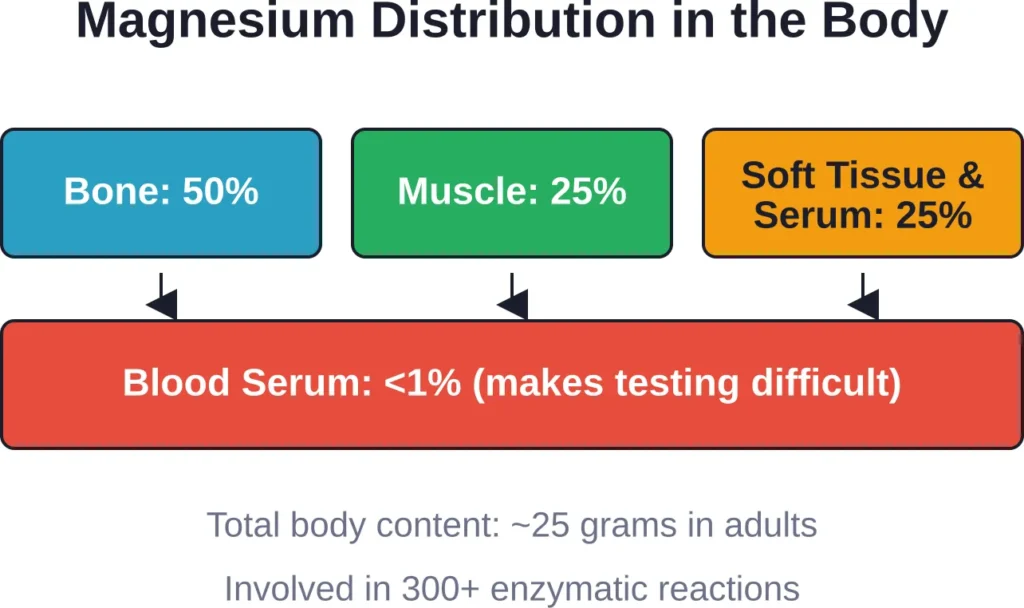
The adult human body contains about 25 grams of magnesium. That might not sound like much, but this mineral is involved in over 300 enzymatic reactions throughout the body.
About 50-60% of the body’s magnesium is stored in bone, with the remainder in soft tissue, primarily muscle, and less than 1% in serum. Less than 1% circulates in the blood, which makes testing for deficiency tricky.
Magnesium plays critical roles in energy production, protein synthesis, nerve function, blood pressure regulation, and blood sugar control. It acts as an electrical conductor that helps muscles contract and relax properly.
The Deficiency Problem
Here’s where things get concerning. Nearly two-thirds of Americans consume magnesium below the recommended daily allowance. A concerning 19% fall below 50% of the RDA.
This widespread deficiency stems from several factors: nutrient-depleted soils, food processing that strips magnesium from grains, and diets heavy in processed foods naturally low in this mineral.
What’s particularly frustrating? Many supplement users consume magnesium below recommended levels despite supplementation.
What Makes Magnesium Glycinate Different
Not all magnesium supplements are created equal. The form matters significantly for both absorption and tolerability.
Magnesium glycinate (also called magnesium bisglycinate) bonds magnesium to glycine, an amino acid. This chelated form offers distinct advantages.
First, absorption. Research shows that only 30-40% of ingested magnesium typically gets absorbed from food. Chelated forms like glycinate demonstrate superior bioavailability compared to magnesium oxide, which is poorly absorbed and often causes digestive distress.
Second, the glycine component adds value beyond just delivery. Glycine acts as an inhibitory neurotransmitter in the central nervous system, contributing to the calming effects many people report. Research shows that glycine taken before bed can improve self-reported sleep quality.
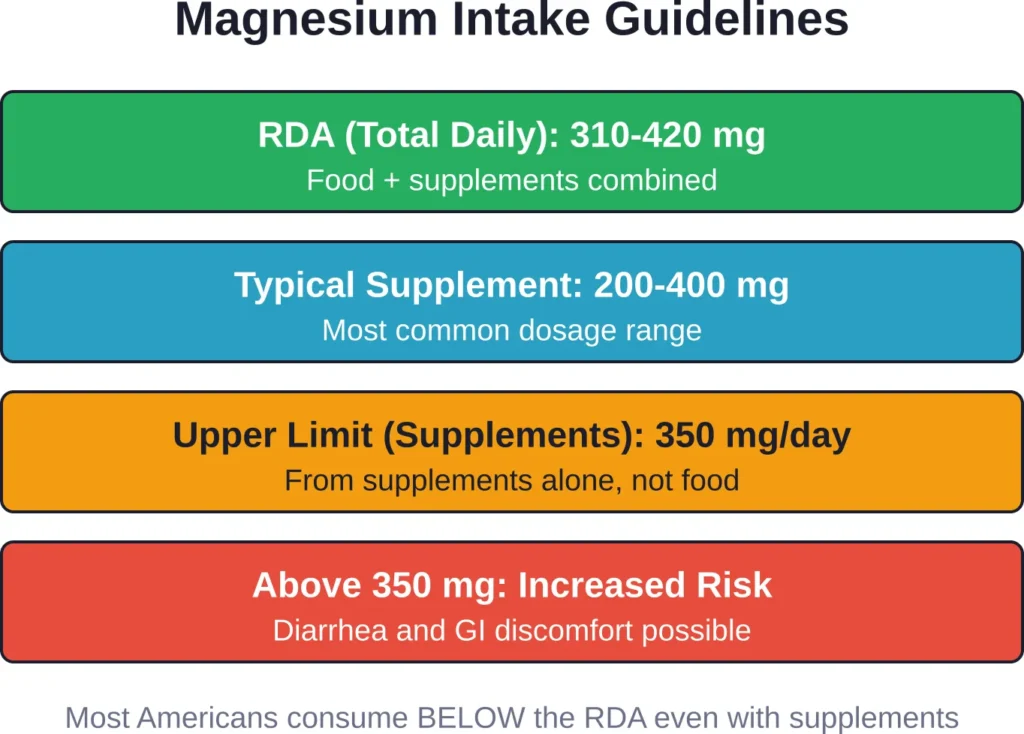
Third, digestive tolerance. The established upper limit for supplemental magnesium is 350 mg/day, set primarily because some individuals experience diarrhea at higher doses. High-dose supplements can lead to diarrhea, nausea, and cramping in some people. Magnesium glycinate causes significantly fewer gastrointestinal issues compared to forms like oxide or citrate.
Daily Magnesium Glycinate: What the Research Shows
A 2025 randomized, placebo-controlled trial examined magnesium bisglycinate supplementation in healthy adults who reported poor sleep quality.
The results? Participants taking magnesium showed a reduction of 3.9 points on the Insomnia Severity Index compared to 2.3 points in the placebo group at Week 4 (p=0.049). The effect size was modest at 0.2 Cohen’s d, but statistically significant.
Now, this is where it gets interesting. The benefits weren’t dramatic overnight transformations. Most participants noticed improvements gradually over the 1-4 week period. This matches what practitioners typically observe—magnesium works subtly and cumulatively.
Beyond Sleep: Other Documented Benefits
Analysis of multiple studies indicates that adequate magnesium intake might help reduce the risk of stroke, heart failure, and diabetes. Adequate magnesium intake has been associated with lower metabolic syndrome risk.
The FDA has even issued a letter of enforcement discretion regarding qualified health claims about magnesium consumption and reduced risk of high blood pressure.
For bone health, magnesium is essential. About 60% of the body’s magnesium is stored in the skeleton, and severe deficiency can disrupt vitamin D and calcium homeostasis.
Recommended Dosages and Safety Limits
The recommended daily allowances vary by age and sex:
| Age Group | Females | Males |
|---|---|---|
| 14 to 18 years | 360 mg | 410 mg |
| 19 to 30 years | 310 mg | 400 mg |
| 31 years and older | 320 mg | 420 mg |
These numbers represent total daily intake from all sources—food plus supplements combined.
The upper limit from supplements alone is 350 mg/day. This was established because some individuals experience mild, reversible adverse effects (primarily diarrhea) at higher supplemental doses, even though others tolerate them fine.
Real talk: this upper limit has been called into question by researchers who argue the evidence doesn’t support such a conservative threshold for chelated forms. But until official guidance changes, 350 mg remains the benchmark for supplemental magnesium.
How Much Magnesium Do You Get From Food?
One serving of spinach, an ounce of almonds, and a banana provides 190 mg of magnesium. That’s nearly 60% of the daily recommendation for women and 45% for men.
Other magnesium-rich foods include beans, nuts, seeds, whole grains, dark chocolate, and leafy greens. A diet following Mediterranean patterns typically provides adequate magnesium.
So if you’re taking a 300 mg magnesium glycinate supplement daily and eating a balanced diet, you’re likely meeting or exceeding the RDA while staying below concerning levels.
Who Should Take Magnesium Glycinate Daily
Certain populations face higher risks of deficiency and may particularly benefit from daily supplementation.
Individuals with gastrointestinal disorders like Crohn’s disease or celiac disease often have impaired magnesium absorption. Type 2 diabetes increases urinary magnesium loss, creating higher requirements.
Older adults typically have lower dietary intake, reduced absorption, and increased urinary excretion. Medications including proton pump inhibitors, diuretics, and certain antibiotics can also deplete magnesium.
Those experiencing poor sleep quality, muscle cramps, or chronic stress might benefit from supplementation. And athletes with high training volumes lose magnesium through sweat.
When to Exercise Caution
People with kidney disease should avoid magnesium supplements unless specifically directed by their healthcare provider. Impaired kidney function can lead to dangerous magnesium accumulation.
Magnesium can interact with certain medications. It may reduce absorption of bisphosphonates, certain antibiotics, and thyroid medications when taken simultaneously. Spacing doses by at least two hours typically resolves this issue.
| Medication/Supplement | Interaction Type | Recommendation |
|---|---|---|
| Calcium (high dose) | Competes for absorption | Separate by 2+ hours |
| Zinc (>25 mg/day) | Inhibits magnesium uptake | Monitor total intake |
| Antibiotics (quinolones, tetracyclines) | Reduces antibiotic absorption | Take 2-3 hours apart |
| Bisphosphonates | Reduces medication absorption | Take 2+ hours apart |
| Thyroid medications | May reduce effectiveness | Take 4 hours apart |
Timing and Practical Considerations
Most practitioners suggest taking magnesium glycinate 30-60 minutes before bed if using it primarily for sleep support. The glycine component enhances this timing strategy.
For general supplementation, timing matters less. Some people split their dose, taking half in the morning and half in the evening to maintain steady levels.
Take magnesium with or without food—both work fine. However, taking it with a meal may further reduce the already-low risk of digestive upset.
Look for supplements that specify “magnesium glycinate” or “magnesium bisglycinate” on the label. Check the elemental magnesium content—this tells you how much actual magnesium you’re getting, not the total weight of the compound.
What to Expect When Taking Magnesium Glycinate Daily
Set realistic expectations. Magnesium isn’t a pharmaceutical with dramatic immediate effects.
Most people notice subtle improvements in sleep quality within 1-4 weeks. Muscle tension and cramping typically improve within a similar timeframe. Energy levels may stabilize, though this effect is harder to measure objectively.
Some individuals report feeling more relaxed within days, particularly if they were significantly deficient to begin with.
But wait. What if you don’t notice anything? That doesn’t mean it’s not working. Magnesium’s benefits often manifest as the absence of problems—fewer muscle cramps, more stable energy, better stress resilience. These preventive effects are easy to overlook.
Frequently Asked Questions
Yes, daily magnesium glycinate supplementation is considered safe for long-term use when taken within recommended dosages (typically 200-350 mg from supplements). Research and clinical practice support continuous use for months or years without adverse effects in individuals with normal kidney function.
Effects vary by individual and purpose. Sleep improvements typically emerge within 1-4 weeks according to clinical trials. Muscle cramps and tension may improve within a similar timeframe. Some people report feeling calmer within a few days, particularly if starting from a deficient state.
For sleep support, take it 30-60 minutes before bed. The glycine component enhances relaxation and may improve sleep quality. For general supplementation without specific sleep goals, timing is less critical—morning or evening both work. Some people split their dose between morning and evening.
Magnesium glycinate is one of the best-tolerated forms. Potential side effects are typically mild and include digestive discomfort or loose stools, though these occur far less frequently than with forms like magnesium oxide. Excessive intake beyond 350 mg from supplements may increase diarrhea risk. Those with kidney disease face higher risks and should consult healthcare providers before supplementing.
Magnesium glycinate is approximately 14-18% elemental magnesium by weight. A 2,000 mg magnesium glycinate supplement typically provides around 280-360 mg of elemental magnesium. Always check the supplement facts label for “elemental magnesium” content—this is what counts toward the 350 mg upper limit.
Blood serum magnesium tests are notoriously unreliable for detecting deficiency since less than 1% of total body magnesium circulates in blood. Your serum levels can appear normal even with significant tissue deficiency. Ionized magnesium testing offers better accuracy but isn’t widely available. Supplementation decisions should be based on symptoms, risk factors, and dietary intake rather than serum tests alone.
Generally yes, but timing matters for some combinations. High-dose calcium or zinc can compete with magnesium for absorption—space them by at least two hours. Magnesium can enhance the calming effects of supplements like L-theanine or glycine. Avoid taking magnesium simultaneously with iron supplements, as magnesium may reduce iron absorption.
The Bottom Line
Taking magnesium glycinate every day is safe and potentially beneficial for most adults, especially given that nearly two-thirds of Americans don’t meet the recommended daily allowance through diet alone.
The chelated form offers superior absorption and minimal digestive side effects compared to other magnesium types. Research supports benefits for sleep quality, muscle function, blood pressure, and metabolic health.
Stick to 200-350 mg from supplements, factor in your dietary intake, and give it 1-4 weeks to assess effects. If you have kidney disease or take medications that interact with magnesium, consult your healthcare provider before starting supplementation.
The widespread deficiency of this essential mineral makes daily magnesium glycinate supplementation a reasonable strategy for many people. It’s not a cure-all, but it addresses a genuine nutritional gap that modern diets often fail to fill.
Consider tracking your sleep quality, muscle comfort, and overall well-being for a month to evaluate whether daily supplementation makes a meaningful difference for you.