
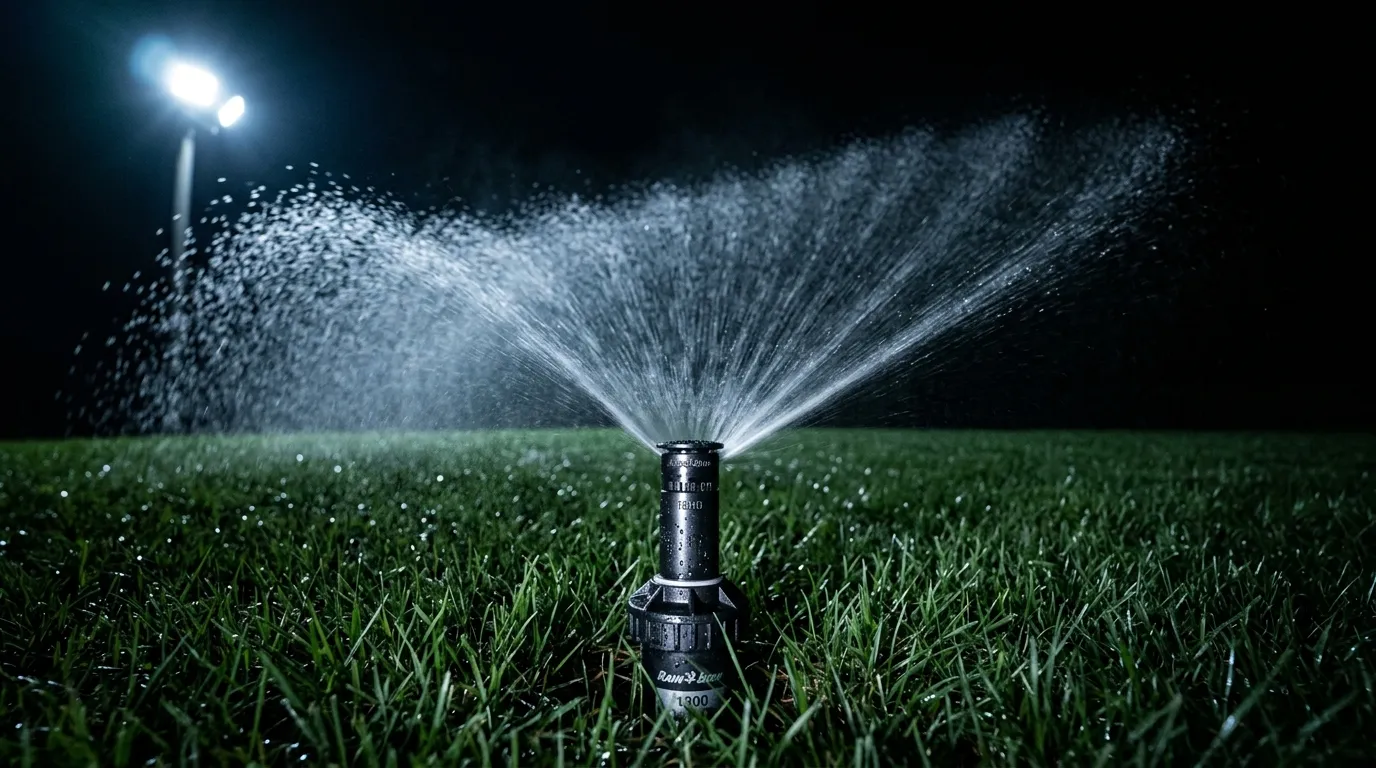
Quick Summary: Watering plants at night is generally safe and can even be beneficial, especially in hot climates where it reduces evaporation. The old warning against nighttime watering comes from specific greenhouse conditions where poor airflow and overhead sprinklers caused fungal issues. For most home gardens with proper technique—watering at soil level, ensuring good drainage, and avoiding already-wet foliage—nighttime watering poses minimal disease risk and can actually support healthier root growth.
The gardening world has long debated the best time to water plants. Walk into any garden center or browse online forums, and someone will inevitably warn against watering after sunset.
But is nighttime watering actually dangerous? Or is this another one of those gardening myths that sounds authoritative but doesn’t hold up under scrutiny?
The answer isn’t as simple as “never” or “always.” Real talk: context matters far more than the clock.
Where the “Never Water at Night” Warning Came From
Early 20th-century horticulturists observed increased powdery mildew and botrytis on roses and tomatoes in poorly ventilated greenhouses where overhead sprinklers soaked leaves late in the day. From those specific, confined conditions, a sweeping generalization emerged: wet leaves plus darkness equals disease.
That observation wasn’t wrong for that environment. Greenhouses trap humidity. Overhead watering drenches foliage. Poor air circulation prevents drying. Combine all three factors, and fungal spores get the perfect breeding ground.
The problem? That advice got applied universally—to outdoor gardens with natural airflow, to drip irrigation that never touches leaves, to climates where overnight temperatures drop and humidity stays low.
The original warning was context-specific. The blanket rule that followed ignored variables like climate, irrigation method, plant type, and garden design.
When Night Watering Actually Makes Sense
Here’s the thing though—nighttime watering offers real advantages in many situations. Water doesn’t just sit there waiting to cause problems. Plants actively take it up, and environmental conditions determine whether moisture becomes beneficial or risky.
Hot, Dry Climates Benefit Most
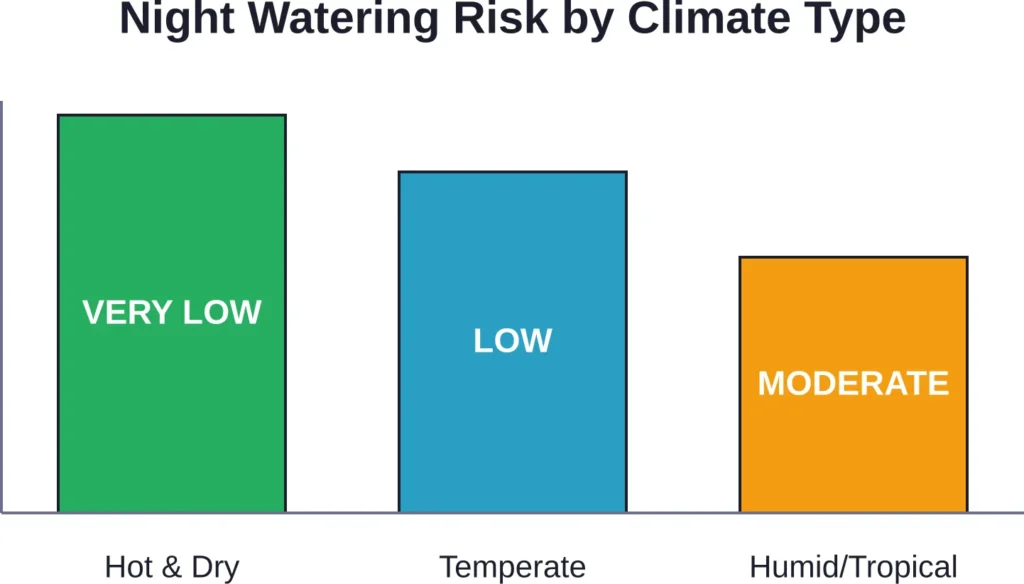
In regions where daytime temperatures regularly exceed 85°F, watering at night can reduce evaporation losses compared to midday watering. That’s significant water conservation, especially in drought-prone areas.
Desert and Mediterranean climates present low overnight humidity and good air movement. Soil stays dry on the surface while roots access moisture below. This matches natural rainfall patterns in many arid ecosystems.
Oregon State University Extension Service research on drought-tolerant vegetables notes that matching irrigation to plant needs makes water-wise gardening both practical and productive. Night watering in hot climates does exactly that—delivers water when plants can use it without waste.
Plants With CAM Photosynthesis
Succulents and cacti use a specialized photosynthesis process called CAM (Crassulacean Acid Metabolism). These plants open their stomata at night to absorb carbon dioxide while minimizing water loss.
For these species, nighttime watering aligns with their natural uptake patterns. Water them deeply every 10-14 days during summer evenings, and avoid watering entirely during winter dormancy.
Risk level? Very low. These plants evolved in environments where the only moisture comes from nighttime dew or rare desert storms.
When Morning Watering Isn’t Possible
Look, not everyone can water at dawn. Work schedules, travel, physical limitations—life happens. The choice isn’t between morning and nothing; it’s between nighttime watering and letting plants suffer drought stress.
Drought stress damages plant cells, reduces crop yields, and makes plants more susceptible to pests. A well-watered plant at night handles minor disease pressure far better than a drought-stressed plant watered at the “ideal” time.
When to Avoid Night Watering (and What to Do Instead)
That said, some conditions do create genuine risk. Recognizing them matters more than following a universal rule.
High Humidity Plus Poor Airflow
When overnight humidity regularly exceeds 80% and gardens sit in enclosed spaces or densely planted beds with minimal air movement, fungal spores thrive. This combination creates the conditions those early greenhouse observations documented.
Coastal regions and tropical climates often face this scenario. Dense foliage traps moisture. Morning dew adds to already-wet leaves.
In these environments, morning watering makes more sense. Plants dry quickly as temperatures rise and humidity drops through the day.
Plants Already Showing Disease Symptoms
Tomatoes with early blight, roses with black spot, cucumbers with powdery mildew—these plants need every advantage. Night watering when leaves already harbor fungal infections gives pathogens extra hours to spread.
Switch to morning watering until treatment controls the disease. Water at soil level exclusively. Remove infected foliage to reduce spore load.
Cold Weather and Frost Risk
Watering before overnight temperatures drop below 40°F keeps soil cold longer and can damage root systems. Wet soil conducts heat away from roots faster than dry soil.
During late fall and early spring in cold climates, water midday when possible. This gives soil time to drain and warm slightly before nighttime temperature drops.
How to Water at Night the Right Way
Technique matters more than timing. Done correctly, nighttime watering poses minimal risk regardless of conventional wisdom.
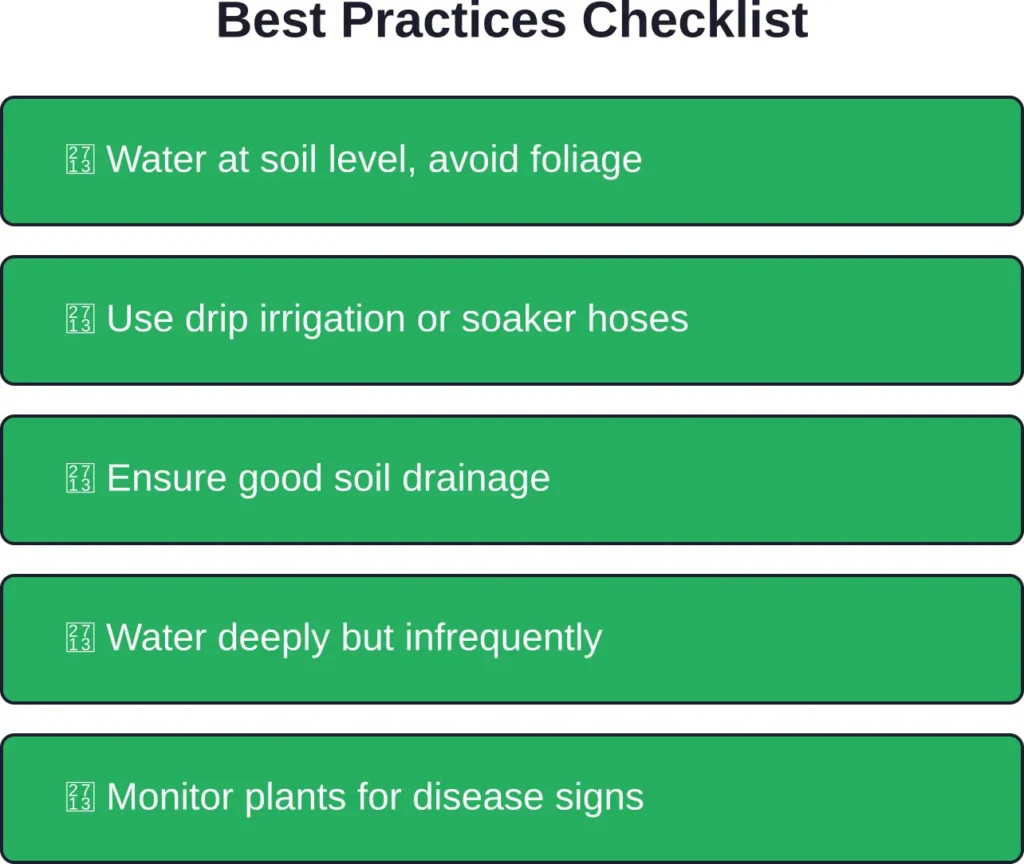
Target the Soil, Not the Foliage
This single practice eliminates most disease risk associated with nighttime watering. Wet leaves create problems. Wet soil does not.
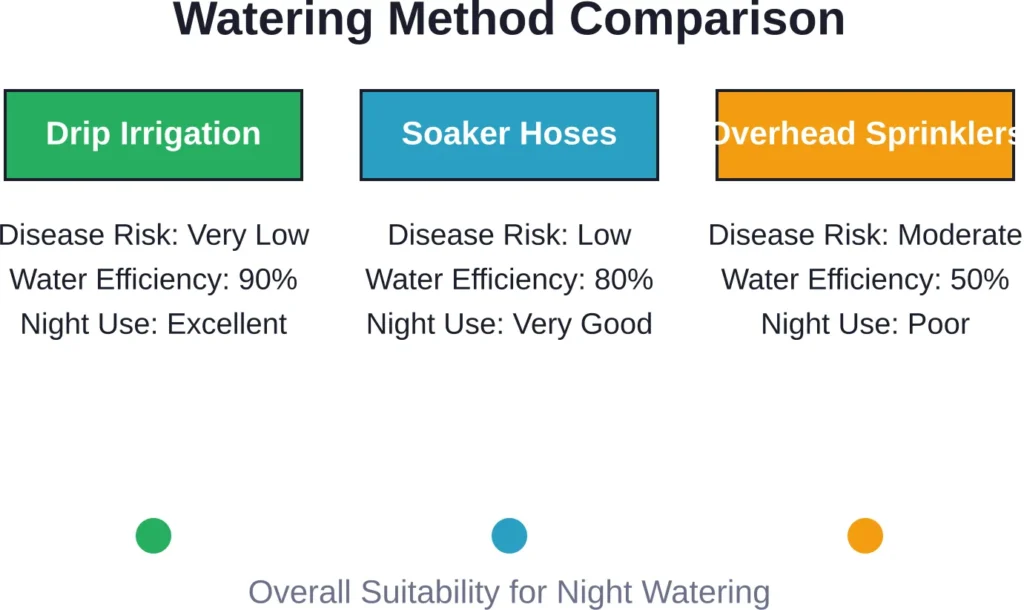
Use drip irrigation, soaker hoses, or hand-water at the base of plants. Keep spray off leaves and stems. Direct water to root zones where plants actually absorb it.
Overhead sprinklers that drench entire plants? Those create risk any time of day, but especially at night. Save those for lawns, not vegetable gardens or ornamental beds.
Water Deeply but Infrequently
Shallow, frequent watering keeps surface soil constantly moist—ideal for fungal growth and terrible for root development. Deep watering encourages roots to grow downward, accessing moisture and nutrients in lower soil layers.
For most gardens, 1-1.5 inches of water per week divided into 2-3 sessions works well. In sandy soil, water more frequently with less volume. In clay soil, water less frequently with more volume to allow drainage between sessions.
Ensure Proper Drainage
Waterlogged soil suffocates roots and promotes root rot regardless of when watering occurs. Gardens need drainage—either naturally well-draining soil or amended beds that allow excess water to escape.
If puddles form and persist more than a few hours after watering, drainage needs improvement. Add organic matter to clay soil. Create raised beds in areas with high water tables. Grade garden areas to prevent water accumulation.
Time It Right Within the Evening Window
Not all nighttime watering is created equal. Watering at 10 PM gives plants 8-10 hours before sunrise. Watering at 6 PM in summer might only give 2-3 hours of darkness.
Earlier evening watering allows some surface drying before full darkness. If choosing to water after sunset, do it as late in the evening as practical—this minimizes the duration that any incidental leaf moisture persists.
Plant-Specific Night Watering Guidelines
Different plants have different needs. Understanding these variations helps make smart watering decisions.
| Plant Type | Night Watering Safety | Best Practice |
|---|---|---|
| Succulents & Cacti | Very safe | Water deeply every 10-14 days at night in summer; avoid in winter |
| Tomatoes & Peppers | Safe with soil watering | Use drip irrigation at soil level; avoid overhead watering entirely |
| Roses | Moderate risk | Morning preferred if possible; if watering at night, keep foliage completely dry |
| Squash & Cucumbers | Moderate risk | Water at soil level only; these are prone to powdery mildew |
| Herbs (basil, oregano) | Safe with good drainage | Ensure pots drain well; avoid waterlogged soil |
| Leafy Greens | Safe | Water at soil level; these have shallow roots so monitor moisture |
Vegetables That Handle Night Watering Well
Root vegetables like carrots, beets, and radishes care little about when water arrives. Their foliage stays relatively dry even with overhead watering, and the edible portion grows underground.
Beans adapt to various watering schedules. According to Oregon State University Extension Service research, some beans like tepary beans are adapted to drought conditions at a cellular level and grow successfully in near-desert conditions.
Leafy greens including lettuce, spinach, and kale benefit from consistent soil moisture. Night watering in hot weather prevents bolting by keeping roots cool.
Ornamentals That Need More Caution
Roses famously struggle with black spot and powdery mildew, both fungal diseases that thrive on wet foliage. Morning watering is genuinely better for roses in most climates.
But even roses survive night watering if the gardener waters at the base and maintains good air circulation through proper spacing and pruning.
Petunias, impatiens, and other bedding plants with dense foliage trap moisture easily. Space these plants properly and water at soil level when watering at night.
Tools and Technology That Make Night Watering Smarter
Modern irrigation tools reduce the risks traditionally associated with nighttime watering while making the process more efficient.
Drip Irrigation Systems
Drip systems deliver water directly to root zones through emitters placed at each plant. Water never touches foliage. Moisture goes exactly where plants need it.
These systems work equally well day or night because they eliminate the wet-foliage problem entirely. Set them on timers to run during off-peak water usage hours, often late evening.
Installation requires upfront investment but pays back through water savings and reduced disease pressure.
Soaker Hoses
Soaker hoses offer a budget-friendly alternative to drip systems. These porous hoses weep water along their entire length, soaking soil without spraying leaves.
Snake them through garden beds at planting time. Cover with mulch to hide them and reduce evaporation. Connect to timers for automated watering on whatever schedule suits the household.
Smart Controllers and Moisture Sensors
Soil moisture sensors measure actual water content and trigger irrigation only when needed. This prevents overwatering—a bigger risk factor for disease than timing alone.
Smart controllers adjust watering based on weather data, skipping scheduled sessions after rainfall or during cool, humid periods when plants need less water.
These technologies optimize watering regardless of timing, but they’re especially valuable for night watering since the gardener isn’t present to observe conditions.
Common Mistakes Even With Good Timing
Technique errors sabotage watering success more often than poor timing does. Avoid these common problems.
Overwatering in the Name of Deep Watering
Deep watering doesn’t mean flooding. It means applying enough water to penetrate 6-8 inches into soil, then allowing that moisture to be used before watering again.
Check soil moisture 3-4 inches down. If it’s still moist, skip the watering session. Constantly saturated soil causes root rot, crown rot, and fungal issues.
Inconsistent Watering Schedules
Plants perform best with consistent moisture. Alternating between drought and flood stresses plants, causes blossom end rot in tomatoes, and leads to cracked fruits and vegetables.
Establish a regular schedule based on plant needs and weather. Adjust as seasons change, but maintain consistency week to week.
Ignoring Mulch
Bare soil dries quickly and crusts over, preventing water penetration. A 2-3 inch layer of organic mulch moderates soil temperature, reduces evaporation, and improves moisture retention.
Mulch benefits gardens regardless of watering timing, but it’s especially valuable in hot climates where night watering conserves water. The mulch layer keeps that water in the root zone where plants can access it.
Using Sprinklers for Everything
Overhead sprinklers have their place—establishing new lawns, cooling off heat-stressed plants midday, washing dust off foliage. But for routine watering? They waste water and create disease risk.
Reserve sprinklers for specific situations. Rely on soil-level watering methods for regular irrigation, especially at night.
What the Science Actually Says
Community discussions on gardening forums reveal mixed experiences with nighttime watering—some gardeners report no problems, others blame it for disease outbreaks. This variation reflects the importance of context.
Research confirms that fungal diseases require specific conditions: susceptible host plants, presence of pathogen spores, and favorable environmental conditions. Remove any one factor and disease doesn’t develop.
Nighttime provides favorable conditions (extended leaf wetness) only if foliage gets wet. Water at soil level and that factor disappears. Grow resistant varieties and the susceptible host factor decreases. Ensure good air circulation and even wet leaves dry faster.
The warning against night watering oversimplifies this disease triangle. It assumes overhead watering, poor air circulation, susceptible plants, and high humidity. Change those variables and risk drops dramatically.
Making the Right Choice for a Specific Garden
So what’s the verdict? Should gardeners water at night or not?
The answer depends on climate, irrigation method, plant types, and garden conditions.
In hot, dry climates with drip irrigation or soaker hoses, nighttime watering makes perfect sense. It conserves water, supports root development, and poses minimal disease risk.
In humid climates with poor air circulation and susceptible plants like roses, morning watering offers advantages. But even here, night watering at soil level remains viable when morning watering isn’t practical.
The universal rule—never water at night—fails because it ignores context. Better advice? Match watering timing and technique to specific garden conditions.
Frequently Asked Questions
No, root rot comes from waterlogged soil with poor drainage, not from watering timing. Ensure proper drainage, water to appropriate depth rather than flooding, and allow soil to partially dry between watering sessions. These practices prevent root rot regardless of when watering occurs.
Morning watering is often cited as ideal because it allows foliage to dry before nightfall. However, evening and night watering work equally well when using drip irrigation or watering at soil level. In hot climates, evening watering reduces evaporation losses. Choose the timing that fits the schedule and use proper technique.
Slugs and snails are active at night and prefer moist conditions, so nighttime watering can make gardens more hospitable to them. However, these pests cause damage regardless of watering timing in areas where they’re present. Control them with physical barriers, copper tape, or targeted baits rather than adjusting watering schedules.
Yes, watering in the evening or at night during extreme heat helps plants recover from daytime stress while minimizing evaporation loss. The cooler nighttime temperatures allow plants to absorb and use water more efficiently. Combine evening watering with morning mulch checks to maximize moisture retention during heat waves.
Container plants can be watered at night safely, especially in hot weather when pots dry out quickly. Ensure containers have drainage holes and don’t sit in water-filled saucers overnight. Empty saucers after watering to prevent root rot. Container plants typically need more frequent watering than in-ground plants regardless of timing.
Automatic sprinkler systems set for nighttime operation are common for water conservation and off-peak usage rates. However, sprinklers that wet foliage do increase disease risk at night compared to morning watering. If using nighttime sprinklers, ensure plants have good air circulation, avoid over-watering, and monitor for disease symptoms.
The distinction between evening and night watering matters less than whether foliage will dry before darkness. In summer, watering at 7-8 PM might allow 1-2 hours of drying time. In winter, 5 PM might be too late. Consider the hours until sunset and whether leaves will stay wet through darkness rather than focusing on clock time.
Final Thoughts
The prohibition against watering plants at night stems from legitimate observations in specific contexts—greenhouses with poor ventilation, overhead watering systems, and humidity-loving fungal pathogens.
But gardens aren’t greenhouses. Most modern gardeners use irrigation methods that target soil rather than foliage. Many regions have dry overnight conditions that pose minimal disease risk.
The real question isn’t whether nighttime watering is acceptable. It’s whether the specific combination of climate, technique, and plant selection creates conditions for problems.
Water at soil level. Ensure good drainage. Use appropriate irrigation tools. Monitor plants for disease signs. These practices matter far more than the time displayed on the clock.
Start observing what happens in a specific garden. Plants show stress signals when watering timing or technique needs adjustment. Wilting, yellow leaves, fungal growth, or stunted growth all provide feedback. Adjust based on results rather than rigid rules.
Nighttime watering works when done thoughtfully. Morning watering isn’t always practical or necessary. Focus on technique and context over timing, and gardens thrive regardless of when the water arrives.