
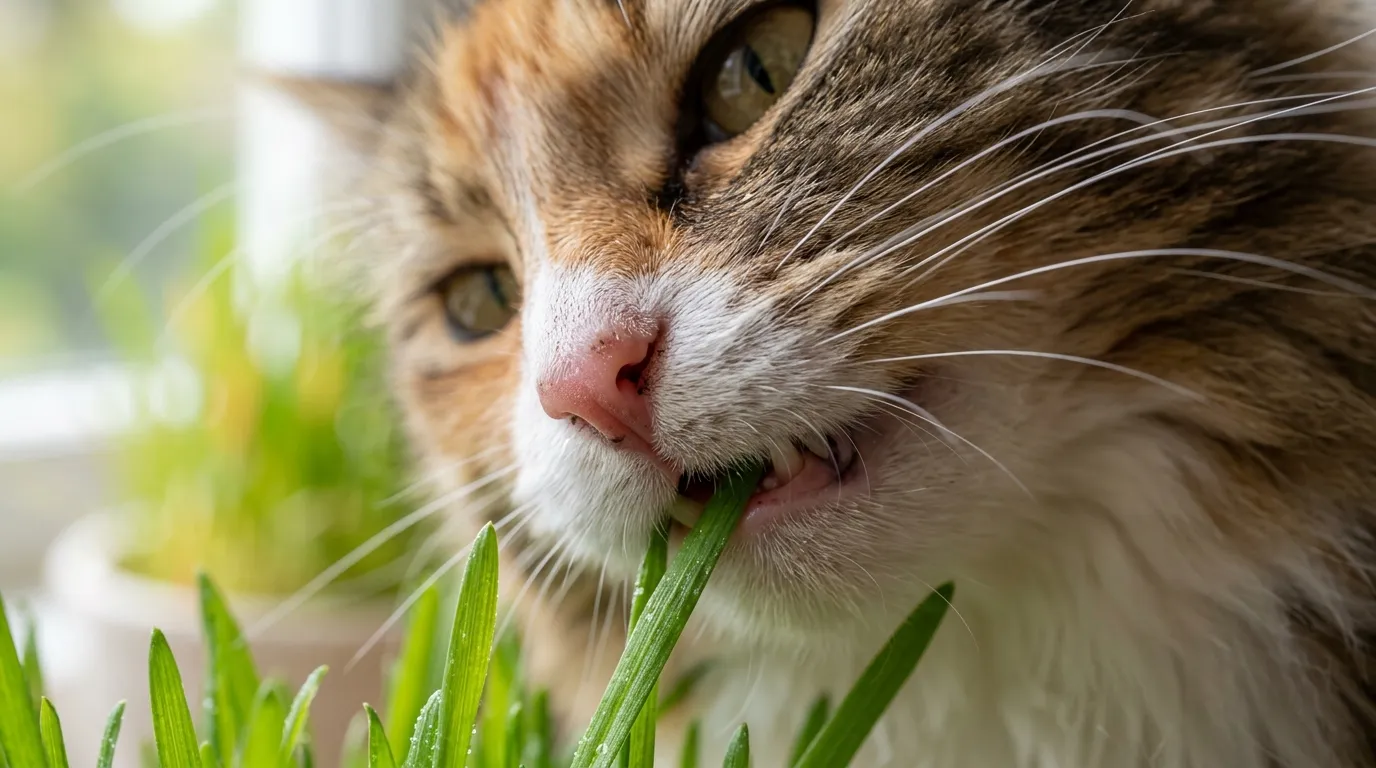
Quick Summary: It’s perfectly OK for cats to eat grass—it’s a normal behavior observed in most felines. Grass can help cats with digestion, hairball elimination, and nutrient supplementation. The main safety concern isn’t the grass itself but potential pesticides, herbicides, or toxic plants in the area where your cat grazes.
Walk outside and you might catch your cat munching on lawn grass like it’s an all-you-can-eat salad bar. For many pet parents, this behavior triggers immediate concern. After all, cats are carnivores, right?
Here’s the thing though—grass eating is one of the most common and natural behaviors in cats. It’s not a sign something’s wrong. But that doesn’t mean there aren’t legitimate safety questions worth exploring.
Let’s break down what’s actually happening when cats graze, whether it poses any health risks, and what precautions make sense.
Why Do Cats Eat Grass in the First Place?
The short answer? Scientists aren’t entirely certain, but several theories have solid support.
Grass acts as a natural digestive aid. Many experts suggest that grass provides roughage and fiber that helps move things through the intestinal tract. This can be particularly useful for indoor cats whose diets might lack plant matter entirely.
Another common explanation centers on hairballs. Cats groom themselves constantly, swallowing loose fur in the process. Grass may trigger vomiting that expels accumulated hair before it causes intestinal blockages. Some cats seem to eat grass specifically when they feel the need to purge.
Nutrient supplementation represents a third possibility. Grass contains folic acid and other trace nutrients. Cats that hunt and consume whole prey get these nutrients from the stomach contents of their catches—mostly plant matter eaten by rodents and birds. Domestic cats might instinctively seek out grass to fill this nutritional gap.
Community discussions among cat owners reveal that most cats exhibit this behavior regularly, not just when they’re sick. It appears to be instinctive foraging behavior rather than self-medication.
Is Grass Actually Safe for Cats?
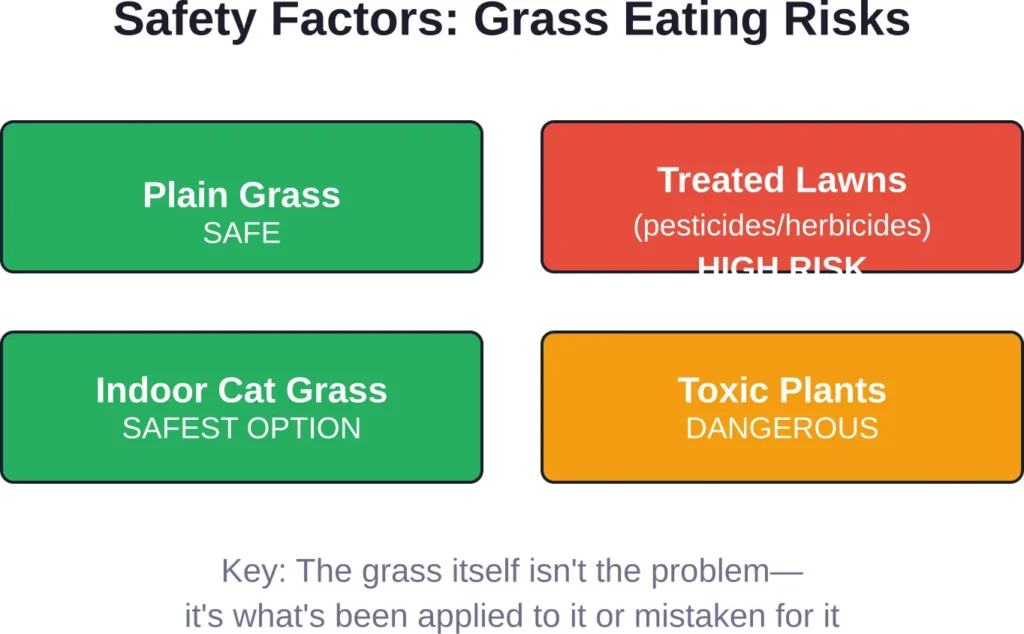
Plain grass itself? Completely safe.
The grass blades aren’t toxic, won’t cause poisoning, and generally pass through the digestive system without issues. Most cats nibble small amounts and experience zero negative effects.
But—and this matters—the safety equation changes based on what’s ON the grass rather than the grass itself.
The Real Risks: Chemical Treatments
Pesticides, herbicides, and fertilizers represent the primary danger. Many lawn treatments contain chemicals that can sicken or even poison cats.
If your cat goes outside, exercise caution with any treatments applied to your lawn. Even products marketed as pet-safe should be approached carefully—that often means safe once dried or after rain, not safe for direct consumption.
Indoor cat grass grown from seed eliminates this concern entirely. Untreated grass grown in a pot provides all the benefits without exposure to lawn chemicals.
Toxic Plants That Look Like Grass
Some ornamental plants resemble grass but contain toxins. Lilies, for example, are extremely dangerous to cats. Ensure your cat only has access to actual grass species, not decorative plants that might look similar.
What About Cats Eating Grass and Throwing Up?
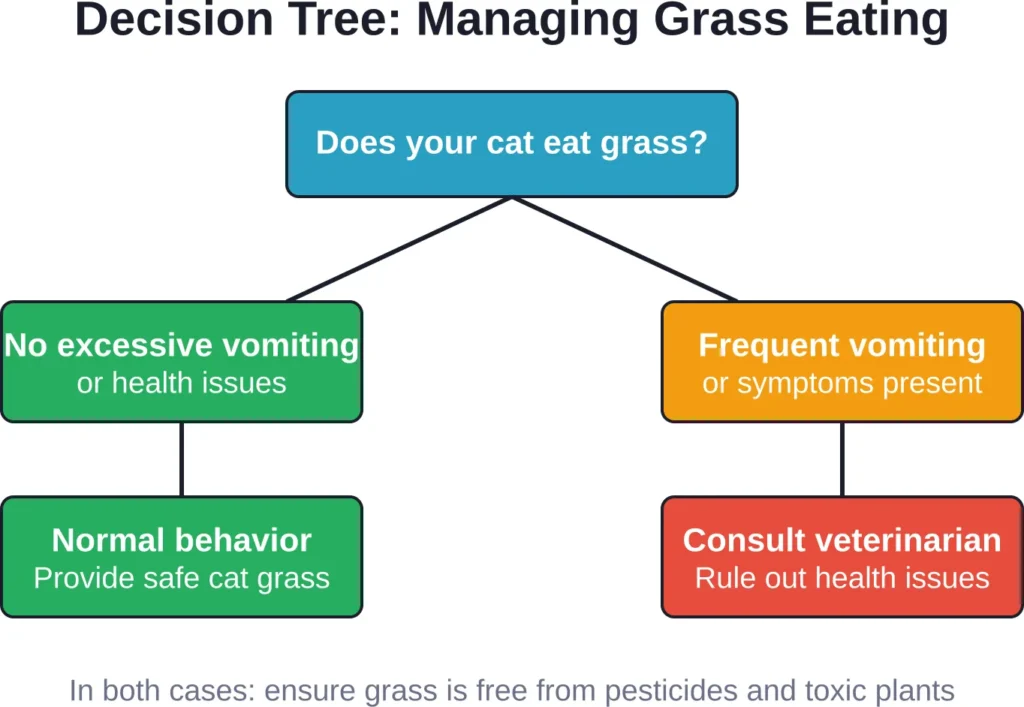
Real talk: vomiting after eating grass is common and usually not concerning.
Some cats eat grass specifically to induce vomiting. This appears to be intentional behavior, not an adverse reaction. The grass irritates the stomach lining just enough to trigger the vomit reflex, bringing up hairballs or undigested food.
Other cats eat grass and don’t vomit at all. Both responses are normal.
That said, frequent vomiting—with or without grass—warrants veterinary attention. Occasional grass-triggered vomiting is one thing. Daily vomiting or signs of distress are another.
When Grass Eating Becomes a Problem
Watch for these warning signs:
- Excessive grass consumption (eating large amounts constantly)
- Vomiting multiple times daily
- Blood in vomit or stool
- Lethargy or loss of appetite
- Diarrhea or constipation accompanying grass eating
These symptoms might indicate underlying digestive issues, parasites, or other health problems. The grass eating itself isn’t the issue—it’s potentially a symptom of something else requiring diagnosis.
Should You Give Cats Grass to Eat?
Providing cat grass indoors offers several advantages.
First, it satisfies the natural foraging instinct. Cats seem to genuinely enjoy nibbling on grass, and providing it enriches their environment.
Second, it gives you control over safety. Indoor cat grass eliminates exposure to lawn chemicals, toxic plants, and other outdoor hazards. You know exactly what your cat is consuming.
Third, it may reduce unwanted plant-chewing behavior. Cats denied access to grass sometimes turn to houseplants instead, some of which are toxic.
Types of Cat Grass
Cat grass typically consists of wheat, oat, rye, or barley grass. All are safe and appealing to cats.
Growing cat grass at home is straightforward—seeds sprout within days and provide fresh grazing in about two weeks. Pre-grown pots are available at pet stores for immediate use.
Place cat grass in an accessible location where your cat can nibble freely. Most cats self-regulate consumption without eating excessive amounts.
| Grass Type | Growth Speed | Cat Appeal | Notes |
|---|---|---|---|
| Wheat Grass | Fast (7-10 days) | High | Most common, easy to grow |
| Oat Grass | Fast (7-10 days) | High | Wider blades, hearty |
| Rye Grass | Medium (10-14 days) | Medium | Durable, long-lasting |
| Barley Grass | Medium (10-14 days) | Medium | Nutrient-dense option |
The Nutritional Angle: Does Grass Provide Health Benefits?
Grass contains folic acid, chlorophyll, fiber, and trace minerals. While cats get most nutrition from meat, these supplemental nutrients may support overall health.
Fiber content aids digestion and helps prevent constipation. For cats prone to hairballs, grass can facilitate the passage of fur through the digestive tract—either by triggering vomiting or adding bulk to help hair move through naturally.
Research into feline nutrition continues to evolve. The EveryCat Health Foundation (formerly the Winn Feline Foundation) has funded studies examining feline health, including research on dietary impacts related to conditions like chronic kidney disease. While grass itself isn’t a focus of such research, understanding optimal feline nutrition helps contextualize why cats might seek out plant matter.
According to the Association of American Feed Control Officials (AAFCO), pet food must be formulated as complete and balanced for the pet’s life stage and condition, providing all required nutrients. Grass would be a supplement rather than a nutritional requirement. But instinct drives cats to forage regardless of dietary completeness.
How to Stop Cats From Eating Grass (If Necessary)
Most veterinarians don’t recommend preventing grass eating unless specific health concerns exist.
But if you need to discourage outdoor grazing due to chemical treatments or other hazards, try these approaches:
Provide indoor cat grass as an alternative. This redirects the behavior to a safe source rather than suppressing the instinct entirely.
Supervise outdoor time. Keep cats away from treated areas or questionable plants.
Increase dietary fiber through high-fiber cat food or hairball control formulas. This may reduce the drive to seek out grass for digestive purposes.
Address underlying issues. If excessive grass eating stems from digestive discomfort or nutritional deficiencies, treating the root cause eliminates the behavior.
Outdoor vs. Indoor Cat Grass: What’s the Difference?
The grass species is essentially the same, but the growing environment creates major safety distinctions.
Outdoor grass on lawns exposes cats to:
- Pesticides and herbicides applied for weed control
- Fertilizers that may contain harmful chemicals
- Parasites and eggs present in soil
- Droppings from other animals
- Toxic plants growing nearby
Indoor cat grass eliminates these variables. Grown in clean potting soil from untreated seeds, it provides a controlled grazing environment.
Many pet parents find that offering indoor cat grass reduces their cat’s interest in outdoor grazing, though some cats enjoy both.
FAQs About Cats Eating Grass
Yes, daily grass nibbling is normal for many cats. As long as consumption remains moderate and doesn’t cause excessive vomiting or other symptoms, daily grazing is simply part of natural foraging behavior.
Grass itself rarely causes blockages. Cats typically consume small amounts that pass through the digestive system or are vomited up without issue. Hairballs represent a more common blockage risk, and grass may actually help prevent them.
No. While grass eating is common, not every cat exhibits this behavior. Some cats show zero interest in grass throughout their lives, which is equally normal.
Occasional appetite fluctuation after eating grass isn’t alarming, especially if the cat vomited. But if appetite loss persists beyond a day or occurs frequently, veterinary evaluation is warranted to rule out underlying digestive issues.
Wheat grass is one type commonly used for cat grass, along with oat, rye, and barley grass. The term “cat grass” refers to any of these safe grass varieties grown specifically for cats to eat.
Yes, kittens can safely eat grass just like adult cats. The same safety considerations apply—ensure the grass is free from chemicals and toxic plants. Kittens may show interest in grass as early as a few months old.
Not at all. Grass eating is common but not universal or necessary. Cats receiving complete, balanced nutrition from quality cat food don’t require grass. Some cats simply have no interest, and that’s perfectly fine.
Final Thoughts: Trust Your Cat’s Instincts (Mostly)
So, is it OK for cats to eat grass? Absolutely.
This behavior is natural, generally beneficial, and rarely problematic. Grass provides fiber, aids digestion, helps manage hairballs, and satisfies foraging instincts hardwired into feline DNA.
The key is ensuring safety. Avoid chemical treatments on lawns where cats graze. Consider providing indoor cat grass to eliminate outdoor hazards entirely. Monitor consumption and watch for warning signs like excessive vomiting or appetite changes.
For most cats, grass eating is just another quirky feline behavior—one that happens to be completely harmless and possibly helpful. Let them graze, keep it safe, and save your concern for behaviors that actually signal problems.
If you’re concerned about your cat’s grass-eating habits or notice any accompanying symptoms, talk to your veterinarian. They can assess whether the behavior points to underlying health issues or is simply your cat being a cat.