

Quick Summary: Yes, dogs can eat apples safely in moderation. Apples provide vitamins A and C, fiber, and antioxidants that support canine health. However, remove all seeds and the core before feeding, as apple seeds contain cyanogenic glycosides that are toxic to dogs. Apples should make up no more than 10% of your dog’s daily calorie intake.
Apples are everywhere in our kitchens—crisp, sweet, and packed with nutrients. So when your dog looks up at you with those pleading eyes while you’re munching on an apple slice, it’s natural to wonder: is it actually safe to share?
The short answer? Yes, but with important caveats.
Apples can be a healthy, low-calorie treat for dogs when prepared correctly. They offer genuine nutritional benefits and most dogs enjoy their crunchy texture. But there are real risks if you feed them incorrectly—particularly when it comes to seeds and portion sizes.
This guide breaks down everything about feeding apples to dogs: the health benefits, the dangers to avoid, proper preparation methods, and exactly how much your dog can safely eat based on their size.
Are Apples Safe for Dogs?
Yes, apples are safe for dogs when prepared properly. The flesh of the apple contains no toxic compounds and provides several health benefits. However, certain parts of the apple pose risks.
According to the ASPCA, apple stems, leaves, and seeds contain cyanogenic glycosides. These compounds release cyanide when digested, which is toxic to dogs. The ASPCA specifically warns that these parts are “particularly toxic in the process of wilting” and can cause “brick red mucous membranes” and other serious symptoms.
The core also presents a choking hazard, especially for smaller breeds. Hard, round objects can easily lodge in a dog’s throat or intestinal tract.
But here’s the thing—when you remove the seeds, core, and stem, the remaining apple flesh is perfectly safe. In fact, veterinary case reports document raw apple with skin being fed to dogs without adverse effects. One documented case from the American Veterinary Medical Association journals showed a Saint Bernard puppy consuming 0.5 medium-sized apple as part of a diet (the case study documented severe nutrient deficiencies in this puppy due to an unbalanced homemade diet).
Health Benefits of Apples for Dogs
Apples aren’t just safe—they’re actually nutritious for dogs. Here’s what makes them a good occasional treat:
Rich in Essential Vitamins
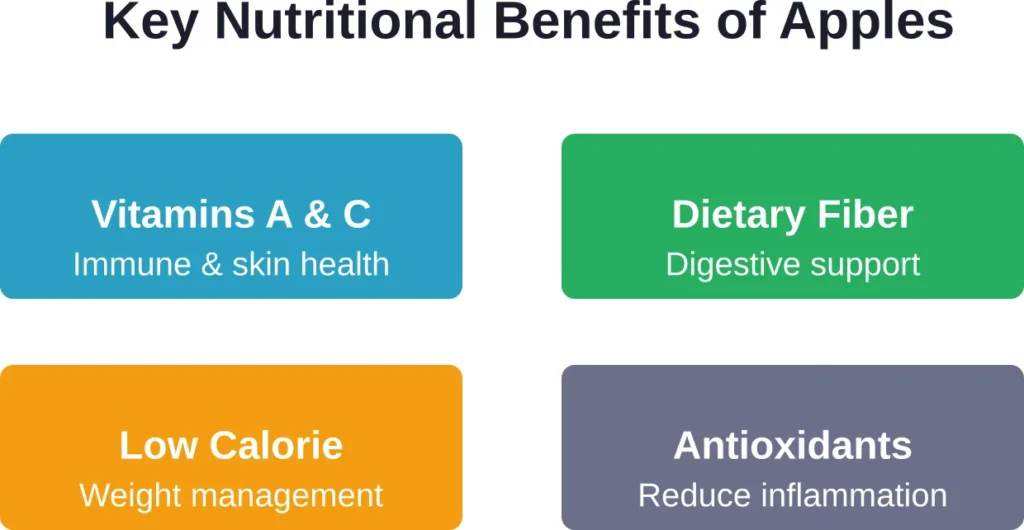
Apples contain vitamins A and C, both of which support canine health. Vitamin A contributes to skin health, coat quality, and immune function. Vitamin C acts as an antioxidant, helping to reduce inflammation and support cognitive health in aging dogs.
High in Dietary Fiber
The fiber in apples serves multiple functions in a dog’s digestive system. According to research published in the American Veterinary Medical Association journals, dietary fiber plays a vital role in “physically altering the digesta, modulating appetite and satiety, regulating digestion, and acting as a microbial energy source through fermentation.”
This means apples can help with digestive regularity and may support healthy gut bacteria. Fiber also helps dogs feel fuller, which can be beneficial for weight management.
Low in Calories
For dogs watching their weight, apples are an excellent treat choice. They’re naturally low in calories compared to commercial dog treats, and they contain no added fats or artificial ingredients.
Natural Teeth Cleaning
The crunchy texture of apples can provide a mild abrasive action that helps reduce plaque buildup. While chewing apples may help reduce plaque slightly, they’re not a replacement for proper dental care, including brushing and professional cleanings.
Risks and Dangers of Feeding Apples to Dogs
While apples offer benefits, improper preparation or overfeeding can cause problems. Here’s what to watch for:
Cyanide Toxicity from Seeds
This is the most serious risk. Apple seeds contain cyanogenic glycosides that break down into cyanide during digestion. A small number of seeds is unlikely to cause immediate harm, but repeated exposure or consumption of multiple seeds can lead to cyanide poisoning.
Symptoms of cyanide toxicity include difficulty breathing, bright red gums, dilated pupils, and shock. If your dog accidentally consumes apple seeds, monitor them closely and contact a veterinarian if any symptoms develop.
Choking Hazards
The apple core, whole apple slices, or large chunks can lodge in your dog’s throat. Small breeds are particularly vulnerable. Always cut apples into bite-sized pieces appropriate for your dog’s size.
Digestive Upset
Too much apple can overwhelm your dog’s digestive system. Some dogs may experience diarrhea, gas, or stomach discomfort when eating apples for the first time or in large quantities.
The fiber content, while beneficial in moderation, can cause loose stools if consumed excessively. Introducing apples gradually helps reduce the risk of digestive problems.
Sugar Content Concerns
Apples contain natural sugars. While not dangerous in small amounts, dogs with diabetes or those prone to weight gain should have limited apple consumption. The sugar content is another reason why apples should remain an occasional treat rather than a dietary staple.
How to Safely Prepare Apples for Dogs
Preparation matters. Follow these steps to make apples safe for your dog:
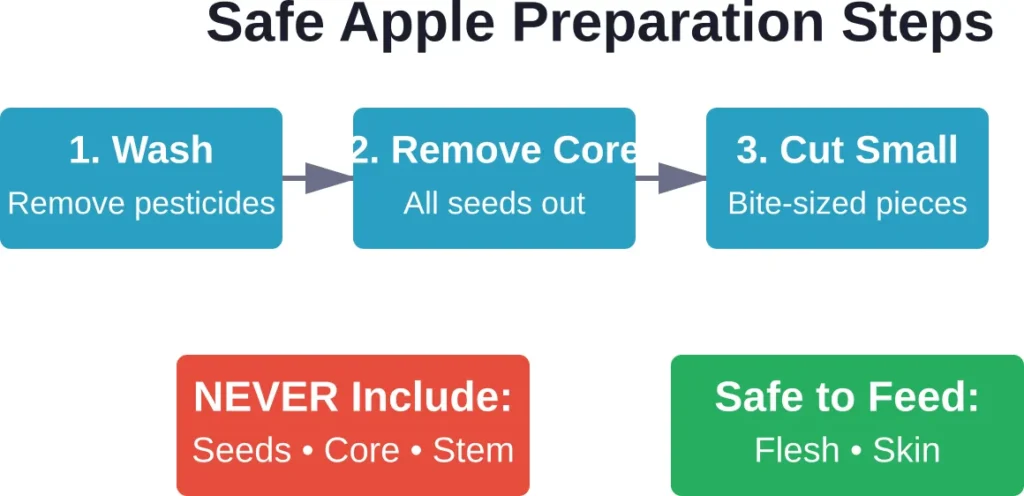
Step 1: Wash thoroughly. Remove any pesticides, dirt, or wax coating from the apple’s surface. Organic apples reduce pesticide exposure, but all apples should be washed regardless.
Step 2: Remove the core completely. Cut out the entire core, including all seeds. Even a few seeds should be avoided as a precaution.
Step 3: Remove the stem and leaves. These parts contain the same toxic compounds as the seeds.
Step 4: Cut into appropriate sizes. Slice the apple into small, bite-sized pieces based on your dog’s size. Smaller dogs need smaller pieces; larger dogs can handle bigger chunks but still shouldn’t receive whole slices that might cause choking.
Step 5: Keep the skin on. The skin contains additional fiber and nutrients. As documented in veterinary case reports, raw apple with skin is safe and has been fed to dogs without issues.
Some dogs prefer frozen apple slices, which provide a longer-lasting, refreshing treat—especially during warm weather.
How Much Apple Can Dogs Eat?
Portion control is critical. Apples should be treated as occasional treats and make up no more than 10% of your dog’s total daily calorie intake.
This principle is corroborated across multiple veterinary sources and helps prevent nutritional imbalance and unwanted weight gain.
Here’s a practical serving guide based on dog size:
| Dog Size | Weight Range | Recommended Serving | Frequency |
|---|---|---|---|
| Extra-small dogs | 2-10 pounds | 1-2 small pieces | Daily maximum |
| Small dogs | 11-20 pounds | 2-3 small pieces | Daily maximum |
| Medium dogs | 21-50 pounds | 3-4 pieces | Daily maximum |
| Large dogs | 51-90 pounds | 4-5 pieces | Daily maximum |
| Extra-large dogs | 90+ pounds | 5-6 pieces | Daily maximum |
Remember, these are maximum amounts. Not every dog needs apples daily. Two to three times per week is often sufficient to provide variety without overdoing it.
When introducing apples for the first time, start with just one small piece and monitor your dog for 24 hours. Watch for any signs of digestive upset, allergic reactions, or unusual behavior before offering more.
What About Applesauce and Other Apple Products?
Fresh apple slices aren’t the only apple product out there. But are alternatives safe?
Applesauce
Plain, unsweetened applesauce can be safe for dogs in very small amounts. The key word is unsweetened. Many commercial applesauces contain added sugar, artificial sweeteners (particularly xylitol, which is extremely toxic to dogs), or spices like cinnamon in quantities that aren’t ideal for canine consumption.
If offering applesauce, check the ingredient list carefully. It should contain only apples—nothing else. Even then, fresh apples are a better choice because they provide more fiber and fewer processing concerns.
Apple Juice
Avoid apple juice. It concentrates the sugar content without the beneficial fiber. The liquid form also makes it easy to overconsume, potentially causing blood sugar spikes and digestive upset.
Dried Apples
Dried apple slices concentrate both nutrients and sugars. While not toxic, they’re much higher in calories per piece than fresh apples. If offering dried apples, give only tiny amounts and ensure they contain no added sugar or preservatives. Watch closely, as dried fruits can also present choking hazards.
Apple Pie and Baked Goods
Never feed dogs apple pie, apple pastries, or similar baked goods. These contain butter, sugar, spices, and sometimes toxic ingredients like nutmeg or raisins. The risks far outweigh any benefit.
Can Puppies Eat Apples?
Yes, puppies can eat apples, but with extra caution. Start with very small pieces—smaller than you’d offer an adult dog of the same size. A puppy’s digestive system is still developing, making them more susceptible to upset.
Introduce apples only after your puppy is eating solid food consistently. Monitor closely for any adverse reactions. If diarrhea or vomiting occurs, discontinue apples and consult your veterinarian.
For puppies on homemade diets, proper nutritional balance is critical. Veterinary case reports document severe nutrient deficiencies in puppies fed unbalanced homemade diets. According to research published by the American Veterinary Medical Association, one Saint Bernard puppy developed “tetanic seizures,” “severe hypocalcemia,” and “bone demineralization” after being fed an unbalanced homemade diet. While the diet in that case included apple, the issue wasn’t the apple itself but rather the lack of complete nutrition.
The lesson? Apples can be part of a puppy’s treat rotation, but they cannot substitute for properly formulated puppy food.
Other Safe Fruits for Dogs
If your dog enjoys apples, they might also like these safe fruit options:
- Blueberries: Low in calories, high in antioxidants, and the perfect size for training treats
- Watermelon: Remove seeds and rind; the flesh is hydrating and refreshing
- Strawberries: Rich in vitamin C and fiber; feed in moderation due to sugar content
- Bananas: High in potassium but also high in sugar; small slices only
- Pears: Similar to apples—remove seeds and core before feeding
- Cantaloupe: Remove rind and seeds; offer small cubes
Always introduce new fruits one at a time and in small quantities. This approach makes it easier to identify any food sensitivities or allergies.
When to Avoid Apples
Most dogs tolerate apples well, but certain situations warrant caution or avoidance:
Diabetic dogs: The natural sugars in apples can affect blood glucose levels. Consult your veterinarian before adding apples to a diabetic dog’s diet.
Dogs with sensitive stomachs: If your dog has chronic digestive issues, inflammatory bowel disease, or a history of pancreatitis, check with your vet before introducing new foods.
Overweight dogs: While apples are relatively low in calories, they still contribute to daily intake. For dogs on strict weight-management plans, even healthy treats need careful portioning.
Dogs with allergies: Though rare, some dogs may have sensitivities to apples. Signs include itching, skin irritation, ear infections, or gastrointestinal upset after consumption.
Signs Your Dog Shouldn’t Eat More Apples
Watch for these warning signs after feeding apples:
- Diarrhea or loose stools
- Vomiting
- Excessive gas
- Lack of appetite
- Lethargy
- Abdominal discomfort (whining, pacing, reluctance to lie down)
If any of these symptoms occur, discontinue apples immediately and contact your veterinarian if symptoms persist or worsen.
Frequently Asked Questions
No, dogs should never eat apple cores. The core contains seeds that have cyanogenic glycosides—compounds that release toxic cyanide during digestion. The hard core also poses a choking hazard and can cause intestinal blockage if swallowed whole.
Yes, apple seeds are toxic to dogs. They contain cyanogenic glycosides that break down into cyanide. While a single seed likely won’t cause acute poisoning, repeated exposure or ingestion of multiple seeds can lead to toxicity. Symptoms include difficulty breathing, bright red gums, and dilated pupils. Always remove all seeds before feeding apples to dogs.
Yes, dogs can eat green apples like Granny Smith varieties. Green apples are safe and contain the same nutrients as red apples. They tend to be more tart, so some dogs may prefer sweeter red varieties. Regardless of apple color, always remove seeds and core before feeding.
Dogs can have apples daily in appropriate portions, but two to three times per week is often sufficient. The key is keeping apple treats within 10% of daily caloric intake. For most dogs, small amounts several times per week provide variety without risking nutritional imbalance or digestive upset.
Yes, eating too much apple can upset a dog’s stomach and cause diarrhea. The high fiber content, while beneficial in moderation, can lead to loose stools if consumed in large quantities. Introduce apples gradually and stick to recommended portion sizes to prevent digestive issues.
Apples can provide mild teeth-cleaning benefits through their crunchy texture, which may help reduce plaque buildup slightly. However, they’re not a substitute for regular tooth brushing or professional dental cleanings. Think of apples as a supplementary benefit, not a primary dental care solution.
Dogs with diabetes can potentially eat very small amounts of apple, but only with veterinary approval. Apples contain natural sugars that affect blood glucose levels. If your dog has diabetes, consult your veterinarian before adding any new foods, including apples, to their diet.
Final Thoughts: Apples as a Healthy Treat
So, is it OK for dogs to eat apples? Absolutely—when prepared correctly and fed in moderation.
Apples offer real nutritional benefits including vitamins, fiber, and antioxidants. They’re low in calories and most dogs enjoy their taste and texture. The documented use of apples in canine diets, including veterinary case studies showing safe consumption, supports their role as a healthy treat option.
But safety requires proper preparation. Remove all seeds, the core, and the stem every single time. Cut apples into appropriate sizes for your dog’s breed and always stay within the 10% treat guideline for daily calories.
Watch your individual dog’s response. Some dogs have sensitive stomachs or specific health conditions that make apples less suitable. When in doubt, consult your veterinarian—particularly for puppies, senior dogs, or dogs with existing health conditions.
Treat apples as what they are: an occasional, wholesome snack that adds variety to your dog’s diet. They’re not a meal replacement and shouldn’t become the primary treat. But when used appropriately, apples can be a simple, affordable way to give your dog something nutritious they’ll actually enjoy.
Looking for more guidance on what foods are safe for your dog? Consult your veterinarian about creating a balanced diet plan that includes appropriate treats and supports your dog’s individual health needs.