
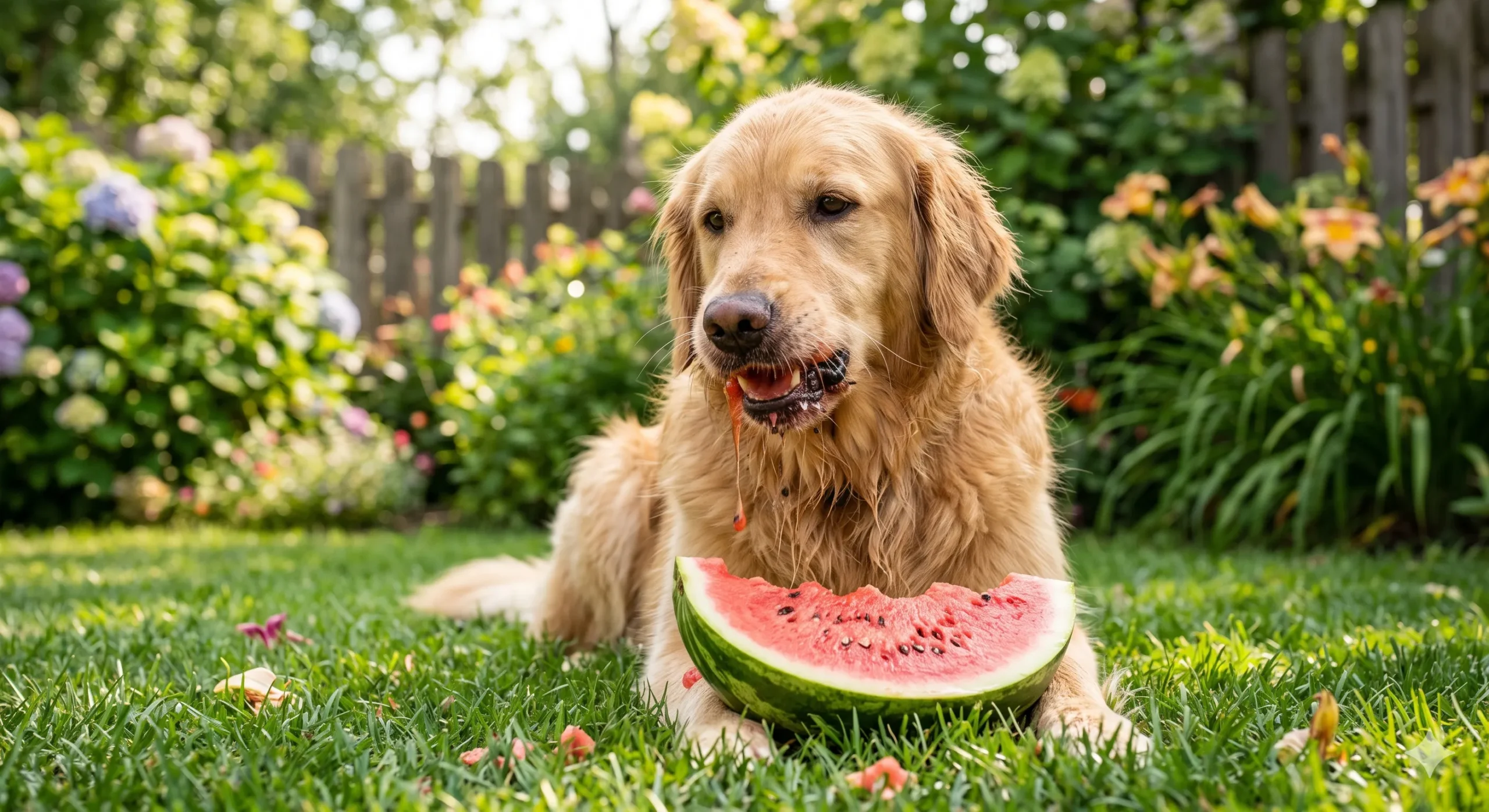
Quick Summary: Yes, dogs can safely eat watermelon in moderation. The flesh is hydrating and packed with nutrients, but seeds and rind must be removed first to prevent digestive issues. Treats like watermelon should make up no more than 10% of a dog’s daily caloric intake.
Summer heat means looking for ways to keep dogs cool and hydrated. Watermelon seems like the perfect refreshing snack, but pet owners often wonder whether it’s actually safe for their canine companions.
The short answer? Yes, dogs can eat watermelon—but preparation matters. Not all parts of this popular fruit are safe, and portion control is essential to avoid digestive upset.
Here’s everything dog owners need to know about sharing watermelon with their pets, from nutritional benefits to potential risks.
Why Watermelon Can Be Good for Dogs
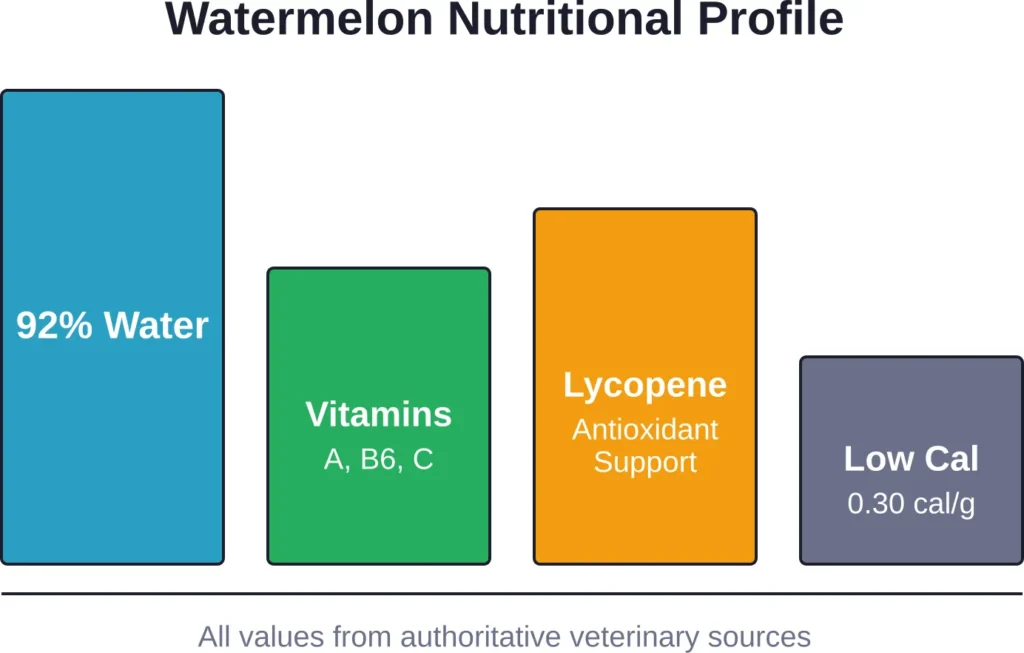
Watermelon offers several nutritional advantages that make it an appealing treat option. According to Purina, watermelon is 92% water, making it one of the most hydrating fruits available.
That hydration factor alone makes watermelon particularly valuable during hot weather when dogs need extra moisture. But the benefits don’t stop there.
Key Nutritional Benefits
Watermelon flesh provides vitamins A, B6, and C, along with potassium and fiber. According to NC State Veterinary Hospital data, watermelon contains 0.30 calories per gram—significantly lower than many commercial dog treats.
The fruit also contains lycopene, an antioxidant that may support cellular health.
Parts of Watermelon Dogs Should Never Eat
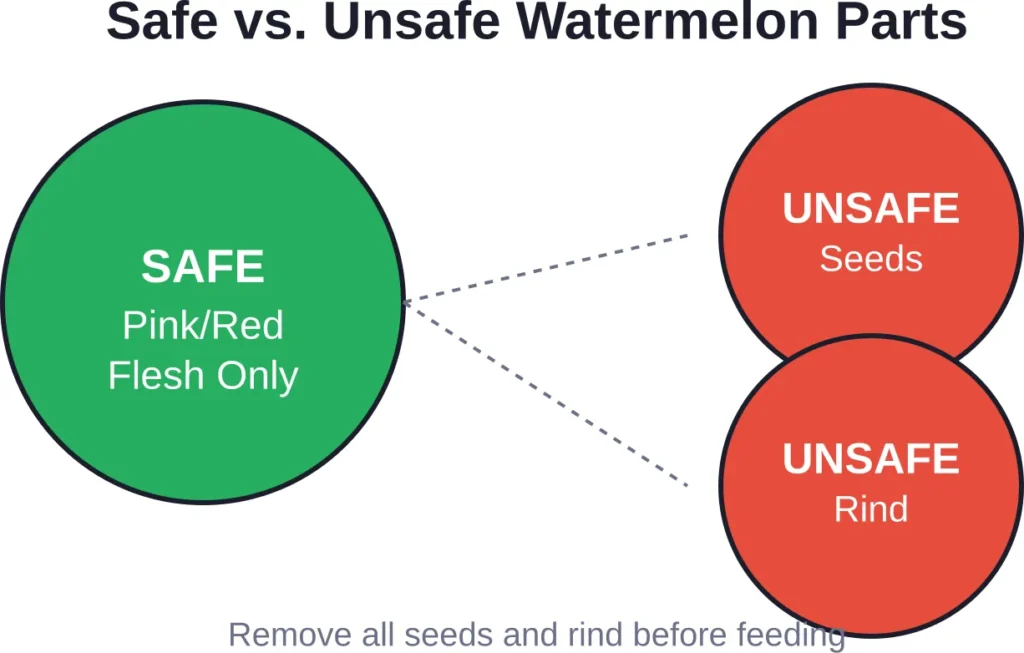
Not every part of a watermelon is safe for canine consumption. Two components require complete removal before offering this fruit to dogs.
Seeds: A Choking and Blockage Hazard
Watermelon seeds pose multiple risks. They can cause intestinal blockage, particularly in smaller dogs, and present a choking hazard. Even a few seeds might trigger digestive discomfort.
Always remove black seeds before serving. Seedless watermelon varieties still contain small white seeds—these are generally softer and less dangerous, but removing them remains the safest approach.
Rind: Hard to Digest
The tough green rind is difficult for dogs to chew and digest properly. It can cause gastrointestinal upset, including vomiting or diarrhea, and in severe cases may lead to intestinal blockage.
The white part between the flesh and green outer skin should also be removed. Stick exclusively to the red or pink flesh.
How Much Watermelon Can Dogs Safely Eat?
Portion control is critical when feeding watermelon to dogs. Multiple veterinary sources, including the American Kennel Club and Purina, confirm that treats should make up no more than 10% of a dog’s daily caloric intake.
For most dogs, this translates to just a few bite-sized pieces at a time. The exact amount depends on the dog’s size, weight, age, and activity level.
| Dog Size | Recommended Portion | Frequency |
|---|---|---|
| Small (under 20 lbs) | 1-2 small cubes | Occasional treat |
| Medium (20-50 lbs) | 3-4 medium cubes | Occasional treat |
| Large (over 50 lbs) | 5-6 larger cubes | Occasional treat |
Start with a smaller amount the first time, especially for dogs that haven’t eaten watermelon before. Monitor for any digestive reaction over the next 24 hours.
Why Moderation Matters
Despite being low in calories, watermelon contains natural sugars. Excessive consumption can lead to digestive upset, including diarrhea or stomach discomfort.
Dogs with diabetes require extra caution. The natural sugar content may affect blood glucose levels, so consult a veterinarian before introducing watermelon to diabetic dogs.
Can Puppies Eat Watermelon?
Puppies can eat watermelon, but extra precautions apply. Their digestive systems are still developing, making them more sensitive to new foods.
According to Purina, puppy caloric intake needs should be considered when offering treats. The 10% treat rule applies even more strictly—watermelon should represent a minimal portion of a puppy’s diet.
Always contact a veterinarian before introducing watermelon or any new food to a puppy’s diet. What seems harmless might interfere with their nutritional requirements during crucial growth phases.
How to Safely Prepare Watermelon for Dogs
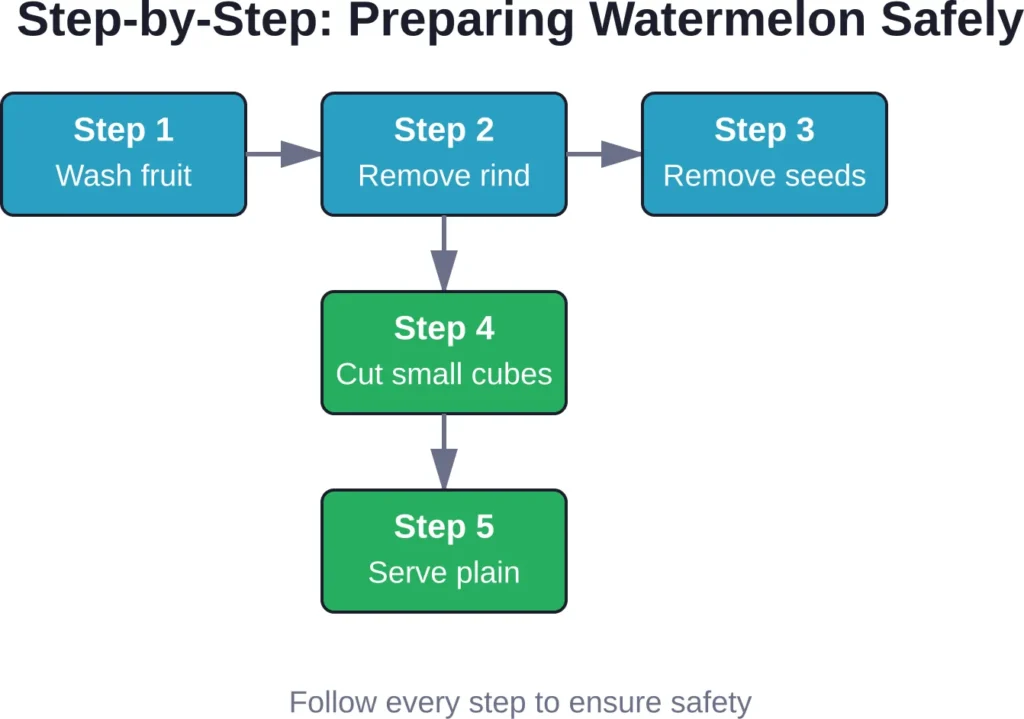
Proper preparation ensures watermelon remains a safe, enjoyable treat. Follow these steps every time.
- Wash the watermelon exterior thoroughly to remove dirt and potential pesticides
- Cut away and discard all green rind and white flesh
- Remove all black seeds (and white seeds when possible)
- Cut the remaining pink flesh into small, bite-sized cubes appropriate for the dog’s size
- Serve at room temperature or slightly chilled—not frozen initially
Some dogs enjoy frozen watermelon cubes as a summer treat. Freeze small pieces and offer them on particularly hot days. The frozen texture provides additional cooling relief.
Never add sugar, salt, or any seasonings. Plain watermelon flesh is all dogs need.
Potential Risks and Warning Signs
While watermelon is generally safe, certain situations require immediate attention. Watch for these warning signs after feeding watermelon.
Signs of Digestive Distress
- Vomiting or repeated gagging
- Diarrhea or loose stools
- Loss of appetite
- Lethargy or unusual tiredness
- Abdominal pain or bloating
These symptoms may indicate the dog ate too much watermelon, accidentally consumed seeds or rind, or has an individual sensitivity to the fruit.
Contact a veterinarian if symptoms persist beyond a few hours or seem severe. According to the AVMA and AAFCO guidelines, pet owners should seek immediate veterinary care for sick pets before attempting home remedies.
Dogs That Should Avoid Watermelon
Certain health conditions warrant extra caution or complete avoidance. Dogs with diabetes face blood sugar concerns from the natural sugars. Those with chronic kidney disease need to monitor potassium intake carefully—research published in medical journals shows watermelon can contribute to hyperkalemia in compromised patients.
Overweight dogs may need to skip watermelon entirely or receive extremely limited portions, as even low-calorie treats add up when weight management is critical.
Other Safe Fruits for Dogs
Watermelon isn’t the only fruit dogs can safely enjoy. According to data from veterinary institutions including NC State and Tufts University, several other fruits make healthy occasional treats when properly prepared.
| Fruit | Calories per Gram | Key Benefit |
|---|---|---|
| Blueberries | 0.10 | Antioxidants |
| Strawberries | 0.33 | Vitamin C, fiber |
| Apple (no seeds) | 0.52 | Fiber, vitamins |
| Honeydew | 0.36 | Hydration, vitamins |
The same rules apply: remove seeds, pits, and tough skins. Keep portions small and treat fruits as occasional supplements, not dietary staples.
Frequently Asked Questions
No, dogs should not eat watermelon daily. It’s a treat, not a dietary staple. Daily consumption could lead to digestive issues and interfere with balanced nutrition from regular dog food. Offer watermelon occasionally as a special snack during warm weather.
A few watermelon seeds typically won’t cause serious harm in larger dogs, but they can trigger digestive upset, intestinal blockage, or choking—especially in smaller breeds. Monitor the dog closely for signs of distress like vomiting, loss of appetite, or lethargy. Contact a veterinarian if symptoms appear or if many seeds were consumed.
Watermelon can contribute to hydration due to its water content, but it shouldn’t replace actual water or veterinary treatment for dehydration. Seriously dehydrated dogs need immediate veterinary care and proper fluid replacement. Watermelon works as a supplemental hydration boost for healthy dogs during hot weather, not as medical intervention.
Yes, frozen watermelon makes an excellent cooling treat during summer. Freeze small, seed-free cubes and offer them on hot days. The frozen texture provides additional relief from heat. Just ensure pieces are appropriately sized to prevent choking, and introduce frozen treats gradually to dogs unfamiliar with them.
Food allergies in dogs are relatively rare, but watch for symptoms like itching, skin irritation, hives, facial swelling, vomiting, or diarrhea after introducing watermelon. Start with a tiny amount and wait 24-48 hours before offering more. If allergic symptoms appear, discontinue watermelon immediately and consult a veterinarian.
Diabetic dogs should avoid watermelon or receive only minimal amounts under veterinary supervision. The natural sugars can affect blood glucose levels and interfere with diabetes management. Always consult a veterinarian before introducing new foods to diabetic pets. Many vets recommend avoiding fruit treats entirely for diabetic dogs.
No, taste preferences vary among individual dogs just like humans. Some dogs love watermelon’s sweet, juicy texture, while others show no interest. Never force a dog to eat watermelon. If a dog refuses it, simply try a different healthy treat option instead. Food preferences are individual and normal variation exists across the canine population.
Final Thoughts on Watermelon and Dogs
Watermelon can absolutely be a safe, nutritious treat for dogs when prepared correctly and fed in appropriate portions. The key is removing all seeds and rind, cutting the flesh into bite-sized pieces, and limiting treats to no more than 10% of daily calories.
The hydration benefits and low calorie count make watermelon particularly appealing during hot summer months. But it remains a treat—not a substitute for balanced, complete dog food that meets AAFCO nutritional standards.
When in doubt, consult a veterinarian. Individual health conditions, dietary restrictions, and specific needs vary from dog to dog. Professional guidance ensures every treat supports long-term health rather than creating problems.
Looking for more information about safe foods for dogs? Explore topics like can dogs eat blueberries, understanding dog nutritional needs, and summer safety tips for pets to keep canine companions healthy year-round.