
Quick Summary: Peeing in the shower is generally safe for most people and can even conserve water. However, it may worsen urge incontinence in some individuals and should be avoided in public or shared shower facilities due to hygiene concerns.
Look, we’ve all been there. The warm water’s running, you’re relaxed, and suddenly you feel the urge. But is it actually okay to pee in the shower, or is this one of those things we do but never talk about?
The short answer? For most people, it’s perfectly fine. But there are some important exceptions and considerations worth understanding.
Let’s break down what health experts actually say about this common bathroom habit.
What Urologists Say About Shower Peeing
Here’s the thing—urologists generally agree that peeing in the shower is safe. The practice isn’t inherently harmful to your health, and there are even some environmental benefits to consider.
Doctors point out that urine goes to the same place whether it leaves your toilet or your shower drain. Both fixtures connect to the same wastewater system, so from a plumbing perspective, there’s no real difference.
But wait. Before you take this as blanket permission, there are some nuances to consider based on your specific situation.
The Pelvic Floor Connection
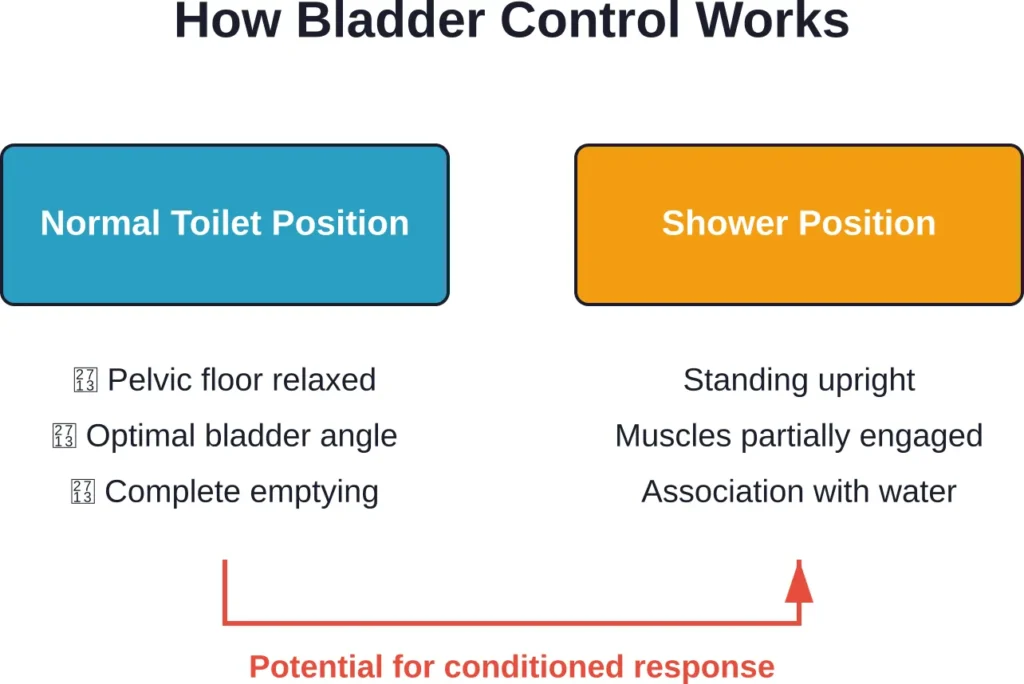
Your bladder and pelvic floor muscles work together in a carefully coordinated system. When you’re standing upright and relaxed, your pelvic floor muscles support your bladder and help you maintain control.
Normally, you sit down on a toilet, which signals your pelvic floor to relax and your bladder to contract. This creates the proper environment for complete, controlled urination.
When you pee standing up in the shower, you’re essentially training your body to associate the sound of running water and the sensation of warmth with urination—even when your pelvic floor isn’t in the optimal position.
The Urge Incontinence Risk
For some people, regularly peeing in the shower can contribute to urge incontinence. This is a condition where you suddenly feel a strong need to urinate and may have difficulty reaching the bathroom in time.
The concern is that your brain starts creating associations. Running water plus warm temperature equals time to pee. Over time, these environmental triggers can become so strong that you experience urgency whenever you hear water running—even when you’re not in the shower.
This doesn’t happen to everyone. But if you already struggle with bladder control issues or have a sensitive pelvic floor, shower peeing might reinforce patterns you’re trying to break.
Real talk: if you’re doing pelvic floor physical therapy or managing any form of incontinence, talk to your healthcare provider before making shower peeing a regular habit.
Is Urine Actually Sterile?
You’ve probably heard the old claim that urine is sterile. Turns out, that’s not quite accurate.
Recent research shows that urine isn’t sterile—it contains bacteria even in healthy individuals. Studies using enhanced culture techniques found that 80% of urine samples grew bacterial species, while 92% of those samples reported as “no growth” by standard testing actually contained bacteria when more sensitive methods were used.
That said, the bacteria present in healthy urine typically aren’t harmful. Your own urine isn’t going to make you sick under normal circumstances.
The real hygiene concern comes when you’re sharing shower space with others.
Public and Shared Showers: Just Don’t
While peeing in your own private shower is generally fine, public or shared shower facilities are a different story.
In gym locker rooms, college dorms, or any communal bathing area, peeing in the shower is both unhygienic and inconsiderate. Other people are walking barefoot in that space, and nobody signed up to stand where strangers have urinated.
Even if the shower floor gets rinsed, bacteria can linger. And some people have open cuts, athlete’s foot, or other conditions that make them more vulnerable to bacterial exposure.
Bottom line: save the shower peeing for your own private bathroom.
The Environmental Benefits
Now for some good news. If you’re environmentally conscious, peeing in the shower actually has some legitimate benefits.
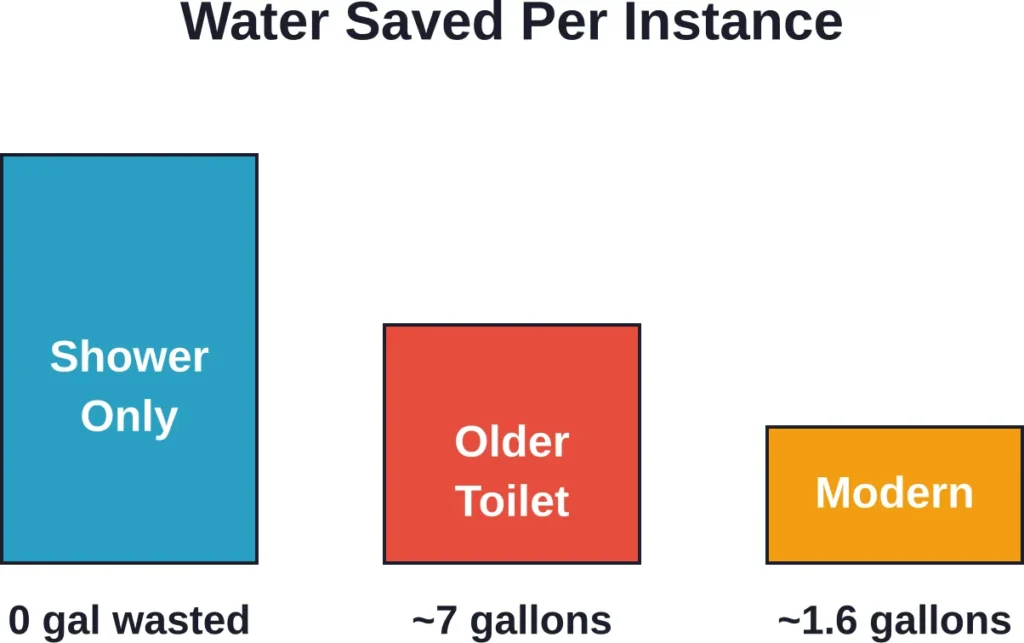
Modern low-flow toilets use approximately 1.6 gallons per flush, while older models may use up to 7 gallons per flush. If you pee in the shower instead of flushing beforehand, you’re saving that water.
According to EPA data, buildings that incorporate Net Zero Water strategies can reduce water demand by 75 to 90%. While shower peeing alone won’t achieve those numbers, every bit of conservation adds up.
Globally, access to clean water remains a challenge. The CDC reports that proper water, sanitation, and hygiene practices are essential for preventing disease.
When You Should Avoid Shower Peeing
So when exactly should you hold it and use the toilet instead? Here are the key situations:
| Situation | Recommendation | Reason |
|---|---|---|
| Urge incontinence | Avoid shower peeing | May strengthen unwanted bladder-water associations |
| Pelvic floor dysfunction | Consult your specialist | Could interfere with physical therapy progress |
| Public/shared showers | Always use the toilet | Hygiene and courtesy to others |
| Private home shower | Generally okay | Minimal health risks for most people |
| Pregnancy | Exercise caution | Pelvic floor is already under stress |
What About Other Bodily Fluids?
While we’re on the topic, let’s address the elephant in the room. What about other things people might do in the shower?
Doctors say the shower is actually the ideal place for many hygiene activities. Blowing your nose, for instance, is perfectly fine—the mucus washes away immediately and everything goes down the same drain system.
Spitting is similarly harmless in your own shower. The key is that you’re in a private space where proper drainage and water flow prevent any hygiene issues.
However, anything involving blood or open wounds requires more care. According to CDC guidelines on handling human waste, basic hygiene practices are important. If you have cuts or sores, keep them clean and protected, and avoid cross-contamination.
Keeping Your Shower Clean
If you do pee in the shower, basic cleaning practices remain important. Regular shower cleaning prevents bacterial buildup and keeps your bathroom hygienic.
According to CDC guidelines on handling human waste, basic hygiene practices are important. For deeper disinfection, a 0.05% chlorine solution (1 part household bleach to 100 parts water) is effective.
And here’s a simple tip: run the water for a few extra seconds after you’re done. Let the drain flush completely before you step out.
The Bottom Line: Context Matters
Is it okay to pee in the shower? For most people in their own private bathrooms, yes. It’s safe, saves water, and won’t cause harm.
But context matters enormously. If you have pelvic floor issues, struggle with incontinence, or share your shower with others, you’ll want to be more cautious.
The key is understanding your own body and situation. What works for one person might not work for another, and that’s perfectly fine.
Listen to your body, respect shared spaces, and make the choice that’s right for your health and circumstances. And if you’re ever unsure, your healthcare provider can give you personalized guidance based on your specific situation.
Frequently Asked Questions
No, peeing in your own shower doesn’t cause infections. Urine from a healthy person isn’t harmful to them, and it washes down the drain immediately. However, in shared or public showers, bacteria from other people could potentially pose risks if you have open cuts or compromised skin.
For some people, regularly peeing in the shower may contribute to urge incontinence by creating associations between running water and the need to urinate. If you already have bladder control issues, this habit might reinforce patterns you’re trying to avoid. However, most people won’t experience problems.
Daily shower peeing is generally safe for most people in their private bathrooms. The main concerns arise if you have pelvic floor dysfunction or incontinence issues. For the average person with normal bladder function, making this a daily habit typically doesn’t cause problems.
Women may need to be slightly more cautious, particularly if they’re pregnant or have pelvic floor issues. Pregnancy, childbirth, and menopause all affect pelvic floor strength. Men can generally pee standing more easily without pelvic floor concerns, but the incontinence association risk applies to everyone.
You save the water from one toilet flush—anywhere from 1.6 gallons for modern low-flow toilets to 7 gallons for older models. If you shower daily and skip one flush each time, that adds up to roughly 580 to 2,500 gallons saved per year, depending on your toilet.
If you share a bathroom but everyone uses the shower at different times (not simultaneously), peeing in your own shower is still generally fine from a health perspective. However, you might want to discuss expectations with your household members as a courtesy.
No. Urine is mostly water with dissolved minerals and waste products. It’s far less harsh than many cleaning chemicals people regularly wash down shower drains. Both your toilet and shower connect to the same wastewater system, so your plumbing handles urine either way.