

Quick Summary: Sleeping on your back during pregnancy is generally safe in the first and second trimesters, but experts recommend switching to side-sleeping by the third trimester. According to ACOG, back-sleeping in later pregnancy can compress major blood vessels and potentially reduce blood flow to the fetus. Research shows an association between supine sleep position and stillbirth risk in the third trimester, though waking up on your back occasionally isn’t cause for alarm.
Pregnancy comes with an endless list of do’s and don’ts, and somewhere near the top sits the question of sleep position. Can pregnant women safely sleep on their backs? The short answer depends on how far along the pregnancy is.
Here’s the thing though—most women naturally shift positions dozens of times during the night. Waking up on your back doesn’t mean something terrible has happened. But understanding why sleep position matters can help expecting mothers make informed choices about their nighttime routine.
Why Sleep Position Matters During Pregnancy
As pregnancy progresses, the growing uterus places increasing pressure on surrounding organs and blood vessels. This mechanical reality creates the core concern with back-sleeping.
According to the American College of Obstetricians and Gynecologists (ACOG), lying on the back puts the weight of the uterus on the spine and back muscles. More importantly, it can compress the inferior vena cava—a major blood vessel that carries blood from the lower body back to the heart.
When this vessel gets compressed, blood flow can decrease. This might make the mother feel dizzy or nauseous, and potentially reduces blood flow to the fetus. The body usually signals discomfort before anything serious happens, but sustained compression over extended periods raises legitimate concerns.
First and Second Trimester: Back-Sleeping Is Generally Fine
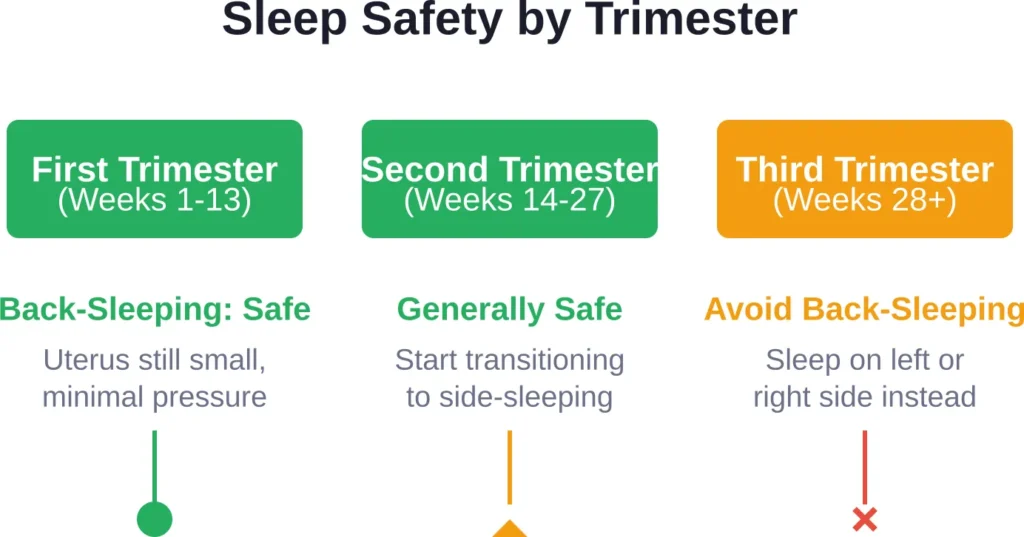
During early pregnancy, the uterus remains relatively small and positioned low in the pelvis. At this stage, back-sleeping poses minimal risk.
Most healthcare providers agree that sleeping on the back through the first and second trimesters is safe. A study funded by the National Institutes of Health found that sleeping position through the 30th week of pregnancy does not appear to increase the risk of stillbirth, reduced size at birth, or high blood pressure disorders of pregnancy.
Real talk: many women find back-sleeping comfortable in early pregnancy when the belly hasn’t yet grown large enough to create significant pressure. The body typically provides warning signs—shortness of breath, dizziness, or discomfort—before circulation becomes compromised.
Third Trimester: Side-Sleeping Becomes Important
The picture changes significantly after 28 weeks. ACOG recommends that women sleep on their side during the second and third trimesters, with particular emphasis on the later weeks.
The research backing this recommendation comes from multiple case-control studies. Research from case-control studies found an association between supine sleep position and stillbirth with an adjusted odds ratio of 2.63 (95% CI 1.72 to 4.04) compared to left lateral position.
That said, this association requires context. These studies looked at the position women fell asleep in, not necessarily the positions they maintained throughout the night. The research also faced methodological limitations that experts continue to debate.
What the Numbers Actually Mean
An odds ratio of 2.63 sounds alarming, but understanding absolute risk matters more than relative risk. Stillbirth is a serious but relatively rare outcome in pregnancy.
Even with the increased odds associated with back-sleeping, the absolute risk remains low. The goal isn’t to create panic about occasionally waking up on the back, but rather to encourage side-sleeping as the default position during the third trimester.
What Happens If You Wake Up on Your Back?
Look, pregnant women shift positions constantly during sleep. Waking up on the back doesn’t mean harm has occurred.
The body has protective mechanisms. Before blood flow becomes dangerously restricted, most women experience warning signs: difficulty breathing, feeling lightheaded, or general discomfort that naturally prompts position changes. These signals typically wake the mother before sustained compression causes problems.
The focus should be on the position when falling asleep, not obsessing over every unconscious shift during the night. Simply roll to the side upon waking and continue with normal sleep.
Best Sleep Positions During Pregnancy
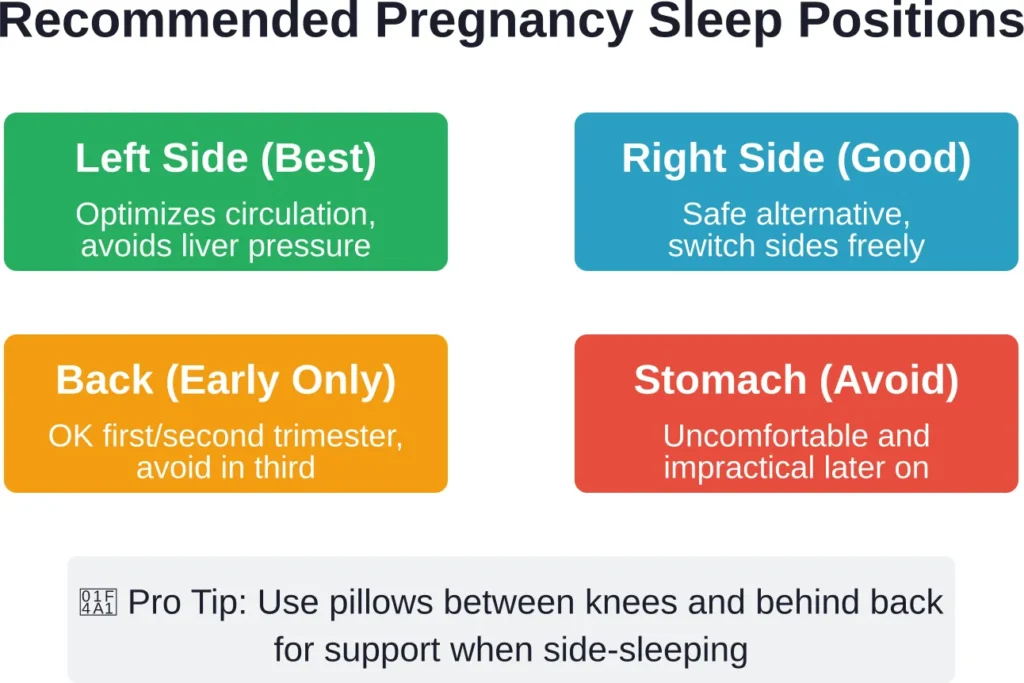
Side-sleeping, particularly on the left side, is generally considered the optimal position for later pregnancy. But wait—does the specific side matter?
Left side-sleeping has traditionally been recommended because it theoretically prevents the uterus from pressing on the liver (which sits on the right side) and may optimize blood flow through the vena cava. However, research hasn’t conclusively proven that left side is significantly better than right side.
Either side works. The priority is simply avoiding prolonged back-sleeping in the third trimester. Switching between left and right sides throughout the night is perfectly fine and can actually help prevent hip and shoulder discomfort.
Making Side-Sleeping More Comfortable
Many women find side-sleeping uncomfortable, especially those accustomed to sleeping on their backs. A few adjustments help:
- Place a pillow between the knees to align the hips and reduce lower back strain
- Use a wedge pillow behind the back for support and to prevent rolling
- Position a small pillow under the belly for additional support
- Consider a full-length pregnancy pillow that provides support along the entire body
- Elevate the upper body slightly if experiencing heartburn
Back-Lying During Exercise: Different Rules Apply
Sleep position guidelines don’t necessarily translate to exercise. It is best to avoid activities where you are lying on your back for extended periods during prenatal exercise.
Short periods of back-lying during activities like yoga poses, strength training exercises, or physical therapy differ significantly from sustained supine positioning during sleep. The key word is duration—brief periods pose minimal risk.
That said, pregnant women should listen to their bodies. Feeling dizzy, nauseous, or experiencing shortness of breath during back-lying exercise signals the need to change position immediately. Many prenatal exercise programs modify traditional exercises to avoid supine positioning after the second trimester simply for comfort and safety.
Understanding the Research Limitations
The studies linking back-sleeping to stillbirth face important methodological challenges that experts continue to discuss.
Most research relies on retrospective data—asking mothers after the fact what position they typically slept in. This introduces recall bias. Additionally, studies measured the position women fell asleep in, not the positions they maintained throughout the night, which shift constantly.
Some researchers question whether the association is causal or correlational. Could there be other factors—sleep disorders, obesity, or pregnancy complications—that both affect sleep position preference and independently increase stillbirth risk?
High-risk obstetrics experts have raised these concerns. The science isn’t settled, and absolute certainty about causation remains elusive. That doesn’t mean ignoring the precaution, but rather maintaining perspective about the level of evidence.
Practical Sleep Tips for Pregnant Women
Beyond position, several strategies improve sleep quality during pregnancy:
Establish a consistent bedtime routine. Going to bed and waking at similar times helps regulate sleep patterns, which pregnancy often disrupts through frequent bathroom trips and discomfort.
Address specific pregnancy symptoms that interfere with sleep. Heartburn, leg cramps, and restless legs all affect sleep quality. Talk with healthcare providers about safe interventions for these issues.
Create a comfortable sleep environment. Temperature regulation becomes challenging during pregnancy as body temperature rises. Keep the bedroom cool and use breathable bedding.
Limit fluids before bedtime. While staying hydrated matters enormously during pregnancy, concentrating fluid intake earlier in the day can reduce nighttime bathroom trips.
| Sleep Challenge | Trimester Most Common | Potential Solutions |
|---|---|---|
| Frequent urination | First and Third | Limit evening fluids, empty bladder before bed |
| Heartburn | Second and Third | Elevate head, avoid spicy foods, eat smaller meals |
| Leg cramps | Second and Third | Stretch calves, stay hydrated, magnesium (ask provider) |
| Hip/shoulder pain | Third | Use support pillows, switch sides, consider mattress topper |
| Anxiety | All trimesters | Relaxation techniques, prenatal yoga, talk therapy |
When to Talk to Your Healthcare Provider
Most sleep position concerns don’t require immediate medical attention, but certain symptoms warrant discussion with an obstetrician or midwife.
Severe dizziness or fainting when lying on the back signals significant vascular compression. Persistent insomnia that affects daily functioning deserves attention, as chronic sleep deprivation affects both maternal health and pregnancy outcomes.
Snoring that develops during pregnancy, especially with daytime fatigue, might indicate sleep apnea—a condition associated with pregnancy complications that requires evaluation and treatment. Sudden changes in sleep patterns, particularly when accompanied by other symptoms, should be discussed at prenatal appointments.
The Bottom Line on Back-Sleeping During Pregnancy
So where does this leave pregnant women worried about sleep position? The evidence supports side-sleeping as the safest default position during the third trimester, while back-sleeping in early pregnancy poses minimal concern.
But obsessing over every unconscious position change throughout the night creates unnecessary stress. The body typically signals discomfort before circulation becomes problematic. Focus on falling asleep on the side, use pillows for support, and simply roll over if waking on the back.
Pregnancy involves enough legitimate concerns without adding excessive anxiety about sleep position. Make reasonable adjustments, follow current medical guidance, and trust the body’s protective mechanisms to signal when something feels wrong.
The goal is informed awareness, not constant vigilance. Side-sleeping optimizes circulation, but occasionally waking on the back doesn’t mean disaster has struck. Balance caution with perspective, and discuss any specific concerns with healthcare providers who understand individual medical histories.
Frequently Asked Questions
No, back-sleeping during the first trimester is completely safe. The uterus remains small and positioned low in the pelvis, so there’s no risk of compressing blood vessels or affecting circulation. Most healthcare providers agree that sleep position doesn’t matter in early pregnancy. The body will naturally signal discomfort if any position becomes problematic.
Waking up on the back occasionally isn’t dangerous. The body has protective mechanisms that typically cause discomfort or waking before blood flow becomes restricted. Simply roll to the side and continue sleeping. The concern is about sustained back-sleeping for hours, not brief periods or unconscious position changes during the night.
Left side sleeping has traditionally been recommended because it avoids pressure on the liver and may optimize blood flow, but research hasn’t proven a significant difference between left and right. Both sides are safe and effective. Many women find switching between sides throughout the night more comfortable and helps prevent hip soreness.
Use a wedge pillow or rolled towel positioned behind the back to create a physical barrier. Full-length pregnancy pillows also make it harder to roll onto the back. Some women find wearing a backpack with a tennis ball creates uncomfortable feedback that prompts position changes during sleep. That said, don’t stress about unconscious movements—focus on starting sleep on the side.
Brief periods of back-lying during yoga or strength training differ from sustained sleep positioning. However, if feeling dizzy, short of breath, or uncomfortable in any back-lying position, modify the pose immediately regardless of duration.
Research shows an association between supine sleep position and increased stillbirth risk in the third trimester, with an odds ratio of 2.63 compared to side-sleeping. However, the absolute risk remains low, and the research has limitations including recall bias and inability to track actual sleep positions throughout the night. The precaution is reasonable, but occasional back-sleeping doesn’t mean stillbirth will occur.
Most healthcare providers recommend transitioning to side-sleeping by the start of the third trimester (28 weeks), though some suggest beginning the habit in the second trimester. There’s no specific week when back-sleeping suddenly becomes dangerous—it’s a gradual increase in risk as the uterus grows. Starting side-sleeping earlier simply helps establish the habit before it becomes more important.