

Quick Summary: Eating before a workout is generally beneficial and can enhance performance, provided the meal timing and composition match the exercise type. Research shows that 78.9% of athletes eat before training, with optimal timing ranging from 30 minutes for light snacks to 2-3 hours for full meals. The key is choosing easily digestible carbohydrates with moderate protein while avoiding high-fat, high-fiber foods that may cause digestive discomfort.
The pre-workout meal question comes up constantly. Should the body exercise on an empty stomach, or does it need fuel first?
The answer isn’t one-size-fits-all. Research analyzing resistance-trained adults found that 78.9% usually eat before training, while 53.6% of participants usually consider the intake timing of food and/or beverages before training. That alone suggests most experienced exercisers have found benefit in fueling up first.
But the real question isn’t whether to eat—it’s when, what, and how much.
Why Pre-Workout Nutrition Actually Matters
Exercise demands energy. The body’s preferred fuel sources during physical activity are carbohydrates stored as glycogen in muscles and the liver.
Here’s what’s interesting: research shows that 80% of ATP production during resistance training comes from glycolysis, the breakdown of carbohydrates. Even moderate-intensity resistance exercise can deplete muscle glycogen by 24% after just three sets, and up to 38% after six sets.
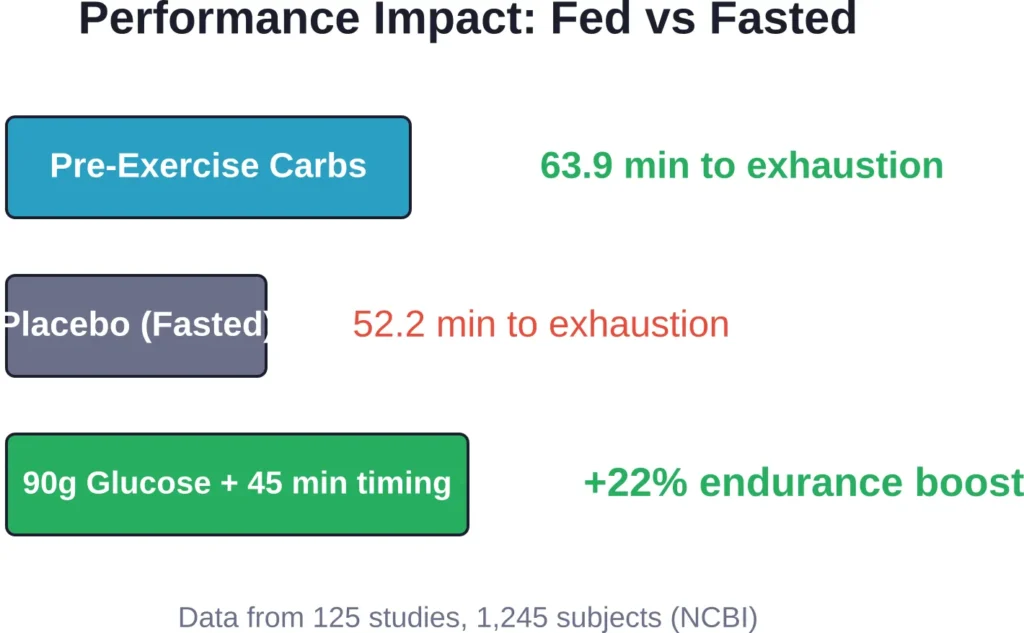
For endurance activities, the numbers are even more striking. Studies demonstrate that consuming carbohydrates before exercise can extend time to exhaustion significantly—one trial showed 63.9 minutes versus 52.2 minutes when comparing 90 grams of glucose consumed 45 minutes prior versus a placebo.
The body can exercise fasted, sure. But performance typically suffers, especially for sessions lasting longer than 60-90 minutes or high-intensity efforts.
Optimal Timing: When to Eat Before Working Out
Timing matters as much as what gets consumed. The digestive system needs time to process food, and exercising with a full stomach creates obvious problems.
Research and practical application suggest three timing windows:
2-3 Hours Before: The Full Meal Window
This timeframe allows for a substantial meal with complex carbohydrates, lean protein, and some healthy fats. The stomach has time to empty, and nutrients enter the bloodstream right when exercise begins.
A meal like grilled chicken with brown rice and vegetables fits perfectly here. So does oatmeal with banana and a handful of nuts.
60-90 Minutes Before: The Moderate Snack Zone
This window works for lighter meals or substantial snacks. Focus shifts more heavily toward easily digestible carbohydrates with moderate protein. Fat content should drop.
Toast with peanut butter, Greek yogurt with fruit, or a small smoothie all work well in this timeframe.
30-45 Minutes Before: The Quick Energy Boost
Right before exercise calls for minimal, rapidly digestible carbohydrates. The goal is quick energy without digestive burden.
A banana, an energy bar, or a small serving of applesauce provides that final boost.
| Timing Before Exercise | Meal Size | Carbohydrate Focus | Example Foods |
|---|---|---|---|
| 2-3 hours | Full meal (400-600 cal) | Complex carbs + protein | Chicken with rice, pasta with lean meat |
| 60-90 minutes | Light meal (200-300 cal) | Simple carbs + moderate protein | Toast with peanut butter, yogurt with fruit |
| 30-45 minutes | Small snack (100-150 cal) | Quick-digesting carbs only | Banana, energy bar, dried fruit |
What to Eat: Macronutrient Composition
Not all foods fuel exercise equally. The macronutrient breakdown of the pre-workout meal significantly impacts how the body performs.
Carbohydrates: The Primary Fuel Source
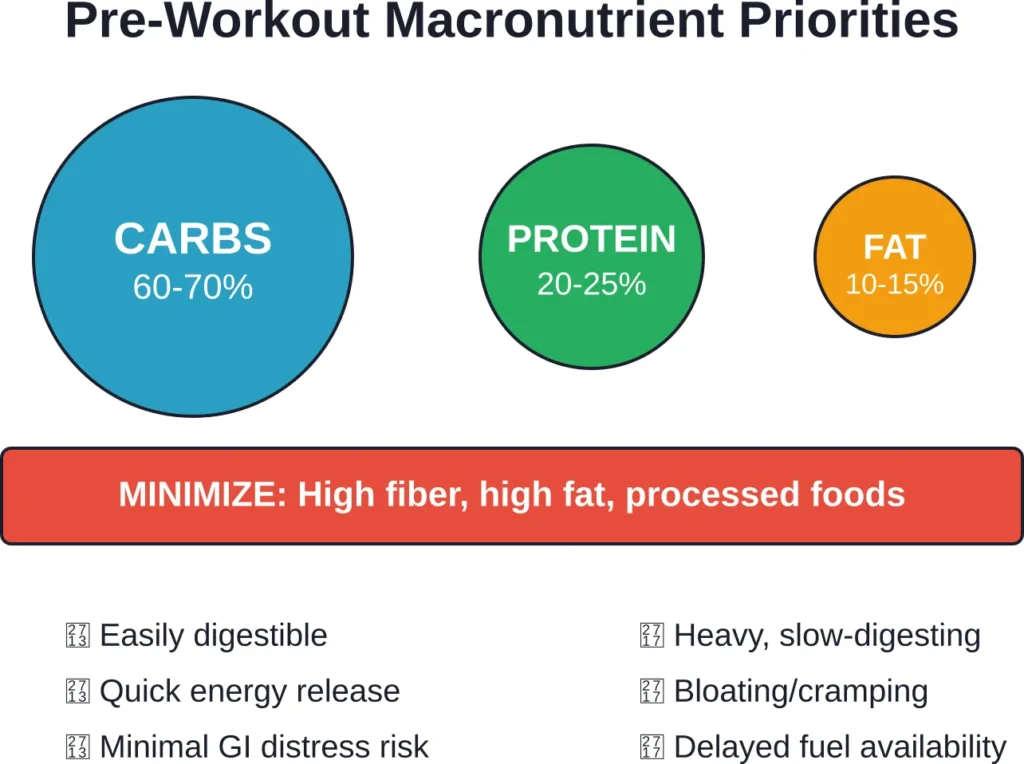
Carbohydrates deserve top billing in pre-exercise nutrition. They convert quickly to glucose, the body’s preferred energy currency during moderate to high-intensity activity.
The International Society of Sports Nutrition position stand states that maximal endogenous glycogen stores are best promoted by following a high-glycemic, high-carbohydrate diet of 600-1000 grams CHO or approximately 8-10 g CHO/kg/d.
For extended exercise lasting longer than 60-90 minutes, consuming carbohydrates can help prolong endurance and maintain concentration.
Protein: Supporting Muscle But Not Overdoing It
Protein plays a supporting role pre-workout. A moderate amount of protein—roughly 15-25 grams—helps prevent muscle breakdown during exercise and primes the body for post-workout recovery. The ideal ratio during and after exercise sits around 3-4 parts carbohydrate to 1 part protein.
But excessive protein before exercise offers no additional benefit and may slow digestion.
Fat and Fiber: The Caution Zone
Here’s where things get tricky. Fat and fiber slow gastric emptying—the rate at which food leaves the stomach. That creates two problems: reduced energy availability and potential digestive discomfort.
One study comparing 90 grams of fat versus placebo found improved endurance compared to placebo. Keep fat and fiber modest in the pre-workout window.
Special Considerations by Workout Type
Different exercise modalities place different demands on the body’s fuel systems.
Endurance Training
Endurance activities—running, cycling, swimming—rely heavily on glycogen stores. Events or training sessions lasting longer than 60-90 minutes benefit substantially from pre-exercise carbohydrate intake.
Consuming carbohydrates helps prolong endurance and maintain concentration, which is especially important for training or events that last longer than 60 to 90 minutes or stop-and-go sports like soccer, basketball or tennis.
Resistance Training
Strength training also depends on glycogen, though to a lesser degree than endurance work. Resistance training depletes glycogen by varying amounts depending on volume, with research demonstrating that a single set of elbow flexion at 80% of 1 rep max to failure depletes muscle glycogen.
The takeaway: resistance training sessions don’t necessarily require pre-workout carbohydrates for fuel, but they certainly don’t hurt. The moderate glycogen depletion suggests that a small snack 30-60 minutes before lifting can maintain energy levels without being strictly necessary.
Early Morning Workouts
Morning exercise presents a unique challenge. Liver glycogen drops approximately 40% following an overnight fast, though blood glucose remains normal due to gluconeogenesis.
For workouts under 60 minutes, many people perform fine fasted. For longer or more intense morning sessions, even a small carbohydrate snack 15-30 minutes before starting makes a measurable difference.
Foods to Avoid Before Exercise
Some foods create problems regardless of timing. High-fat foods like fried items, heavy cream sauces, or fatty cuts of meat sit in the stomach for hours. High-fiber foods like beans, cruciferous vegetables, or large salads can cause bloating and cramping.
Spicy foods, carbonated beverages, and artificial sweeteners also trigger digestive issues in many people during exercise. New or unfamiliar foods carry risk—the pre-workout meal isn’t the time to experiment.
Real talk: what works in daily life may not work before exercise. The digestive system operates differently when blood flow redirects to working muscles.
Hydration Pairs With Food
Nutrition is only half the equation. Hydration status affects performance just as much as fuel availability.
The general recommendation is to drink about 1/2 to 1 cup (118-237 milliliters) of water every 15 to 20 minutes during your workout, with amounts adjusted for body size and weather conditions.
Starting exercise already well-hydrated makes maintaining fluid balance far easier. Drinking 16-20 ounces of water 2-3 hours before exercise, followed by another 8-10 ounces 15-20 minutes before starting, establishes a solid foundation.
When Fasted Training Makes Sense
Despite the performance benefits of pre-workout nutrition, fasted training has its place. Some research suggests that training with low carbohydrate availability may enhance certain metabolic adaptations, though this remains an area of active investigation.
For fat loss specifically, fasted cardio shows mixed results. While exercising fasted may increase fat oxidation during the session, total 24-hour fat loss depends on overall caloric balance, not the timing of individual meals.
Low-intensity recovery sessions, mobility work, or short morning walks don’t require pre-workout fuel. Save the strategic fueling for sessions that matter—high-intensity work, long duration, or skill-dependent training where concentration matters.
Individual Response Varies
Here’s the frustrating truth: individual digestive tolerance varies enormously. Some athletes handle a full meal 60 minutes before intense exercise. Others need 3-4 hours or experience cramping and nausea.
The only way to determine personal tolerance is experimentation during training—never during competition. Testing different foods, timing windows, and portion sizes over weeks reveals what works for an individual body.
Age, training status, exercise intensity, environmental conditions, and even stress levels all influence how the digestive system responds to pre-workout nutrition.
Practical Pre-Workout Meal Examples
| Timing | Meal Example | Why It Works |
|---|---|---|
| 2-3 hours | Grilled chicken, sweet potato, steamed broccoli | Balanced macros, complete digestion before exercise |
| 2-3 hours | Oatmeal with banana, almonds, and honey | Complex carbs, sustained energy, moderate protein |
| 60-90 minutes | Whole grain toast with peanut butter | Quick carbs, small protein dose, minimal fiber |
| 60-90 minutes | Greek yogurt with berries and granola | Easily digestible, good carb-protein ratio |
| 30-45 minutes | Banana or apple | Pure simple carbs, no digestion burden |
| 30-45 minutes | Energy bar or rice cakes with jam | Rapid absorption, immediate fuel availability |
Frequently Asked Questions
For workouts under 60 minutes, many people perform well fasted. For longer or more intense morning sessions, a small carbohydrate snack 15-30 minutes before starting improves performance. Overnight fasting reduces liver glycogen by approximately 40%, so fueling becomes more important as workout duration and intensity increase.
Wait 2-3 hours after a full meal, 60-90 minutes after a light meal or substantial snack, and 30-45 minutes after a small snack. The larger and more complex the meal, the longer the wait time needed. Individual digestive tolerance varies—some people need more time while others handle food closer to exercise without issues.
Nausea typically indicates eating too much, too close to exercise, or choosing foods high in fat and fiber. Try smaller portions, earlier timing, or switching to simpler carbohydrates like bananas or toast. Some people genuinely have sensitive stomachs and perform better with minimal pre-workout food, especially for intense activities.
Total daily caloric balance matters more than meal timing for fat loss. That said, eating something before exercise typically improves workout quality, allowing higher intensity and longer duration—both of which increase total calories burned. Exercising completely fasted may reduce workout performance, ultimately burning fewer calories overall.
Protein shakes work as a convenient pre-workout option, but they should include carbohydrates for optimal energy. Pure protein provides minimal immediate fuel since the body preferentially burns carbohydrates during exercise. A shake containing both protein and carbs (such as protein powder with fruit and oats) makes a better choice.
For most people doing standard workouts under 90 minutes, whole foods provide adequate nutrition. Sports drinks containing 6-8% carbohydrate solutions become useful for endurance events or training sessions exceeding 60-90 minutes. Supplements are rarely necessary for recreational exercisers eating a balanced diet.
Both benefit from pre-exercise carbohydrates, though endurance training relies more heavily on glycogen stores. Resistance training depletes glycogen by varying amounts depending on volume, while endurance work can drain stores completely. Strength sessions may get by with smaller pre-workout snacks, while longer cardio sessions benefit from more substantial fueling.
The Bottom Line on Pre-Workout Eating
Eating before exercise is not only okay—it’s beneficial for most people and most workout types. Research clearly demonstrates that pre-exercise carbohydrate intake enhances endurance, maintains concentration, and supports performance.
The fact that 78.9% of resistance-trained athletes regularly eat before training speaks volumes. These individuals have experimented, paid attention to their bodies, and discovered what works.
The optimal approach depends on workout timing, exercise type, individual digestive tolerance, and performance goals. A 30-minute recovery jog doesn’t require the same fueling strategy as a 2-hour tempo run or a heavy squat session.
Start with the general timing guidelines—2-3 hours for full meals, 60-90 minutes for light meals, 30-45 minutes for snacks. Emphasize easily digestible carbohydrates with moderate protein. Limit fat and fiber close to exercise.
Then experiment. Track how different foods and timing windows affect energy levels, performance, and digestive comfort. What works for one person may not work for another, and that’s perfectly normal.
The goal is finding a sustainable pre-workout nutrition strategy that enhances training quality, supports performance goals, and fits individual lifestyle and preferences. The body will provide feedback—pay attention to it.