
Quick Summary: No, you should never flush tampons down the toilet. Despite some brands marketing ‘flushable’ tampons, all menstrual products should be disposed of in the trash. Tampons don’t break down like toilet paper, and flushing them can cause expensive plumbing blockages, sewer system damage, and environmental pollution.
It’s one of those questions that seems simple until you ask around. Some people say it’s fine. Others look horrified at the suggestion. And if you check the box your tampons came in, the instructions might be vague or nonexistent.
Here’s the reality: flushing tampons down the toilet is never a good idea, even when brands claim their products are flushable. Let’s break down exactly why.
Why You Shouldn’t Flush Tampons
The U.S. Environmental Protection Agency is crystal clear on this. In March 2020, the EPA issued guidance encouraging Americans to flush only toilet paper—not disinfecting wipes, paper towels, or menstrual products. The reason? These items don’t break down the way toilet paper does.
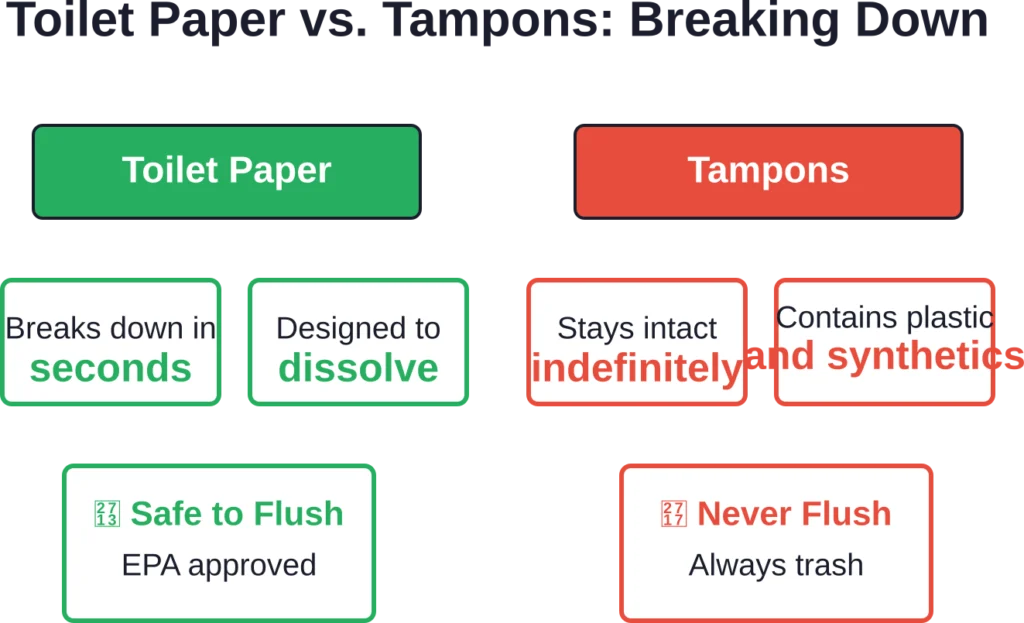
Toilet paper is specifically engineered to disintegrate rapidly when it hits water. Within seconds, it starts falling apart. Tampons don’t work that way at all.
Modern tampons contain plastic and synthetic materials. They’re designed to absorb and expand, not dissolve. When you flush one, it stays intact as it travels through your plumbing system.
What Actually Happens When You Flush a Tampon
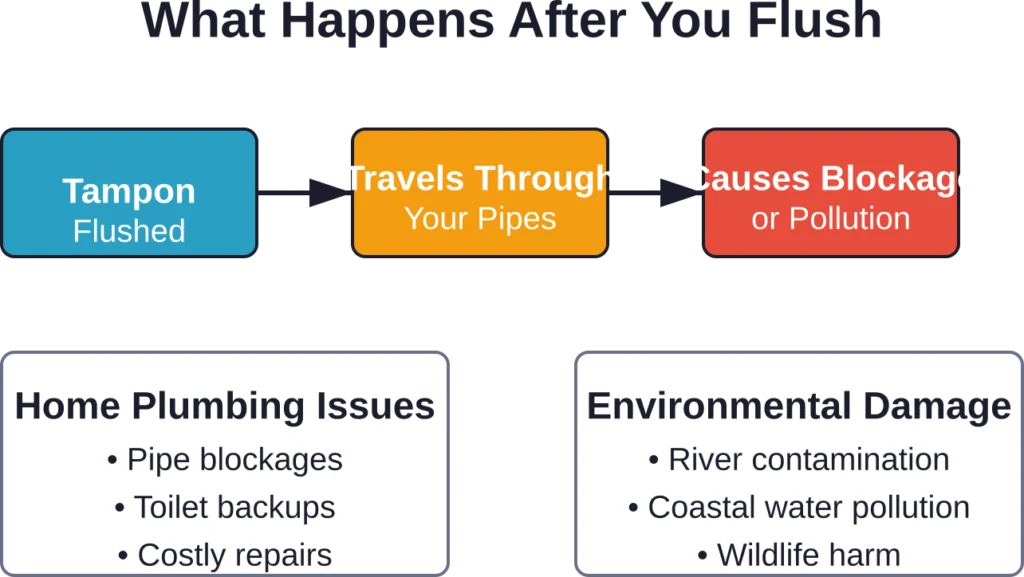
That tampon you just flushed? It’s now on a journey through pipes that were only designed to handle human waste and toilet paper.
First, it might snag on a rough edge in your home’s plumbing. Over time, more items catch on that spot—dental floss, hair, wipes—and you’ve got a blockage forming. The result is a backup that can flood your bathroom and cost hundreds or thousands in plumbing repairs.
If the tampon makes it past your home’s pipes, it enters the municipal sewer system. Water treatment plants aren’t always effective at filtering out menstrual products, and these items can end up in rivers and coastal waters, contributing to pollution.
But What About “Flushable” Tampons?
Some tampon brands have marketed products as flushable over the years. The truth? Plumbers strongly disagree with this claim.
There’s no industry standard for what “flushable” actually means when it comes to menstrual products. Unlike toilet paper, which must meet specific disintegration standards, tampons face no such requirements.
Even tampons marketed as flushable maintain their structure in water. They’re still made from absorbent materials designed to hold together when wet—the exact opposite of what you want going down your pipes.
The Environmental Impact
Beyond your home’s plumbing, flushed tampons create broader environmental problems. Studies indicate that menstrual products commonly end up in landfills. When menstrual products are flushed and escape wastewater treatment systems, they contribute to plastic pollution in waterways. Disposable pads and tampons can take up to 500 years to decompose in landfills or natural environments.
Consider that a person uses an estimated 11,000 to 16,000 menstrual products in their lifetime. Globally, over 12 billion disposable menstrual hygiene products are estimated to be utilized annually worldwide. That’s an enormous amount of material flowing through—or clogging—our waste systems.
How to Properly Dispose of Tampons
The right way to dispose of a tampon is simple: wrap it and trash it.
According to the CDC’s menstrual hygiene guidance updated in March 2025, used menstrual products should be wrapped in either toilet paper or facial tissue and placed in a trash receptacle. That’s it.
Here’s the step-by-step process:
- Remove the used tampon
- Wrap it in toilet paper, the wrapper from your new tampon, or tissue
- Place it in a trash bin
- Wash your hands thoroughly
Many public restrooms include small disposal bins mounted on the wall specifically for menstrual products. At home, a small trash can with a lid in your bathroom works perfectly.
What About Septic Systems?
If your home uses a septic system instead of municipal sewage, flushing tampons is even more problematic.
The EPA’s guidance on septic system care is explicit: only flush toilet paper. Septic systems rely on bacterial action to break down waste. Tampons won’t break down and will accumulate in the tank, potentially clogging the outlet or drainfield.
Research from Penn State Extension confirms that flushing non-degradable items like tampons can negatively impact septic system functioning. Your tank should be pumped if the sludge layer gets too high—and flushing tampons accelerates how quickly that happens.
The average septic tank pumping costs several hundred dollars. Avoiding flushed tampons helps protect that investment.
The Cost of Flushing Tampons
Ignoring this advice carries real financial consequences. According to a 2016 report in The Guardian, it costs approximately £88 million annually to unblock sewers maintained by UK water companies—costs that get passed along to consumers through higher water bills.
For context, replacing old, inefficient toilets with WaterSense labeled models can save water through improved efficiency, according to the EPA. But those savings are quickly consumed when you’re paying a plumber to snake your backed-up toilet or sewer line.
Individual plumbing calls for toilet backups can be costly to repair. These expenses add up quickly, making prevention far more economical than dealing with the aftermath of flushed items.
Frequently Asked Questions
No. Toilet flush power doesn’t matter—tampons don’t break down in water regardless of flush strength. Even high-efficiency toilets can’t dissolve materials that aren’t designed to disintegrate. The tampon will simply travel further into your plumbing system before causing problems.
One accidentally flushed tampon probably won’t cause immediate disaster, but it’s now sitting somewhere in your plumbing or sewer system. The risk increases with each flushed item. If you notice slow drains or gurgling sounds in the days after, call a plumber before a full blockage forms.
Despite marketing claims, plumbers and wastewater professionals agree that no menstrual products—tampons, pads, liners, or applicators—should be flushed. There’s no regulatory standard for “flushable” menstrual products like there is for toilet paper. When in doubt, throw it out.
Plastic and cardboard tampon applicators both go in the trash, never the toilet. Wrap them in toilet paper or tissue along with the used tampon itself, then place everything in your bathroom trash bin.
No, the same rules apply everywhere. Public restrooms almost always have disposal bins mounted inside stalls specifically for menstrual products. These bins are there because flushing these items damages plumbing systems and wastewater infrastructure.
Yes, absolutely. Septic systems are particularly vulnerable because they rely on bacterial breakdown of organic waste. Tampons won’t decompose and will accumulate in the tank, potentially blocking the outlet and forcing more frequent—and expensive—pumping. The EPA explicitly warns against flushing anything but toilet paper when you have a septic system.
Stop immediately and consider having your plumbing inspected, especially if you’ve noticed slow drains. For septic system users, schedule a tank inspection and pumping if it’s been more than three years. Accumulated tampons might already be causing hidden damage that will worsen over time.
The Bottom Line
Despite confusing messaging from some brands and mixed advice you might hear, the answer is clear: never flush tampons down the toilet.
The EPA, plumbers, wastewater professionals, and environmental scientists all agree. Tampons don’t break down like toilet paper, and flushing them risks expensive plumbing repairs, septic system damage, and environmental pollution.
The proper disposal method is simple—wrap it in toilet paper and place it in the trash. This small habit protects your home’s plumbing, reduces strain on wastewater systems, and helps prevent menstrual products from ending up in rivers and oceans.
Make the switch today. Your pipes—and the environment—will thank you.