
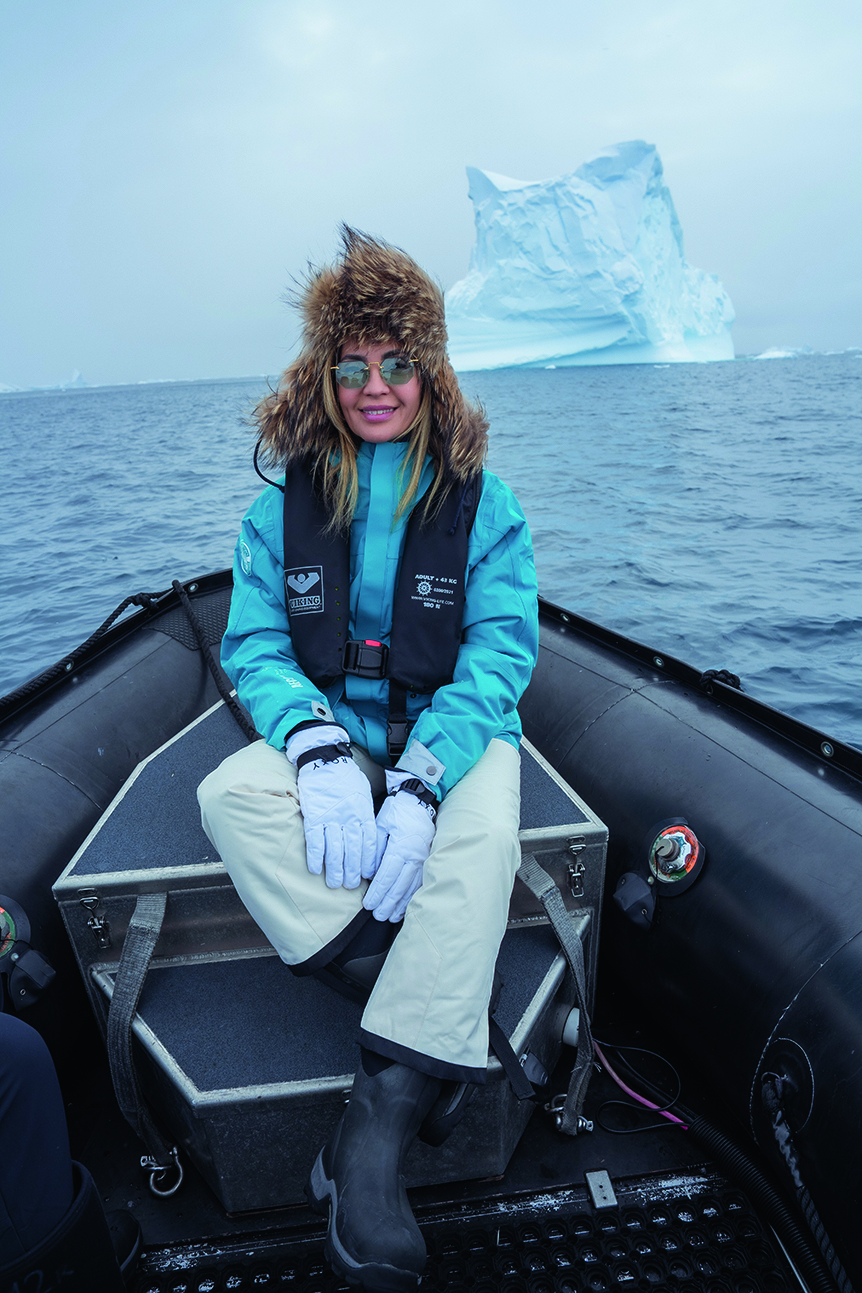
Iceberg skyscrapers 450 metres high, whales instead of pigeons, and snow the colour of watermelon rind — Antarctica overturns everything we think we know about the planet. Lara Palmer recounts her voyage to the White Continent in the company of Swan Hellenic, the British cruise line renowned for expeditions with a historical and cultural bent. Antarctica is the freest country on Earth.
A severe yet spellbinding land, it remains one of the least explored continents, where mountains, lakes, and even volcanoes lie concealed beneath a kilometre-thick carapace of ice. It is the only place on the globe without permanent inhabitants or national borders, but it boasts colonies of emperor penguins, seal rookeries, and primeval glaciers that guard the secrets of our planet’s past. Even so, the journey is not for the casual holidaymaker.
In the short season from November to early March no more than 150,000 people make the crossing; Paris, by contrast, sees 13 million tourists a year. Return business-class flights Dubai to Buenos Aires for two: AED 40,000. Cost of the eleven-day Antarctic voyage: AED 90,000 for two, all-inclusive — landings on the continent, all excursions, a generous balcony stateroom, round-the-clock cuisine, unlimited drinks, rubber boots and life-jackets on loan, and an expedition parka to keep.
The Drake Passage is the most tempestuous stretch of water on the planet. It shows travellers one of two faces: the notorious Drake Shake or the unexpectedly benign Drake Lake. For us, the Drake behaved more like a familiar Gulf breeze, and we crossed it in a single day.
Each dawn we climbed into inflatable Zodiacs and skimmed ashore. On one memorable day we set foot inside the caldera of a dormant volcano. What astonished me most was the sheer abundance of wildlife, none of which regarded us as a threat.
We watched southern elephant seals — five-metre, four-tonne colossi — lolling on the beaches. Whales were as common as pigeons in a London square. Antarctica left an indelible mark on us: its landscapes defy superlatives.
One even encounters green and red snow, tinted by microscopic algae thriving within the drifts. By the voyage’s end, even penguins had lost the power to astonish us. Antarctica harbours more than eighteen species, and in barely three days we had encountered some 50,000 birds — vast colonies, rank upon rank.