
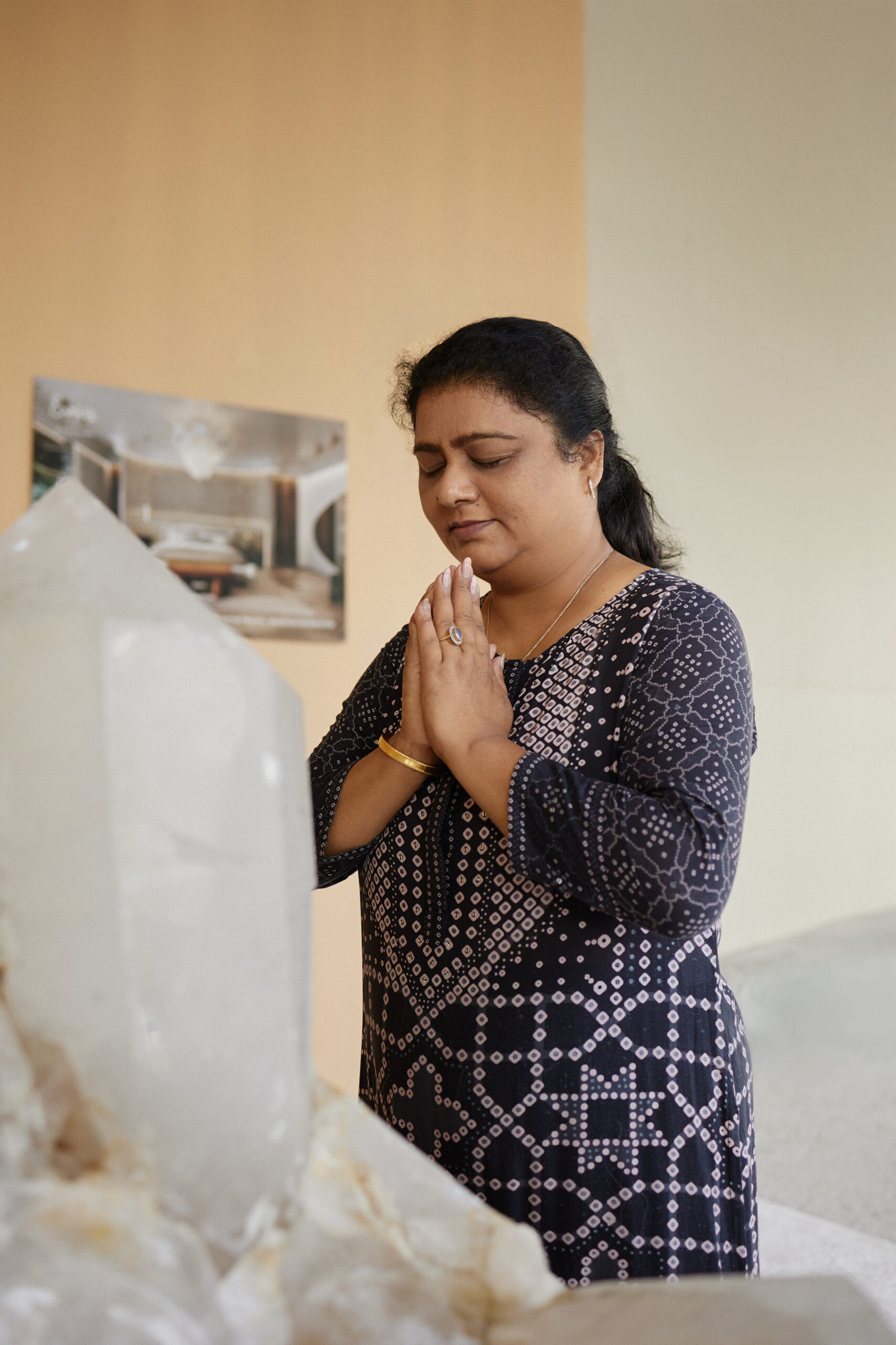
Vastu Shastra, the traditional Indian system of architecture, offers far more than mere building guidelines — it is a comprehensive philosophy of harmonious living that transcends cultural boundaries. Acharya Chhaya Goyal Ji, founder of Vaastu Devayah Namah, shares her insights into applying these principles to the contemporary architecture of Dubai. Time and again, we have observed the transformative power of Vastu Shastra.
A family in Dubai had been experiencing persistent health issues, relationship tensions, and career stagnation despite their apparent success. Their elegant apartment overlooked the marina, yet something felt fundamentally wrong. After assessing their home, I identified several critical issues: their master bedroom received harsh afternoon sun, contained aggressive red décor, and their bed was positioned in a low-energy zone.
Within six weeks of implementing my recommendations, they reported profound changes not just in their circumstances, but in their very mindset. Many confuse Vastu with Feng Shui, but the differences are significant. Vastu principles remain constant — they function effectively regardless of time period or individual.
Once you construct a home according to Vastu principles, its benefits extend to all occupants forever. Conversely, Feng Shui employs yearly alignments that change regularly. The Dubai property landscape presents unique challenges for Vastu implementation.
Traditional Vastu principles are rarely incorporated into standard Dubai construction, because many developers bring architectural practices from their native countries that fail to optimise energy flow in Dubai’s specific environment. A couple experiencing relationship difficulties had their bedroom bed positioned directly under a ceiling beam, creating subtle but persistent psychological pressure. By reorienting their sleeping arrangement and adjusting décor elements, we witnessed remarkable transformation in their dynamics within just two months.
The husband later confided that these seemingly minor adjustments had saved their marriage. A Russian client initially approached us with scepticism, viewing Vastu as culturally foreign. Yet after implementing our recommendations — including reorienting his desk to face northeast while working — he reported such significant improvements in both wellbeing and business outcomes that he subsequently engaged us for his Moscow property.