
Architecture and fashion share their roots in shelter, identity and the elevation of the everyday through proportion, structure and draping. Today, cities vie for iconic skylines as fashion houses commission landmark museums — from Gehry’s titanium-clad forms to Virgil Abloh’s structural garments. Askar Ramazanov, founder and managing partner of the international consultancy Askar Inc. and creator of the City Circle project, examines how architects dress cities whilst designers conceive load-bearing silhouettes.
This article is dedicated to the great architect Frank Gehry, who left us in December 2025 at the age of 96. Which came first: the building or the garment? The question itself reveals the ancient kinship between architecture and fashion.
As Coco Chanel famously declared: La mode c’est de l’architecture, c’est une question de proportions. Fashion is architecture; it is a question of proportions. Hubert de Givenchy would later call Cristóbal Balenciaga the architect of haute couture — the highest compliment one discipline could pay another.
Norman Foster has been the world’s most prolific tailor of cities. For over half a century, Foster + Partners has dressed the world’s capitals in distinctive silhouettes. The HSBC building transformed Hong Kong’s skyline; the Gherkin became London’s most recognisable profile.
Nowhere does the convergence of architecture and fashion manifest more clearly than on Saadiyat Island in Abu Dhabi. The Saadiyat Cultural District offers the UAE capital a rare opportunity to become a new Venice, a cultural and financial centre for the world. Foster’s Zayed National Museum evokes the region’s ancient pearl-diving heritage: shells rising from the desert like memories of maritime wealth.
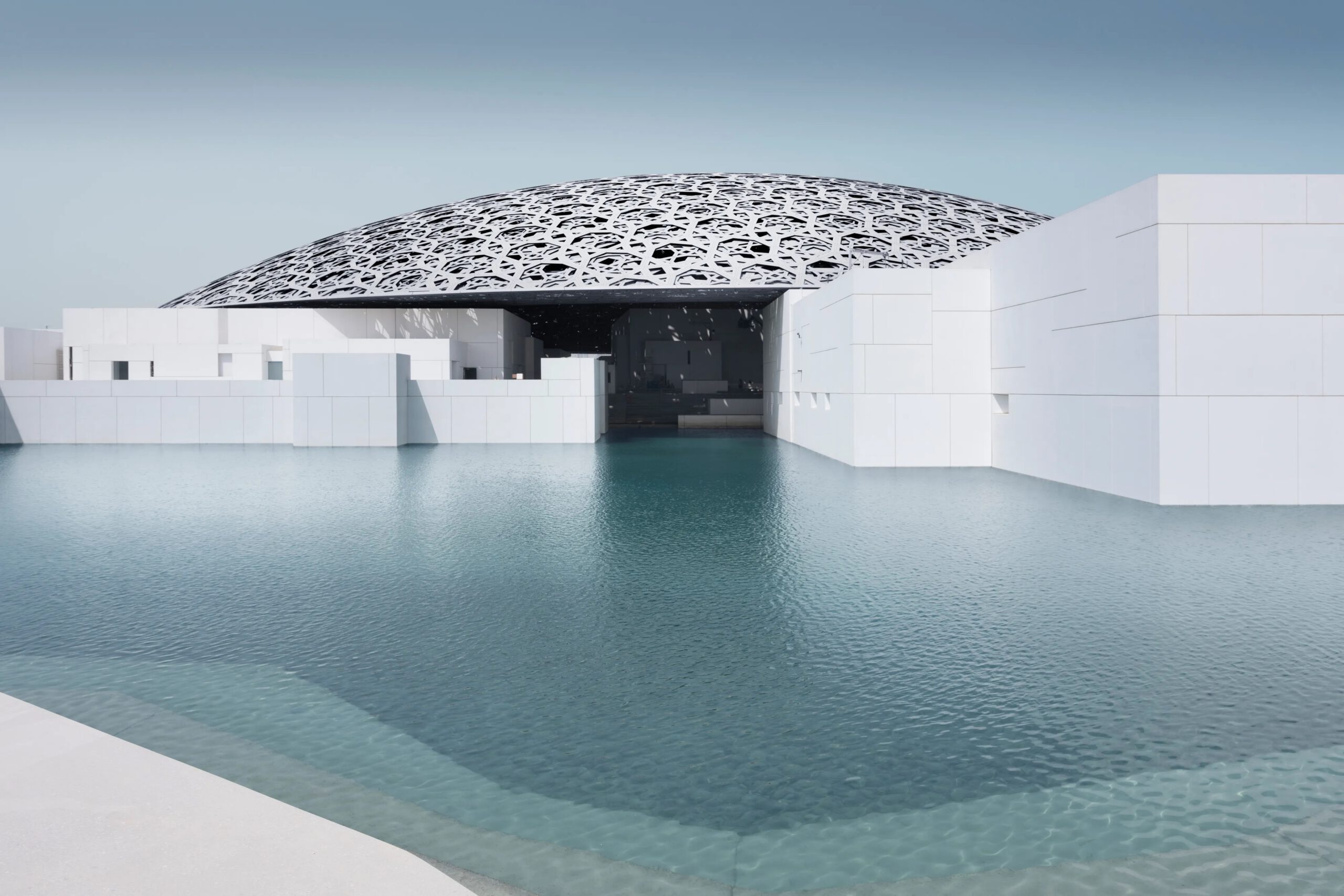
Jean Nouvel’s Louvre Abu Dhabi filters sunlight through a latticed dome, creating a rain of light — an effect recalling the mashrabiya that for centuries shaped both Islamic architecture and textile patterns. Zaha Hadid’s practice demonstrated that the transition between scales — from jewellery to buildings — constitutes a single research process. Her collaborations spanned the industry: shoes for Melissa, Lacoste and United Nude; a sculptural bag for Louis Vuitton.
The Mobile Art Pavilion for Chanel: a travelling exhibition space commissioned by Karl Lagerfeld in 2007, inspired by the iconic quilted Chanel 2.55 bag, a 180-tonne structure of steel and fabric. No one better embodied the fusion of architecture and fashion than Virgil Abloh. Having studied architecture at the Illinois Institute of Technology — shaped by Mies van der Rohe — Abloh brought structural thinking to his work at Off-White and Louis Vuitton. In his show notes, he wrote simply: Mies is my other Michael Jordan.