

Quick Summary: Narcissists can change, but it’s extremely rare and requires genuine self-awareness, willingness to engage in therapy, and consistent effort over years. Research suggests that less than 5% achieve significant, lasting change, primarily because most people with narcissistic personality disorder don’t recognize their behavior as problematic or seek treatment.
The question haunts relationships, families, and friendships across the world: Can a narcissist actually change?
It’s not just curiosity. For many people living with or loving someone with narcissistic traits, this question carries profound weight. The answer determines whether to stay or leave, whether to invest more emotional energy or protect what’s left.
Here’s what the research actually shows—and why the answer is more nuanced than a simple yes or no.
Understanding Narcissistic Personality Disorder
Before exploring whether change is possible, it’s crucial to understand what narcissism actually means in a clinical context.
According to the American Psychiatric Association, narcissistic personality disorder (NPD) is defined as “a pervasive pattern of grandiosity (sense of superiority in fantasy or behavior), need for admiration, and lack of empathy.” This pattern emerges by early adulthood and appears across various situations.
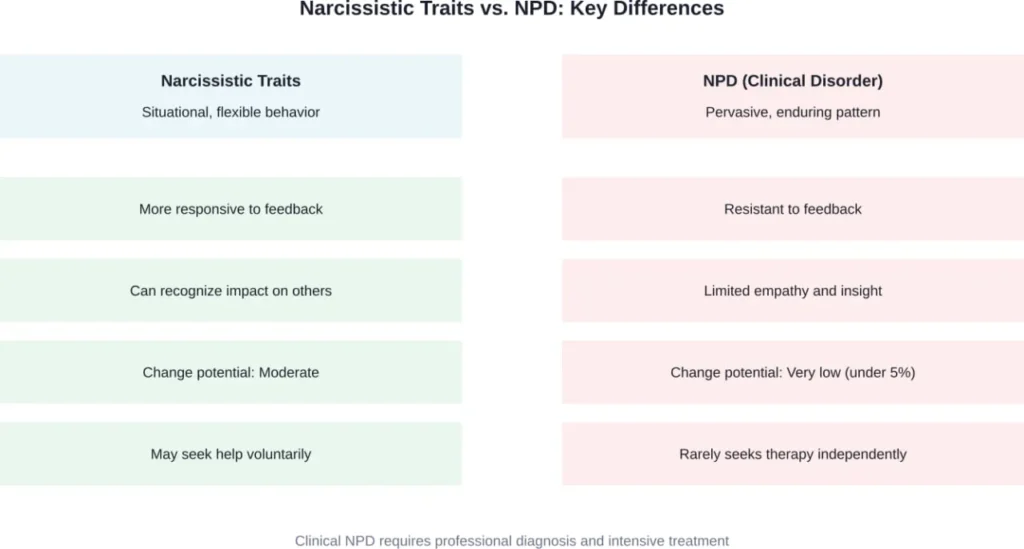
But here’s the thing—there’s a significant difference between narcissistic traits and full-blown NPD.
Narcissistic Traits vs. Clinical NPD
Many people occasionally behave in narcissistic ways without having NPD. Someone might be self-centered after a promotion or seek excessive validation during a difficult period. These behaviors don’t necessarily indicate a personality disorder.
Research indicates the prevalence of NPD in the general population is approximately 1% to 2%, according to the American Psychiatric Association. Some estimates range from 0.0% to 6.2% depending on the population studied, though prevalence estimates vary widely.
The National Institute of Mental Health notes that personality disorders represent “an enduring pattern of inner experience and behavior that deviates markedly from the expectations of the individual’s culture.” These patterns tend to be fixed and consistent across situations and lead to distress or impairment.
An estimated 9% of U.S. adults have at least one personality disorder, though NPD represents only a fraction of that percentage.
What the Research Says About Change
So can a narcissist change? The scientific answer is technically yes—but with significant caveats.
Studies examining treatment outcomes for NPD paint a challenging picture. Research suggests that less than 5% of individuals with NPD achieve significant, lasting change through therapy. Some studies report even lower success rates.
Why is the percentage so low?
The Core Problem: Lack of Self-Awareness
People with NPD typically don’t recognize their behavior as problematic. From their perspective, other people are the problem. This fundamental lack of insight creates the first major barrier to change.
According to medical research on NPD treatment, aspects of narcissistic pathology—including interpersonal enhancement, avoidance, aggressivity, and control—contribute to challenges in forming a therapeutic alliance and pursuing treatment goals.
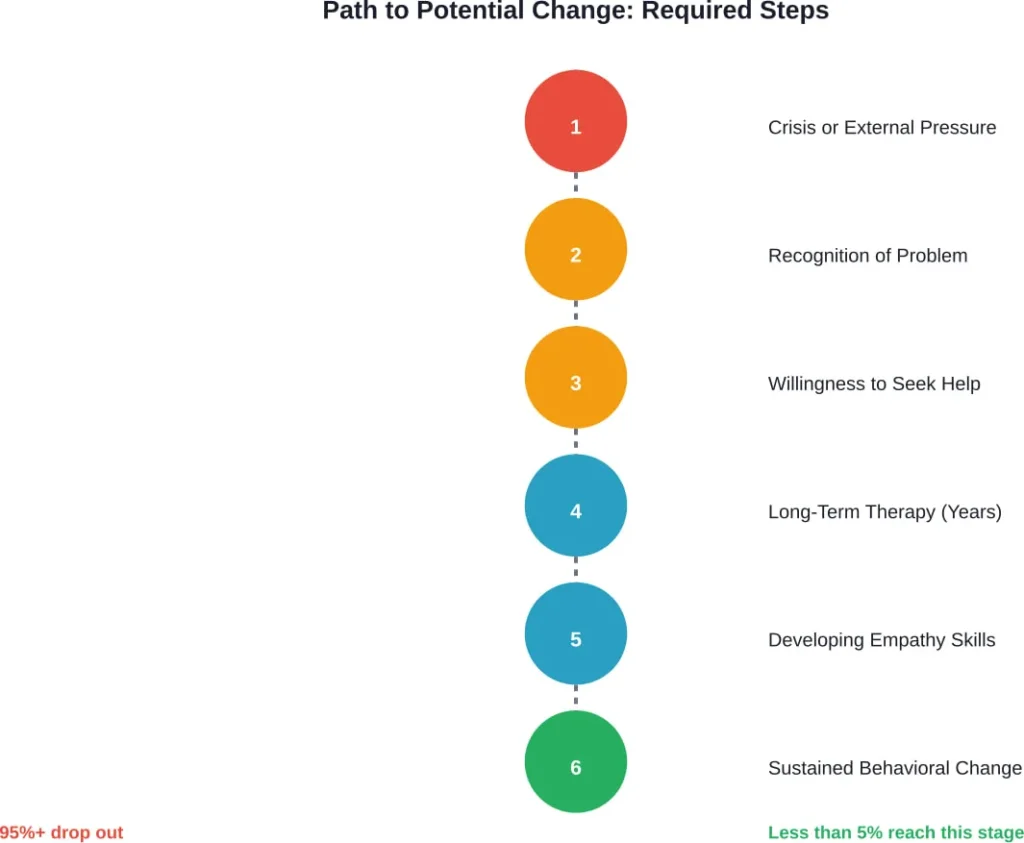
Most narcissists don’t seek therapy voluntarily. When they do enter treatment, it’s often because external pressure forces them: a spouse threatening divorce, legal consequences, or workplace repercussions.
| Factor | Impact on Change Potential |
|---|---|
| Self-Awareness | Without recognizing problematic patterns, change is impossible |
| Therapy Engagement | Most don’t seek treatment; those who do often drop out early |
| Treatment Success Rate | Less than 5% show significant, lasting change |
| Willingness to Change | Requires genuine motivation beyond external pressure |
| Length of Treatment | Long-term therapy (years) necessary for meaningful progress |
| Relapse Risk | High—old patterns resurface under stress |
Long-Term Treatment Requirements
Research on long-term psychotherapy for personality disorders reveals that patients with narcissistic pathology who have sustained severe early developmental trauma often require long-term psychotherapeutic treatment to achieve lasting psychological change.
We’re talking years, not months. And even then, success isn’t guaranteed.
Research examining patients with NPD who improved in treatment has identified cases of genuine progress, though such cases remain rare. What made these cases special? Each person developed genuine self-awareness and committed to the difficult work of examining their behavior patterns over extended periods.
When Change Might Actually Happen
Despite the grim statistics, change isn’t absolutely impossible. Certain conditions make transformation more likely—though still rare.
Critical Factors for Potential Change
Genuine willingness to acknowledge the problem: The person must truly recognize that their behavior hurts others and themselves. Surface-level acknowledgment doesn’t cut it.
Sustained commitment to therapy: Treatment for NPD requires specialized approaches and long-term engagement. Dropping out after a few sessions won’t produce results.
Development of empathy: Real change involves developing the capacity to understand and care about how others feel—something fundamentally lacking in NPD.
Hitting rock bottom: Sometimes severe consequences—losing everything important—create enough pain to motivate genuine change. But even this doesn’t guarantee transformation.
Why Most Narcissists Don’t Change
Understanding why change is so rare helps clarify realistic expectations.
The Defense Mechanisms Are Too Strong
Narcissistic defenses exist to protect an extremely fragile self-image. Examining those defenses feels like psychological death to someone with NPD. The pain of honest self-reflection outweighs any motivation to change.
They Don’t See the Need
From the narcissist’s perspective, they’re fine. Other people are too sensitive, too demanding, or simply wrong. Why would someone change when they believe everyone else needs to adjust?
Therapy Becomes Another Arena for Manipulation
Even when narcissists enter therapy, many use it as another stage for performance. They may present a false self to the therapist, manipulate the narrative to maintain their self-image, or drop out when confronted with uncomfortable truths.
Research on treatment principles for pathological narcissism emphasizes the difficulty of establishing therapeutic goals with NPD patients because they often struggle to find meaningful goals beyond maintaining their grandiose self-image.
Change Requires Sustained Discomfort
Real transformation demands sitting with painful emotions: shame, guilt, vulnerability, inadequacy. People with NPD have spent their entire lives avoiding these feelings. Asking them to deliberately experience this discomfort for years is an enormous ask.
The Difference Between Real Change and Performance
Here’s where things get tricky. Narcissists are often excellent performers.
They can appear to change. They might say the right things, perform appropriate emotions, or temporarily modify behavior—especially when facing consequences.
But performance isn’t transformation.
Signs of Genuine Change vs. Manipulation
Genuine change includes:
- Sustained behavioral shifts over years, not weeks or months
- Acknowledgment of specific harm caused to others without deflection
- Consistent empathy even when no one is watching
- Willingness to be uncomfortable without becoming defensive
- Reduced need for admiration and validation
- Taking responsibility without making excuses
Performance looks like:
- Temporary behavior changes that disappear once consequences are avoided
- Surface-level apologies with underlying justifications
- “Changes” that only occur when others are present
- Quick defensiveness when patterns are questioned
- Continuing to blame others while claiming to take responsibility
- Using therapy language to manipulate rather than reflect
Real talk: The difference between these can be extremely difficult to detect, especially for people emotionally invested in seeing change.
Treatment Approaches That Show Promise
While success rates remain low, certain therapeutic approaches show more promise than others for treating NPD.
Specialized Long-Term Psychotherapy
Research demonstrates that long-term psychotherapy specifically designed for personality disorders can produce some positive outcomes. These approaches focus on developing self-awareness, building genuine empathy, and addressing underlying trauma.
Treatment typically requires years of consistent work with a therapist trained in personality disorders.
Metacognitive Interpersonal Therapy
Studies on metacognitive therapy for NPD focus on helping patients understand their own thought processes and how they interpret social interactions. The approach involves continuously rewriting therapeutic contracts as patients develop insight.
This therapy acknowledges that NPD patients struggle to identify meaningful treatment goals initially and works with that reality.
Schema-Focused Therapy
This approach addresses the underlying schemas or core beliefs that drive narcissistic behavior patterns. It aims to identify childhood experiences that contributed to the development of these patterns and reprocess them.
Like other treatments, this requires long-term commitment and genuine willingness to engage.
| Therapy Type | Primary Focus | Treatment Duration |
|---|---|---|
| Long-Term Psychodynamic Therapy | Unconscious patterns, early trauma, defense mechanisms | Multiple years |
| Metacognitive Interpersonal Therapy | Thought processes, social cognition, meaningful goals | 1-3 years minimum |
| Schema-Focused Therapy | Core beliefs, childhood origins, cognitive restructuring | 2-4 years typical |
| Transference-Focused Psychotherapy | Relationship patterns, therapeutic alliance, integration | Multiple years |
What About Love, Age, or Other Factors?
Many people wonder whether love, aging, or life experience might catalyze change in someone with narcissistic patterns.
Can Love Change a Narcissist?
The short answer: No, love alone cannot change a narcissist.
This is perhaps the hardest truth for people in relationships with narcissists. The belief that “if I just love them enough” or “if they truly loved me” they would change keeps people trapped in harmful situations for years.
Love might be part of what motivates someone to seek help, but it can’t replace the internal work required for genuine transformation.
Do Narcissists Mellow With Age?
Some research suggests personality traits can shift slightly with age. People generally become somewhat less neurotic and more agreeable as they grow older.
However, this doesn’t mean NPD disappears with age. Core narcissistic patterns tend to persist throughout life, even if certain expressions of those patterns change.
An older narcissist might have less energy for overt grandiosity but can still lack empathy and manipulate relationships.
The Real Question: Should You Wait?
For people in relationships with narcissists, the question isn’t really “Can they change?” but rather “Should I put my life on hold waiting for change that probably won’t happen?”
The statistics are clear: Less than 5% achieve meaningful change, and those who do require years of intensive treatment they must genuinely commit to.
Protecting Yourself While They’re Unchanged
If you’re dealing with someone with narcissistic traits or NPD, focus on what you can control:
Establish firm boundaries: Decide what behavior you will and won’t tolerate, then enforce those limits consistently.
Prioritize your own mental health: Therapy for yourself can help you process the impact of the relationship and make clear decisions.
Build a support network: Isolation benefits the narcissist, not you. Maintain connections with people who see the situation clearly.
Recognize manipulation patterns: Educate yourself about common narcissistic tactics so you can identify them in real-time.
Accept that you can’t fix them: This person’s healing isn’t your responsibility, and it’s not within your power to create.
When to Consider Leaving
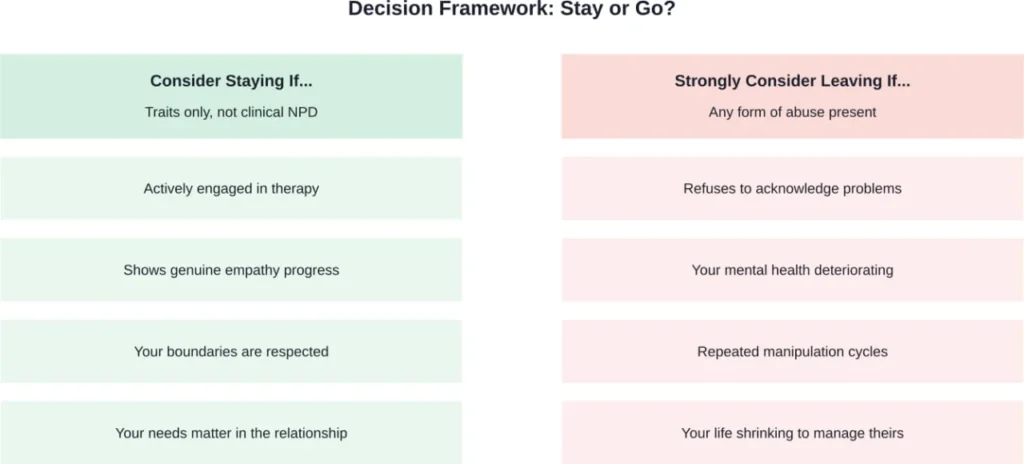
Some situations require ending the relationship for your own wellbeing:
- Abuse of any kind—physical, emotional, financial, or sexual
- Consistent refusal to acknowledge harmful behavior
- Patterns that are destroying your mental health
- Unwillingness to seek or continue professional help
- Cycles of promised change followed by identical behavior
- Your own life becoming smaller to accommodate their patterns
Waiting for change that may never come costs years of your life and wellbeing. That’s a steep price for a statistically unlikely outcome.
Frequently Asked Questions
Change without professional treatment is extremely unlikely. The self-awareness, empathy development, and pattern interruption required for genuine transformation typically need guided therapeutic work. While someone with mild narcissistic traits might make some improvements through self-reflection, clinical NPD virtually always requires specialized long-term therapy to achieve any meaningful change.
If change occurs at all—which happens in less than 5% of cases—it requires years of consistent therapeutic work, not months. Research on treatment for personality disorders indicates that meaningful transformation typically takes a minimum of two to four years of specialized therapy, and often longer. Brief therapy or short-term interventions don’t produce lasting change in narcissistic personality patterns.
No medication specifically treats narcissistic personality disorder itself. While medications might address co-occurring conditions like depression or anxiety, they don’t change the core personality patterns, lack of empathy, or grandiosity that define NPD. Therapy remains the only evidence-based approach for addressing narcissistic patterns, though even that has low success rates.
No. The idea that a narcissist will change for “the right person” is a harmful myth that keeps people trapped in destructive relationships. Narcissistic patterns exist independently of who they’re with. While a narcissist might temporarily modify behavior to secure a relationship or avoid consequences, genuine transformation requires internal motivation and years of therapeutic work—not the presence of any particular person, no matter how patient or loving.
Research indicates that less than 5% of individuals with narcissistic personality disorder achieve significant, lasting change through treatment. Some studies suggest even lower rates. The majority of people with NPD don’t seek therapy, and among those who do, most discontinue treatment before meaningful progress occurs. These statistics highlight why waiting for a narcissist to change is generally not a viable strategy.
Most people with NPD lack the self-awareness to recognize their problematic patterns. This lack of insight is actually part of the disorder itself. They typically view others as the problem rather than examining their own behavior. In rare cases where individuals develop enough self-awareness to recognize narcissistic patterns, that recognition represents the crucial first step toward potential change—but it’s still only the beginning of a long, difficult process.
Age alone doesn’t significantly increase the likelihood of meaningful change in narcissistic patterns. While some personality traits naturally shift slightly with age in the general population, the core features of NPD tend to persist throughout life. An older narcissist might have less energy for certain behaviors but typically maintains the same fundamental lack of empathy and self-centered perspective. Change requires intentional therapeutic work regardless of age.
The Bottom Line on Narcissistic Change
Can a narcissist change? Technically, yes. Will they? Probably not.
The research is consistent: Less than 5% achieve meaningful, lasting transformation. Those who do require genuine self-awareness, years of specialized therapy, sustained willingness to experience psychological discomfort, and consistent effort even when no external pressure exists.
Most people with NPD never develop the insight to recognize their patterns as problematic. Among those who do, most aren’t willing to do the difficult work required for genuine change. And among the tiny fraction who are willing, many still don’t succeed.
These aren’t encouraging odds if you’re waiting for transformation in someone with narcissistic personality disorder.
The healthier question to ask isn’t “Can they change?” but “Am I willing to accept this person exactly as they are right now, with no guarantee of change, indefinitely?”
If the answer is no—and it’s completely valid if that’s your answer—then it’s time to prioritize your own wellbeing over the statistically unlikely possibility of their transformation.
Your mental health, your boundaries, and your life trajectory matter. Don’t sacrifice them waiting for change that research suggests probably won’t happen.
If you’re struggling in a relationship with someone with narcissistic traits or NPD, consider speaking with a therapist who specializes in personality disorders and relationship dynamics. They can help you make decisions that protect your wellbeing while seeing the situation clearly.