
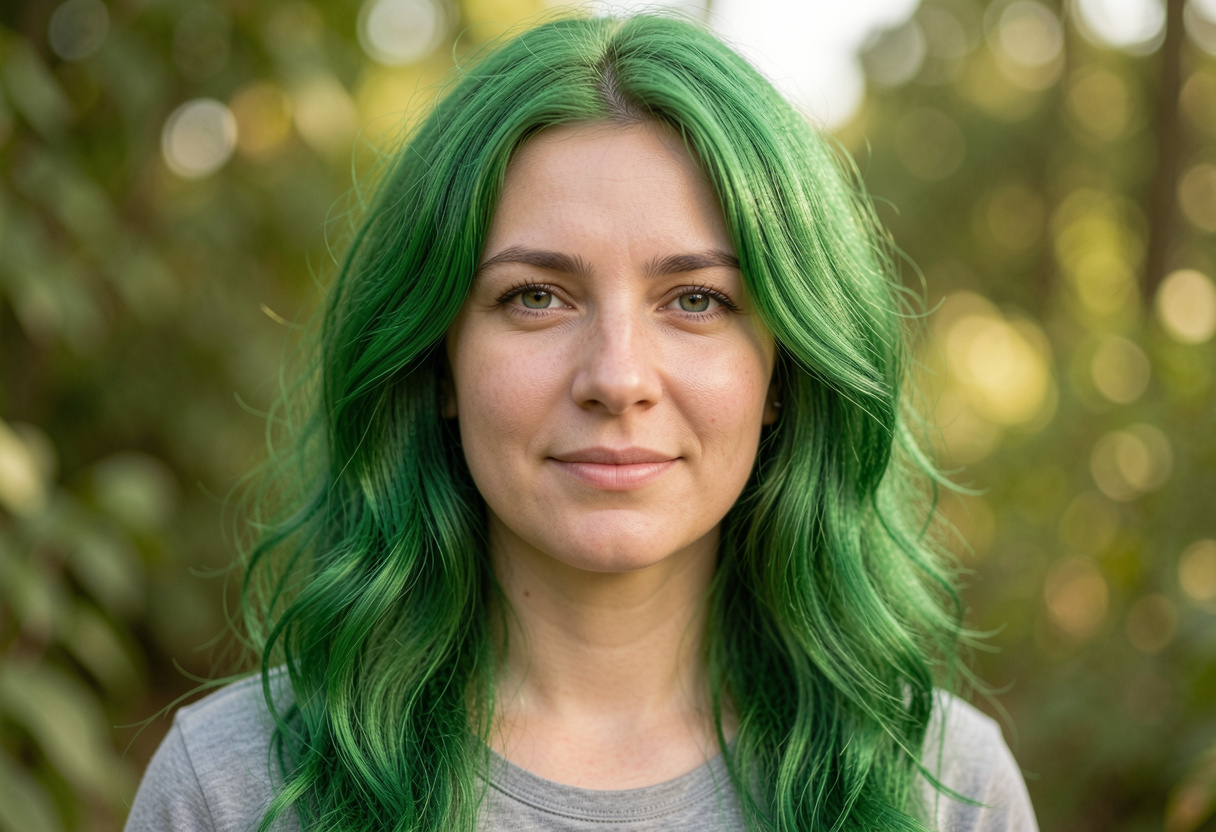
Quick Summary: No, humans cannot be born with naturally green hair. Human hair color is determined exclusively by two types of melanin pigment (eumelanin and pheomelanin), which only produce shades ranging from black and brown to blonde and red. Green hair occurs only through external copper deposition—a condition called chlorotrichosis—not from genetic factors.
It’s a question that pops up surprisingly often: why can humans have orange hair (red) but not green, blue, or purple? The answer lies in the fascinating biology of hair pigmentation—and it’s more limited than you might think.
Human hair color doesn’t work like a paint palette. We’re stuck with the colors our biology can produce naturally.
The Biology Behind Natural Hair Colors
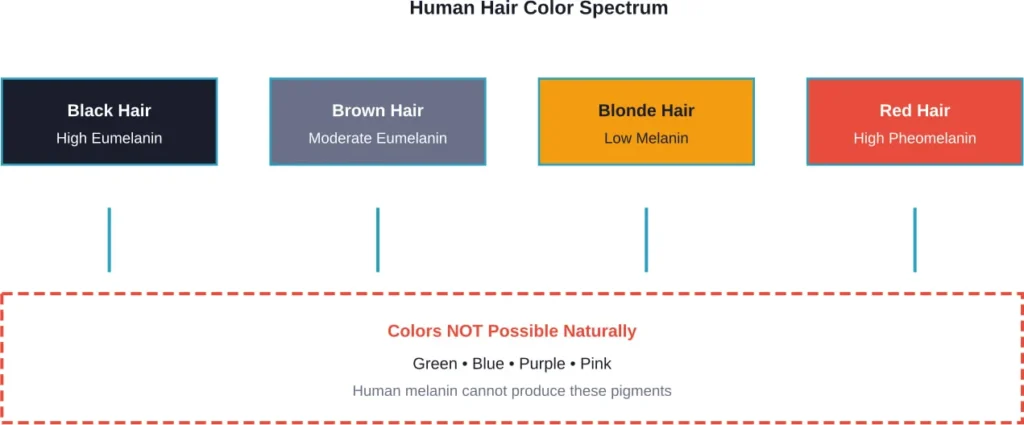
Human hair color comes down to two pigments, both types of melanin. That’s it. Just two.
The first is eumelanin, which produces black and brown shades. The second is pheomelanin, which creates blonde and red tones. Every natural human hair color—from jet black to strawberry blonde—results from different concentrations and combinations of these two pigments.
According to NIH research on pigmentation disorders, these melanin varieties are produced by specialized cells called melanocytes. The genes controlling melanin production determine how much of each type gets deposited into growing hair shafts.
Here’s the thing though—neither eumelanin nor pheomelanin can produce green, blue, or purple pigments. The molecular structure of human melanin simply doesn’t create those colors.
Why Some Animals Have Green or Blue Coloring
So why do some birds have brilliant blue feathers or certain insects have iridescent green shells?
Animals achieve unusual colors through completely different mechanisms. Some use structural coloration—microscopic structures that refract light to create blue or green appearances without actual pigment. Others produce entirely different pigment molecules that mammals simply don’t have the genetic machinery to create.
Humans didn’t evolve these capabilities. Our melanin-based system works well for protection against UV radiation and camouflage in varied environments, but it doesn’t offer the full rainbow.
What Actually Causes Green Hair
Wait—but people do get green hair sometimes, right?
Yes, but not from genetics. According to a 2024 case report published in the journal Skin Appendage Disorders, green hair results from a condition called chlorotrichosis. This occurs when copper from external sources deposits onto hair shafts.
The most common cause? Swimming pools. Copper-based algaecides used in pool treatments can bind to hair proteins, especially in blonde or chemically-treated hair. The copper oxidizes and creates that characteristic greenish tint.
Other causes documented in medical literature include occupational copper exposure and even certain medical treatments. But in every case, the green color comes from outside the body—never from the hair follicle itself.
| Hair Color | Primary Pigment | Genetic Basis | Naturally Possible |
|---|---|---|---|
| Black | High eumelanin | MC1R gene variants | Yes |
| Brown | Moderate eumelanin | Multiple genes | Yes |
| Blonde | Low melanin overall | KITLG and other genes | Yes |
| Red | High pheomelanin | MC1R gene mutations | Yes |
| Green | N/A (external copper) | None | No |
| Blue | N/A | None | No |
| Purple | N/A | None | No |
Genetic Hair Color Variations That Do Exist
While we can’t have green hair naturally, human genetics does produce some fascinating variations.
Medical research has documented cases of hair heterochromia—individuals born with patches of different colored hair. A case published in the Journal of the American Academy of Dermatology described a child with red hair patches against a blonde background, likely due to genetic mosaicism.
Conditions affecting pigmentation include albinism (complete or partial absence of melanin) and various genetic syndromes. According to NCBI research, oculocutaneous albinism type 1A (OCA1) has a prevalence of 1 in 40,000 worldwide, though prevalence varies significantly by population. In some sub-Saharan African communities where consanguineous marriages are more common, such as with OCA2, prevalence can reach 1 in 1,000.
Griscelli syndrome produces distinctive silvery-gray hair from birth. Piebaldism creates white patches of hair due to melanocyte absence. These conditions demonstrate that genetic variations in pigmentation do occur—just not in colors outside the melanin spectrum.
Could Humans Ever Evolve Colorful Hair?
Real talk: could future humans develop genes for blue or green hair?
Theoretically, evolution could introduce entirely new pigment systems. But it would require beneficial mutations that produce novel pigment molecules and the cellular machinery to deposit them in hair shafts.
The challenge? There’s no evolutionary pressure for it. Hair color in humans primarily relates to UV protection and sexual selection within existing color ranges. Natural selection wouldn’t favor green hair unless it provided some survival or reproductive advantage.
Genetic engineering might make it possible someday. But natural evolution producing green-haired humans? Don’t hold your breath.
FAQ
No. Human genetics cannot produce green hair naturally. Hair color comes exclusively from melanin pigments (eumelanin and pheomelanin), which only create black, brown, blonde, and red shades.
Green hair results from external copper deposition, a condition called chlorotrichosis. Swimming pool chemicals containing copper are the most common cause, particularly affecting blonde or chemically-treated hair.
Red hair comes from pheomelanin, one of the two melanin types humans produce naturally. Blue and purple require completely different pigment molecules that human biology doesn’t create.
No mammals produce truly blue or green pigmentation. Some appear to have these colors due to structural coloration (light refraction) or specific lighting conditions, but the fur itself contains only melanin-based pigments.
Red hair is often cited as rare, occurring in approximately 1-2% of the global population in some populations. It requires two copies of specific MC1R gene variants, making it a recessive trait.
Yes. Many babies born with blonde hair develop darker hair as melanin production increases during childhood. Hormonal changes during puberty can also shift hair color. Graying occurs when melanocyte activity decreases with age.
Several genetic conditions affect hair pigmentation, including various types of albinism (white or very pale hair), Griscelli syndrome (silvery-gray hair), and hair heterochromia (patches of different natural colors). However, none produce colors outside the melanin spectrum like green or blue.
The Bottom Line
The science is clear: humans cannot be born with green hair. Our genetic toolkit produces only melanin-based colors, limiting natural hair to shades of black, brown, blonde, and red.
When green hair does appear, it’s always from external sources—typically copper from swimming pools or occupational exposure. The condition is cosmetic and treatable with chelating agents that remove metal deposits.
While we might envy the vibrant blues and greens found elsewhere in nature, human hair color reflects millions of years of evolution optimized for survival, not aesthetics. For now, anyone wanting green hair will need to visit a salon rather than wait for their genes to cooperate.