

Quick Summary: Yes, it’s entirely possible to be pregnant with no symptoms, especially in the first trimester. Some people experience minimal or no early pregnancy signs like nausea, fatigue, or breast tenderness. However, most pregnancies eventually show some indicators, and a missed period combined with a positive pregnancy test remains the most reliable early sign.
Pregnancy typically brings to mind a cascade of symptoms: morning sickness, exhaustion, tender breasts, frequent bathroom trips. But what happens when those telltale signs never arrive?
The experience of being pregnant without symptoms is more common than many people realize. Some individuals sail through their first trimester—or even longer—without feeling anything different at all.
This raises an important question: if there are no symptoms, how do you even know you’re pregnant? And perhaps more importantly, should you be worried if you’re expecting but feeling completely normal?
Can You Actually Be Pregnant With No Symptoms?
The short answer is yes, absolutely. Not everyone experiences the classic pregnancy symptoms, and some people have virtually none.
Pregnancy symptoms vary dramatically from person to person. While one individual might be bedridden with nausea for weeks, another might feel nothing more than slight bloating. According to community discussions among pregnant individuals, experiencing minimal symptoms in the first trimester is fairly common.
Research on COVID-19 in pregnancy provides some perspective on asymptomatic conditions. According to CDC data, among pregnant women with confirmed COVID-19 infection, 62% were asymptomatic at the time of diagnosis. This demonstrates that the pregnant body doesn’t always manifest obvious signs of significant physiological changes.
Why Some Pregnancies Have No Early Symptoms
Several factors contribute to symptom-free pregnancies:
Hormonal sensitivity varies. Pregnancy symptoms largely result from hormonal changes, particularly rising levels of human chorionic gonadotropin (hCG) and progesterone. Some bodies simply don’t react as strongly to these hormonal shifts.
Individual baseline matters. If someone already experiences irregular periods, mild fatigue, or digestive variations, they might not notice pregnancy-related changes against their normal backdrop.
First-time versus subsequent pregnancies. People who’ve been pregnant before sometimes report fewer symptoms in later pregnancies, though this isn’t universal.
Timing of symptom onset. Some pregnancy symptoms don’t begin until week 6, 8, or even later. Early on, there might genuinely be nothing to feel yet.
What Is Cryptic Pregnancy?
While having few symptoms is common, cryptic pregnancy represents a more extreme scenario: not knowing you’re pregnant until very late in pregnancy or even until labor begins.
Cryptic pregnancy, also called stealth pregnancy or denied pregnancy, occurs when someone doesn’t realize they’re pregnant for a significant portion of the pregnancy—sometimes not until the second half or beyond.
This phenomenon happens more often than you’d think. Research suggests that approximately 1 in 400 to 500 women are 20 weeks (about 5 months) into pregnancy before realizing it, and 1 in 2,500 women go all the way to delivery before realizing they’re having a baby.
How Does Cryptic Pregnancy Happen?
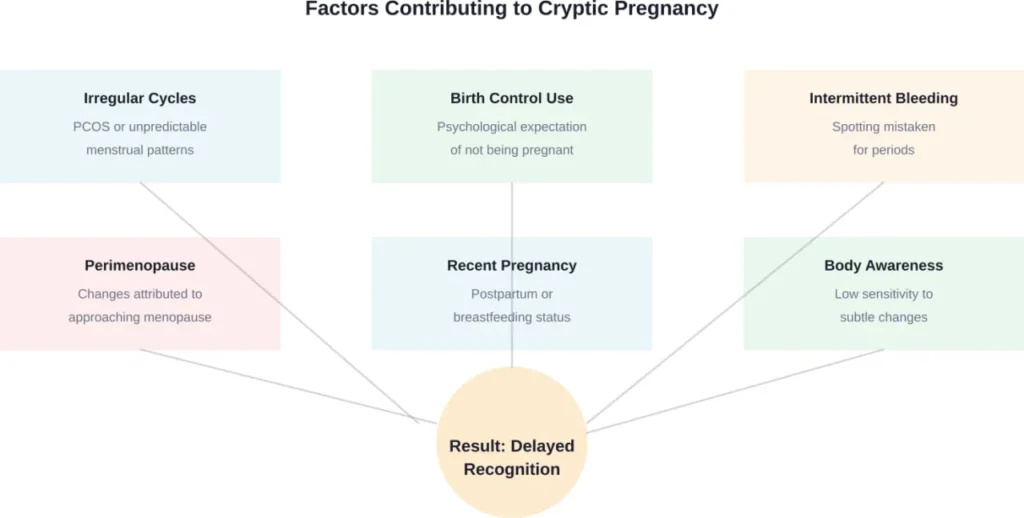
Several circumstances make cryptic pregnancy more likely:
Irregular menstrual cycles. People with conditions like polycystic ovary syndrome (PCOS) may have unpredictable periods anyway, so a missed period doesn’t raise red flags.
Intermittent bleeding. Some pregnant individuals experience spotting or light bleeding that they interpret as a period, especially in early pregnancy.
Birth control use. No contraceptive method is 100% effective, but using birth control creates a mental framework where pregnancy seems impossible. People might attribute any unusual symptoms to other causes.
Recent pregnancy or breastfeeding. Postpartum individuals might not expect their cycles to return immediately, delaying recognition of a new pregnancy.
Perimenopausal changes. People in their 40s might attribute missed periods to approaching menopause rather than pregnancy.
Low body awareness. Some individuals naturally tune out bodily sensations or have higher pain thresholds, making subtle pregnancy symptoms easy to miss.
Common Early Pregnancy Symptoms (That You Might Not Have)
Understanding what you’re not experiencing helps contextualize symptom-free pregnancies. Here are the typical early pregnancy symptoms that some people never develop:
Nausea and morning sickness. Often considered the hallmark of early pregnancy, but not universal. Some people never experience it at all.
Breast tenderness. Hormonal changes can make breasts sore, swollen, or sensitive, but this doesn’t happen to everyone.
Fatigue. Progesterone can cause exhaustion, though some pregnant individuals maintain normal energy levels.
Frequent urination. Increased blood volume and hormonal changes affect the bladder, but this symptom might not appear until later.
Food aversions or cravings. These are common but far from guaranteed.
Mood changes. Hormonal fluctuations can affect emotions, but they’re not always noticeable.
Bloating and cramping. Some people experience these as implantation occurs, while others feel nothing.
The only near-universal early pregnancy sign is a missed period—and even that isn’t absolute, given irregular cycles and implantation bleeding.
Should You Worry About Having No Pregnancy Symptoms?
Here’s the thing: absence of symptoms doesn’t typically indicate a problem with your pregnancy.
Many people worry that no symptoms means something is wrong, but research doesn’t support this concern. According to TheBump.com, if you don’t experience pregnancy symptoms but do have a normal ultrasound at a prenatal visit when you’re between 6 and 11 weeks pregnant, the miscarriage risk is less than 10%.
In fact, only 1 in 10 pregnancies that were previously confirmed by a doctor end in miscarriage, and this rate doesn’t significantly change based on symptom presence.
When Symptoms Disappear Suddenly
A more concerning scenario is when pregnancy symptoms were present but then vanish suddenly. This can occasionally signal a problem, particularly if it happens before 12 weeks and is accompanied by bleeding or cramping.
However, it’s also completely normal for symptoms to fluctuate. Nausea often peaks around weeks 8-10 and then improves. Fatigue might come in waves. Breast tenderness can wax and wane.
If symptoms disappear gradually or you simply feel better as you enter the second trimester, that’s typically normal pregnancy progression.
Signs That Do Warrant Concern
While lack of symptoms isn’t worrying, certain signs do require medical attention:
- Heavy bleeding with clots
- Severe abdominal or pelvic pain
- Severe shoulder pain (can indicate ectopic pregnancy)
- Dizziness or fainting
- Fever above 100.4°F
- Burning or pain during urination (potential urinary tract infection)
According to ACOG, an ectopic pregnancy occurs when a fertilized egg grows outside of the uterus, and almost all ectopic pregnancies—more than 90%—occur in a fallopian tube. and can be life-threatening if untreated. This condition might present with minimal typical pregnancy symptoms but can cause severe one-sided pain.
How to Confirm Pregnancy Without Obvious Symptoms
If you suspect pregnancy despite having no symptoms, several reliable methods can confirm it:
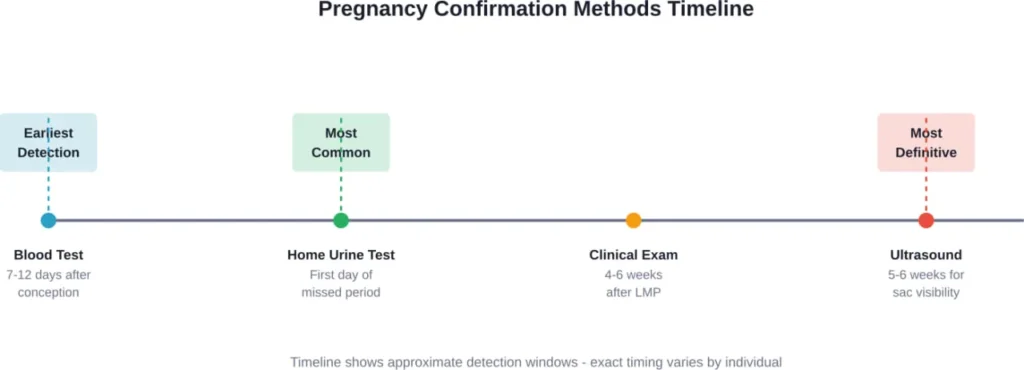
Home Pregnancy Tests
These detect hCG in urine and are quite accurate when used correctly. For best results, test with first-morning urine after a missed period. Some sensitive tests can detect pregnancy a few days before an expected period.
Blood Tests
Healthcare providers can order two types of blood pregnancy tests. Qualitative tests simply confirm pregnancy (yes or no), while quantitative tests measure exact hCG levels. Blood tests can detect pregnancy earlier than urine tests.
Ultrasound
According to WHO recommendations, obstetric ultrasound is often performed to obtain fetal biometry (measurement), which facilitates estimation of gestational age, particularly when a scan is performed early in pregnancy. Accurate gestational age assessment supports appropriate time-sensitive interventions during pregnancy.
A transvaginal ultrasound can typically detect a gestational sac around 4-5 weeks of pregnancy and a fetal heartbeat by 6-7 weeks.
Prenatal Care When You Have No Symptoms
Regardless of whether symptoms are present, proper prenatal care remains essential.
According to WHO, pregnant women must be able to access the right care at the right time. WHO has issued recommendations to improve quality of antenatal care in order to reduce the risk of stillbirths and pregnancy complications and give women a positive pregnancy experience.
Important Screenings and Tests
According to the CDC, healthcare providers recommend specific screenings during pregnancy regardless of symptoms:
Hepatitis B testing. CDC recommends all pregnant patients be screened for hepatitis B virus infection during each pregnancy, as timely treatment is essential for preventing perinatal transmission.
Urinary tract screening. According to ACOG, urinary tract infection (UTI) is one of the more common perinatal complications, affecting approximately 8% of pregnancies. Asymptomatic bacteriuria—bacteria in urine without symptoms—affects pregnant women and, if left untreated, can lead to adverse outcomes. The US Preventive Services Task Force recommended that pregnant women should be screened for asymptomatic bacteriuria based on findings of a moderate net benefit in reducing perinatal complications.
Rubella immunity. According to the CDC, rubella IgG serology testing should be used for assessing rubella immunity before, during, and after pregnancy.
These screenings detect conditions that might not cause obvious symptoms but can significantly affect pregnancy outcomes.
Monitoring Fetal Development
Even without maternal symptoms, monitoring fetal growth and development remains critical. Regular ultrasounds, fetal heart rate monitoring, and measurements help ensure the pregnancy is progressing normally.
Research examining COVID-19 infection during pregnancy found that even asymptomatic or mild infections could potentially affect fetal development, highlighting why monitoring matters regardless of how someone feels.
Pregnancy Without Symptoms: Real Experiences
Community discussions reveal varied experiences with symptom-free pregnancies. According to community discussions among pregnant individuals, some people report entering week 8 with no nausea, fatigue, or significant changes beyond slight bloating and breast enlargement. Others describe similar experiences—hunger fluctuations early on that then normalized, with minimal other indicators.
These accounts demonstrate that symptom-free or minimal-symptom pregnancies happen regularly and don’t necessarily indicate problems.
That said, the psychological aspect can be challenging. Without physical symptoms as constant reminders, some people struggle to feel connected to their pregnancy or worry that something is wrong. This is where regular prenatal appointments and ultrasounds become especially valuable for reassurance.
Factors That Influence Pregnancy Symptom Intensity
Why do some people experience intense symptoms while others feel nothing? Several factors play a role:
| Factor | How It Affects Symptoms | Example |
|---|---|---|
| Hormone Sensitivity | Individual variation in how the body responds to hCG and progesterone | Some people develop severe nausea from hormone surges; others don’t |
| Genetics | Family history can predict symptom likelihood | If your mother had minimal symptoms, you might too |
| Body Composition | Higher body fat may absorb hormones differently | May affect how strongly symptoms manifest |
| Pregnancy Number | Subsequent pregnancies sometimes differ from first | Second pregnancy might have fewer symptoms than first |
| Multiple Gestation | Twin or triplet pregnancies often have more intense symptoms | Higher hCG levels typically cause stronger nausea |
| Overall Health | Underlying conditions can mask or amplify symptoms | Pre-existing fatigue might make pregnancy fatigue less noticeable |
When to Contact Your Healthcare Provider
Even with no symptoms, certain situations warrant reaching out to your provider:
You’ve missed a period and gotten a positive test. Schedule your first prenatal appointment, typically around 8-10 weeks of pregnancy.
You have risk factors for complications. Pre-existing conditions like diabetes, hypertension, or previous pregnancy complications require early monitoring.
You experience any concerning symptoms. Bleeding, severe pain, or fever always warrant immediate contact.
You’re unsure about your last menstrual period. If dating the pregnancy is difficult, early ultrasound can establish accurate gestational age.
You have questions or anxiety. Mental health matters during pregnancy. If lack of symptoms is causing significant worry, discuss it with your provider.
Comparing Symptomatic Versus Asymptomatic Pregnancies
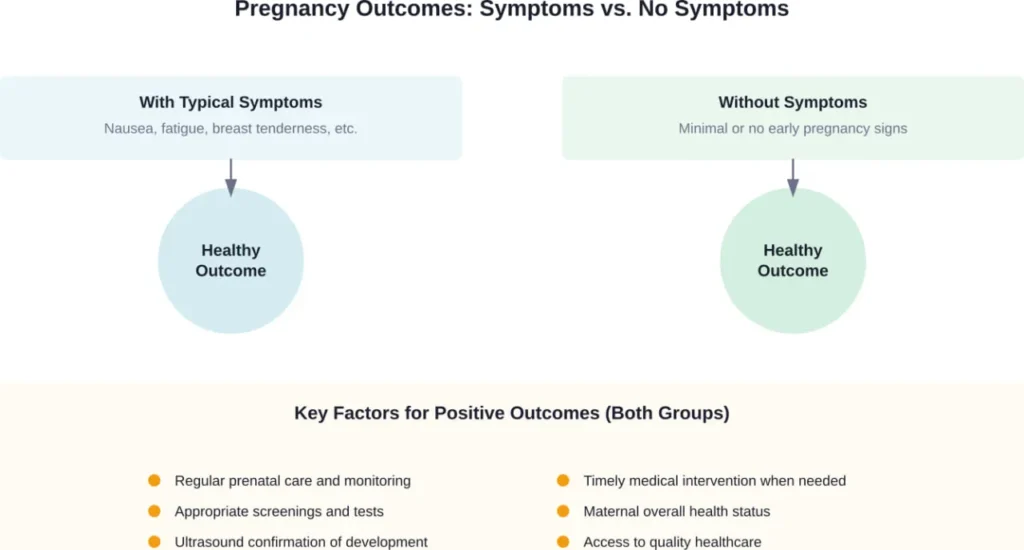
Research examining pregnancy outcomes provides interesting context. Studies comparing symptomatic and asymptomatic pregnant patients with conditions like COVID-19 found that symptom presence didn’t necessarily predict pregnancy outcomes as strongly as other factors.
What matters more than symptom presence is appropriate prenatal care, timely screenings, and monitoring fetal development. Someone with severe nausea and someone with no symptoms at all can both have healthy, uncomplicated pregnancies—or both can encounter challenges that have nothing to do with symptom intensity.
Managing Anxiety About Symptom-Free Pregnancy
The psychological challenge of having no symptoms deserves attention. When pregnancy doesn’t feel real, anxiety can creep in.
Some strategies that help:
Track what you can. Even without symptoms, you can note your missed period, positive test date, and scheduled appointments. This creates tangible pregnancy markers.
Consider early ultrasounds. If anxiety is high, some providers offer early ultrasounds (even before the standard 8-10 week appointment) for reassurance.
Connect with others. Online communities include many people with similar experiences. Knowing you’re not alone helps.
Focus on what you control. Take prenatal vitamins, eat well, avoid alcohol and smoking, and attend appointments. These actions support your pregnancy regardless of symptoms.
Communicate with your provider. Don’t hesitate to voice concerns. Good providers understand that pregnancy anxiety is real and valid.
Frequently Asked Questions
Yes, it’s possible to be pregnant with no noticeable symptoms, especially in early pregnancy. Some people experience minimal or no nausea, fatigue, breast tenderness, or other common signs. The most reliable indicator remains a missed period combined with a positive pregnancy test.
Pregnancy symptoms naturally fluctuate and often decrease as you approach the second trimester. Gradual symptom reduction is typically normal. However, if symptoms vanish suddenly before 12 weeks and you experience bleeding or severe cramping, contact your healthcare provider. Otherwise, symptom changes are usually just normal pregnancy progression.
Quite common. While nausea affects many pregnant individuals, not everyone experiences it. Some people sail through pregnancy without any morning sickness at all. This doesn’t indicate a problem with the pregnancy—it simply reflects individual variation in how bodies respond to pregnancy hormones.
No. Research shows that if you have a normal ultrasound between 6 and 11 weeks of pregnancy, miscarriage risk is less than 10% regardless of symptom presence. Only about 1 in 10 pregnancies confirmed by a doctor end in miscarriage, and this rate doesn’t significantly change based on whether someone experiences symptoms.
Cryptic pregnancy occurs when someone doesn’t realize they’re pregnant until very late in pregnancy—sometimes not until the second half or even until labor begins. This happens more often in people with irregular cycles, those using birth control, individuals experiencing perimenopause, or anyone who has intermittent bleeding that mimics periods. It’s also called stealth pregnancy or denied pregnancy.
If you’ve missed a period—even without other symptoms—take a home pregnancy test. For most accurate results, test with first-morning urine on or after the first day of your missed period. If you have irregular cycles, test about three weeks after potential conception. Blood tests ordered by healthcare providers can detect pregnancy even earlier.
Absolutely. Symptom presence doesn’t determine pregnancy health. What matters most is receiving appropriate prenatal care, attending scheduled appointments, completing recommended screenings, and monitoring fetal development through ultrasounds. Many people with minimal symptoms have completely healthy, uncomplicated pregnancies and deliver healthy babies.
The Bottom Line on Pregnancy Without Symptoms
Being pregnant without symptoms is more common than many people realize, and it doesn’t indicate a problem with your pregnancy.
Every pregnancy is different. Some people experience every symptom in the book, while others feel completely normal. Neither scenario is inherently better or worse—they’re just different manifestations of the same process.
What matters isn’t whether you feel pregnant, but whether you’re receiving appropriate prenatal care. Regular appointments, recommended screenings, and ultrasound monitoring provide far more reliable information about pregnancy health than subjective symptoms ever could.
If you’ve confirmed pregnancy through a missed period and positive test but have no other symptoms, schedule your first prenatal appointment and follow your healthcare provider’s recommendations. That’s all you need to do.
And if anxiety about lack of symptoms is affecting your well-being, don’t hesitate to discuss it with your provider. They can offer reassurance, additional monitoring if appropriate, and support throughout your pregnancy journey—symptoms or no symptoms.
Ready to start your prenatal care journey? Contact your healthcare provider to schedule your first appointment and establish a care plan that’s right for you, regardless of whether you’re experiencing pregnancy symptoms.