

Quick Summary: Yes, it’s entirely possible to develop lactose intolerance later in life. According to the National Institute of Diabetes and Digestive and Kidney Diseases (NIDDK), many people begin to develop lactose malabsorption after infancy, with approximately 68% of the world’s population affected. As the body ages, production of lactase—the enzyme needed to digest lactose—naturally decreases, making symptoms like bloating, gas, and diarrhea increasingly common after consuming dairy products.
Maybe you’ve enjoyed ice cream and milk for decades without a second thought. But recently, that latte leaves you feeling bloated, and pizza night ends with digestive discomfort.
Sound familiar? You’re not imagining things.
The reality is that lactose intolerance doesn’t just affect children or develop at birth. For many adults, the ability to digest dairy products gradually diminishes over time—sometimes appearing seemingly overnight.
What Is Lactose Intolerance?
Lactose intolerance is a digestive condition where the body struggles to break down lactose, the natural sugar found in milk and dairy products. According to the NIDDK, this happens when the small intestine doesn’t produce enough lactase, the enzyme responsible for digesting lactose.
When lactose isn’t properly broken down, it passes undigested into the colon. There, bacteria ferment it, creating those uncomfortable symptoms: gas, bloating, diarrhea, nausea, and abdominal pain.
The NIDDK reports that symptoms typically appear within a few hours after consuming milk or dairy products. The severity varies widely—some people can handle small amounts of dairy, while others react to even trace amounts.
Why Does Lactose Intolerance Develop Later in Life?
Here’s the thing: humans are actually unusual among mammals. Most mammals lose the ability to digest milk after weaning—it’s biologically normal.
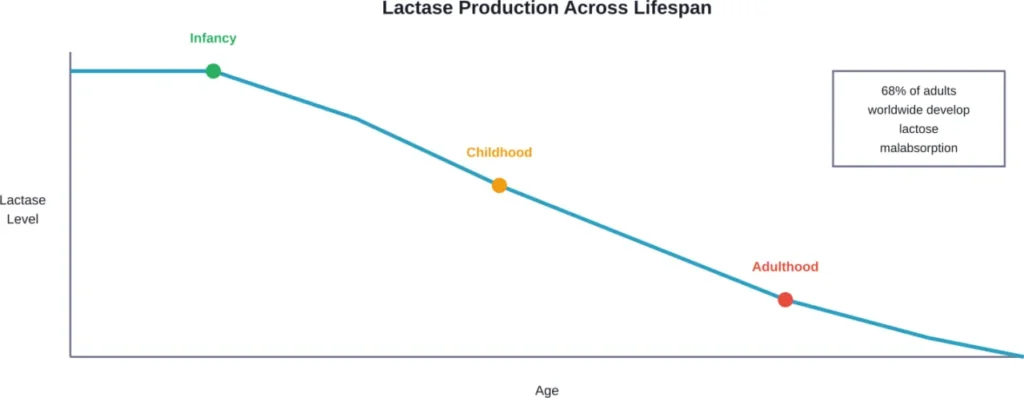
Babies produce high levels of lactase because they need it to digest breast milk. But as we age, lactase production naturally declines. According to research published on PubMed, lactase activity is vital during infancy but decreases after the weaning phase in most mammals, including most humans.
This decline is called primary lactase deficiency, and it’s the most common cause of lactose intolerance in adults. The NIDDK notes that experts estimate about 68% of the world’s population has lactose malabsorption.
Think of it as a gradual process. The body slowly produces less lactase over years or decades. Eventually, production drops below the threshold needed to handle typical dairy consumption—and that’s when symptoms start appearing.
Geographic and Ethnic Patterns
Lactose intolerance isn’t distributed evenly across populations. The NIDDK reports that lactose malabsorption is more common in some parts of the world than others.
Communities with long histories of dairy farming tend to have higher rates of lactase persistence—the continued production of lactase into adulthood. Conversely, populations without traditional dairy consumption show higher rates of lactose intolerance.
According to MedlinePlus, approximately 65% of the human population has a reduced ability to digest lactose after infancy. The condition is particularly common in people of East Asian, West African, Arab, Jewish, Greek, and Italian descent.
Other Causes of Adult-Onset Lactose Intolerance
While age-related decline is the primary cause, lactose intolerance can also develop from other factors. These are called secondary causes.
MedlinePlus identifies several conditions that can damage the small intestine and reduce lactase production:
- Celiac disease
- Crohn disease
- Infections in the small intestine (particularly common in children)
- Surgery involving the small intestine
- Any illness causing inflammation or damage to intestinal lining
The good news? According to MedlinePlus, treatment of these underlying illnesses may improve lactose intolerance symptoms. Once the intestinal damage heals, lactase production can sometimes recover.
But wait. There’s another category: congenital lactase deficiency. MedlinePlus notes this rare genetic disorder appears at birth, making it difficult for newborns to digest breast milk or formula. It’s most common in Finland, affecting an estimated 1 in 60,000 newborns.
Recognizing the Symptoms
According to the NIDDK, symptoms typically appear within a few hours of consuming lactose-containing foods. The severity depends on how much lactose was consumed and how much lactase the body still produces.
Common symptoms include:
- Bloating
- Diarrhea
- Gas
- Nausea
- Abdominal pain or cramps
- Stomach rumbling sounds
- Vomiting (in severe cases)
According to MedlinePlus, symptoms may occur within 30 minutes to 2 hours after consuming dairy products, though the NIDDK notes symptoms may appear within a few hours.
Research suggests that disaccharidase deficiency, including lactase deficiency, is found in 35%-40% of adults and can sometimes go undiagnosed in patients presenting with bloating and other digestive complaints.
Getting Diagnosed
The NIDDK explains that doctors diagnose lactose intolerance by reviewing symptoms, family history, medical history, and eating habits. A physical exam and specialized tests may follow.
According to MedlinePlus, lactose tolerance tests measure how well the body breaks down lactose. These tests typically involve drinking a lactose-containing liquid and then measuring the body’s response through blood tests or breath tests.
Accurate diagnosis matters because other conditions can mimic lactose intolerance. The NIDDK points out that irritable bowel syndrome, celiac disease, and inflammatory bowel disease can cause similar symptoms.

Managing Lactose Intolerance
The NIDDK recommends talking with a doctor or dietitian about dietary changes to manage symptoms while ensuring adequate nutrition. This is especially important because dairy products are major sources of calcium and vitamin D.
Management strategies include:
- Limiting dairy consumption based on individual tolerance
- Choosing lactose-free dairy products
- Taking lactase enzyme supplements before consuming dairy
- Consuming dairy with other foods to slow digestion
- Trying hard cheeses and yogurt, which contain less lactose
According to the NIDDK, many people with lactose intolerance can handle small amounts of dairy, especially when consumed with meals. Hard cheeses like cheddar and Swiss contain minimal lactose, and yogurt with live cultures may be easier to digest.
Frequently Asked Questions
While it may seem sudden, lactose intolerance typically develops gradually as lactase production declines with age. According to the NIDDK, many people begin developing lactose malabsorption after infancy, though symptoms may not become noticeable until adulthood. Secondary lactose intolerance from illness or injury can appear more suddenly.
The NIDDK reports that lactase production naturally decreases after infancy in most people. Symptoms can emerge at any point from childhood through older adulthood, though many people notice changes in their 20s, 30s, or 40s. The timing varies based on genetics and ethnic background.
No. According to MedlinePlus, lactose intolerance is a digestive issue caused by insufficient lactase enzyme. A milk allergy is an immune system response to milk proteins. Milk allergies can cause severe reactions including hives, wheezing, and anaphylaxis, while lactose intolerance causes digestive discomfort but isn’t dangerous.
Primary lactase deficiency—the age-related type—cannot be cured. However, MedlinePlus notes that secondary lactose intolerance caused by intestinal damage may improve or resolve when the underlying condition is treated. Symptoms can be effectively managed through dietary changes and lactase supplements.
This varies widely. The NIDDK explains that tolerance levels differ significantly between individuals. Some people react to small amounts, while others can consume moderate quantities without symptoms. Hard cheeses and yogurt are often better tolerated than milk or ice cream.
Yes. Lactose-free dairy products contain the same nutrients as regular dairy—including calcium, vitamin D, and protein. The only difference is that the lactose has been broken down into simpler sugars, making the products easier to digest for people with lactose intolerance.
Some research suggests that certain probiotics may help improve lactose digestion. According to research on PubMed, modifying the gut microbiome shows promise for managing lactose intolerance symptoms. However, more research is needed to establish definitive treatment protocols.
The Bottom Line
Developing lactose intolerance later in life isn’t just possible—it’s remarkably common. With approximately 68% of the global population experiencing lactose malabsorption according to the NIDDK, chances are good that dairy tolerance will decrease with age.
The good news? Lactose intolerance is manageable. Understanding your tolerance level, making informed dietary choices, and working with healthcare providers ensures you can maintain proper nutrition while minimizing uncomfortable symptoms.
If you suspect lactose intolerance is affecting your quality of life, consult with a healthcare provider. Proper diagnosis rules out other conditions and opens the door to effective management strategies tailored to your specific needs.