

Quick Summary: While it’s technically possible for some women to feel faint baby movements at 14 weeks, it’s not common. For first-time mothers, fetal movement usually becomes noticeable between 16 and 22 weeks according to competitor sources, while those who’ve been pregnant before might notice movements as early as 13 to 16 weeks, though this is still uncommon. What you might feel at 14 weeks could be gas, digestion, or muscle twitches—though it’s worth noting your experience.
That tiny flutter you just felt—was it your baby? Or just last night’s dinner making its way through your system?
At 14 weeks pregnant, this question pops up constantly. Community discussions across pregnancy forums show women debating whether those subtle sensations are real fetal movements or something else entirely. The answer isn’t straightforward, and that’s what makes this stage both exciting and confusing.
Here’s the thing though—your baby is definitely moving at 14 weeks. The real question is whether you can actually feel it yet.
What’s Actually Happening at 14 Weeks
Your baby is about the size of a lemon right now.
During early second trimester, the brain and spine continue developing. Cardiac tissue is well-established, and the fetus has started making small movements. But there’s a significant gap between when your baby starts moving and when you can detect those movements.
The uterus sits low in the pelvis at this point. Your baby has plenty of room to somersault without bumping the uterine wall hard enough for you to notice. Think of it like someone tapping on a thick pillow—the cushioning absorbs most of the impact.
Medical research indicates that maternal perception of fetal movements typically begins around 19 weeks. That’s the average across large study populations, which means plenty of variation exists on both sides of that timeline.
When Most Women Actually Feel Movement
The timing varies dramatically based on several factors. But let’s break down the typical ranges.
For first-time mothers, fetal movement usually becomes noticeable between 16 and 22 weeks according to competitor sources. That’s a wide window, and it’s completely normal to fall anywhere within it.
Women who’ve been pregnant before often feel movement earlier—sometimes as early as 13 to 16 weeks, though this is still uncommon. Why? They recognize the sensation. The first time around, you don’t know what you’re feeling for. The second time, your brain connects the dots faster.
So is 14 weeks possible? Technically, yes. Probable? Not really.
| Pregnancy Type | Typical First Movement | Early Range |
|---|---|---|
| First pregnancy | 18-25 weeks | 16-18 weeks (uncommon) |
| Second+ pregnancy | 13-18 weeks | 13-16 weeks (possible) |
| Average (all women) | Around 19 weeks | Varies significantly |
What Early Movement Actually Feels Like
This is where things get tricky. Descriptions vary wildly because the sensation is so subtle at first.
Most women describe early fetal movement—called quickening—as flutters, bubbles, or tiny pulses. Some compare it to popcorn popping. Others say it feels like gas bubbles or a goldfish swimming.
Real talk: at 14 weeks, these sensations are incredibly faint. They’re easy to miss and even easier to misinterpret.
Community discussions reveal that many women only recognized their early movements in retrospect. After feeling stronger, unmistakable kicks later on, they looked back and realized those weird flutters weeks earlier might have been the baby.
The movements at this stage aren’t rhythmic. They happen randomly, maybe once or twice a day if you notice them at all. They’re nothing like the consistent kicking patterns you’ll experience in the third trimester.
Factors That Affect When You Feel Movement
Several variables determine whether you’ll be an early perceiver or a late bloomer. None of them reflect anything wrong—they’re just individual differences.
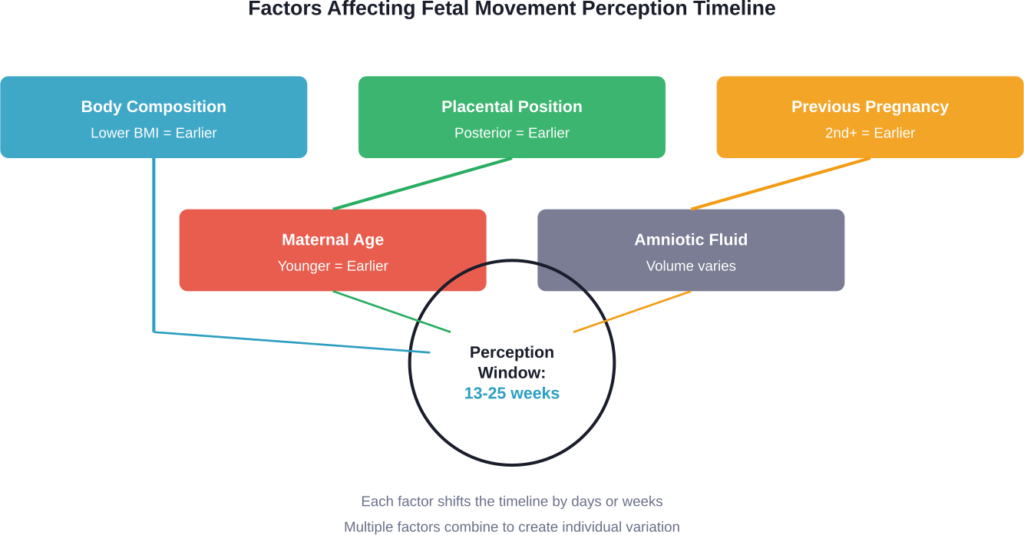
Body Weight and Composition
It is commonly reported that higher body mass index can delay the perception of fetal movements. The layer of tissue between the uterus and skin surface acts as additional cushioning, absorbing those tiny movements before they reach your awareness.
Thinner women sometimes report feeling movement earlier. The physical barrier is simply less substantial.
Placental Position
This one’s significant. Anterior placental position—when the placenta attaches to the front wall of the uterus—is reported to delay maternal perception of fetal movements.
The placenta sits between your baby and your abdominal wall, cushioning movements. Women with posterior placentas (attached to the back of the uterus) typically feel movements earlier and more strongly.
You won’t necessarily know your placental position unless it was noted during an ultrasound. But it explains why two women at the same gestational age might have completely different experiences.
Number of Previous Pregnancies
As mentioned earlier, this makes a substantial difference. Nulliparity (never having given birth) is associated with later perception of movement.
Your uterine muscles are tighter during a first pregnancy. They’re also less sensitive to the sensations. After one pregnancy, the tissue has more give, and your nervous system has learned the pattern.
Maternal Age
Higher maternal age may correlate with slightly delayed perception of movements. The mechanism isn’t entirely clear, but it shows up consistently across studies.
What You Might Be Feeling Instead
Okay, so what about those sensations you’re noticing at 14 weeks? They’re real—but they might not be your baby.
Gas and digestion cause remarkably similar sensations to early fetal movement. Your intestines are literally next to your uterus. When gas bubbles move through or muscles contract during digestion, it creates fluttering feelings that mimic quickening.
Muscle twitches happen too. Your abdominal muscles are stretching and adjusting to accommodate your growing uterus. These spontaneous fasciculations feel like tiny pops or twitches.
Blood flow increases dramatically during pregnancy. You might be feeling the pulse of blood vessels or the sensation of increased circulation in your pelvic region.
Round ligament adjustments can create sharp, sudden sensations or dull flutters as the ligaments supporting your uterus stretch and shift.
But wait. Does this mean your 14-week flutters definitely aren’t the baby? Not necessarily.
Some women—particularly thin women experiencing their second or third pregnancy—do report feeling genuine movement this early. It’s uncommon but documented in both medical literature and community experiences.
The Truth About Quickening
Quickening is the traditional term for first fetal movements. Historically, it held significant cultural and even legal importance, marking the point when pregnancy became “real” in many societies.
Research on quickening and pregnancy psychology shows that this milestone affects maternal-fetal attachment and drives attention to early sensations. Women report feeling more connected to their babies and more aware of the pregnancy as a distinct person after experiencing movement.
The psychological impact matters. Feeling movement shifts pregnancy from an abstract concept to a tangible reality. It enhances maternal well-being and strengthens feelings toward the unborn baby, according to studies examining the process changes during first pregnancy.
When Movement Becomes Consistent
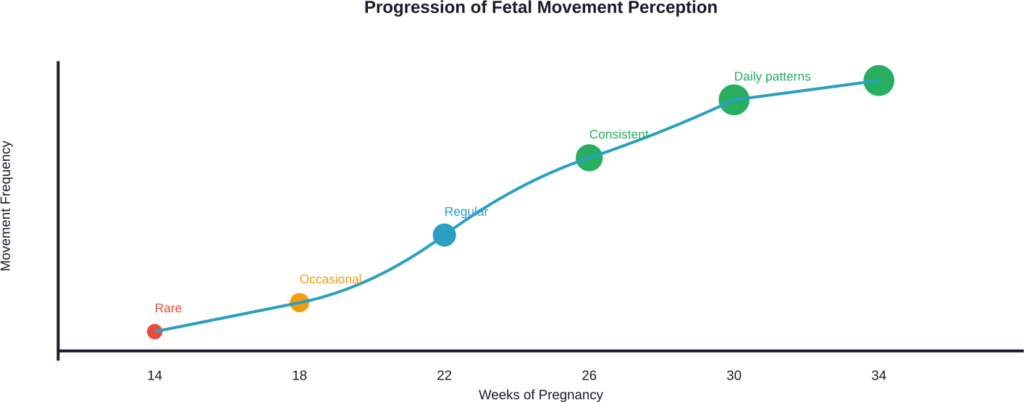
Even after you first detect movement, it won’t be regular for several more weeks.
Between 16 and 20 weeks, movements remain sporadic. You might feel something one day and nothing the next. Your baby still has tons of space to move without hitting the uterine wall at angles you can detect.
As pregnancy progresses beyond 20 weeks, movement patterns start emerging. Movements become stronger and more frequent. This is when most women transition from “I think I felt something?” to “That was definitely the baby.”
By 28 weeks, movement tracking becomes clinically relevant. Healthcare providers often recommend monitoring fetal movements at this stage because patterns of activity serve as indicators of fetal well-being.
Should You Worry If You Don’t Feel Movement Yet?
Short answer: No.
At 14 weeks, absence of perceived movement means absolutely nothing about your baby’s health. It’s completely expected and normal.
Even at 18 or 20 weeks, plenty of first-time mothers haven’t felt definite movement yet. The variation is enormous, and all of it falls within normal parameters.
Concern about decreased fetal movements becomes relevant much later—typically after 28 weeks when movement patterns are established. Research on reduced fetal movements at term examines complications that arise when previously consistent movement patterns change dramatically.
But that’s third trimester stuff. At 14 weeks, your baby’s movements aren’t something anyone would monitor or track.
What Actually Matters at 14 Weeks
Ultrasound provides far more reliable information about fetal well-being at this stage. Visual confirmation that your baby is growing, the heart is beating, and development is on track matters infinitely more than whether you can feel kicks.
Most prenatal care appointments around this time focus on measuring fundal height, checking your blood pressure, and listening to the fetal heartbeat with a Doppler. These objective measures tell your healthcare provider what they need to know.
When to Actually Contact Your Healthcare Provider
Certain symptoms warrant immediate attention at any stage of pregnancy, including 14 weeks. But they’re not related to fetal movement.
Severe abdominal pain, heavy bleeding, persistent cramping, or sudden severe headaches need evaluation. Fever above 100.4°F, painful urination, or severe vomiting that prevents you from keeping anything down also require medical attention.
Concerns about absence of movement at 14 weeks? That’s not an emergency. But if it’s causing significant anxiety, mentioning it at your next prenatal appointment makes sense. Your provider can offer reassurance and potentially listen to the heartbeat if that helps ease your mind.
What Happens During Your Next Few Weeks
Between weeks 14 and 20, significant fetal development continues. Your baby grows rapidly, developing more coordinated movements as the nervous system matures.
During the second trimester, your baby’s sensory system develops. Touch receptors spread across the body. The fetus responds to stimuli even though you can’t feel those responses yet.
Your body changes as well. The uterus rises out of the pelvis and becomes palpable above your pubic bone. This shift sometimes makes movements easier to detect because there’s less pelvic cushioning.
Somewhere in this window—maybe at 16 weeks, maybe at 22—you’ll feel that first unmistakable movement. When it happens, you’ll likely still question it at first. Then it’ll happen again. And again. And eventually, you’ll have no doubt.
Making Sense of Different Sensations
Learning to distinguish fetal movement from other sensations takes time and attention. Here’s what different feelings might indicate.
| Sensation | Likely Cause | When It Occurs |
|---|---|---|
| Bubbling or popping | Gas, possibly early movement | Any time, increases after eating |
| Quick flutter then stops | Muscle twitch or early movement | Random, brief |
| Rhythmic pulsing | Your own pulse/heartbeat | When lying still, consistent rhythm |
| Sharp poke or jab | Round ligament, later movement | With position changes or sudden |
| Rolling sensation | Definite fetal movement | Usually after 20 weeks |
| Persistent tapping | Fetal hiccups or movement | After 20-24 weeks typically |
The Psychological Side of Waiting
The period before feeling movement can feel frustratingly abstract. Pregnancy symptoms might have eased after the first trimester, leaving you without much physical reminder of your baby.
This creates what researchers call a “liminal space”—you’re definitely pregnant, but you can’t interact with your baby yet. The psychological research examining pregnancy as a developmental process recognizes this phase as particularly challenging for some women.
Many expectant mothers report feeling more anxious during this pre-movement period than either earlier or later in pregnancy. The lack of tangible feedback creates uncertainty.
That’s normal. And it’s temporary.
What Second-Time Moms Know
Women who’ve been pregnant before often have completely different experiences at 14 weeks. They recognize sensations faster and feel more confident distinguishing movement from other bodily processes.
Community discussions show that second-time mothers commonly report feeling movement several weeks earlier than during their first pregnancy. A woman who didn’t feel anything until 22 weeks the first time might detect flutters at 15 or 16 weeks the second time around.
The baby isn’t actually moving earlier or more. The difference is entirely about perception and recognition.
This experience gap explains why talking to other pregnant women can sometimes create confusion. Someone enthusiastically describing obvious kicks at 14 weeks is almost certainly on their second or third pregnancy, has a posterior placenta, and a lower BMI. That’s not the typical first-pregnancy experience.
Tracking Movement Later On
Once movement becomes regular—typically after 28 weeks—tracking patterns becomes worthwhile. The specifics vary, but the general principle involves noting when and how often your baby moves.
Monitoring established movement patterns is recommended by healthcare providers to detect potential problems. A sudden significant decrease in movement can indicate fetal distress.
But again, that’s third-trimester territory. At 14 weeks, there’s nothing to track because there’s no established pattern yet.
When the time comes, your healthcare provider will give you specific guidance about what to monitor and when to call with concerns.
Managing Expectations at 14 Weeks
Here’s the realistic picture: Most first-time mothers at 14 weeks don’t feel definite fetal movement. If you think you might be feeling something, you might be right—but it’s impossible to know for certain.
That ambiguity is frustrating but unavoidable. The sensations are simply too subtle and too similar to other bodily processes to distinguish with confidence this early.
So what should you do? Note what you’re feeling. Pay attention without obsessing. And recognize that whether you feel movement now or four weeks from now says nothing about your baby’s health or your capabilities as a mother.
The waiting is hard. It ends soon.
Frequently Asked Questions
It’s more likely for women with lower body weight to feel movement earlier because there’s less tissue cushioning the sensation. However, even thin women usually don’t feel consistent, identifiable movement until 16-18 weeks at the earliest. Occasional faint flutters at 14 weeks are possible but still uncommon regardless of body type.
At 14 weeks, it’s nearly impossible to distinguish reliably. Gas tends to be associated with digestive timing—occurring after meals or before bowel movements. It might also create audible gurgling. Fetal movement has no pattern at this stage and feels like the briefest flutter or pop. When movement becomes unmistakable around 20 weeks, the difference will be obvious in retrospect.
Absolutely normal. Most first-time mothers don’t feel movement until 18-25 weeks. Studies indicate average perception occurs around 19-20 weeks. Feeling nothing at 14 weeks is the typical experience for first pregnancies and indicates nothing about your baby’s health.
Yes, but it typically takes longer. An anterior placenta (attached to the front uterine wall) cushions movements, often delaying perception by several weeks. You’ll eventually feel movement clearly, but those early flutters at 14-18 weeks are much less likely to be perceptible with an anterior placenta.
If you feel anything at 14 weeks, it would be extremely subtle—like tiny bubbles, a brief flutter, or a light tap that lasts a fraction of a second. It won’t be rhythmic or regular. Many women describe it as so faint they initially dismiss it. The sensation is nothing like the stronger kicks and jabs that develop later.
Not necessarily. While women carrying multiples sometimes report feeling movement earlier or more frequently, plenty of singleton pregnancies involve early movement too. Twins would have been detected on any ultrasound by 14 weeks, so if you’ve had a scan showing one baby, early sensations don’t indicate hidden twins.
Not at 14 weeks. Concern about absent movement becomes relevant only after you’ve established a consistent pattern of daily movement, which typically happens after 28 weeks. If movement dramatically decreases after that point, contact your healthcare provider. Before regular patterns develop, absence of movement is completely expected and normal.
The Bottom Line
That flutter at 14 weeks might be your baby. It might be gas. It might be muscle movement or increased blood flow or any number of other bodily processes happening as your pregnancy progresses.
The uncertainty is temporary. Within the next few weeks, the sensations will become stronger, more frequent, and unmistakable. What feels ambiguous now will soon become one of pregnancy’s most tangible and reassuring experiences.
Studies indicate average perception occurs around 19-20 weeks, with significant variation in both directions. Whether you’re an early perceiver or fall on the later end of the spectrum, both experiences are completely normal.
Pay attention to what you’re feeling, but don’t let the absence of clear movement create anxiety. Your prenatal appointments, ultrasounds, and other clinical measures provide far more reliable information about your baby’s well-being at this stage.
The wait for those first definite kicks might feel endless right now. But when they arrive—and they will—the experience will be worth the anticipation. Until then, trust that your body and your baby are doing exactly what they should be doing at 14 weeks, whether you can feel it yet or not.