
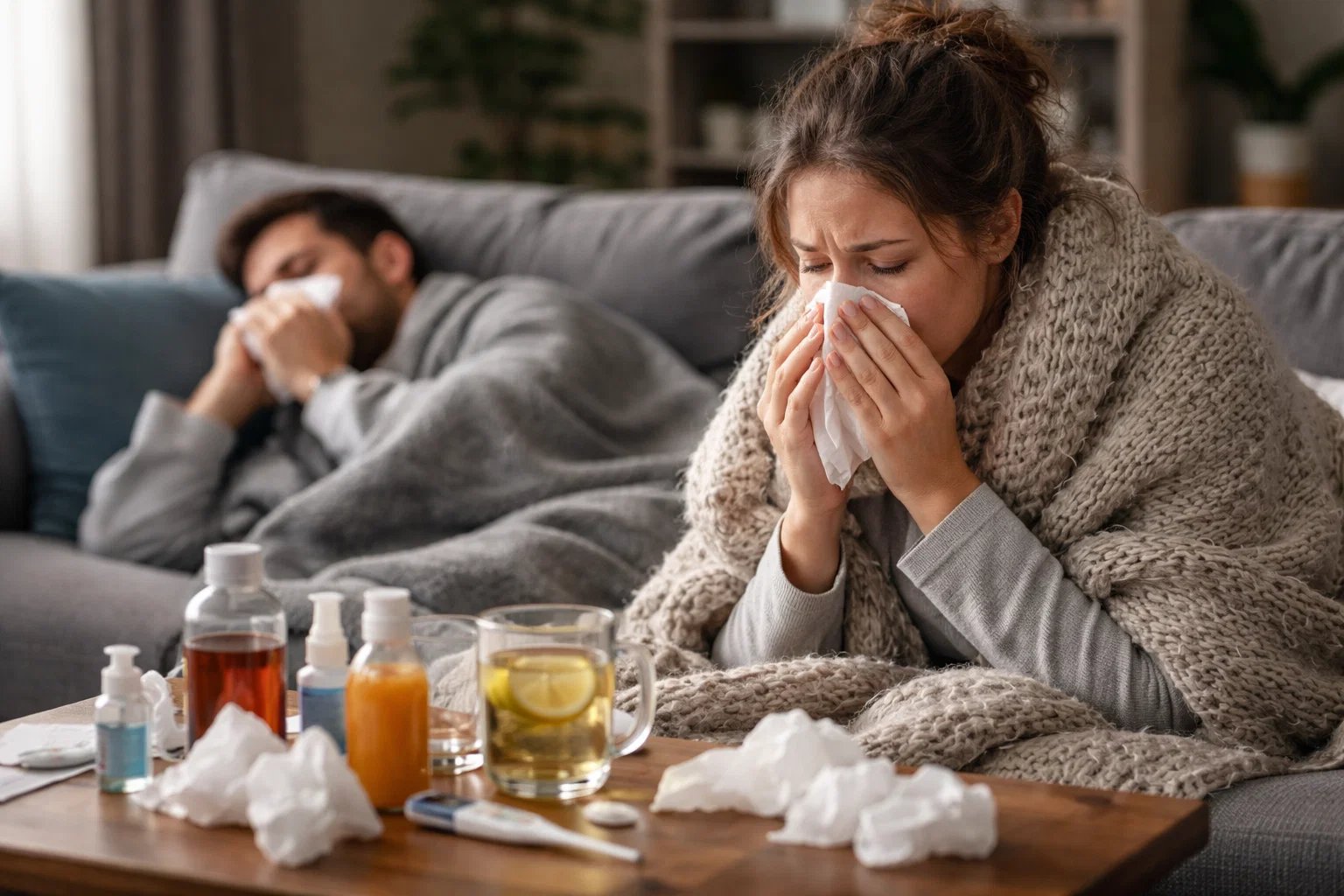
Quick Summary: Yes, it is possible to get sick back to back. You can catch different strains of cold and flu viruses consecutively, experience reinfections from the same pathogen after initial immunity wanes, or even get infected with multiple viruses simultaneously. According to the CDC, reinfection with viruses like COVID-19 occurs when you recover from one infection and then get infected again, and you can get reinfected multiple times.
Few things feel more frustrating than recovering from one illness only to immediately catch another. But is this pattern actually possible, or does it just feel that way?
The short answer: absolutely. Getting sick back to back isn’t just common—it’s backed by solid science. Your body doesn’t get a grace period after fighting off one infection, and several factors can leave you vulnerable to repeated illnesses within weeks or even days of recovery.
Here’s what’s actually happening when those back-to-back infections strike.
Why Multiple Infections Happen So Quickly
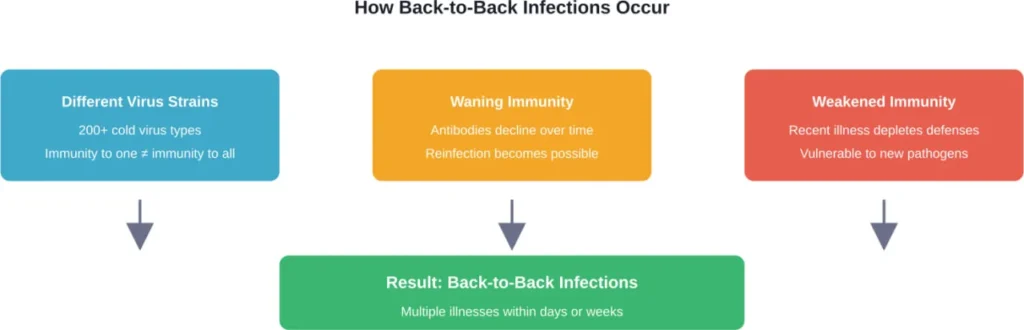
Your immune system develops specific antibodies against each pathogen it encounters. But that doesn’t mean universal protection against all illnesses.
According to research published in the Journal of Infectious Diseases, endemic coronaviruses alone can cause repeated infections. The study tracked patients over time and observed multiple reinfections with the same coronavirus type, demonstrating that immunity wanes and reinfection becomes possible relatively quickly.
This pattern extends beyond coronaviruses. More than 200 different viruses cause common cold symptoms, meaning you could technically catch different cold viruses back to back without your immune system recognizing the second one.
Different Strains Mean Different Infections
Once your body builds immunity to a specific virus strain, that protection doesn’t extend to other strains. Health experts at Mount Sinai explain that your body builds antibodies and develops immunity against a particular strain, but a different strain represents an entirely new challenge for your immune system.
Think of it like this: beating one level of a game doesn’t automatically unlock all the others. Each viral strain requires its own immune response.
Understanding Viral Reinfection Patterns
Reinfection with the same pathogen follows predictable patterns, though the timeline varies considerably.
The CDC confirms that reinfection with the virus that causes COVID-19 occurs when someone is infected, recovers, and then gets infected again. Research published on early SARS-CoV-2 reinfections found that among 26 patients with two COVID-19 episodes separated by 20-45 days, 11 patients (42%) had confirmed reinfections involving different variants or subvariants.
That’s remarkable. Traditional guidelines considered reinfection only after 90 days, but genomic analysis revealed it could happen much faster when different variants circulated.
When Immunity Fades
Antibody levels don’t remain constant after infection. Research on SARS-CoV-2 antibodies showed that despite a remarkable decline in neutralizing activity, antibody levels remained above detection thresholds after six months. IgM antibodies showed the greatest decline at 53%, while IgG antibodies declined by 32%.
This gradual decline creates windows of vulnerability. Once antibodies drop below protective levels, reinfection becomes possible even with the same pathogen previously encountered.
The Immune System Depletion Factor
Fighting off one infection takes a toll. Your immune system doesn’t bounce back to full strength immediately after clearing a virus.
During active infection, immune cells mobilize resources to combat the invader. This process depletes certain cellular populations and exhausts immune mediators. In the days and weeks following recovery, the immune system remains in a recovery phase itself.
This temporary weakness creates opportunity for secondary infections. A different pathogen entering during this recovery window faces less resistance than it would have encountered before the first illness.
Chronic Infections and Immune Compromise
Some people experience truly chronic infections that persist beneath the surface. Research on recurrent viral infections in primary immunodeficiencies found that certain populations face substantially higher risks of sustained infections.
According to a study by the Primary Immune Deficiency Treatment Consortium (PIDTC), 21% of their cohort had a respiratory infection prior to transplant, with the most common being parainfluenza followed by RSV, rhinovirus, and influenza. These underlying immune deficiencies make the cycle of repeated illness far more difficult to break.
When the immune system can’t fully clear an initial pathogen, it remains perpetually weakened and unable to mount effective responses against new threats.
Can You Catch the Same Cold Twice?
The answer depends on timing and specifics.
Immediately after recovering from a cold caused by a specific virus strain, your body maintains protective antibodies against that exact strain. Passing that cold to a coworker and then catching it back from them won’t work—your immune system recognizes and neutralizes it.
But here’s where it gets interesting. Cold viruses mutate, and immunity wanes. Given enough time—typically several months to a year—you could theoretically catch a mutated version of the same virus or become susceptible again as antibodies decline.
| Scenario | Reinfection Risk | Timeline |
|---|---|---|
| Same exact virus strain | Very low | Within weeks to months |
| Different cold virus type | High | Immediate |
| Mutated variant of same virus | Moderate | Months to a year |
| After immunity wanes | Moderate to high | 6-12 months |
COVID-19 Reinfection Severity Patterns
What happens when reinfection does occur? According to NIH-funded research analyzing health record data, reinfections from the virus that causes COVID-19 likely have similar severity as the original infection.
The data revealed concerning patterns. About 27% of those with severe initial cases, defined as receiving hospital care for a coronavirus infection, also received hospital care for a reinfection. Adults with severe initial cases showed higher likelihood of severe reinfections.
Vaccination correlated with protective effects, though vaccines weren’t available during the entire study period. For younger populations, recent research found that COVID-19 reinfection doubles the risk of long COVID in children, teens, and young adults. The rate per million patients per 6 months was 903 after the first infection and 1,884 after the second infection.
Breaking the Cycle of Repeated Illness
Constant reinfection isn’t inevitable. Several strategies can interrupt the pattern.
First, allow complete recovery. Rushing back to normal activities before the immune system fully rebuilds creates vulnerability. Adequate sleep, hydration, and nutrition during recovery aren’t optional—they’re essential for restoring immune function.
Second, minimize exposure during recovery periods. High-traffic environments expose recovering individuals to countless new pathogens before their defenses have recovered. When possible, limit contact with large groups for a week or two after symptoms resolve.
Staying current with recommended vaccines provides crucial protection. While vaccines don’t prevent all illness, they significantly reduce severity and help maintain baseline immune readiness.
When to Seek Medical Evaluation
Occasional back-to-back illnesses happen to everyone. But frequent patterns warrant medical attention.
According to research on recurrent viral infections, certain warning signs suggest underlying immune deficiency. These include infections requiring hospitalization, infections that don’t respond to standard treatment, or unusually severe illness from typically mild pathogens.
If infections occur monthly or multiple times per season consistently, comprehensive immune evaluation becomes appropriate. Primary immunodeficiencies affect substantial numbers of people and often go undiagnosed for years.
The Role of Vaccination in Prevention
Vaccines provide protection beyond individual pathogens. Research on COVID-19 vaccine effectiveness found that among adolescents, VE against infection was 54.4%, with 39.1% VE after the first dose, 60.6% after the second, and 63.4% after a booster.
For children, pooled VE against Omicron infection was 46.3%, with a VE of 18% after the first dose and 50.7% after the second. While not perfect protection, these numbers represent significant risk reduction—especially for severe outcomes.
Vaccination also appears to reduce reinfection risk. Data showed protective correlation with vaccination status, even when vaccines weren’t available during entire study periods.
Frequently Asked Questions
Not immediately with the same virus strain. After recovering from an illness, your immune system maintains antibodies that recognize and neutralize that specific pathogen. However, the person could carry a different virus strain that your immune system doesn’t recognize, leading to a new infection.
Immediately, if it’s a different virus type. More than 200 viruses cause cold symptoms, so recovering from one doesn’t protect against others. Your body could encounter a different cold virus the day after recovering from the first and develop a new infection.
Temporarily, yes. Fighting an active infection depletes immune resources and exhausts certain cellular populations. During recovery, the immune system operates below full capacity, creating a window of increased vulnerability to secondary infections lasting days to weeks.
Absolutely. Co-infections with multiple respiratory viruses occur regularly, especially during peak cold and flu seasons. Someone can simultaneously carry influenza and a coronavirus, or multiple cold virus types, leading to more severe or prolonged symptoms.
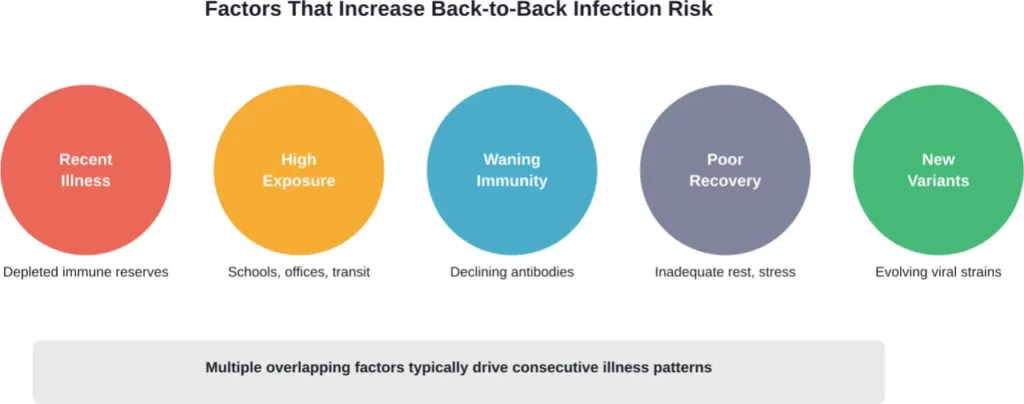
Several factors could be at play: high pathogen exposure in schools or workplaces, incomplete recovery between illnesses, waning immunity from previous infections, underlying immune deficiency, or encountering multiple different virus strains consecutively. Frequent illness patterns warrant medical evaluation.
Immunity to specific cold virus strains typically lasts several months to a year, though it varies considerably. Antibody levels decline gradually after infection, and cold viruses also mutate over time. These factors combine to allow potential reinfection with the same virus type after sufficient time passes.
Indirectly, yes. Chronic stress impairs multiple immune functions, reducing the body’s ability to fight off pathogens and recover fully between infections. Stress hormones suppress certain immune responses, creating conditions where infections occur more frequently and last longer.
Conclusion: Understanding Your Infection Patterns
Getting sick back to back isn’t just possible—it’s a well-documented phenomenon with multiple contributing factors. Different virus strains, waning immunity, depleted immune reserves, and high pathogen exposure all create conditions for consecutive infections.
The good news? Understanding these patterns empowers better prevention. Allowing complete recovery, maintaining current vaccinations, and recognizing when frequent illness signals underlying problems all help break the cycle.
If you’re experiencing repeated infections that disrupt your life or seem unusually severe, consult a healthcare provider. Patterns of frequent illness sometimes indicate treatable underlying conditions that, once addressed, can dramatically improve quality of life.
Your immune system is remarkably capable—but it needs proper support, adequate recovery time, and occasionally professional evaluation to function optimally.