

Quick Summary: After age 25, natural height increase is biologically impossible once growth plates close, typically by age 20. While no supplements or exercises can make you taller after this point, maintaining proper posture, spinal health, and avoiding height loss through good nutrition and lifestyle habits can help you maintain your full stature throughout adulthood.
The question comes up constantly in community discussions: “I’m 25 and only 5’4″. Can I still grow taller?” It’s a hope many adults share, especially those who feel disadvantaged by their height in dating, careers, or sports.
Here’s the reality check: once you’ve reached full skeletal maturity, your bones won’t lengthen naturally. But the story has more nuance than a simple no.
How Growth Actually Works
Height gains result from longitudinal bone growth, which depends on chondrocyte differentiation and proliferation within growth plates of long bones. According to research published in Clinical and Experimental Pediatrics (2024), these growth plates—also called epiphyseal plates—are divided into resting, proliferative, and hypertrophic zones.
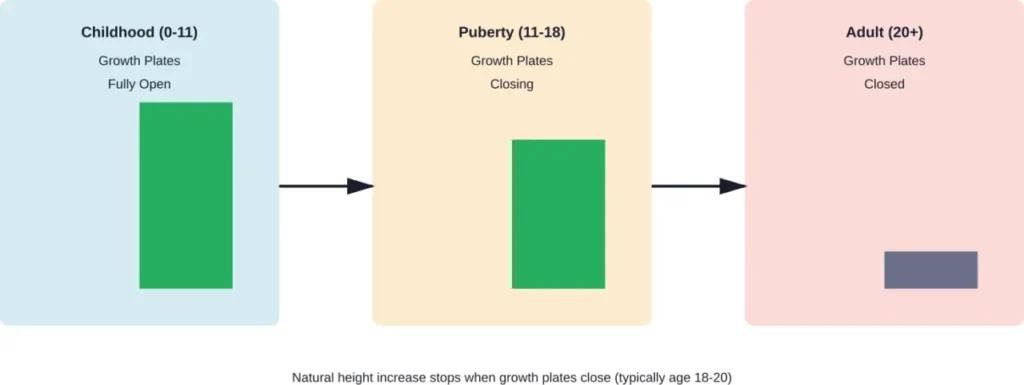
Think of growth plates as construction zones at the ends of your bones. During childhood and adolescence, these zones actively produce new bone tissue, making you taller. The process is controlled primarily by growth hormone and sex hormones.
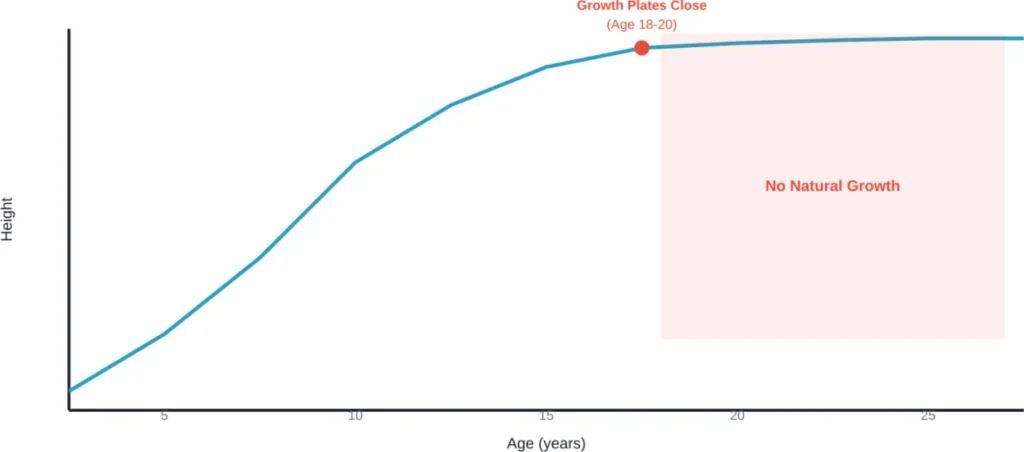
Research from the National Institutes of Health shows that growth plate closure is the definitive end of natural height increase. This closure typically occurs around age 20, though some variation exists based on sex and individual development.
When Do People Stop Growing?
The timing varies between males and females. Girls typically reach their adult height earlier than boys, while boys may continue growing into late adolescence. According to the Endocrine Society, by adolescence, most adult height is already achieved — only about 15-20% remains to be gained.
Some research indicates variation in height maintenance during early adulthood, with some individuals experiencing minimal changes while others show continued growth. Some men actually gained height in their early twenties, particularly those with delayed skeletal maturation.
That said, growth after 25 is exceptionally rare and typically indicates a medical condition rather than normal development.
What Determines Your Final Height
Genetics accounts for about 80-90% of height variation between individuals. If both your parents are 5’4″, your genetic potential likely falls within a similar range, though not always.
The Endocrine Society identifies several other factors that influence height:
- Nutrition during critical growth periods, particularly the first 1,000 days from conception to age two
- Chronic illnesses or infections during childhood
- Hormonal conditions affecting growth hormone or thyroid function
- Birth weight and whether a child was small for gestational age
- Psychosocial stimulation and overall health environment
According to WHO research, stunting from malnutrition in early childhood is largely irreversible. A child cannot recover height the same way they regain weight. This underscores that height is determined during developmental windows that close permanently.
Medical Interventions for Height (Before Growth Plates Close)
For children and adolescents still growing, certain medical interventions can influence final adult height. These don’t apply after age 25, but understanding them clarifies why adult height increase isn’t possible.
Research published in PLoS One examined gonadotropin-releasing hormone agonists in girls with early puberty. By temporarily halting pubertal development, these medications keep growth plates open longer, allowing additional time for height gain.
Studies on growth hormone therapy show modest benefits for children with idiopathic short stature. According to NIH research, benefits of 7.0 to 8.0 cm have been reported with higher doses of 0.32 to 0.4 mg/kg/week, though the number of studies is limited.
Research presented at ENDO 2016 (April 3, 2016) by the Endocrine Society found that combining aromatase inhibitors with growth hormone in very short adolescent boys could safely extend growth.
None of these interventions work once growth plates have fused. The biological window closes permanently.
Why Some Adults Think They’ve Grown
Community discussions occasionally mention height increases after 25. Some of these reports likely reflect measurement errors, time-of-day variations (people are slightly taller in the morning due to spinal compression throughout the day), or improved posture rather than actual bone growth.
Spinal compression throughout the day from gravity and activity can temporarily reduce height. Poor posture can make this worse. Correcting posture might reveal your true height, creating the impression of growth.
Real talk: if medical imaging confirms growth plates remain open past 25, that’s abnormal and warrants evaluation for endocrine disorders.
What You Can Actually Do After 25
While growing taller isn’t possible, preventing height loss and optimizing your appearance matters. Here’s what works:
Maintain Proper Posture
Poor posture and slouching can make someone appear noticeably shorter than their actual height. Strengthening core muscles, practicing good sitting and standing posture, and doing exercises like yoga or Pilates helps maintain proper spinal alignment.
Posture work won’t add inches to your skeleton, but it ensures you’re presenting your full height.
Protect Your Spine
Spinal health directly affects height. Disc degeneration, osteoporosis, and vertebral compression can cause measurable height loss in adulthood. Weight-bearing exercise, adequate calcium and vitamin D, and avoiding smoking help preserve bone density.
According to WHO data, maintaining healthy bones becomes increasingly important as people age, since height loss from osteoporosis can be significant.
Strategic Appearance Choices
Wearing vertical stripes, monochromatic outfits, properly fitted clothes, and shoes with thicker soles can make someone appear taller. These are visual tricks, not biological changes, but they’re effective.
| Method | Does It Increase Actual Height? | Practical Value |
|---|---|---|
| Posture correction | No (reveals existing height) | High—immediate visible difference |
| Stretching exercises | No (temporary spinal decompression) | Moderate—helps with flexibility |
| Supplements/vitamins | No | Low—only helps if deficient during growth |
| Limb lengthening surgery | Yes (2-3 inches possible) | High risk, extreme measure |
| Growth hormone (adults) | No | None for height—ineffective after plate closure |
The Limb Lengthening Option
Surgical limb lengthening is the only proven method to increase adult height. The procedure involves cutting leg bones and gradually separating them, allowing new bone to fill the gap. This surgical approach comes with substantial risks including infection, nerve damage, and significant costs. It’s typically reserved for individuals with leg length discrepancies or severe psychological distress related to height.
Most medical professionals don’t recommend this procedure purely for cosmetic height gain unless there’s significant medical or psychological justification.
Frequently Asked Questions
No. Stretching can temporarily decompress your spine, which might make you measure slightly taller immediately after, but this effect disappears within hours. Stretching improves flexibility and posture but doesn’t create new bone growth.
No credible scientific evidence supports height-increasing supplements for adults with closed growth plates. Adequate nutrition matters during developmental years, but once skeletal maturity is reached, no supplement can reopen growth plates or stimulate bone lengthening.
An X-ray assessment by a medical professional can determine growth plate status. If you’re over 20 and had normal development, they’re almost certainly closed. Only an endocrinologist or orthopedic specialist can provide definitive answers through imaging.
These activities improve posture and spinal alignment, which might help someone stand at their full height rather than a compressed posture. They don’t stimulate new bone growth or permanently increase height beyond revealing what’s already there.
No, barring extremely rare medical conditions. By 40, growth plates have been closed for roughly two decades. At this age, the focus should be on preventing age-related height loss through bone health, posture, and fitness rather than seeking height increase.
If someone experienced significantly delayed puberty, growth plates might remain open slightly longer than average, potentially into the early twenties. However, by 25, even late bloomers have typically completed skeletal maturation. Medical evaluation would clarify individual status.
Sleep quality affects overall health and may help with spinal decompression overnight, but sleep position doesn’t influence adult height. Proper sleep supports bone health and recovery, which matters for preventing height loss, not creating height gain.
The Bottom Line on Growing Taller After 25
The biological reality is straightforward: natural height increase after 25 isn’t possible for the overwhelming majority of adults. Growth plates close by the late teens to early twenties, ending the capacity for bones to lengthen.
Medical research from the NIH, Endocrine Society, and peer-reviewed journals consistently confirms this. While interventions exist for children and adolescents still growing, these become irrelevant once skeletal maturity is reached.
That doesn’t mean height is out of your control entirely. Maintaining good posture, protecting bone health, preventing age-related height loss, and making strategic appearance choices can help you maximize and maintain your stature throughout life.
If height concerns significantly impact your mental health or quality of life, speaking with a healthcare provider about realistic options—whether that’s counseling, extreme measures like limb lengthening, or acceptance strategies—offers more value than searching for non-existent solutions.
Focus on what you can control: health, posture, fitness, and confidence. Those factors influence how you carry your height far more than another inch ever would.