

Quick Summary: Learning two languages simultaneously is absolutely possible and backed by cognitive research. The brain can handle multiple language systems at once, especially when learners choose linguistically distinct languages, allocate dedicated study time to each, and maintain consistent practice schedules.
The question keeps popping up in language learning communities: is tackling two languages at the same time realistic, or just setting yourself up for failure?
Here’s the thing though—research on bilingual language acquisition shows the human brain handles multiple language systems remarkably well. Research on language acquisition shows people acquire language incrementally through practice, and the brain can manage competing language mappings without catastrophic interference.
But that doesn’t mean the path is without challenges. Success depends heavily on approach, language choices, and time management strategies.
What Science Reveals About the Bilingual Brain
Research from academic institutions provides compelling evidence that simultaneous language learning works. Harvard Graduate School of Education notes that what was once considered cognitively confusing is now understood as brain-sharpening, with bilingualism protecting and preserving cognitive function.
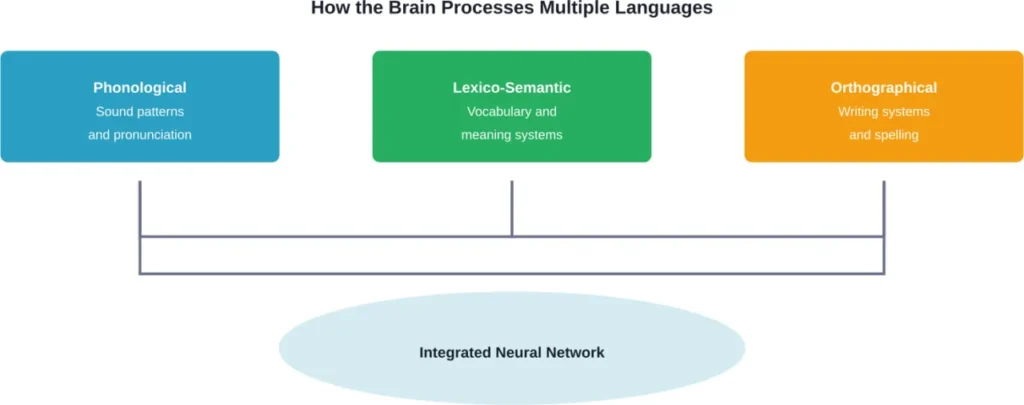
The developmental process of language acquisition functions as a self-organizing mental network consisting of lexico-semantic, phonological, and orthographical components. This network varies across languages and adapts to accommodate multiple linguistic systems.
Research on simultaneous bilingual children demonstrates they develop language discrimination abilities that monolingual peers don’t possess.
The University of Arizona highlights that multilingualism enhances cognitive abilities and makes people more empathetic. Being multilingual helps individuals understand what it might be like to live in different cultures.
Strategic Approaches That Actually Work
Community discussions and expert polyglots agree on several effective strategies. The key isn’t whether simultaneous learning works—it’s how to structure it.
The 80/20 Time Split Method
One proven approach dedicates 80% of study time to a primary language and 20% to a secondary language. This prevents cognitive overload while maintaining progress in both.
For learners tackling two languages equally, alternating full-day immersion works better than fragmenting sessions. Spending 30 consecutive minutes in German creates deeper neural engagement than splitting that time into two 15-minute blocks.
Language Pairing Decisions
Choosing which languages to learn simultaneously matters significantly. Linguistically similar languages—like Spanish and Italian, or German and Dutch—create more interference than distinct pairs.
| Language Combination Type | Interference Level | Recommended Approach |
|---|---|---|
| Similar (Spanish + Italian) | High | Stagger start dates by 3-6 months |
| Different families (Korean + French) | Low | Safe for simultaneous start |
| Different scripts (Japanese + German) | Very Low | Ideal for parallel learning |
| Related but distinct (French + German) | Medium | Works with clear separation strategies |
Learners report success pairing languages with different writing systems. Japanese and French, for example, create distinct mental compartments that reduce cross-contamination.
Proficiency Level Considerations
Starting two languages from scratch simultaneously presents different challenges than adding a new language when already intermediate in another.
Experienced polyglots often use one language to study another. Once a language reaches a good enough level, learners can study another language using textbooks written in that language to reinforce both simultaneously.
Practical Implementation Strategies
Real talk: theory means nothing without execution. These tactics translate research into daily practice.
Dedicated Study Schedules
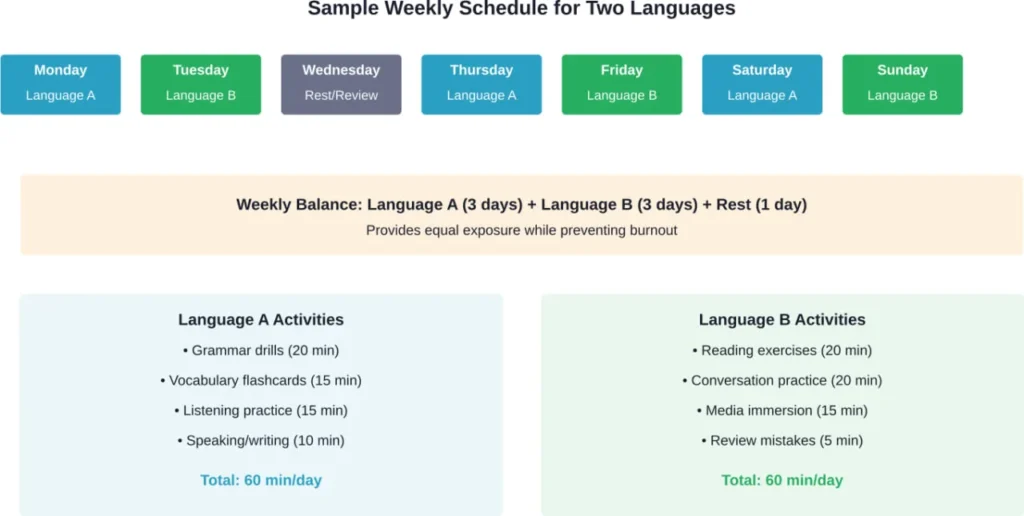
Consistency trumps intensity. Switching languages on alternate days creates reliable patterns that the brain anticipates.
This scheduled approach prevents the chaos of random switching, which fragments attention and reduces retention.
Method Differentiation
Using different learning methods for each language creates mental separation. If grammar textbooks drive Language A study, conversation-based apps might anchor Language B practice.
This variation helps the brain categorize languages into distinct learning contexts, reducing mixing errors.
Immersion Techniques
Longer study sessions beat fragmented ones, especially for beginners. A concentrated 30-minute immersion allows deeper cognitive processing than scattered 10-minute bursts throughout the day.
Cultural immersion accelerates progress. Watching films, reading news, or following social media accounts in target languages provides contextual learning that textbooks miss.
Common Pitfalls and How to Avoid Them
Even with solid strategies, certain mistakes derail dual language learners.
Time Commitment Miscalculations
Learning one language demands significant time investment. Doubling that requirement catches many learners off guard. Those with packed schedules often discover that two languages simultaneously creates unsustainable pressure.
Realistic assessment matters. Thirty minutes daily per language—minimum—keeps progress steady. Anything less risks stagnation in both.
The Interference Problem
Vocabulary mixing happens, especially with similar languages. Spanish and Portuguese learners frequently report blending words from both languages mid-sentence.
Clear mental separation helps. Designating specific physical locations for each language—German at the desk, French on the couch—creates environmental triggers that reduce mixing.
Neglecting One Language
Without intentional balance, one language inevitably dominates. Natural affinity, easier grammar, or better learning materials can skew attention.
Tracking study time prevents drift. Simple logs showing weekly hours per language reveal imbalances before they become problematic.
When to Reconsider Simultaneous Learning
Simultaneous learning isn’t optimal for everyone or every situation.
Complete beginners benefit from establishing solid foundations in one language first. Reaching A2 or B1 level before adding a second language often produces better long-term outcomes than starting both from zero.
Time constraints matter. Those managing fewer than two hours weekly for language study should master one language before attempting multiple.
Professional or academic requirements sometimes demand focused attention. Needing business-level Spanish in six months isn’t the time to simultaneously learn Portuguese.
| Scenario | Simultaneous Learning? | Reason |
|---|---|---|
| Hobbyist with 2+ hours daily | Yes | Sufficient time for both languages |
| Professional need in 3-6 months | No | Focus maximizes urgent outcomes |
| Already intermediate in one language | Yes | Existing foundation reduces cognitive load |
| Complete beginner, limited time | No | Foundation-building requires focus |
| Linguistically distant languages | Yes | Low interference between systems |
| Very similar languages | Maybe | Requires strong separation strategies |
Maximizing Success with Multiple Languages
Certain tactics amplify effectiveness regardless of language combination.
Clear Goal Setting
Vague ambitions like “become fluent” create measurement problems. Specific targets—”hold 15-minute conversations about daily life” or “read news articles with 80% comprehension”—provide trackable milestones.
Different goals for different languages work fine. Conversational French and reading-focused German both represent valid objectives.
Resource Quality Over Quantity
Dozens of apps, textbooks, and courses create decision fatigue. Selecting 2-3 high-quality resources per language and using them consistently beats endlessly sampling new materials.
Language learning platforms offer structured curricula that eliminate guesswork. Check official websites for current features and pricing that fit specific learning styles.
Community Engagement
Language exchange partners provide accountability and real-world practice. Finding native speakers through language exchange platforms creates regular conversation opportunities that accelerate fluency.
Online communities of fellow learners offer support during motivation slumps. User experiences show that connecting with others pursuing similar language pairs provides valuable strategy sharing.
Frequently Asked Questions
Most learners find two languages manageable with proper time allocation. Polyglots with extensive experience sometimes handle three or more, but this requires exceptional time management and isn’t recommended for most people. The cognitive demands increase exponentially with each additional language.
No. Many successful multilingual learners maintain different proficiency levels across languages. An 80/20 split with one primary language at intermediate level and a secondary language at beginner level often works better than trying to advance both equally from zero.
With consistent daily practice, noticeable progress typically appears within 3-4 months. Basic conversational ability generally develops around the 6-month mark for each language, though this varies based on language difficulty, prior experience, and study intensity.
Some interference is normal and temporary. Strengthen separation by using different learning methods, study environments, or time blocks for each language. If mixing persists after trying separation strategies, temporarily pause one language to solidify the other before resuming both.
Research shows children exhibit certain advantages, with young children’s brains uniquely suited to learn a second language as the brain is in its most flexible stage. However, adults bring stronger metacognitive skills, learning strategies, and motivation that can compensate for age-related challenges in simultaneous language learning.
For linguistically similar languages, staggering start dates by 3-6 months reduces interference. For very different language families with distinct writing systems, simultaneous starts work well. The decision depends more on language pairing than universal rules.
Motivation becomes critically important with multiple languages. Clear, personally meaningful reasons for learning each language—career advancement, cultural connection, family communication—sustain effort through challenging periods when progress feels slow.
Taking the Multilingual Leap
Learning two languages simultaneously absolutely works, but success requires honest assessment of time availability, strategic language pairing, and consistent practice routines.
The cognitive benefits documented by institutions like Harvard and the NIH—enhanced problem-solving, improved memory, increased cultural empathy—make the investment worthwhile. Research on bilingual development confirms the brain handles multiple linguistic systems without the interference once feared.
Start with realistic goals. Choose languages that align with personal interests and practical needs. Build sustainable study schedules that provide each language adequate attention without creating burnout.
The journey demands patience. Progress in two languages takes longer than focusing on one—but reaching conversational ability in two languages beats abandoning language learning altogether because the “perfect” single language never emerges.
Ready to expand your linguistic repertoire? Select two languages, establish a clear study schedule, and begin. The multilingual version of yourself is waiting on the other side of consistent daily practice.