

Quick Summary: Yes, it’s possible to miscarry without bleeding. Known as a missed or silent miscarriage, this occurs when the embryo or fetus stops developing but the body doesn’t expel the pregnancy tissue, causing no immediate bleeding. Many people only discover the loss during a routine ultrasound scan when no heartbeat is detected.
When most people think about miscarriage, vaginal bleeding immediately comes to mind. It’s often portrayed as the primary warning sign. But here’s what many don’t realize: pregnancy loss can occur without any bleeding at all.
This type of loss, called a missed or silent miscarriage, happens more often than you’d expect. The embryo or fetus stops developing, but the body doesn’t recognize the loss right away. No bleeding occurs because the pregnancy tissue remains in the uterus.
According to the American College of Obstetricians and Gynecologists (ACOG), early pregnancy loss occurs in 10% of all clinically recognized pregnancies. Research suggests that approximately 15% of all recognized pregnancies end in pregnancy loss, and not all of these involve immediate bleeding.
What Is a Missed Miscarriage?
A missed miscarriage—sometimes called a silent miscarriage—occurs when the embryo has died or never formed, but the placenta and gestational sac remain in the uterus. The body hasn’t expelled the pregnancy tissue yet.
In many cases, pregnancy symptoms like nausea or breast tenderness continue because the placenta may still produce hormones for a period. This makes the loss particularly difficult to detect without medical examination.
The loss may go unnoticed for several weeks. Some people don’t realize anything is wrong until a routine ultrasound reveals no fetal heartbeat or shows that development stopped weeks earlier.
Signs and Symptoms Beyond Bleeding
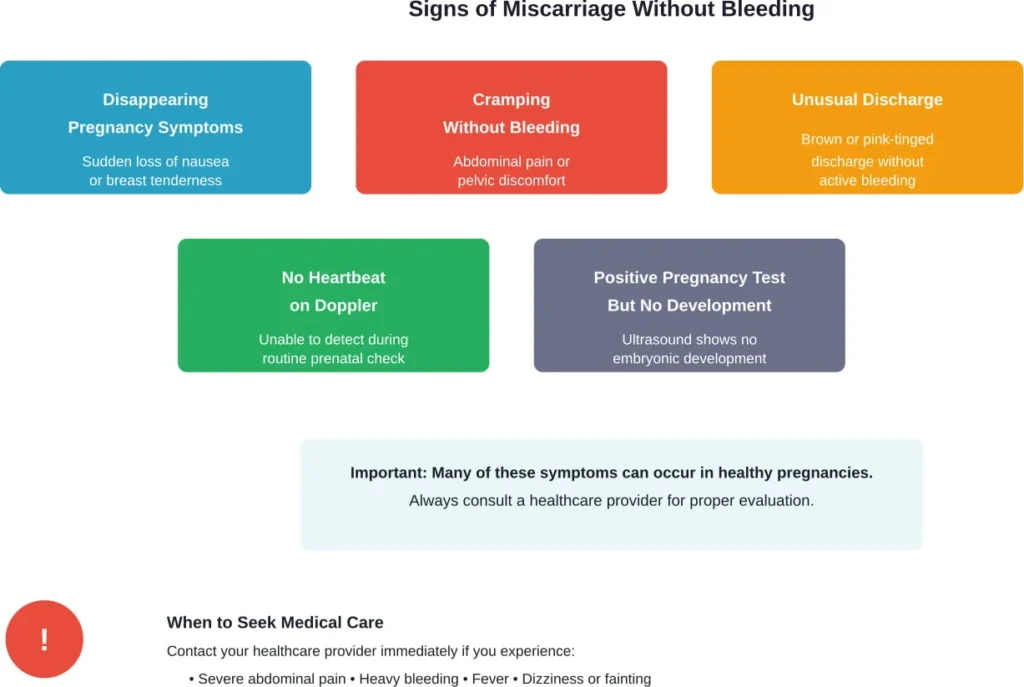
While bleeding is the most recognized symptom of pregnancy loss, several other signs can indicate a miscarriage is occurring or has occurred:
Disappearing Pregnancy Symptoms
One of the earliest indicators is a sudden decrease in pregnancy symptoms. If morning sickness, breast tenderness, or fatigue abruptly disappears, it might signal that hormone levels are dropping.
That said, pregnancy symptoms naturally fluctuate. Many healthy pregnancies experience periods where symptoms ease, especially as the first trimester progresses.
Cramping and Abdominal Pain
Cramping without bleeding can occur during a miscarriage. The uterus may contract as it attempts to expel pregnancy tissue, causing abdominal discomfort or pelvic pain.
Research on early pregnancy loss symptoms indicates that pain can accompany miscarriage even when bleeding hasn’t started. The cramping may feel similar to menstrual cramps or present as lower back pain.
Unusual Discharge
Some people notice changes in vaginal discharge without frank bleeding. The discharge might appear brown, pink-tinged, or contain small amounts of tissue. This can indicate that the body is beginning to recognize the pregnancy loss.
Lack of Fetal Movement
In later first-trimester losses, some individuals report not feeling the sensations they’d begun to associate with pregnancy. While fetal movement typically isn’t felt until the second trimester, the absence of certain physical sensations might raise concerns.
No Heartbeat on Doppler
During prenatal appointments, if a healthcare provider cannot detect a fetal heartbeat with a Doppler device when one should be present, this warrants further investigation through ultrasound.
How Missed Miscarriage Is Diagnosed
Because missed miscarriage often produces no obvious symptoms, diagnosis typically happens during routine prenatal care.
Ultrasound Examination
Ultrasound is the primary diagnostic tool. A transvaginal or abdominal ultrasound can reveal whether the embryo has a heartbeat and whether development matches the expected gestational age.
If the ultrasound shows an embryo measuring smaller than expected with no cardiac activity, or an empty gestational sac when an embryo should be visible, a missed miscarriage is diagnosed.
Serial hCG Testing
Human chorionic gonadotropin (hCG) is a hormone produced during pregnancy. In a healthy pregnancy, hCG levels typically double every 48 to 72 hours in early pregnancy.
If hCG levels plateau or decrease, this suggests the pregnancy is not developing normally. However, hCG testing alone cannot definitively diagnose missed miscarriage—ultrasound confirmation is needed.
Follow-Up Scans
Sometimes, healthcare providers schedule a follow-up ultrasound one to two weeks later to confirm the diagnosis. This ensures that gestational age calculations were accurate and the pregnancy truly isn’t viable.
What Causes Miscarriage Without Bleeding?
Research indicates that in more than 60% of pregnancy losses between 6 to 10 weeks of gestation, chromosomal abnormalities are the cause. These genetic issues prevent the embryo from developing properly.
Other potential causes include:
- Hormonal imbalances that affect pregnancy maintenance
- Structural problems with the uterus
- Blood clotting disorders
- Maternal health conditions like uncontrolled diabetes
- Exposure to environmental toxins
In a missed miscarriage specifically, the body hasn’t yet recognized that the pregnancy has failed. The cervix remains closed, and the uterus hasn’t begun contracting to expel the tissue—which is why bleeding doesn’t occur immediately.
Treatment Options for Missed Miscarriage
Once a missed miscarriage is confirmed, several management options are available:
| Treatment Option | Description | Timeline |
|---|---|---|
| Expectant Management | Wait for the body to naturally expel pregnancy tissue | Can take several weeks; bleeding usually starts within 48 hours once it begins |
| Medication | Use of misoprostol to stimulate uterine contractions | Tissue typically passes within 24-48 hours after medication |
| Surgical Procedure | Dilation and curettage (D&C) to remove pregnancy tissue | Completed same day; recovery begins immediately |
According to ACOG, the choice between these options depends on individual circumstances, gestational age, patient preference, and whether any complications exist.
Expectant Management
Some people prefer to let the miscarriage happen naturally. This approach involves waiting for the body to recognize the pregnancy loss and begin the expulsion process.
According to ACOG expert guidance, cramping or bleeding usually starts within a few hours once the process begins. Most women pass the tissue within 48 hours, though some may need a surgical procedure if tissue remains.
Medical Management
Medication like misoprostol can trigger uterine contractions to expel the pregnancy tissue. This gives more control over timing compared to expectant management.
The medication causes cramping and bleeding as the uterus empties. Pain medication and support during this process are important.
Surgical Management
A dilation and curettage (D&C) procedure involves dilating the cervix and removing pregnancy tissue from the uterus. It’s performed in a medical facility, often with sedation.
This option provides immediate resolution and allows for pathology testing of the tissue if desired. Physical recovery is typically quick, though emotional healing takes longer.
Emotional Impact and Recovery
Discovering a pregnancy loss without warning symptoms can be particularly traumatic. Many people describe feeling blindsided when a routine ultrasound reveals the loss.
The emotional recovery from miscarriage varies widely. Some people feel ready to try conceiving again quickly, while others need more time to grieve and heal.
Support from healthcare providers, partners, family, friends, or pregnancy loss support groups can be invaluable during this time. Community discussions often highlight how isolating pregnancy loss feels, especially when it occurs without typical symptoms.
When Bleeding Eventually Occurs
Even with a missed miscarriage, bleeding will eventually occur—either naturally, with medication, or has already happened by the time of the surgical procedure.
When bleeding begins, it may be heavier than a normal period and include clots or tissue. Cramping accompanies the bleeding as the uterus contracts.
Untreated bleeding can pose health risks if not properly managed, particularly during pregnancy and miscarriage. Contact a healthcare provider immediately if bleeding soaks through 2 pads every hour for 2 hours, or if severe pain, fever, or dizziness occurs.
Frequently Asked Questions
Yes, missed miscarriage can occur without bleeding or cramping. The embryo stops developing but remains in the uterus with a closed cervix, producing no immediate symptoms. Many people discover the loss only during an ultrasound examination.
A missed miscarriage can go undetected for several weeks. Some people don’t realize the pregnancy has ended until a routine prenatal appointment reveals no fetal heartbeat or development. In some cases, the embryo stopped growing three or more weeks before diagnosis.
Before active bleeding begins, discharge during a missed miscarriage might appear brown, slightly pink-tinged, or contain small tissue fragments. Some people notice increased mucus-like discharge. However, many experience no discharge changes at all until the miscarriage physically begins.
Yes, pregnancy tests often remain positive during a missed miscarriage because the placenta may continue producing hCG hormone for a period even after embryonic development has stopped. The hormone takes time to decrease to undetectable levels.
Missed miscarriage can occur in any pregnancy, not specifically first pregnancies. According to research, early pregnancy loss affects approximately 15% of recognized pregnancies regardless of whether it’s a first pregnancy or subsequent one. Risk factors relate more to maternal age, chromosomal issues, and health conditions than pregnancy order.
You typically cannot tell the difference without medical examination. Many missed miscarriages produce no symptoms, and pregnancy signs may continue. Only ultrasound examination showing no fetal heartbeat or arrested development can definitively diagnose missed miscarriage versus a healthy pregnancy.
No evidence shows that normal stress causes miscarriage. Research indicates that chromosomal abnormalities cause more than 60% of early pregnancy losses. Other causes include hormonal problems, uterine structural issues, blood clotting disorders, and maternal health conditions—not typical daily stress.
Moving Forward After Pregnancy Loss
Experiencing pregnancy loss is deeply personal. Whether bleeding occurred or the loss was discovered unexpectedly, the emotional impact is real and valid.
Most people who experience one miscarriage go on to have successful pregnancies. According to ACOG, early pregnancy loss is common, occurring in approximately 10 of every 100 clinically recognized pregnancies, and usually doesn’t indicate future problems.
If you’ve had multiple pregnancy losses or have concerns about trying to conceive again, consult with a healthcare provider. Testing may identify treatable conditions that could improve future pregnancy outcomes.
Remember that healing happens at your own pace. Give yourself permission to grieve, seek support when needed, and take the time necessary before making decisions about future pregnancies.
If you’re experiencing symptoms that concern you during pregnancy—whether bleeding, cramping, or simply intuition that something isn’t right—contact your healthcare provider. Trust your instincts and advocate for the care and answers you need.