
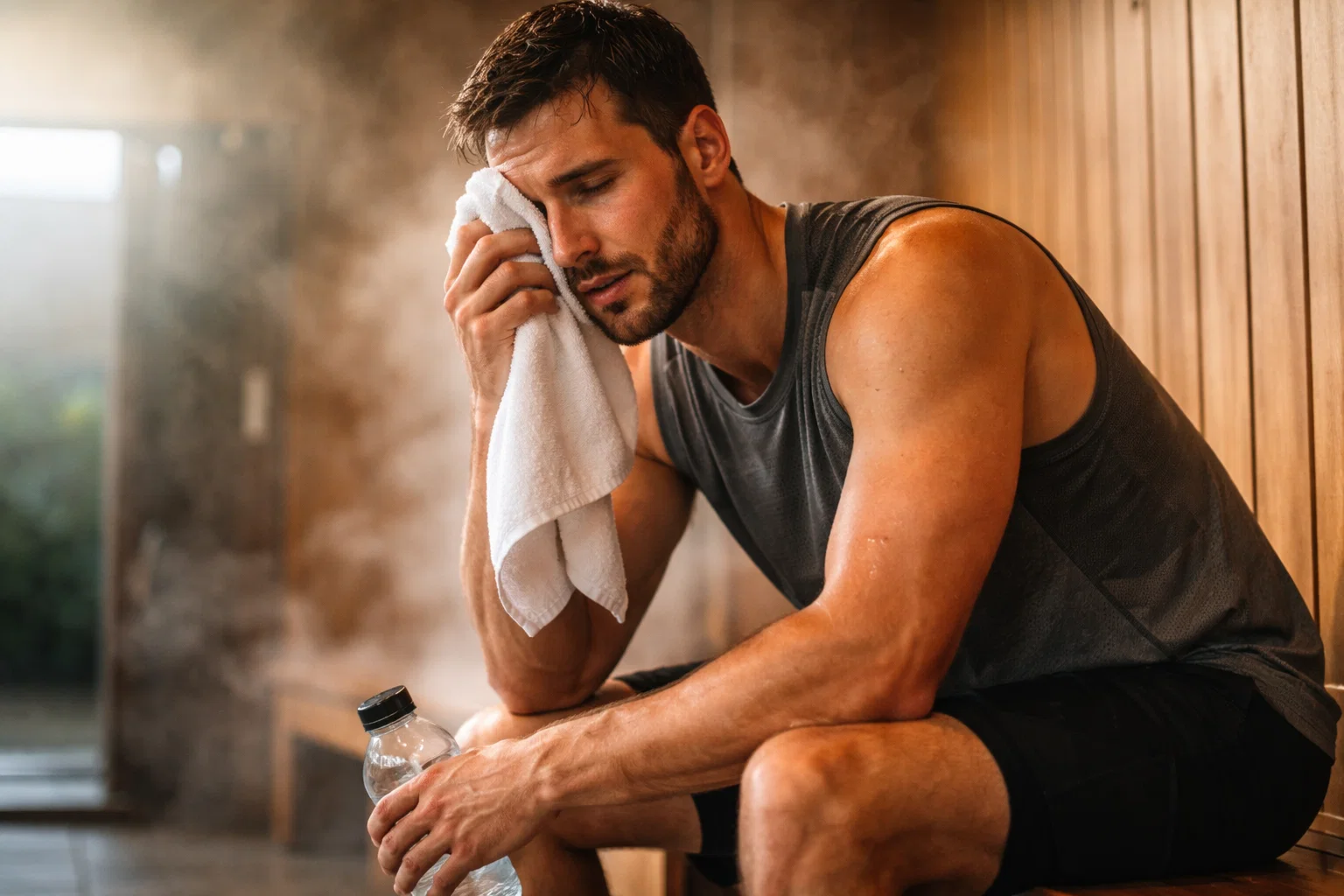
Quick Summary: No, you cannot sweat out a cold. Sweating does not expel viruses from your body or shorten the duration of a cold. While induced sweating through exercise, saunas, or hot showers may provide temporary symptom relief, the cold virus must run its natural 7-10 day course regardless of sweating.
The common cold remains one of the most frequent reasons people visit doctors. Adults catch colds up to four times annually, while children may experience as many as eight per year.
When symptoms strike, many people turn to an old remedy: sweating it out. But does this popular approach actually work?
Understanding the Common Cold
Over 200 different viruses can cause the common cold, though the rhinovirus tops the list as the most common culprit. These illnesses spread through respiratory droplets from sneezes and coughs, making them highly contagious.
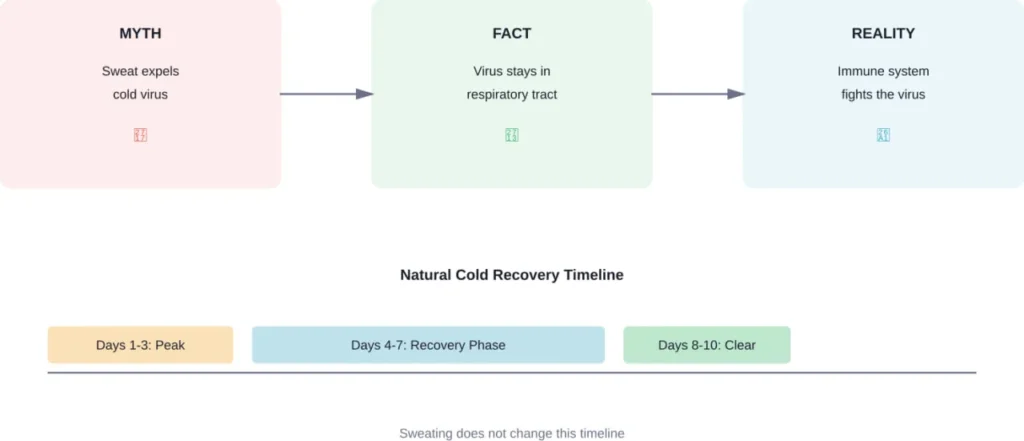
Cold symptoms typically peak within 2-3 days of infection and last about 7-10 days total. The virus takes up residence in your upper respiratory tract, triggering an immune response that creates the familiar symptoms: congestion, runny nose, sore throat, and fatigue.
Here’s the critical point — the cold virus doesn’t leave your body through sweat glands. It remains in your respiratory system until your immune system successfully eliminates it.
The Science Behind “Sweating Out” a Cold
The idea of sweating out a cold stems from a misunderstanding of how the body fights illness. Sweat serves one primary function: cooling the body down through evaporation. According to research on temperature regulation, sweating is a thermal response, not an immune one.
When you have a cold, your body temperature might rise slightly as part of the immune response. According to the NIH, fever is a hallmark symptom of infection that has been conserved through 600 million years of evolution. This natural fever response helps boost immune function.
But intentionally inducing sweat through external heat or exercise doesn’t replicate this natural immune process. The virus remains in your respiratory passages regardless of how much you perspire.
Exercise When Sick: What Research Shows
Many people head to the gym hoping to sweat out a cold through exercise. The research on this approach tells a cautionary tale.
Research on animal models examined mice with flu infections divided into groups based on activity levels. Mice in the sedentary group had fewer flu symptoms, while mice that ran for approximately 120 minutes on a treadmill experienced higher infection and mortality rates.
What does this mean for humans? Intense exercise while sick can stress your body when it needs energy for immune function.
That said, light exercise might not be harmful. Most health experts recommend the “neck check” rule: if symptoms are above the neck (runny nose, congestion), light exercise might be tolerable. If symptoms are below the neck (chest congestion, body aches, fever), rest is essential.
Steam, Saunas, and Heat Therapy
Hot showers, steam rooms, and saunas represent another popular sweating strategy. Do they help?
A 2017 analysis examined six trials on heated, humid air exposure for common cold sufferers. The conclusion? It was neither harmful nor beneficial for recovery duration.
However, steam may provide temporary symptom relief. The warm, moist air can help loosen congestion and soothe irritated airways. Just don’t expect it to shorten your cold.
Sauna Safety Guidelines
If you choose to use a sauna while fighting a cold, follow these precautions:
- Limit sessions to 15-20 minutes maximum
- Stay well hydrated before, during, and after
- Avoid saunas if you have a fever or feel dizzy
- Listen to your body and exit if you feel worse
Steam inhalation therapy does pose risks of burns or scalding, so exercise caution with extremely hot water or steam.
What Actually Helps Cold Recovery
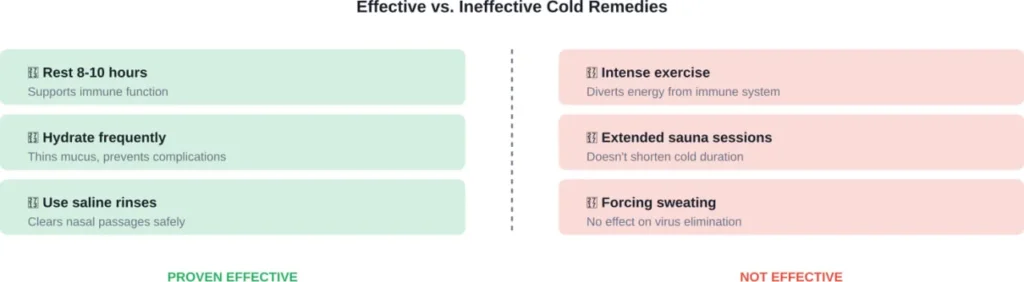
Real talk: if sweating doesn’t help, what does? The CDC and other health authorities recommend proven strategies focused on symptom management and supporting your immune system.
| Strategy | How It Helps | Evidence Level |
|---|---|---|
| Rest (8-10 hours sleep) | Allows immune system to focus energy on fighting infection | Strong |
| Hydration | Thins mucus, prevents dehydration from sweating/fever | Strong |
| Humidity/Steam | Temporarily relieves congestion and throat irritation | Moderate |
| Saline nasal rinse | Clears nasal passages, reduces congestion | Moderate |
| Warm liquids | Soothes throat, provides comfort, maintains hydration | Moderate |
Hydration and Nutrition
Drinking water and eating salty snacks can help maintain electrolyte balance during illness. The CDC recommends drinking water and having snacks or drinks that replace carbohydrates and electrolytes. Your body loses fluids through congestion, sweating from fever, and reduced appetite.
Warm liquids like tea, broth, or soup provide dual benefits: hydration and soothing warmth for irritated throats.
Rest as Medicine
Sleep might be the most underrated cold remedy. Aim for 8-10 hours per night when sick. Your immune system works most effectively during rest periods.
Research on fever and immunity indicates that the immune response requires significant metabolic energy. Every hour spent exercising or working is energy not available for fighting the virus.
When to See a Doctor
Most colds resolve without medical intervention. However, certain symptoms warrant professional evaluation.
Seek medical attention if you experience:
- Fever above 103°F or lasting more than 3 days
- Symptoms persisting beyond 10 days
- Severe headache or sinus pain
- Difficulty breathing or wheezing
- Chest pain or pressure
According to WHO guidelines on influenza care, severe illness can develop in any patient, though certain groups face higher risk: infants, young children, pregnant women, people with underlying conditions, and adults over 65.
The Bottom Line on Sweating Out Colds
The scientific evidence is clear: sweating does not eliminate cold viruses from your body or reduce the duration of illness. Colds typically last 7-10 days regardless of interventions designed to induce perspiration.
While steam, saunas, or light exercise might provide temporary symptom relief for some people, they don’t address the underlying viral infection. Your immune system needs time and energy to do its work.
The most effective approach combines proven strategies: adequate rest, consistent hydration, and patience. Save your energy for recovery rather than spending it at the gym or in a sauna.
Listen to your body. If symptoms are mild and above the neck, gentle activity might be tolerable. But when your body signals the need for rest — honor that signal. Rest isn’t laziness when fighting a cold; it’s medicine.
Frequently Asked Questions
Sweating can occur when a fever breaks as your body temperature normalizes, but sweating itself doesn’t cause the fever to break. The fever resolves when your immune system gains control of the infection.
Regular moderate exercise when healthy may support immune function and potentially reduce cold frequency. However, exercising during an active cold doesn’t shorten its duration and may prolong recovery.
Most people remain contagious for the first 2-3 days of symptoms, though you can spread the virus from one day before symptoms appear until about 5-7 days after becoming sick.
Cold showers don’t eliminate cold viruses and may actually stress your body. Warm showers with steam provide better symptom relief by helping loosen congestion.
Yes, especially out of consideration for others. Colds spread easily through respiratory droplets and surface contact. Equipment sharing makes gyms particularly efficient transmission zones.
No, sweating doesn’t eliminate a fever. Fever is controlled by your brain’s temperature regulation center and resolves when your immune system addresses the underlying infection.
Temporary symptom relief may come from increased circulation, endorphin release, or the psychological comfort of “doing something” about the illness. However, this doesn’t indicate faster recovery or virus elimination.