

Quick Summary: The best ecommerce web design companies combine technical expertise with creative strategy to build online stores that convert browsers into buyers. These agencies specialize in mobile-first design, fast load times, intuitive checkout flows, and secure payment integration. This comprehensive guide profiles 15 leading ecommerce design agencies, detailing their specialties, strengths, and ideal client profiles to help businesses find the perfect design partner for their online store.
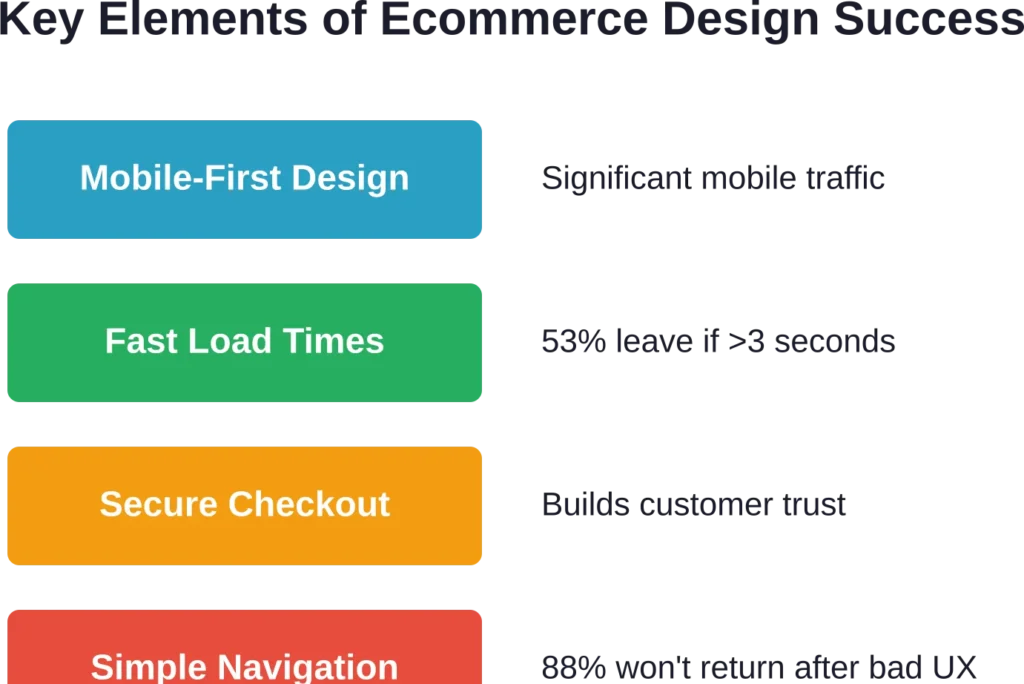
The ecommerce landscape has shifted dramatically. Browsing patterns have changed, mobile shopping has become the default, and conversion rates hinge on milliseconds. Research indicates that 88% of online consumers will not return to a website after a bad user experience, and 53% of mobile visitors leave a page if it takes longer than three seconds to load.
That’s why choosing the right ecommerce web design company matters more than ever. The difference between an average online store and one that converts lies in hundreds of small decisions about layout, navigation, checkout flow, and performance optimization.
This guide examines 15 agencies that have demonstrated consistent excellence in ecommerce design. Each brings different strengths to the table, whether that’s Shopify expertise, custom platform development, or conversion-focused UX design.
What Makes an Ecommerce Design Agency Stand Out
Not all web design companies understand ecommerce. Building an online store requires different skills than creating a corporate website or portfolio. The best ecommerce agencies focus on specific elements that directly impact sales.
Mobile-first design is non-negotiable. A significant proportion of ecommerce traffic comes from mobile devices, and mobile-optimized layouts drive conversions. This means responsive design that adapts smoothly, touch-friendly buttons, and simplified navigation paths.
Page speed affects revenue. Studies indicate that well-designed UI can significantly increase conversion rates. Companies have reported improved conversion metrics after optimizing page load times. Fast-loading product pages keep potential customers engaged instead of bouncing to competitors.
Security builds trust. Payment gateway integration, SSL certificates, and compliance with data protection standards are baseline requirements. Shoppers need confidence that their financial information is protected.
Checkout simplification reduces cart abandonment. The best agencies streamline the purchase process, minimize form fields, offer guest checkout options, and provide clear progress indicators throughout the transaction flow.
Top 15 Ecommerce Web Design Companies in 2026
The following agencies have established track records in ecommerce design. They’ve worked with diverse clients, built stores on multiple platforms, and demonstrated measurable results. Each brings unique strengths to different types of projects.
1. Lengreo

Lengreo operates as a complete marketing and technology partner with strong capabilities in building and optimizing ecommerce websites. The team combines strategic consulting with hands-on development to create high-performing online stores.
Their approach focuses on data-driven decisions that improve lead flow, conversion rates, and overall digital presence. They develop custom websites, landing pages, and ecommerce platforms while integrating powerful marketing channels.
Lengreo specializes in B2B and B2C ecommerce solutions that require sophisticated lead generation, personalized outreach, and seamless user journeys. They support businesses in software, architecture, events, sports tech, and IT sectors looking to scale online sales.
Their strength lies in connecting website development with full-funnel marketing execution — from SEO and paid ads to demand generation and appointment setting — delivering measurable growth in client acquisition and conversions.
Best for: Businesses seeking integrated ecommerce web design paired with performance marketing and lead generation.
Platforms: Custom development, Shopify, WordPress
Key services: Ecommerce website development, SEO, Paid Ads, Lead Generation, Conversion Rate Optimization, Digital Marketing Strategy
Contact Information:
- Website: Lengreo.com
- Phone: +31 686 147 566
- Email: [email protected]
- Address: Vrijstraat 9 C/D, 5611 AT Eindhoven, Netherlands
- LinkedIn: Lengreo
- Twitter: @Lengreo
- Instagram: @lengreo
2. Gilzor

Gilzor delivers custom software development focused on building ecommerce and digital commerce solutions that drive real business growth. The team creates web and mobile applications designed to launch, scale, and optimize online sales channels.
Their approach combines idea validation, user-centric UI/UX design, and full-cycle development to ensure stores are both attractive and highly functional. They emphasize performance, scalability, and seamless user experiences that boost conversions.
Gilzor works with startups, small and medium businesses, and product companies across industries including grocery ecommerce, retail, and service-based platforms. They build solutions that automate processes, reduce operational costs, and enhance customer loyalty.
Their strength is end-to-end delivery — from product ideation and go-to-market strategy to post-launch support — helping clients launch ecommerce initiatives that resonate with users and generate sustainable revenue.
Best for: Startups and growing businesses needing custom ecommerce web and mobile solutions with strong user experience focus.
Platforms: Custom development, iOS/Android, Web frameworks
Key services: Ecommerce web development, Mobile app development, UI/UX design, Idea validation, Go-to-market strategy, Quality assurance
Contact Information:
- Website: www.gilzor.com
- Email: [email protected]
- Address: Poland, Warsaw, Office 58, street Adama Mickiewicza 37, 01-625
- LinkedIn: www.linkedin.com/company/gilzor-softwaredevelopment
3. Oski

Oski builds smart, well-engineered software solutions for ecommerce and tech-forward businesses. With deep expertise in modern web technologies, they design and develop scalable online stores and digital commerce platforms.
Their approach integrates cloud architecture, modern frontend frameworks, and artificial intelligence to create fast, secure, and conversion-oriented ecommerce experiences. They focus on seamless user journeys and operational efficiency.
Oski serves enterprises, ambitious startups, and established companies in e-commerce, logistics, travel, fintech, and education. They deliver solutions that support personalized shopping, automation, and high-volume transactions.
Their strength lies in combining creative design with robust technical implementation, including AI-powered features, cloud scalability, and CMS solutions tailored for dynamic ecommerce environments.
Best for: Tech-forward companies and enterprises requiring scalable, AI-enhanced ecommerce web platforms.
Platforms: Custom development, React, Vue, Angular, Next.js, Cloud solutions, Umbraco, WordPress
Key services: Ecommerce web development, Frontend solutions, Cloud architecture, AI integration, UI/UX design, CMS implementation
Contact Information:
- Website: oski.site
- Phone: +48571282759
- Email: [email protected]
- Address: Kaupmehe tn 7, 10114 Tallinn, Estonia
- LinkedIn: www.linkedin.com/company/oski-solutions
4. A-listware

A-listware provides software development and consulting services with proven expertise in building reliable ecommerce and enterprise digital solutions. They help companies create, modernize, and scale their online stores through dedicated technical teams.
Their approach emphasizes seamless integration, custom development, and infrastructure management to deliver secure, high-performance ecommerce platforms that align with business objectives.
The company works with enterprises, small and medium businesses, and startups across various sectors, delivering tailored solutions for online sales, customer management, and internal operations.
Their strength is end-to-end software services — including application development, UX/UI design, testing, and ongoing support — ensuring ecommerce platforms are robust, maintainable, and ready for growth.
Best for: Companies looking for dedicated development teams and custom ecommerce software solutions with full technical support.
Platforms: Custom development, Cloud solutions
Key services: Custom ecommerce development, UX/UI design, Software consulting, Dedicated development teams, Testing & QA, Infrastructure services
Contact Information:
- Website: a-listware.com
- Phone: +1 (888) 337 93 73
- Email: [email protected]
- Address: North Bergen, NJ 07047, USA
- LinkedIn: www.linkedin.com/company/a-listware
- Facebook: www.facebook.com/alistware
5. Mobian Studio
Mobian Studio builds dedicated engineering teams that deliver production-ready mobile and web solutions for ecommerce and digital commerce. They specialize in creating fast, scalable applications for businesses that demand reliable technology.
Their approach combines full-stack development, AI capabilities, and domain expertise to produce clean, documented, and high-performing ecommerce systems. They support both end-to-end project delivery and team augmentation models.
Mobian works with companies in IT, healthcare, fintech, and logistics, developing solutions that power online sales, automation, and customer engagement across web and mobile channels.
Their strength lies in scalable architecture, legacy integration, and post-launch partnership, ensuring ecommerce platforms remain performant as businesses grow and evolve.
Best for: Companies in competitive markets needing fast, reliable custom ecommerce web and mobile development with ongoing technical partnership.
Platforms: Custom development, Mobile (iOS, Android, Flutter), AI systems, Cloud infrastructure
Key services: Ecommerce product development, Mobile app development, AI & automation, Scalable architecture, Legacy integration, Quality assurance
Contact Information:
- Website: mobian.studio
- Phone: [email protected]
- Address: Harju maakond, Tallinn, Kesklinnalinnaosa, Masina tn 22, 10113
- LinkedIn: www.linkedin.com/company/mobian-studio
6. Ramotion

Ramotion approaches ecommerce from a product design perspective. Their work emphasizes user research, prototyping, and iterative testing before final implementation.
The agency conducts extensive discovery phases, mapping customer journeys and identifying friction points in existing stores. This research informs design decisions rather than applying generic templates.
Ramotion’s visual work leans modern and minimal, with clean typography, generous whitespace, and focused product presentation. They remove distractions that don’t serve the purchase decision.
Their client base includes tech companies, direct-to-consumer brands, and startups. These businesses value design thinking methodologies and data-backed UX improvements.
Best for: Tech-forward brands valuing user research and modern design aesthetics.
Platforms: Custom development, Shopify, headless commerce solutions
Key services: UX research, interface design, prototyping, brand identity
7. Webdew

Webdew combines ecommerce development with video production services, a unique combination that addresses a growing need. Product videos increase conversion rates, and Webdew creates both the store and the visual content.
The agency specializes in Shopify and Shopify Plus, building custom themes and integrating advanced features. They’ve developed stores for fashion, electronics, and subscription box services.
Their video capabilities include product demonstrations, brand storytelling, and explainer content. This integrated approach means consistent messaging across store design and video assets.
Webdew works with direct-to-consumer brands launching new products or rebranding existing lines. Their projects often involve complete visual overhauls combining new store design with video content libraries.
Best for: DTC brands needing both store development and video content production.
Platforms: Shopify, Shopify Plus
Key services: Shopify development, video production, animation, marketing content creation
8. SmartSites

SmartSites operates as a performance-driven digital agency focused on measurable results. They tie design decisions directly to conversion metrics and revenue impact.
The agency emphasizes speed and mobile optimization as core priorities. Their development process includes performance testing throughout, ensuring stores load quickly across devices and connection speeds.
SmartSites works with small to mid-sized businesses across varied industries. They’ve built stores for local retailers expanding online, service companies adding ecommerce components, and established brands redesigning outdated platforms.
Their pricing structure accommodates different budgets, making professional ecommerce design accessible to businesses that might not afford larger agencies. They offer transparent project scopes with defined deliverables.
Best for: Small to mid-sized businesses seeking performance-focused design at accessible budgets.
Platforms: Shopify, WooCommerce, BigCommerce
Key services: Ecommerce development, PPC management, SEO, email marketing
9. Duck.Design

Duck.Design focuses specifically on WordPress and WooCommerce solutions. This specialization means deep expertise in the WordPress ecosystem and extensive plugin knowledge.
The agency builds custom WooCommerce stores for businesses preferring open-source platforms with full code control. WooCommerce appeals to companies with specific requirements that SaaS platforms can’t accommodate.
Duck.Design handles complex product catalogs, subscription systems, and membership sites. They’ve integrated WooCommerce with CRMs, inventory systems, and custom business logic.
Their work emphasizes long-term maintainability. They document code, follow WordPress coding standards, and build architectures that future developers can understand and modify.
Best for: Businesses requiring WordPress/WooCommerce expertise and custom functionality.
Platforms: WordPress, WooCommerce
Key services: WooCommerce development, custom plugin creation, WordPress optimization, maintenance
10. Blue Acorn iCi

Blue Acorn iCi serves enterprise ecommerce clients with complex requirements. Their projects involve large product catalogs, high transaction volumes, and sophisticated integrations.
The agency specializes in Adobe Commerce (Magento), Salesforce Commerce Cloud, and other enterprise platforms. These systems support advanced features like personalization engines, international storefronts, and B2B portals.
Blue Acorn iCi combines technical implementation with strategic consulting. They help clients define digital commerce strategies, select appropriate platforms, and plan phased rollouts.
Their team includes certified developers, UX specialists, and ecommerce strategists. This depth allows handling every aspect of complex projects from discovery through launch and optimization.
Best for: Enterprise companies needing sophisticated platforms and strategic consulting.
Platforms: Adobe Commerce (Magento), Salesforce Commerce Cloud, custom solutions
Key services: Enterprise platform implementation, digital strategy, systems integration, conversion optimization
11. Lounge Lizard

Lounge Lizard operates as a full-service digital agency with deep ecommerce expertise spanning two decades. The team handles projects from initial strategy through launch and ongoing optimization.
Their approach combines brand development with technical implementation. This means creating visual identities that align with business goals while building stores that handle high transaction volumes reliably.
The agency specializes in custom ecommerce platforms for mid-market and enterprise clients who need specialized functionality beyond standard templates. They’ve built solutions for fashion brands, electronics retailers, and B2B distributors.
Lounge Lizard’s strength lies in integrating ecommerce with broader digital marketing strategies. They connect store design with SEO, content marketing, and paid advertising for cohesive customer acquisition.
Best for: Mid-market companies seeking custom ecommerce solutions with integrated marketing.
Platforms: Custom development, Shopify Plus, Magento, WooCommerce
Key services: Ecommerce strategy, custom platform development, UX/UI design, conversion optimization
12. Fahrenheit Marketing
Fahrenheit Marketing focuses specifically on B2B ecommerce, a niche that requires different approaches than consumer retail. Their clients typically sell industrial products, components, or wholesale goods to business buyers.
The agency understands B2B purchasing behaviors—longer sales cycles, multiple decision-makers, quote requests, and bulk ordering capabilities. They build features like custom pricing tiers, account-based catalogs, and ERP integration.
Fahrenheit combines ecommerce design with demand generation. They create stores that support complex sales processes while capturing leads and nurturing relationships through content and automation.
Their work emphasizes functionality over flashy design. B2B buyers prioritize efficient product search, detailed specifications, and streamlined reordering more than aesthetic appeal.
Best for: B2B companies, manufacturers, distributors, and wholesale businesses.
Platforms: Magento, Shopify Plus, custom solutions
Key services: B2B ecommerce development, ERP integration, lead generation, marketing automation
13. Dotcomweavers
Dotcomweavers delivers ecommerce solutions for businesses ranging from startups to established retail brands. They’ve built hundreds of online stores across diverse product categories.
The agency emphasizes platform flexibility, working with Shopify, Magento, BigCommerce, and WooCommerce depending on client needs. This platform-agnostic approach means recommending solutions based on requirements rather than internal preferences.
Dotcomweavers handles both design and development in-house, which streamlines communication and speeds up implementation. Their teams work collaboratively on UX design, visual branding, and technical build simultaneously.
They offer post-launch support including performance monitoring, security updates, and feature additions as businesses scale. This ongoing partnership model helps clients adapt their stores as markets shift.
Best for: Growing businesses needing scalable ecommerce platforms with ongoing support.
Platforms: Shopify, Magento, BigCommerce, WooCommerce
Key services: Platform development, responsive design, payment integration, ongoing maintenance
14. Big Drop Inc

Big Drop Inc operates across four continents with offices in New York, Los Angeles, London, and Europe. This global presence brings diverse design perspectives and round-the-clock development capabilities.
The agency positions itself at the intersection of creativity and technology. Their ecommerce work balances striking visual design with conversion-focused functionality.
Big Drop specializes in Shopify development, including Shopify Plus for high-volume merchants. They’ve built custom themes, developed proprietary apps, and created unique shopping experiences that differentiate brands in crowded markets.
Their client roster spans fashion, beauty, consumer electronics, and lifestyle brands. These categories demand strong visual presentation, and Big Drop’s design team excels at product photography integration and immersive layouts.
Best for: Brands prioritizing visual design and creative differentiation.
Platforms: Shopify, Shopify Plus, custom solutions
Key services: Creative design, Shopify development, branding, mobile app development
15. Inflow

Inflow specializes exclusively in ecommerce, having spent over a decade building and optimizing online stores. This focused expertise translates to deep knowledge of conversion optimization tactics.
The agency doesn’t just build stores—they analyze user behavior, conduct A/B testing, and refine layouts based on data. This performance-driven approach appeals to merchants focused on ROI.
Inflow works primarily with established ecommerce businesses looking to scale. Their typical clients generate significant revenue but face challenges with conversion rates, mobile performance, or outdated platforms.
The team combines design with technical SEO and paid advertising expertise. They understand how design decisions affect search rankings and ad performance, creating stores optimized for multiple acquisition channels.
Best for: Established online retailers seeking conversion optimization and scaling strategies.
Platforms: Shopify Plus, BigCommerce, Magento
Key services: Conversion rate optimization, platform migration, SEO, paid advertising management
How to Choose the Right Ecommerce Design Agency
Selecting an agency partner requires evaluating several factors beyond portfolio aesthetics. The right choice depends on project requirements, budget constraints, and long-term business goals.
Define Project Scope and Requirements
Start by documenting specific needs. Are you launching a new store from scratch or redesigning an existing one? How many products will you sell? Do you need international shipping, subscription management, or B2B features?
Different agencies excel at different project types. Some handle simple Shopify stores efficiently while others specialize in complex custom builds. Matching your requirements to agency strengths prevents misalignment.
Consider platform preferences. If you’re committed to WooCommerce, agencies specializing in that platform make more sense than Shopify experts. Platform-agnostic agencies can guide platform selection based on requirements.
Evaluate Relevant Experience
Review agency portfolios for projects similar to yours. An agency that’s built successful fashion stores understands that industry’s requirements differently than one focused on industrial equipment.
Ask about specific challenges they’ve solved. How have they handled cart abandonment? What conversion optimization tactics have worked? How do they approach mobile performance?
Request case studies with measurable results. Good agencies document performance improvements—conversion rate increases, load time reductions, revenue growth. These metrics matter more than subjective design opinions.
Assess Technical Capabilities
Ecommerce requires specific technical skills beyond general web design. Agencies should understand payment gateway integration, inventory management systems, SSL certificates, and PCI compliance.
Ask about their development process. Do they conduct user testing? How do they handle responsive design? What tools do they use for performance optimization?
For complex projects, inquire about systems integration experience. Can they connect your store to existing ERP, CRM, or warehouse management systems? Integration capabilities separate full-service agencies from basic designers.
| Evaluation Factor | Questions to Ask | Red Flags |
|---|---|---|
| Portfolio Relevance | Have you built stores in our industry? Can we see similar projects? | Only showing unrelated work, generic templates, no live examples |
| Technical Expertise | What platforms do you specialize in? How do you handle integrations? | Vague technical answers, no platform certifications, outsourcing development |
| Process & Timeline | What’s your development process? How long will this take? | Unrealistic timelines, no defined milestones, unclear deliverables |
| Post-Launch Support | What happens after launch? Do you offer maintenance and updates? | No ongoing support, build-and-abandon approach, unclear maintenance terms |
| Communication Style | Who will be our main contact? How often will we receive updates? | Poor responsiveness during sales process, unclear team structure, no dedicated contact |
Consider Budget and Timeline
Ecommerce design costs vary dramatically based on complexity. Simple template-based stores cost significantly less than custom platforms with proprietary features.
Most agencies have minimum project thresholds. Enterprise firms typically don’t take projects below certain budgets, while smaller agencies can’t handle the complexity larger companies require.
Timeline expectations should be realistic. A custom Shopify theme might take 8-12 weeks, while enterprise platform implementations can span 6-9 months. Rushing quality work leads to problems post-launch.
Evaluate Communication and Cultural Fit
The agency relationship lasts months or years. Communication styles matter. Some clients prefer detailed weekly reports while others want minimal updates until milestones.
Assess responsiveness during the sales process. Agencies that respond slowly or provide vague answers before signing contracts typically don’t improve afterward.
Cultural alignment affects collaboration quality. Do they understand your brand voice? Do they ask insightful questions about your business? Do they challenge assumptions constructively?
Essential Services to Expect from Top Ecommerce Agencies
Leading ecommerce design companies offer comprehensive services beyond basic website creation. These capabilities ensure stores function properly and perform well long-term.
Strategy and Planning
Professional agencies begin with discovery and planning phases. They research target audiences, analyze competitors, and define conversion goals before designing anything.
Strategic planning includes information architecture—organizing products, categories, and content logically. Poor structure confuses shoppers and tanks conversion rates.
User journey mapping identifies paths customers take from landing to purchase. This process reveals friction points and opportunities for optimization.
UX/UI Design
User experience design focuses on functionality and ease of use. This includes navigation structure, search functionality, filtering systems, and checkout flows.
Interface design handles visual presentation—typography, color schemes, imagery, and layout. Strong UI makes stores attractive while supporting usability rather than conflicting with it.
The best agencies balance aesthetics with conversion optimization. Every design element should serve a purpose beyond looking good.
Responsive Development
Mobile responsiveness is mandatory, not optional. Agencies should develop mobile-first, ensuring experiences work perfectly on phones before adapting to larger screens.
Cross-browser testing confirms stores function identically across Chrome, Safari, Firefox, and Edge. Compatibility issues frustrate customers and reduce conversions.
Performance optimization includes image compression, code minification, caching strategies, and content delivery networks. These technical factors directly impact load times.
Platform Integration
Ecommerce stores rarely exist in isolation. They connect to payment processors, shipping carriers, inventory systems, email platforms, and analytics tools.
Quality agencies handle these integrations properly, ensuring data flows correctly between systems. Poor integrations cause order errors, inventory discrepancies, and customer service nightmares.
API experience matters for complex projects. Agencies should understand RESTful APIs, webhooks, and data synchronization challenges.
Security Implementation
Ecommerce sites handle sensitive financial data, making security critical. Agencies should implement SSL certificates, secure payment processing, and protection against common vulnerabilities.
PCI compliance is required for processing credit cards. Agencies should understand compliance requirements and build accordingly.
Regular security updates and patches prevent exploits. Ongoing maintenance plans should include security monitoring and response protocols.
SEO and Performance
Technical SEO affects visibility in search results. This includes proper URL structures, meta tags, schema markup, and XML sitemaps.
Site speed optimization improves both user experience and search rankings. Google considers load times when ranking pages, making performance a ranking factor.
Mobile-first indexing means Google primarily uses mobile versions for ranking. Agencies should optimize mobile performance specifically.
Common Ecommerce Design Challenges and Solutions
Even well-funded projects face predictable obstacles. Recognizing these challenges early allows proactive solutions rather than reactive firefighting.
Cart Abandonment
Average cart abandonment rates hover around 70%. Shoppers add products but leave before completing purchases for various reasons.
Common causes include unexpected shipping costs, complicated checkout processes, security concerns, and lack of payment options. The best agencies address these systematically.
Solutions include displaying shipping costs earlier, simplifying checkout to fewer steps, prominently displaying security badges, and offering multiple payment methods including digital wallets.
Mobile Conversion Gaps
Mobile traffic often exceeds 70% but conversion rates lag desktop. Small screens, touch interfaces, and distracted browsing create unique challenges.
Mobile optimization requires different approaches than simply shrinking desktop layouts. Forms need larger touch targets, navigation requires simplified menus, and checkout must work with autocomplete features.
Progressive web app capabilities can improve mobile experiences through faster loading and offline functionality. Some agencies specialize in PWA implementation for ecommerce.
Product Discovery
Large catalogs overwhelm shoppers. Finding specific products becomes difficult without effective search and filtering systems.
Faceted search allows filtering by multiple attributes simultaneously—size, color, price range, brand, ratings. This helps customers narrow options efficiently.
Visual search and recommendation engines powered by AI improve discovery. These technologies suggest relevant products based on browsing history and purchase patterns.
International Expansion
Selling internationally requires currency conversion, multi-language support, international shipping calculation, and compliance with varying regulations.
Platform selection matters for international commerce. Some platforms handle multi-currency and localization better than others.
Agencies with international experience understand these complexities and can guide strategy, platform selection, and implementation approaches.
Trends Shaping Ecommerce Design in 2026
The ecommerce landscape continues evolving. Several trends are reshaping how agencies approach store design and functionality.
Headless Commerce
Headless architecture decouples the front-end presentation layer from back-end commerce functionality. This allows using different technologies for each.
Benefits include faster performance, greater flexibility, and easier integration with emerging channels like voice commerce or augmented reality.
However, headless commerce adds complexity and typically costs more. It makes sense for enterprises with specific requirements but often exceeds small business needs.
AI-Powered Personalization
Artificial intelligence enables dynamic personalization at scale. Stores can show different products, layouts, and promotions based on individual user behavior and preferences.
Recommendation engines have existed for years, but newer AI capabilities enable sophisticated personalization including dynamic pricing, customized navigation, and predictive search.
Implementation requires substantial data and technical infrastructure. Agencies working with enterprise clients increasingly integrate these capabilities.
Augmented Reality Integration
AR allows customers to visualize products in their own environments before purchasing. Furniture retailers, home improvement stores, and fashion brands are adopting AR features.
Technology barriers have decreased as smartphone AR capabilities improve. Implementation is more accessible than in previous years.
Agencies specializing in innovative experiences are building AR features into ecommerce stores, particularly for products where visualization matters.
Subscription and Membership Models
Direct-to-consumer brands increasingly offer subscriptions alongside one-time purchases. Recurring revenue models improve customer lifetime value and predictability.
Implementing subscriptions requires specialized functionality—billing management, subscription modification, skip options, and customer portals.
Agencies experienced in subscription commerce understand these requirements and can recommend appropriate platforms and approaches.
Questions to Ask During Agency Selection
The discovery process goes both ways. Asking specific questions reveals whether agencies truly understand ecommerce requirements.
What’s your experience with our specific platform? Generic web design skills don’t translate directly to Shopify, Magento, or custom platforms. Platform-specific experience matters.
Can you show measurable results from previous projects? Request conversion rate improvements, load time reductions, or revenue increases. Vague answers suggest lack of tracking or poor results.
How do you handle responsive design testing? Mobile optimization requires testing across devices. Agencies should have defined testing processes and tools.
What’s included in your ongoing support? Clarify whether post-launch support is included, optional, or unavailable. Understand response times for critical issues.
Who owns the code and design assets? Intellectual property terms should be clear upfront. Most client work should transfer ownership, but confirm this explicitly.
How do you approach conversion rate optimization? CRO requires ongoing testing and refinement. Agencies should describe their methodology, not just claim they “optimize for conversions.”
What’s your quality assurance process? Pre-launch testing should cover functionality, cross-browser compatibility, mobile responsiveness, checkout flows, and payment processing.
The Cost Factor: What Determines Ecommerce Design Investment
While specific pricing wasn’t included per the brief requirements, understanding cost factors helps businesses budget appropriately.
Platform choice significantly affects costs. Template-based solutions cost less than custom development. Shopify stores typically require smaller budgets than custom Magento implementations.
Complexity drives costs more than any other factor. A store with 50 products, standard features, and minimal integrations costs dramatically less than one with 10,000 SKUs, custom functionality, and ERP integration.
Design customization level matters. Using existing themes with minor modifications costs less than custom designs built from scratch. Complete custom design requires more designer and developer hours.
Integration requirements add costs. Connecting to inventory systems, CRMs, shipping providers, accounting software, and other tools requires development time proportional to complexity.
Ongoing maintenance and support add recurring costs beyond initial development. Many agencies offer monthly retainers covering updates, security patches, and technical support.
Timeline pressure can increase costs. Rushed projects often require additional resources or overtime work, resulting in premium pricing.
Red Flags to Watch During Agency Selection
Certain warning signs suggest problematic partnerships. Recognizing these early prevents expensive mistakes.
Overpromising results: Agencies guaranteeing specific conversion rates or revenue increases lack integrity. Too many variables affect outcomes to promise precise results.
Poor communication during sales: Slow responses, vague answers, or difficulty scheduling calls during the courtship phase typically worsen after contracts are signed.
No relevant portfolio examples: Agencies should show work similar to your project. Generic portfolios or unrelated industries suggest lack of specific expertise.
Unclear project scope: Proposals should detail deliverables, timelines, and responsibilities. Vague scopes lead to scope creep and budget overruns.
No discovery process: Quality agencies invest time understanding requirements before proposing solutions. Instant quotes without questions suggest template approaches.
Ownership ambiguity: Unclear intellectual property terms or agencies claiming ongoing ownership of code raise red flags about eventual control and portability.
No testing methodology: Agencies should describe quality assurance processes. Lack of structured testing leads to buggy launches.
Making the Final Decision
After researching agencies, reviewing portfolios, and conducting interviews, making the final selection requires weighing multiple factors.
Create a scorecard comparing agencies across key criteria—relevant experience, technical capabilities, communication quality, cultural fit, and budget alignment. This structured approach prevents emotional decisions.
Check references thoroughly. Speak with previous clients about their experiences, particularly regarding communication, problem-solving, and post-launch support. Ask about challenges and how the agency responded.
Review contracts carefully before signing. Clarify payment terms, deliverable specifications, timeline expectations, revision policies, and termination clauses. Legal review prevents misunderstandings.
Start with a smaller project if uncertain. Some agencies offer discovery phases or smaller scopes before full implementations. This tests the relationship with limited commitment.
Trust instincts about cultural fit. Technical skills matter, but productive collaboration requires good working relationships. If something feels off during sales conversations, it rarely improves later.
Conclusion
Selecting the right ecommerce web design company directly impacts online business success. The agencies profiled here represent different approaches, specializations, and strengths, each serving different client needs effectively.
The best choice depends on specific project requirements, platform preferences, budget constraints, and long-term business goals. An enterprise company with complex requirements needs different capabilities than a small business launching its first online store.
Focus on agencies demonstrating relevant experience, strong technical capabilities, clear communication, and proven results. Request case studies, check references, and evaluate portfolios critically rather than superficially.
Remember that website design isn’t a one-time project—it’s an ongoing process of testing, refinement, and optimization. The right agency partner supports this continuous improvement rather than simply building and abandoning.
Take time to evaluate options thoroughly. The investment in finding the right partner pays dividends through better performance, fewer problems, and stronger long-term results. Your ecommerce store represents your brand and drives revenue—partner with an agency that treats it with appropriate seriousness.
Frequently Asked Questions
Timeline varies dramatically based on project complexity. A simple Shopify store using a customized theme might take 6-8 weeks from kickoff to launch. Mid-complexity custom designs typically require 10-14 weeks. Enterprise platforms with extensive integrations and custom functionality can span 6-9 months or longer. Discovery and planning phases add 2-4 weeks before design work begins. Agencies should provide realistic timelines based on specific scope—be skeptical of promises for complex builds in unreasonably short periods.
Most businesses succeed with established platforms like Shopify, WooCommerce, or BigCommerce. These platforms handle standard ecommerce requirements efficiently at lower costs than custom development. Custom platforms make sense when you need proprietary functionality unavailable through existing solutions, have complex B2B requirements, require unusual integrations, or operate at massive scale. Platform selection depends on specific features needed, budget available, technical resources for maintenance, and growth projections. Quality agencies guide this decision based on requirements rather than pushing preferred solutions.
Mobile optimization is critical, not optional. A significant proportion of ecommerce traffic comes from mobile devices, and research shows 53% of mobile visitors leave pages taking longer than three seconds to load. Mobile-first design ensures stores work perfectly on phones before adapting to larger screens. This includes touch-friendly navigation, simplified checkout processes, fast load times, and layouts that work on small screens. Google uses mobile-first indexing, meaning mobile performance affects search rankings. Agencies that don’t prioritize mobile optimization lack fundamental ecommerce understanding.
This depends on your internal capabilities and preferences. Some businesses prefer one-stop-shop agencies handling design, development, SEO, and paid advertising. Others work with specialized agencies for each function. Integrated approaches ensure consistent messaging and coordinated strategies but may not provide best-in-class expertise across all areas. Specialist agencies offer deeper knowledge in specific domains but require more coordination. Consider whether you have internal marketing resources, your budget for multiple vendors, and whether your store needs are simple enough for generalists or complex enough requiring specialists.
Ecommerce stores need regular maintenance including security updates and patches, platform version upgrades, plugin and extension updates, performance monitoring and optimization, backup management, broken link fixes, and product catalog updates. Technical maintenance prevents security vulnerabilities and ensures compatibility as platforms evolve. Many agencies offer monthly maintenance retainers covering these tasks. Alternatively, businesses can handle maintenance in-house with technical staff. Neglecting maintenance leads to security risks, performance degradation, and compatibility issues. Budget for ongoing maintenance when planning total cost of ownership.
Ecommerce-specialized agencies demonstrate specific knowledge through their questions, processes, and portfolio. They ask about average order value, cart abandonment, conversion funnels, payment processors, shipping logistics, and inventory management—not just aesthetic preferences. Their portfolios show functioning stores with clear calls-to-action, streamlined checkout flows, and mobile optimization. They discuss metrics like conversion rates and load times rather than just visual appeal. They understand ecommerce platforms deeply rather than treating all websites identically. During conversations, specialized agencies focus on business outcomes and user behavior, not just design trends.
Both approaches work depending on current platform, existing functionality, and strategic goals. Redesigns make sense when the underlying platform remains viable, core functionality works properly, and primarily visual/UX improvements are needed. Starting fresh makes sense when current platforms limit growth, technical debt has accumulated, fundamental architecture problems exist, or business models have changed substantially. Platform migrations allow redesigning while moving to better technology. Agencies should evaluate your existing store and recommend the most cost-effective approach for your specific situation rather than defaulting to complete rebuilds that may not be necessary.