
The world has over two hundred underground railway systems. Some are famous for their architecture, some for their depth, some for their capacity to absorb a city’s growth. All of them represent a particular kind of civic commitment — a decision that the movement of people through a city is worth building for, permanently, underground.
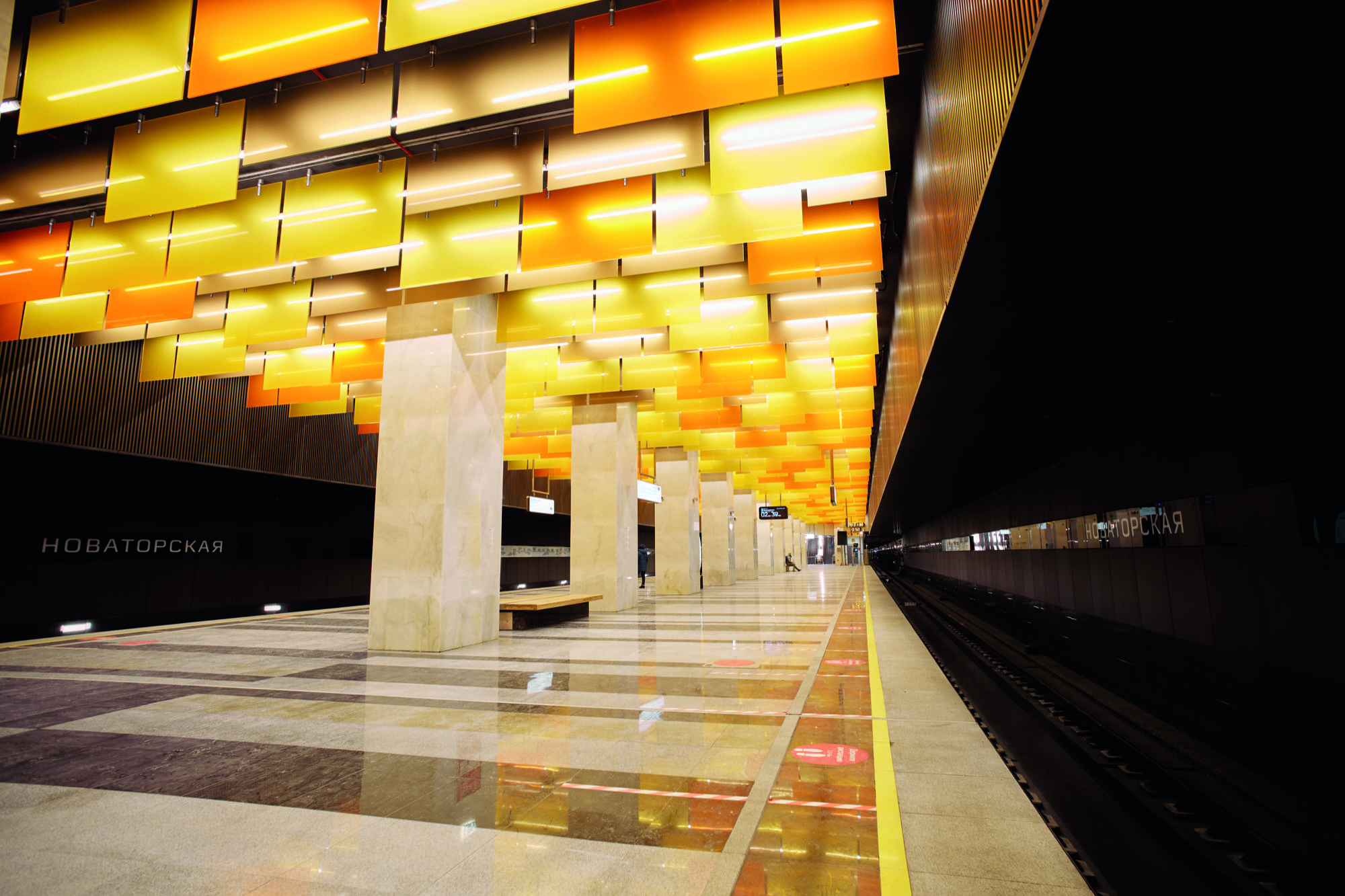
Moscow’s Big Circle Line, opened in March 2023, is the longest circular metro line in the world at 70 kilometres, with 31 stations. It carries up to a million passengers daily, and its launch has reduced car traffic in Moscow by 15,000 to 17,000 vehicles per day. The design of new stations on the line draws on Russian Suprematism and Constructivism — works by Malevich, Tatlin, Rodchenko, and others appear on station walls and ceilings.
Dubai’s metro system is one of the largest automated systems in the world: 89 kilometres of track, 53 stations, 600,000 daily riders, over two billion total journeys since launch. The Oliver Wyman Forum’s urban mobility index ranks Dubai first in the Middle East and Africa for mobility readiness. The system still faces the challenge of summer temperatures that make the gaps between climate-controlled stations genuinely hostile to pedestrians.
Tashkent operates four lines with 43 stations, running from 6am to midnight. The Alisher Navoi Station on the O’zbekiston Line is considered the most impressive, its magnificent ceiling and ceramic murals illustrating the works of the poet after whom it is named. Pyongyang has one of the deepest systems in the world — approximately 110 metres underground, originally designed to serve as a bomb shelter.
Its two lines draw direct inspiration from the Moscow Metro: deep construction, long distances between stations, and Socialist Realist murals throughout. Until recently only two stations were open to visitors; now more of the system can be seen.