
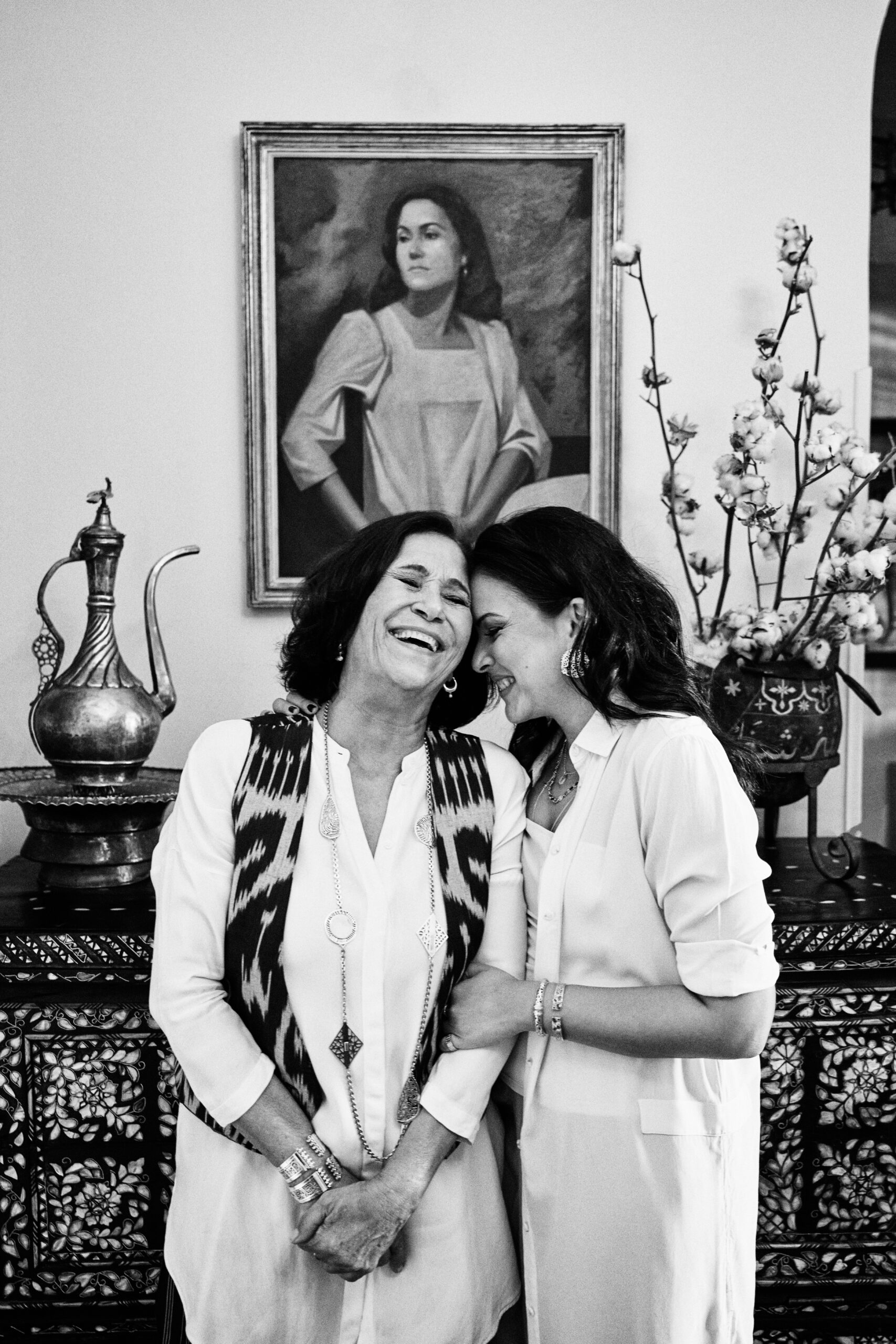
There exists a particular tension in the world of creative legacy: the weight of what came before against the necessity of forging what comes next. Amina Ghali, design partner at Azza Fahmy Jewellery and mastermind behind the celebrated Wonders of Nature collections, offers her perspective on navigating this delicate territory, on craftsmanship as a living language, and on the stories that jewellery tells across cultures and generations. I don’t think there was one single moment when I realised jewellery design wasn’t just my mother’s profession, but my calling as well.
It was much more a feeling that grew with time, gradually taking root as I moved through childhood surrounded by the particular rhythm of the workshop. Jewellery was always part of my life. My mother would take us to exhibitions, museums, and creative spaces, and she possessed this remarkable ability to turn everything into inspiration.
A carpet, a tree, a pattern on a wall — she could look at anything and find within it some seed of an idea. Over time, I realised it was a language I wanted to speak too, that jewellery wasn’t just adornment but a form of storytelling, a way of capturing emotion and memory in physical form. When the time came to pursue formal education, there were no specialised jewellery design programmes in Egypt.
Italy first, then the UK, each offering something essential to my development as a designer. It wasn’t about leaving home behind. It was about acquiring the right tools to contribute meaningfully and evolve the craft I had grown up around.
When I’m designing a new collection, the first spark can come from anywhere. For the Wonders of Nature collections, the inspiration came from sustained attention to the natural world — the way flowers unfold, how vines climb and twist, the particular geometry of leaves and petals. Jewellery has always been a way of telling stories that transcend borders; it carries symbols, memories, and meaning that people from different cultures can connect with.
At Azza Fahmy Jewellery, we draw on diverse histories and references so that each piece feels like a bridge between traditions and contemporary expression. Craftsmanship only survives through people. As we grow, the focus is on keeping knowledge alive, investing in long-term training, and making sure skills are passed from one generation to the next.
We work within a master-trainer-trainee model, so techniques aren’t just preserved, they’re evolved. My mother’s legacy gives me confidence and direction. My role is shaped by that legacy — to work alongside it, protect it, and contribute in a way that supports its continued evolution.