

Quick Summary: Babies should always be placed on their back to sleep for every nap and nighttime until their first birthday to reduce the risk of SIDS. Once a baby can roll both ways independently (typically around 4-6 months), they can stay in whatever position they choose during sleep. Parents should continue placing babies on their back initially, even after rolling skills develop.
The question of stomach sleeping keeps countless parents awake at night—ironically, while trying to figure out how to help their baby sleep safely. One moment, the baby’s sleeping peacefully on their back. The next, they’ve rolled onto their stomach, face pressed into the mattress.
Should parents flip them back over? Let them stay? Panic?
Here’s the thing though—the answer isn’t always straightforward. It depends on the baby’s age, developmental stage, and whether the baby rolled there independently or was placed that way. Understanding these distinctions can mean the difference between safe sleep practices and unnecessary risks.
Why Back Sleeping Is the Gold Standard
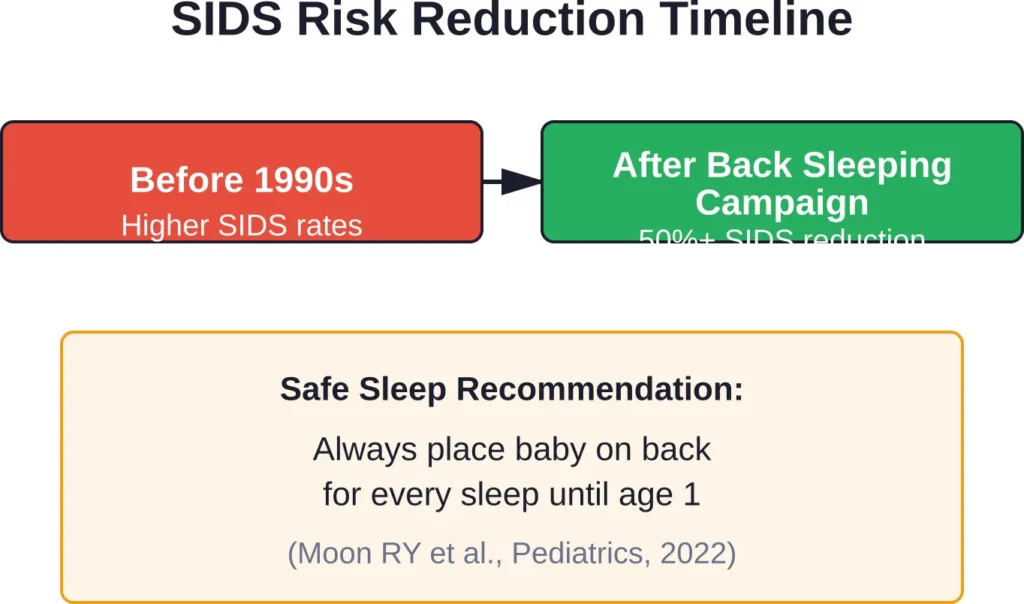
Back sleeping has transformed infant safety since the 1990s. According to research referenced in the Pediatrics journal (Moon RY et al., 2022; doi:10.1542/peds.2022-057990), back sleeping has cut SIDS rates by more than 50% since public health campaigns began promoting this sleep position.
That’s not a small reduction. That’s thousands of babies whose lives were saved simply by changing sleep position.
The Safe to Sleep campaign from the NIH makes it clear: the back sleep position is the safest sleep position for all babies until they reach their first birthday. This applies to every single sleep—naps included, not just nighttime.
But why does position matter so much?
When babies sleep on their stomach, several risk factors converge. The airway sits above the esophagus; when on their back, fluids more easily go back down the esophagus rather than into the airway. Stomach sleeping can also lead to rebreathing expired air (air that has already been breathed out), which can reduce oxygen intake and increase carbon dioxide in the baby’s body.
Additionally, babies sleeping on their stomach have reduced ability to arouse from sleep when something goes wrong, which is a critical safety mechanism. That arousal mechanism serves as a critical safety feature—it helps babies wake up if they’re not getting enough oxygen.
The Newborn Phase: No Exceptions
For newborns and young infants who cannot yet roll over independently, the rule is absolute. No stomach sleeping. Period.
Newborns lack the neck strength and motor control to lift or turn their head if their airway becomes blocked. Even if a baby seems more comfortable on their stomach—and some do seem to settle more easily that way—the risk simply isn’t worth it.
This is where many parents encounter the reflux concern. Won’t a baby choke on spit-up if they’re on their back?
Real talk: the anatomy actually works in favor of back sleeping. As noted by PAK Pediatrics, the airway sits above the esophagus when babies lie on their back, so fluids more easily flow back down the esophagus rather than into the airway. If reflux becomes bothersome, the solution isn’t stomach sleeping—it’s holding the baby upright for 10-20 minutes after feeds, burping thoroughly, and considering smaller, more frequent feeds if recommended by a pediatrician.
The mattress should always stay flat. Wedges, positioners, and inclined surfaces create their own suffocation risks and aren’t recommended.
When Rolling Changes Everything
Now, this is where it gets interesting. Development eventually shifts the safety landscape.
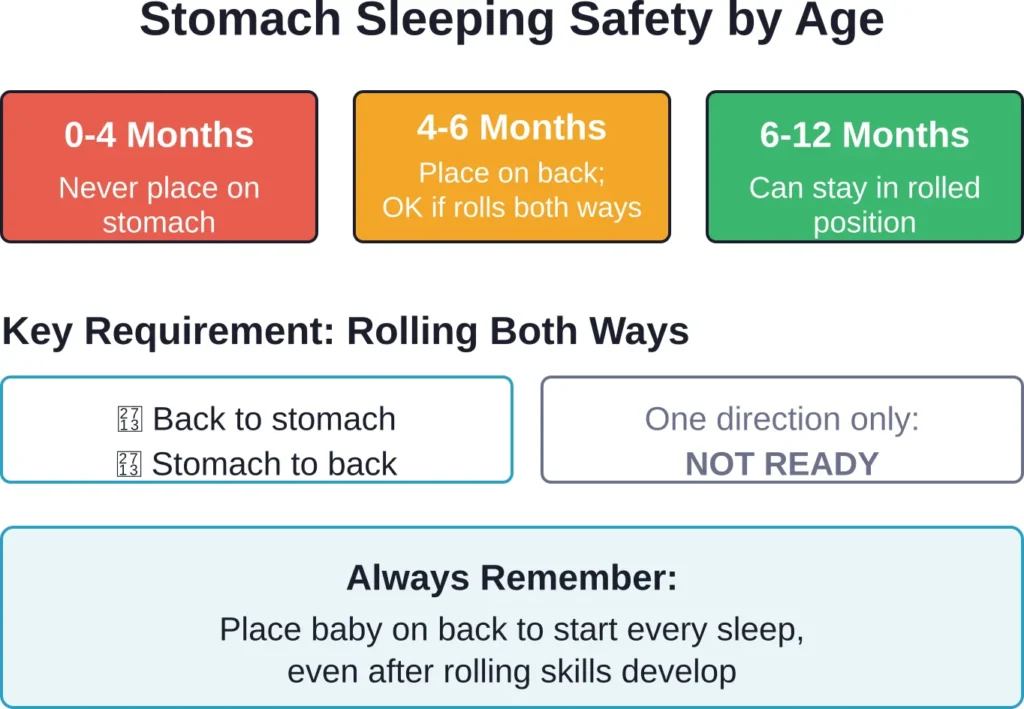
Once a baby can roll both ways independently—from back to stomach AND from stomach to back—the strict intervention changes. At that point, typically around 4 to 6 months for most babies, they can stay in whatever position they roll into during sleep.
Notice the critical qualifier: both ways. Rolling from back to stomach alone isn’t enough. The baby needs the ability to get out of the stomach position if needed.
But here’s what doesn’t change: parents should still place the baby on their back at the start of every sleep. Even when rolling skills are solid, back placement remains the initial safe sleep standard until the baby’s first birthday.
What happens after placement isn’t something parents need to correct all night. If the baby rolls to their stomach mid-sleep and can roll both directions, they can stay there. Constantly flipping a mobile baby back over actually disrupts sleep more than it helps—and exhausted babies (and parents) don’t make for safer conditions overall.
Signs a Baby Can Safely Sleep on Their Stomach
So when exactly does stomach sleeping cross from dangerous to acceptable?
Look for these developmental markers:
Bidirectional rolling mastery. The baby consistently demonstrates the ability to roll from back to stomach and from stomach to back, not just once or twice, but repeatedly and with control. This usually emerges between 4 and 6 months, though some babies take longer.
Head control. Strong neck muscles that allow the baby to lift their head, turn it side to side, and reposition it freely. Babies who can do this have the physical capability to move their face if their airway becomes compromised.
No swaddle. Once rolling begins, swaddling becomes unsafe and should stop immediately. Swaddled babies who roll cannot use their arms to push up or reposition, which dramatically increases suffocation risk.
Even with all these skills in place, back placement to start sleep remains the recommendation through the first year. The difference is that repositioning becomes unnecessary once the baby has rolled on their own.
Creating a Safe Sleep Environment
Sleep position is only one piece of the safe sleep puzzle. The sleep environment matters enormously, particularly when babies start moving more during sleep.
| Safe Sleep Element | Why It Matters | What to Do |
|---|---|---|
| Firm, flat surface | Prevents sinking and airway obstruction | Use a safety-approved crib mattress with fitted sheet only |
| Empty sleep space | Eliminates suffocation hazards | Remove blankets, pillows, bumpers, toys, and positioning devices |
| Room sharing | Allows quick response without bed-sharing risks | Keep baby’s sleep surface in parent’s room for first 6-12 months |
| Temperature control | Reduces overheating risk | Dress baby in sleep sack; keep room comfortably cool |
| Smoke-free environment | Significantly lowers SIDS risk | No smoking during pregnancy or around baby |
These standards apply regardless of sleep position. A baby who rolls to their stomach during sleep still needs a completely clear, firm sleep surface.
Products marketed to keep babies in one position—wedges, positioners, special pillows—aren’t just unnecessary. They’re actively dangerous and aren’t recommended by pediatric safety organizations. Babies should have the freedom to move their head and body.
The Face-Down Dilemma
Okay, so what about babies who don’t just roll to their stomach, but sleep face-down on the mattress?
This one stresses parents out more than almost anything else. The baby’s face is literally pressed into the mattress. Should parents intervene?
If the baby can roll both ways and the sleep surface is firm and clear, the baby has the capability to reposition if needed. Constantly going in to turn the baby’s head often results in waking a sleeping baby—who then rolls right back to face-down as soon as the parent leaves.
That said, if the baby seems stuck, is very young, or can only roll one direction, gentle repositioning makes sense. Placing the baby on their back to start sleep gives them the safest position at the beginning of each sleep cycle.
The firm mattress becomes absolutely critical here. Soft surfaces, memory foam, pillow-top mattresses, adult beds, and couches all create pockets where air can become trapped. A proper crib mattress stays firm enough that even face-down babies can breathe.
Tummy Time vs. Tummy Sleep
Here’s something that confuses new parents: tummy time is essential, but tummy sleep is dangerous for young babies. How does that make sense?
The difference is supervision and wakefulness.
Tummy time refers to supervised, awake periods when babies spend time on their stomach. This strengthens neck muscles, prevents flat spots on the head, and builds the motor skills babies need to eventually roll over. Starting tummy time from the newborn stage—even just a few minutes several times a day—helps babies develop the physical capabilities that eventually make stomach sleeping safer.
Tummy sleep, by contrast, happens when babies are unconscious and unmonitored for extended periods. That’s when the reduced arousal response and potential airway obstruction create serious risk.
Both involve stomach position. Only one involves conscious supervision and the ability to intervene immediately if something goes wrong.
Babies who get regular tummy time while awake often develop rolling skills earlier and build stronger neck control, which ultimately contributes to safer sleep once developmental milestones arrive.
Special Circumstances and Medical Conditions
Some babies have medical conditions that affect sleep position recommendations. Certain breathing issues, anatomical differences, or diagnosed conditions might lead pediatricians to advise different positioning.
This isn’t something parents should decide independently. If a baby has any medical condition—reflux, breathing difficulties, diagnosed syndromes, prematurity complications—sleep position should be discussed explicitly with the baby’s healthcare provider.
Generally speaking, the back sleep recommendation applies to healthy, full-term infants. Medical exceptions exist, but they require medical guidance.
Additionally, babies in hospital settings, particularly NICUs, sometimes sleep in positions other than on their back due to medical equipment, monitoring needs, or specific treatments. These medically supervised situations differ from home sleep and shouldn’t be replicated at home without explicit provider approval.
What Parents Can Actually Control
Look, safe sleep guidelines can feel overwhelming. But they’re also remarkably straightforward when broken down.
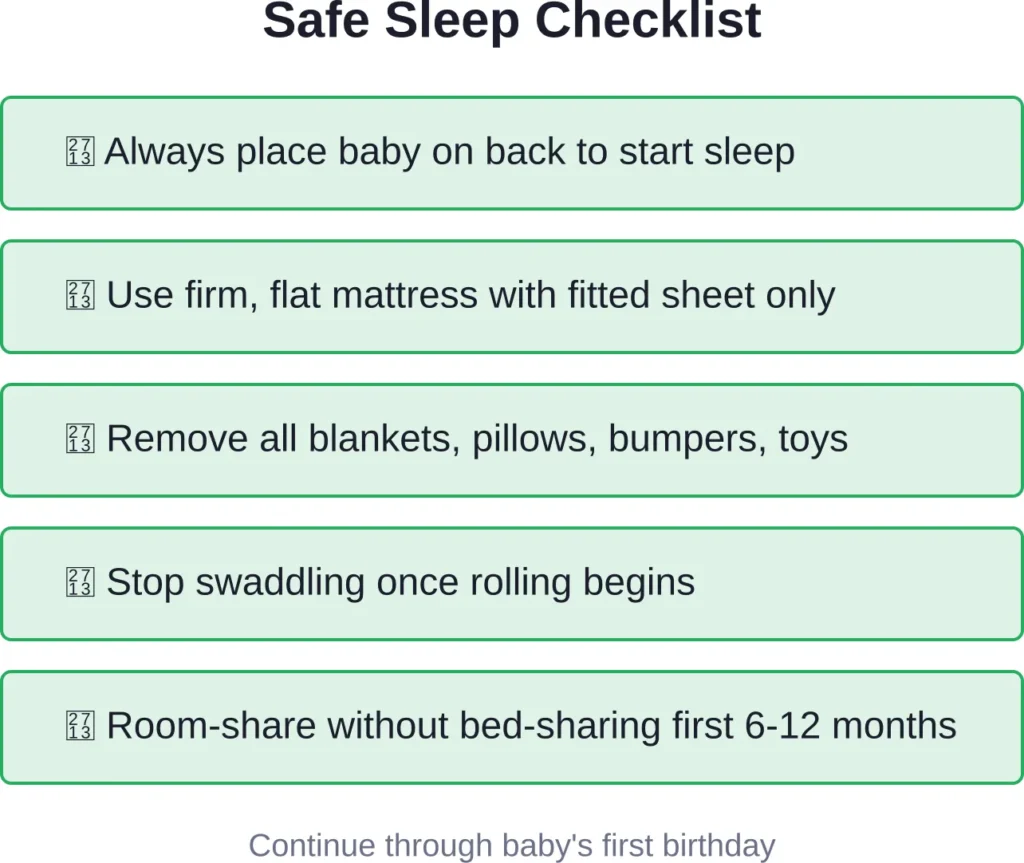
Parents control the initial placement position—always back. Parents control the sleep environment—firm, flat, empty. Parents control the room temperature, the elimination of smoke exposure, and whether swaddling continues past the point of rolling.
What parents can’t control is how a mobile baby moves once asleep. And that’s actually okay, as long as the baby has demonstrated the developmental capacity to handle different positions.
The anxiety around sleep position often stems from the feeling that parents must maintain perfect conditions all night. That’s not realistic—or necessary—once developmental milestones hit.
The goal is to stack the safety odds in the baby’s favor as much as possible through controllable factors, while recognizing that mobile babies will move, and that movement is actually a sign of healthy development.
When to Contact a Pediatrician
Most sleep position questions fall within the range of normal development. But some situations warrant professional guidance.
Contact a healthcare provider if the baby:
- Shows signs of breathing difficulty in any sleep position
- Has significant reflux that doesn’t improve with typical interventions
- Hasn’t developed rolling skills by 7-8 months
- Seems to struggle or panic when on their stomach while awake
- Has any diagnosed medical condition that might affect sleep safety
- Was born prematurely and needs individualized guidance
Sleep concerns often surface during regular well-baby visits, which provide natural opportunities to ask questions. Most pediatricians would rather answer twenty “Is this normal?” questions than have parents silently worry or make unsafe choices based on outdated information.
Addressing Common Myths
Misinformation about baby sleep position persists, often passed down from well-meaning relatives or found in outdated parenting resources.
Myth: Babies will choke on spit-up if they sleep on their back. As covered earlier, anatomy actually makes back sleeping safer for reflux. The airway position prevents fluid from entering the lungs more effectively than stomach sleeping does.
Myth: Stomach sleeping helps babies sleep longer. While some babies do seem to sleep more deeply on their stomach, better sleep quality doesn’t outweigh safety risks for young infants who can’t roll independently.
Myth: Babies who roll to their stomach should immediately be flipped back. Once a baby can roll both ways, they can stay in rolled positions. Constant repositioning disrupts sleep without adding meaningful safety.
Myth: Side sleeping is a safe compromise. Side sleeping is unstable—babies often roll from side to stomach. Back sleeping remains the only recommended position for initial placement.
Grandparents sometimes recall placing babies on their stomach “and everyone turned out fine.” This reflects outdated knowledge from before research quantified SIDS risk factors. Medical recommendations evolve as evidence improves.
Frequently Asked Questions
No, healthy newborns should never be placed on their stomach to sleep. Newborns lack the neck strength and motor skills to reposition themselves if their airway becomes blocked. Always place newborns on their back for every sleep until they can roll both ways independently.
If the baby can roll both directions (back to stomach AND stomach to back), let them stay in whatever position they roll into. Continue placing them on their back at the start of each sleep, but repositioning throughout the night isn’t necessary once rolling skills are established. If the baby can only roll one direction, gently return them to their back.
Babies can safely remain on their stomach during sleep once they can roll both ways independently, typically around 4 to 6 months. However, parents should continue placing babies on their back to start every sleep through the first birthday, even after rolling develops. The baby can then move into their preferred position.
Supervised tummy time while the baby is awake is essential for development, but sleep—even supervised naps—should still start with back placement. The reduced arousal response during sleep creates risks that don’t exist during awake tummy time. Once rolling skills develop, babies can stay on their stomach if they roll there during a supervised nap.
No. Positioning devices, wedges, and products designed to keep babies in one position aren’t recommended by pediatric safety organizations. These products can create suffocation hazards. Babies should have freedom to move their head and body on a firm, flat, empty sleep surface.
The highest SIDS risk occurs when young babies who cannot roll are placed on their stomach. Once babies can roll both ways independently, they have developed protective reflexes and motor skills that substantially reduce risk. However, maintaining a safe sleep environment—firm surface, no loose items, proper temperature—remains critical regardless of position.
If the baby can roll both directions and the mattress is firm and the sleep space is clear, the baby has the physical capability to reposition if needed. Ensure the mattress meets safety standards and is genuinely firm—soft surfaces create dangerous air pockets. If the baby seems stuck or is younger than 4-5 months, gentle repositioning makes sense.
The Bottom Line on Stomach Sleeping
Safe sleep doesn’t have to be complicated, even when it feels like babies have read exactly zero of the safety guidelines.
The core principle remains consistent: back is best for initial placement, every single time, until the first birthday. This single practice has prevented more infant deaths than perhaps any other safety recommendation in recent decades.
But development creates nuance. Babies who gain the ability to roll both ways have also gained physical capabilities that reduce risk. At that point, parents can let sleeping babies lie—literally—in whatever position they’ve rolled into, while still maintaining the back-placement standard at the start of sleep.
The sleep environment matters as much as position. A firm, flat, empty sleep space gives babies the safest possible conditions whether they stay on their back all night or roll around like tiny rotisserie chickens.
When uncertainty strikes at 2 a.m.—and it will—remember the basics. Back placement to start. Firm surface. Clear space. No swaddle after rolling begins. These controllable factors create the foundation for safe sleep.
Ready to optimize your baby’s sleep safety? Start by evaluating the current sleep environment against the checklist above, eliminate any items that don’t belong in the sleep space, and commit to back placement for every sleep. Small, consistent actions create the safest sleep conditions possible—and that’s something worth losing sleep over.